Independently Owned, Locally Grown, Community Loved


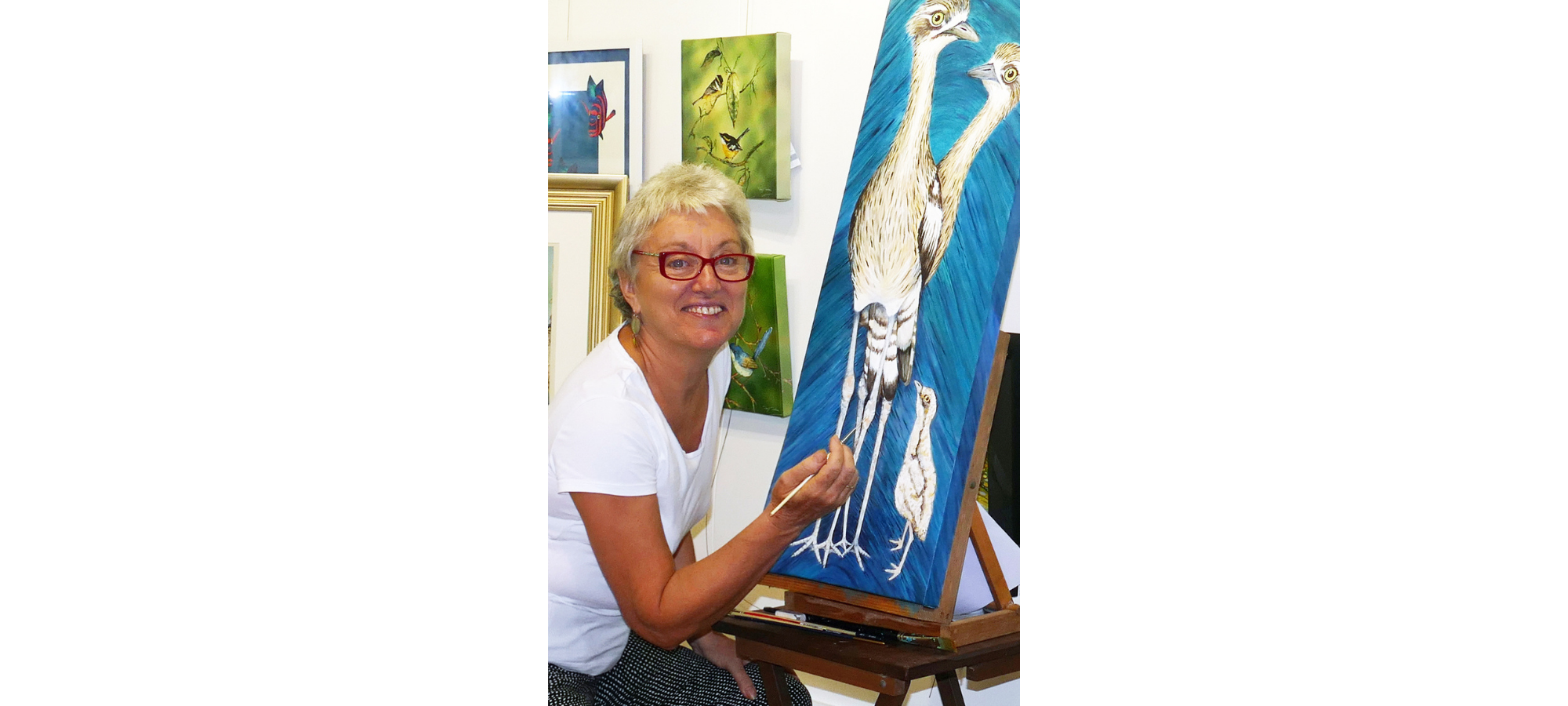
Daryl Dickson in her studio. Photo supplied
For Cardwell wildlife artist Daryl Dickson, the endangered mahogany glider is much more than a subject for her paintings. It has shaped her life and decades of dedication to protecting North Queensland’s wildlife.
This evening, Daryl will share her knowledge and experiences at C4’s Science in the Pub at Shanti Café in Mission Beach, introducing audiences to one of Australia’s rarest and least-known marsupials.
Rediscovered in 1989 after being lost to science for more than a century, the mahogany glider survives in a limited area of North Queensland, where habitat loss and fragmentation threaten its future.
“It’s still a very unknown species,” Daryl said. “The more people know about it, the better chance they’ve got of making good decisions that don’t harm the landscape or the animals that rely on it.”
Her presentation will explore the glider’s remarkable characteristics, its habitat and the conservation efforts underway to secure its survival.
Daryl’s connection with the Wet Tropics began in 1988, when a hot-air ballooning trip from Adelaide introduced her to the region.
“I couldn’t believe the colour, and the forests, and the wildlife,” she recalled. “There was just something so magic about this place.”
In 1993, she and husband Geoff Moffatt left their telecommunications careers behind and moved north, eventually building their own home beside Myunga Creek in the Kennedy Valley. They later discovered their property was important mahogany glider habitat, sparking decades of involvement in conservation and wildlife rehabilitation.
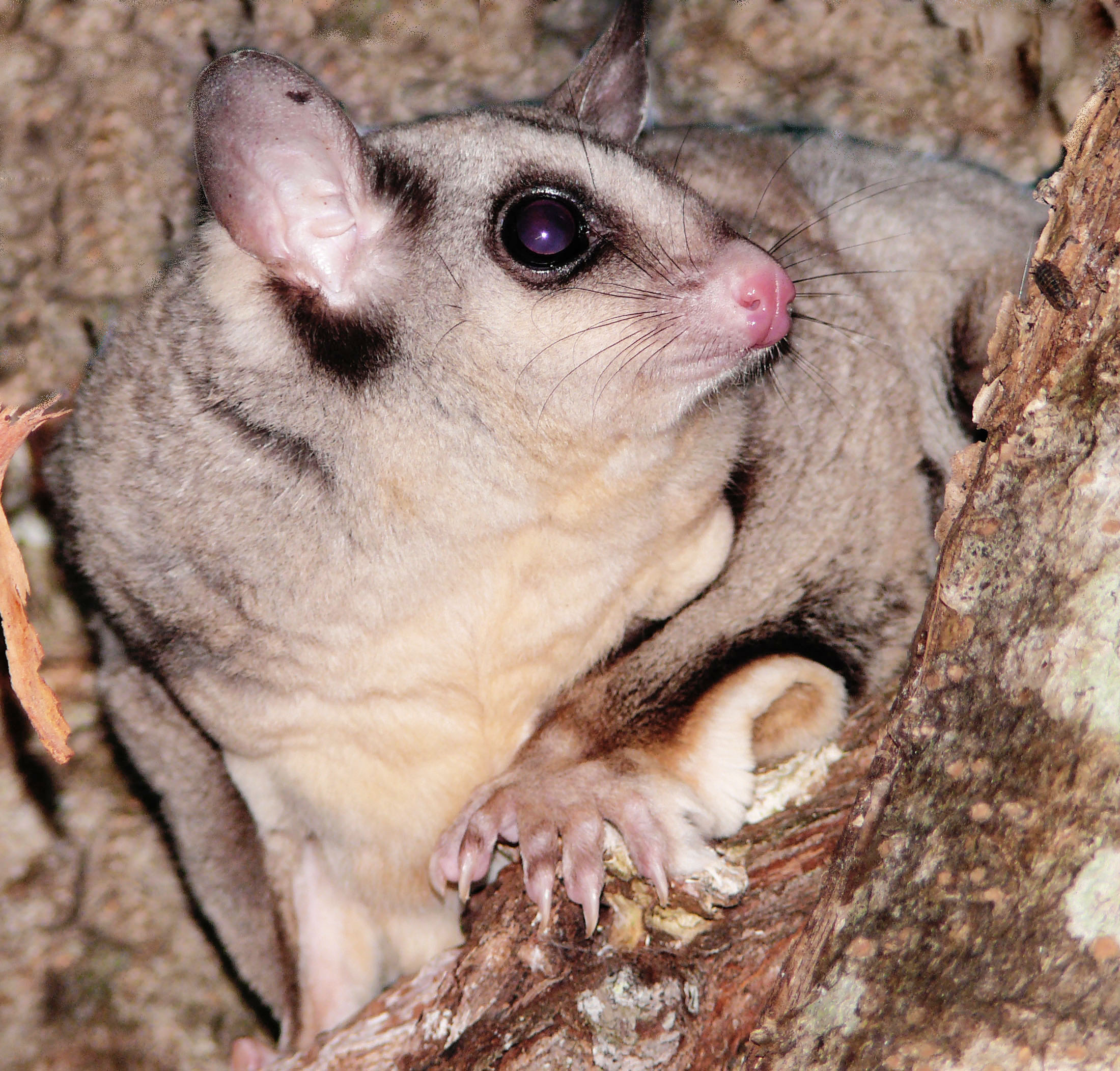
Today, their Mungarru Lodge Sanctuary helps injured and orphaned gliders and possums prepare for release into the wild. A large enclosure allows recovering animals to rebuild the strength and fitness needed to survive in their natural environment. That close connection with wildlife also informs Daryl’s art.
“What they give me in return is this close contact and the ability to observe them moving naturally and doing things that they do, which informs my art,” she said.
For Daryl, art and conservation are inseparable, shaped by more than three decades living among the animals she paints.
“We’re just another animal in their forest,” she said.
Tuesday’s presentation offers an opportunity to discover the extraordinary mahogany glider through the eyes of someone who has devoted much of her life to understanding and protecting it.
1. Born to glide: Mahogany gliders can glide up to 60 metres between trees and rarely come to ground.
2. Family life: They breed once a year, producing one or two young cared for by both parents. Each pair defends a territory of approximately 20 hectares.
3. Rare and endangered: Found nowhere else on Earth, mahogany gliders were rediscovered in 1989 after more than a century lost to science.
Source: Fact Sheet, Mungarru Lodge Sanctuary
Publishers Indemnity. Any individual or entity that places advertising, supplies copy material, or submits editorial content to Life Publishing agrees and undertakes to ensure that all such material:- Does not infringe upon any copyright, trademark, or other intellectual property rights;- Is free from any content that could be considered defamatory, libelous, or slanderous;- Does not infringe upon any rights related to privacy or breach of confidence;- Contains no obscene, indecent, or otherwise unlawful material;- Complies fully with the Trade Practices Act and all other applicable laws, regulations, or statutes. Furthermore, by submitting or placing such material, these individuals or entities agree to indemnify and hold harmless the publisher, Life Publishing and Events Pty Ltd, and/or its agents from and against any and all investigations, claims, demands, liabilities, damages, costs, or judgments arising out of or in connection with the material provided. All material is believed to be accurate at the time of printing and remains the copyright of Life Publishing and Events Pty Ltd.
© 2026 Life Publishing Group Ltd.
.jpg)