
Independently Owned, Locally Grown, Community Loved

With nearly two decades in real estate, Nathan Henderson has built a career grounded in experience, local knowledge, and a genuine understanding of people. After working as an agent for several years, he gained his Principal’s licence in 2007, marking the beginning of a long-standing presence in the Hinchinbrook property market. Nathan specialises in residential sales, rentals, and rural properties, with a particular appreciation for the people behind each transaction. “Residential sales and rentals and rural sales are the bulk of our work and having been around for a while, the people are the best part. We are truly grateful when people are referred to us and we have sold to parents and then children in the same family. Being an agent means helping people navigate an important transition in their life.” With a rural background, Nathan values getting out on the land and understanding how properties function within their environment and community. “It’s easy to focus too locally… we take care to understand what is happening outside of our area to ensure we are reacting quickly to changes in our market for clients.” “Understanding what people are aiming to achieve and when, helps us give advice and strategy in selling their property. We assist with the happiest and saddest moments in people's lives and we are always grateful for the trust our clients put in us.” What advice would you give to first-home buyers looking to settle in the region? “Avoid the FOMO, don’t rush unless it’s the right place… build a relationship with agents so you have a chance of seeing things as they come on the market.”
Read the full story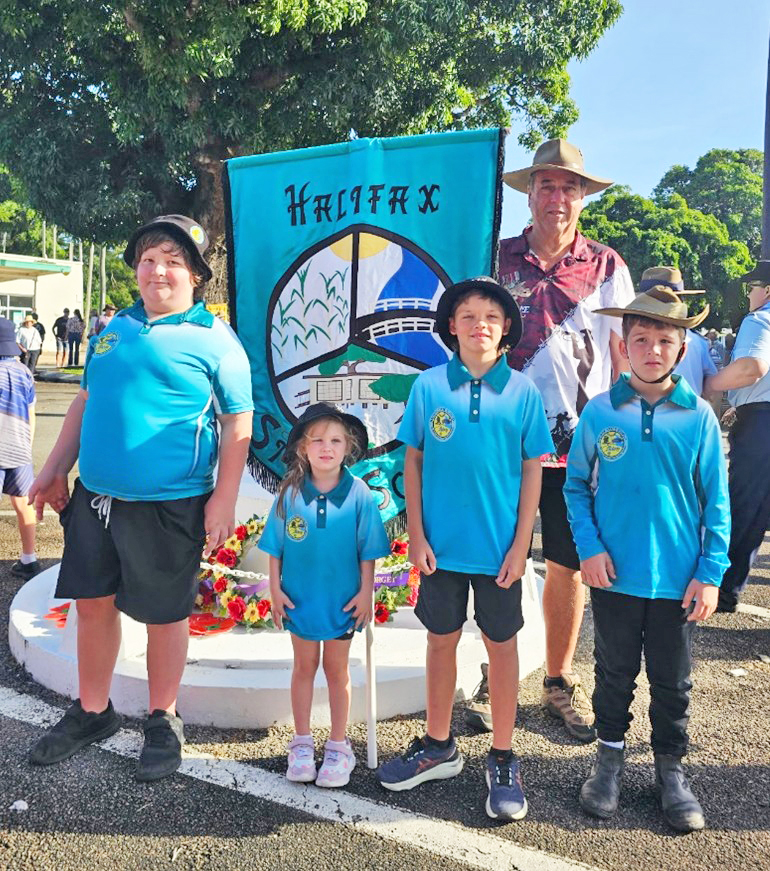
Caption: Mr Blake and students at the Halifax memorial
Read the full story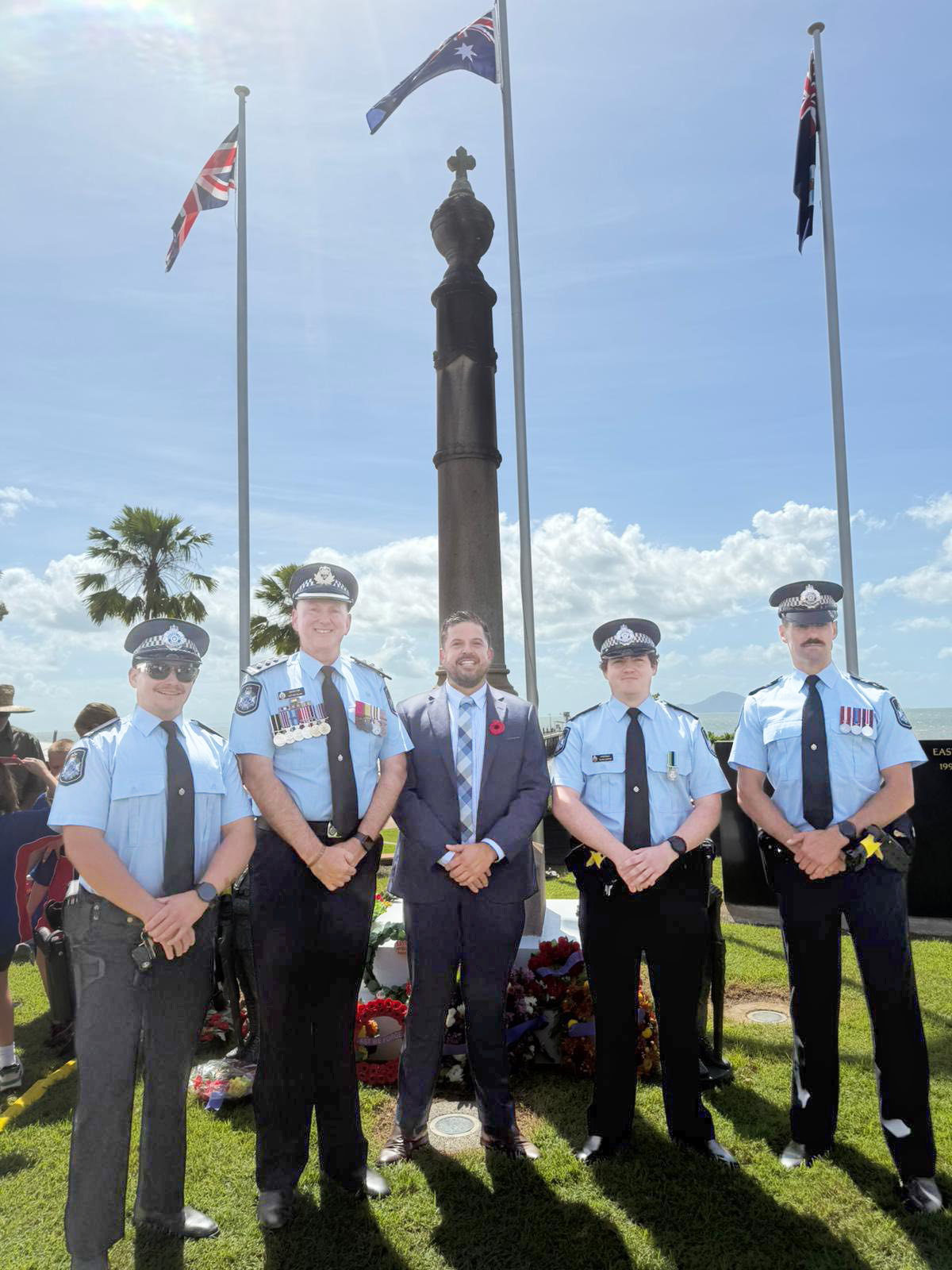
Last week I was in Brisbane for Parliament, continuing to advocate for the issues that matter most to our region, before returning home to spend time across the Hinchinbrook electorate. A key focus during the sitting week was the need for Queensland to become more self-sufficient, particularly when it comes to critical inputs like fuel and fertiliser. For communities like ours, these are important issues that directly impact the cost of living, our farmers, and the strength of our local economy. We have seen how global events can disrupt supply chains and drive-up costs. That’s why I have continued to push for greater sovereign capability, so Queensland is less exposed to international uncertainty. The Crisafulli Government is committed to strengthening this self-sufficiency and ensuring regional communities like Hinchinbrook are better protected into the future. We also passed the third tranche of Adult Crime, Adult Time laws in Parliament. This builds on the work already underway to restore community safety after a decade where victim numbers rose 193% under the former government. While we are starting to see some early signs of progress from stronger laws and a more focused approach, I know from conversations across our community that there is more to do. Turning around long-term challenges takes time, but the commitment remains clear: to back our police, hold offenders accountable, and make our communities safer. On Saturday, I had the privilege of attending a number of ANZAC Day services across the electorate, including the Dawn Service, RSL service, cemetery service, as well as services at Forrest Beach, Halifax and Cardwell. Each service was moving in its own way, and it was encouraging to see such strong attendance across all locations. It speaks to the deep respect our community holds for those who have served, and the importance of continuing to honour their sacrifice. It is always a privilege to stand alongside our community on ANZAC Day and reflect on the values of service, mateship and sacrifice that continue to shape our nation. As always, I will continue to take the voices of Hinchinbrook to Brisbane, while staying closely connected to our community here at home.
Read the full story
The Crisafulli Government is launching a new international prize for eight high-achieving Queensland students and two teachers. Successful applicants will fly to London to visit the birthplace of Westminster democracy and will undertake trips to Canberra and Brisbane parliaments. Applications for the inaugural program open on Monday 18 May to Queensland Year 9 students. The Crisafulli Government is delivering a plan for Queensland’s future and supporting the State’s students and teachers. The Crisafulli Government is delivering a once-in-a-lifetime opportunity for Queensland students and teachers to experience the birthplace of parliamentary democracy through a prestigious education prize. Launching today, the Westminster Prize is open to all Year 9 students across Queensland’s state schools, non-state schools, and homeschool settings who have a strong interest in civics and citizenship. It’s just one of the ways the Crisafulli Government is delivering a plan for Queensland’s future after a decade of decline under Labor. Eight successful students will fly to London next year with two teacher chaperones to experience first-hand aspects of the Westminster system of government, which is the foundation of Australia’s parliamentary democracy. The prize also includes trips to Canberra and Brisbane parliaments where students will gain valuable knowledge, insights and experiences with Australia’s political system. The Westminster Prize is a new initiative from the Crisafulli Government and adds to existing excellence programs including the Premier’s ANZAC Prize, the Premier’s Reading Challenge and the Peter Doherty Awards. Minister for Education John-Paul Langbroek said the Westminster Prize aimed to strengthen Queensland students’ understanding of civics, citizenship and democratic participation. “This exciting new program offers a once-in-a-lifetime opportunity for our students to travel to London, Canberra and Brisbane to learn about our rich history and political system,” Minister Langbroek said. “Today’s students are our future leaders, and the Crisafulli Government’s new Westminster Prize is a fantastic opportunity for them to travel, explore and deepen their understanding of democratic values. “Through the Westminster Prize, the eight students will grow their understanding of Queensland’s parliamentary system, Australia’s federal democracy and the Westminster model in the UK. “As well as their travels, the prize winners will deliver a local civics project focused on a community issue, applying their learning to real-world contexts.” British Consul General for Queensland and the Northern Territory Richard Cowin said he was delighted to support the fantastic initiative. “This exciting award gives students an amazing opportunity to see how the Westminster system works in real life and to experience the democratic traditions that connect the UK and Australia,” Mr Cowin said. “In a fast-changing world, understanding our shared values and approaches is more important than ever. “This prize will enable a lucky group of young Queenslanders to experience these principles firsthand and draw on them throughout their lives.” Applications to be part of the inaugural Westminster Prize open on 18 May and close 31 July, with interviews and selection in August and September. For more information, visit the website.
Read the full story

By simply filling in a survey, Queenslanders can help shape plans for the state’s electricity networks.
Energex, Ergon Energy Network and Powerlink are encouraging customers to share insights on their energy use, including rooftop solar, battery storage and electric vehicle charging.
Since the Queensland Household Energy Survey was launched in 2009, there have been significant advances in technology, and the electricity distribution and transmission networks have evolved to meet the changing needs of customers.
Last year more than 4000 customers participated in the survey, which helps to build a picture of their immediate priorities and longer-term aspirations.
This qualitative data builds on the wealth of information Energex, Ergon and Powerlink use to plan prudent investment in the networks to ensure an affordable, reliable and safe electricity supply for millions of Queenslanders.
Have your say in the future of energy by completing the Queensland Household Energy Survey, which is open from now until Thursday 2 April at www.qhes.com.au
Please remember: Fallen powerlines can be hidden in tree branches and other debris. Take extra care when you are cleaning up, stay well away from any fallen powerlines and report them to emergency services on 000 or call the Ergon Faults Team on 13 16 70.
Making sites safe for the communities and everyone supporting them in the clean-up and recovery phase will be the first priority for our crews before they commence restoration work in damaged sites.

Women across Queensland are being supported to return to work, build new skills, and strengthen their economic security through a range of targeted programs and grants. From direct financial assistance to community-led initiatives, these efforts are helping to remove barriers and create meaningful pathways into employment.
A key initiative is the Women’s Career Grants program, which provides eligible women with up to $5,000 to assist with the costs of re-entering the workforce. The funding can be used for essential expenses such as workwear, childcare, training, recertification, transport, tools, technology, or relocation for new employment opportunities.
The program has already made a significant impact, with more than 1,000 women supported in its first round. Notably, 93 per cent of recipients accessed funding across multiple categories, highlighting the complex and varied challenges many women face when returning to work. Technology, recertification, and training were among the most commonly requested supports.
Minister for Women and Queensland’s first Minister for Women’s Economic Security Fiona Simpson said the initiative is helping to break down barriers for women across the state.
“Our Women’s Career Grants are breaking down barriers and providing cost-of-living relief to help women with the essentials to get back into work,” Minister Simpson said.
“The first round supported more than 1,000 women across Queensland and we’re already hearing some of their success stories. We’ll be aiming to empower the same number of women again – if not more – through Round 2.”
The program is delivered in partnership with Future Women, an organisation focused on advancing women’s economic participation. Founder and Managing Director Helen McCabe said the grants address a clear and growing need.
“The Women's Career Grants program addresses a clear need for women looking to return to paid work – whether that's covering laptops, technology, childcare or transport,” Ms McCabe said.
For many participants, the support has been life-changing. Gold Coast mother-of-four Lin Yang used the grant to purchase a laptop, workwear, and obtain a real estate licence, helping her transition into a new career.
“When I began my job search, I was navigating uncertainty while trying to create long-term stability for my family,” Ms Yang said.
“With that stability, I was able to prepare properly, refine my approach and present myself with confidence in interviews.
“I have now secured a position in a real estate agency, which provides a pathway for my professional growth.”
Complementing this program is the expanded Jobs Academy, which supports women over the age of 40 to return to work or further their education. With additional funding secured, the program will assist hundreds more women in gaining new skills and rebuilding their careers in the coming years.
Beyond individual support, community organisations are also playing a vital role in empowering women. The Empowering Queensland Women grants program provides funding to grassroots groups delivering initiatives focused on financial literacy, leadership development, and employment pathways. Grants of up to $10,000 are available to help organisations deliver training programs, host events, and create networking opportunities for women and girls.
In its first round, the program supported 29 organisations with a total of $279,000 in funding. These initiatives ranged from helping older women navigate housing challenges to delivering leadership programs and financial education workshops.
Minister Simpson said investing in community-led programs is essential to long-term change.
“We recognise that directly supporting financial literacy, leadership, and economic security programs helps in breaking down barriers and creating more opportunities for women and girls to succeed and thrive,” she said.
Among the funded organisations is Broken to Brilliant, which supports survivors of domestic and family violence. The group is expanding its “Financial Superwomen” workshops across North Queensland, providing practical tools to help women rebuild independence and stability.
Director Karen Lindsay said the program is designed to create lasting change for participants.
“These programs help reform responses to abuse, rebuild financial independence and stability, improve legal literacy, and give survivors back their voice,” Ms Lindsay said.
“We know there are higher risks and different risks for regional and rural women experiencing domestic and family violence, so we can’t wait to introduce this proven formula of the Financial Superwomen Workshop to the North Queensland centres.”
Together, these initiatives highlight a strong, coordinated approach to empowering women in the workforce. By addressing financial barriers, supporting skills development, and investing in community programs, Queensland continues to create opportunities for women to achieve greater independence, confidence, and long-term career success.
The Women’s Career Grants Round 2 applications can be lodged now at womenscareergrants.com.au and apply for support through the Jobs Academy at www.women.qld.gov.au/eqw
Grants and other support are available right now for Women seeking help in employment and upskilling. Photo sourced: womenscareergrants.com.au
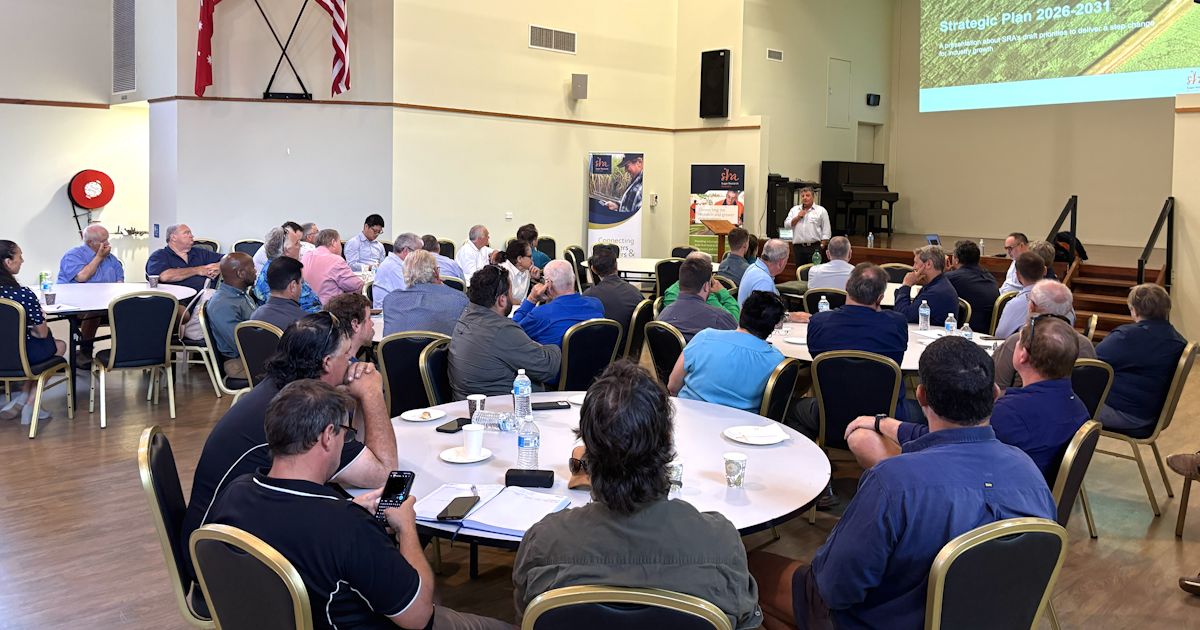
Cane growers and industry stakeholders from the Herbert Region have had the opportunity to help shape the future of the sugar industry, as Sugar Research Australia (SRA) continues its statewide consultation roadshow.
The sessions form part of a broader effort to develop SRA’s Strategic Plan 2026–2031, with meetings recently held across North Queensland, including nearby centres such as Babinda and Townsville.
Growers, millers and industry representatives from the Herbert and surrounding districts were invited to share local insights, priorities and challenges facing the sector, ensuring regional voices are reflected in future research and investment decisions.
The consultation series is being rolled out across all cane-growing regions throughout March, providing one of the most significant opportunities for stakeholders to directly influence the direction of the industry.
SRA says the feedback gathered will play a key role in shaping long-term strategies aimed at supporting productivity, sustainability and innovation across Australia’s sugarcane sector.
The roadshow will continue to visit remaining regions in the coming weeks, with further sessions planned across Queensland and New South Wales.
Growers across the state recently gathered to attend a series of workshops. Photo source: Sugar Research Australia

Managing invasive species is one of the most important responsibilities we share as a community, particularly here in Hinchinbrook, where agriculture, natural ecosystems, and livelihoods are closely connected.
One weed that continues to pose a serious threat across our region is Navua sedge.
Navua sedge is an aggressive invasive plant that spreads rapidly and outcompetes pasture and crops, reducing productivity.
If left unmanaged, it can dominate entire paddocks, making land difficult to use and significantly increasing long‑term control costs.
Council’s “no slash zones” are a key part of our strategy to control this weed.
The name “no slash zone” doesn’t mean that the area doesn’t get slashed; it simply means that Council workers or contractors won’t be slashing the marked area. The landholder who has applied for the zone is responsible for mowing the area to reduce the spread of Navua sedge.
Grass on roadsides needs to be kept to a manageable height for safety and visibility. This also helps with road maintenance. It has been extremely wet this season, and mowing in some areas has been difficult. Some no slash zones have been kept short and tidy; however, others haven’t. If you have a no slash zone that you are responsible for, I hope the weather fines up soon and you get the opportunity to tidy it up. If you are no longer able to maintain your zone, please let Council know and it will be deregistered and maintained by Council.
By maintaining designated no slash zones, landholders play a critical role in breaking the cycle of spread. These areas are identified to allow for more effective control methods, such as targeted herbicide application and careful monitoring. Respecting these zones helps protect clean areas, reduces reinfestation, and supports a coordinated, region‑wide approach to weed management.

There has never been a better time to take lawn care seriously. Or at least, that is what the sheer range of mowers currently on offer would suggest.
From high-powered ride-ons to reliable push mowers and everything in between, the options available right now cover just about every yard, property and weekend warrior ambition imaginable. Whether it is a small suburban patch or a sprawling block, there is a machine built for the job.
Leading the charge are the zero turn models from Bushranger Power Equipment, designed to deliver precision, speed and a smoother mowing experience. These are the kind of machines that turn a chore into something far more satisfying.
The range also includes ride-on mowers from COX Mowers, a brand that has been building tough, reliable equipment for Australian conditions since the 1950s. They are built to last and designed to handle whatever the backyard throws at them.
For those looking for value and versatility, Husqvarna offers ride-on mowers starting from $4,199, along with a zero turn model currently on sale for $7,999. Trimmers, blowers and hedge trimmers are also available, making it easy to tackle every part of the yard.
And for the lawn enthusiasts, the Masport push mower range is now available with significant savings, offering dependable performance backed by a trusted dealer network.
The real challenge now is deciding which one suits your needs best. Because with this many quality options available, the only thing left to do is get out there and make the lawn look its best.
A powerful range of mowers is waiting for you in the showrooms of Ingham Motorcycle and Mowers. Photo supplied

Letter to our Editor in Chief,
I was amazed to read in your edition published on December 16th, an item by Hinchinbrook Shire Council, reference pay it forward container collections.
Whilst the Local Government Act of Queensland legalises, what amounts to financial scamming of Ratepayers, I was shocked to see this admission within Councils article.
Whilst a lot of lip service is paid to transparency, honesty, open governance. It must be a first for a Shire Council to admit in print to scamming its ratepayers.
Almost refreshing to see such an admission.
The article explicitly states that a recycling facility is not yet in place. It’s something for the future. But for years our Council has forced on us the rental of recycle bins. Charged
Ratepayers for Recycle bin collections fortnightly, when in fact like many smaller shires all waste regardless of the bin lid colour goes to landfill including returnable containers.
Yes, the Local Government act permits this charging for recycled waste collection, when no recycling exists, and landfill is the only disposal option.
It’s no wonder Politicians are held in such low regard, when even at our local government level we are taken advantage of. Financially scammed.
If the cost of a single waste collection needs to be increased, so be it, do so. Not force a second pointless, optics only bin service on us.
Clearly all our returnable containers have gone to landfill and that is set to continue. It just means we will now no longer bother sorting our recyclables.
It can all go weekly into the Red Bin.
Bob Ford
Taylor Beach
------------------------------------------------
Dear Editor,
Thank you for publishing the letter regarding Council’s recent article on the Containers for Change Pay‑It‑Forward (PiF) stations from Bob Ford, Taylors Beach.
Council strongly rejects the assertion that it is “scamming” ratepayers.
Waste management services, including kerbside waste and recycling collections, are delivered in accordance with Queensland legislation and form part of the overall cost of managing waste responsibly for the community.
Contrary to the claims made, recyclable material placed in yellow‑lid kerbside bins is not sent to landfill.
Council’s kerbside collection vehicles are purpose‑built with two separate compartments, allowing general waste and recycling to be collected simultaneously while remaining fully separated.
All recyclable material collected from yellow‑lid bins is transported to a Materials Recovery Facility in Townsville, where it is sorted and processed for the recovery of recyclable materials.
General waste collected from red‑lid bins is transported separately for landfill disposal.
At no point are these waste streams combined.
Our ratepayers can watch this process during pick up by viewing it on our YouTube channel here: https://youtu.be/DrTJkZmnhME?si=_y23766p8JmmeNKU
This collection system is widely used across Queensland and allows Council to operate efficiently by reducing fuel use, minimising vehicle movements, improving safety, and limiting costs for ratepayers, while still ensuring materials are managed appropriately.
The Pay‑It‑Forward stations referenced in Council’s article are a simple community initiative that encourages the recovery of eligible drink containers through Queensland’s Containers for Change program.
These stations help reduce litter and allow individuals or community groups to collect container refunds if they choose.
Council has also been transparent in acknowledging that additional recycling infrastructure is needed in the region. That is why Council is actively advocating for the development of a local recycling facility at Warrens Hill, which would improve local recycling capacity, increase resource recovery, and extend the operational life of the landfill.
Council remains committed to transparency, responsible waste management, and continual improvement of services for the Hinchinbrook community. Providing accurate information is essential to informed public discussion, and Council encourages residents with questions about waste and recycling services to seek clarification directly.
Mayor Ramon Jayo
Hinchinbrook Shire Council

A $22.1 million investment will strengthen Mount Fox’s critical agricultural corridor and improve access to Australia’s tallest single‑drop waterfall.
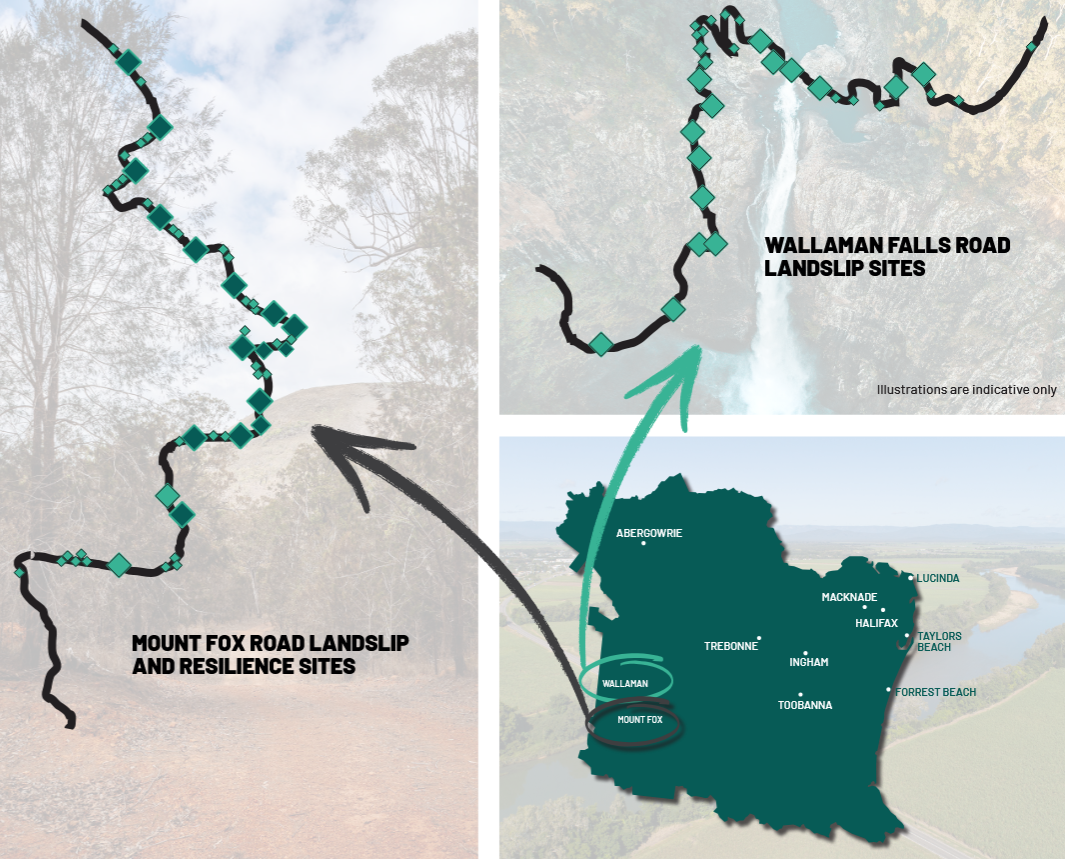
Of this funding, $18.6 million is dedicated specifically to slope stabilisation and remediation works, addressing 35 landslip sites on Mount Fox Road and 30 sites on Wallaman Falls Road, which winds through Girringun National Park.
Works Soon To Begin For One Of The Region’s Premier Tourist Destinations
These projects are jointly funded by the Australian and Queensland Governments under the Disaster Recovery Funding Arrangements (DRFA).
A further $3.5 million from the Australian Government under the North Queensland Resilience Program will fund priority safety upgrades along 16 key sections of the Mount Fox Road corridor.
During periods of heavy rainfall, the ranges are particularly prone to landslips, often leading to road closures and restricted access throughout the wet season.
These disruptions significantly impact residents, local businesses, and tourists. Increased traffic from emerging energy precincts, combined with Defence Force use of the route to access training areas above the Mount Fox Range, further highlights the need for a safe and reliable road network.
Hinchinbrook Shire Council Mayor Ramon Jayo said the inspection findings have driven a targeted approach, prioritising works in locations with the highest risk to improve long‑term slope stability.
“The upgrades will also support reliable access to Wallaman Falls, one of the region’s premier tourist destinations, benefiting visitors, businesses, and the broader community,” Mayor Jayo said.
“They are equally critical for the Mt Fox area, where primary producers, emerging industries, and key economic activities rely on a safe and dependable road network.
“We’ve seen what severe weather can do. This investment is about addressing the damage and making these sections of road safer for the community and the industries that depend on them.”
Member for Hinchinbrook Wayde Chiesa said the Hinchinbrook Shire Council’s commitment to ensuring these remediation works are carried out in a planned and safe manner will ensure the project’s longevity and success.
“The Crisafulli Government is proud to back this vital project alongside the Commonwealth, supporting lasting infrastructure that ensures access and strengthens resilience.”
“It’s important that we get this right, and I’ll be backing Council every step of the way as they deliver for our region.”
While construction was initially planned to begin earlier this year, the decision was made to wait until conditions were safer.
Construction is expected to begin from April 2026, subject to site conditions. Works will be staged where possible to maintain access, with completion anticipated later in 2027, weather permitting.
Further updates will be provided ahead of construction, including details about traffic management arrangements, as the project moves from planning into delivery by visiting www.hinchinbrook.qld.gov.au/water-waste-and-roads/roads-and-public-works/major-projects/mount-fox-road-and-wallaman-falls-road-remediation/
Caption: Targeted sites for Landslip and resilience projects have been outlined for both the Wallaman and Mount Fox roads. Image sourced: Hinchinbrook Shire Council
Caption: The view from the Wallaman Falls public viewing platform. Photo credit: Victoria Velton
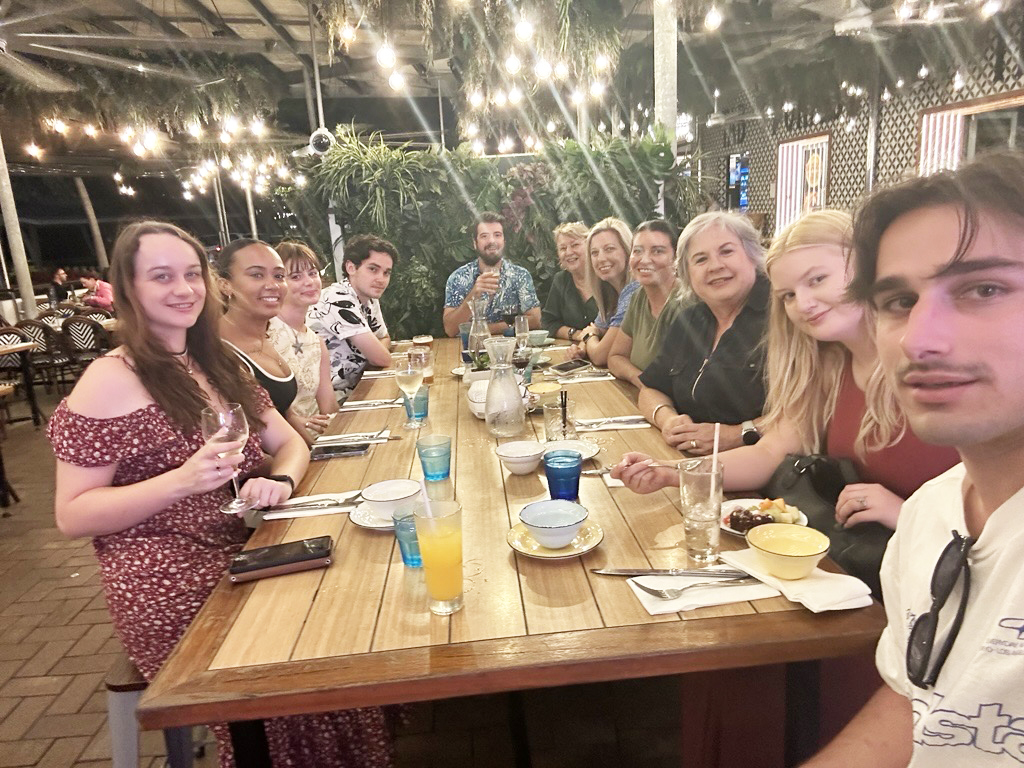
Hiya Hinchinbrook, or should I say Airlie Beach? I was away from the region most of this week and working with our sister publications at the main office in the Whitsundays. What a beautiful place to work, but I tell you, I was glad to be away and back home after the noise from all the tourists.
And what a week to be away, I missed so much action! You can bet your sweet cane sugar I would have loved to participate in the One-Act Plays and gone to see the TYTO Gallery opening of the Androgyny exhibition, both of which were cancelled last year.
But it was important that I check in with head office, and touch base with all my teammates from all parts of the production line, from sales to design, we were all there getting to know each other and work together to bring you, our readers, the best newspaper and magazine we can.
I also celebrated a bit while I was down there, doing a few things with some old friends like snorkelling and jet skiing. I couldn't believe how huge some of the fish where and how close they would swim up to you. Jet skiing was a thrill; the speed and power and the airtime you get as you hop over the waves – an incredible experience - I absolutely want to do it again.
(Signature)
Fun fact: We met a huge living legend known to the tour guides as Gorgeous George, the Humpheaded Maori Wrasse. He crested the water a few times like a sea serpent of myth.
Caption: The Life Publishing team out for dinner in Airlie Beach.

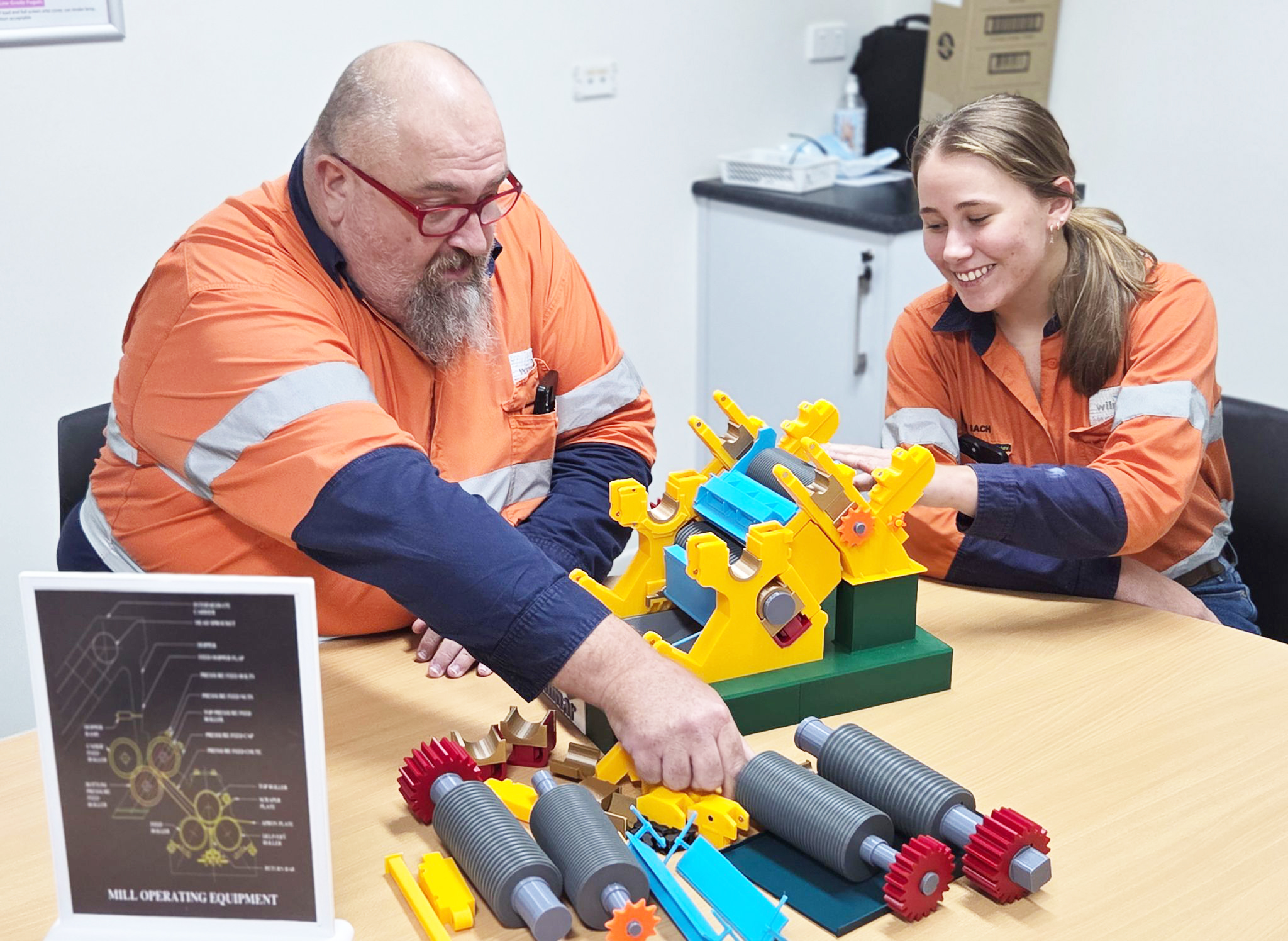
Wilmar Sugar Australia has developed a 3D printed model of a crushing mill to support hands-on training for trades and operational employees working across its sugar factories.
The model is the first in a planned series designed to help workers better understand equipment components and key operational settings used within the milling process.
Wilmar’s design team began by creating a generic 3D model of a crushing mill using AutoCAD, ensuring it included all the necessary elements for training while remaining suitable for 3D printing.
A Townsville-based 3D printing company was then engaged to produce the final model.
The completed training tool features 75 individual parts connected using rare earth magnets, allowing it to be easily taken apart and reassembled. Despite being designed for repeated use in training environments, the model is also robust enough to withstand long-term handling.
The mill was printed using Polylactic Acid Plus, a plant-based material made from renewable resources including sugarcane.
Wilmar said the model is intended to improve practical learning by giving employees a clear, hands-on understanding of how mill components work together.
Following the success of the project, the company is now considering producing additional 3D printed models of other critical equipment used in sugar processing, including shredders and mud filters.
Design Draftsperson Paris Ogden and Cadet Draftsperson Grace Bach reassembling the printed mill at Pioneer Mill. Photo source: Wilmar Sugar Australia Limited

New apprenticeship initiatives are helping to strengthen Queensland’s workforce, with a focus on supporting small businesses, boosting training opportunities and encouraging more people to take up trades.
A key program is the $19 million Small Business Apprenticeship Pilot Program, which has supported 526 small businesses since its launch in October. Through the initiative, 579 apprentices in training are benefiting from subsidised wages, helping employers take on and retain staff while building essential skills.
The program has also delivered strong outcomes for regional Queensland, with around one third of successful registrations coming from businesses outside the south-east corner. Among the 35 eligible trades, carpentry accounts for the largest share of participants, followed by electrical and plumbing.
Eligible small businesses receive wage subsidies of 50 per cent for first and second year apprentices, and 25 per cent for third and fourth year apprentices while attending training. Over four years, apprentices under 21 may receive up to $10,060 in support, while those aged 21 and over may be eligible for up to $13,740.
Alongside construction-focused initiatives, there is also a growing emphasis on increasing female participation in trades through targeted programs and recognition. The 2026 Women in Manufacturing Apprentice Awards highlighted the achievements of female apprentices and the important role they play in shaping the future workforce.
Second year automotive electrician Zahlee Wheeler was awarded the Leading Apprentice Award, recognised for her leadership and for encouraging other young women to pursue a trade. Laila Stevens received the Highly Commended Apprentice Award for her mentorship of fellow apprentices and her advocacy for women in the manufacturing industry. Both recipients received financial support to assist with further training, career development, tools and uniforms.
These awards form part of broader efforts to increase female representation in manufacturing, where women currently make up 27 per cent of the workforce. Initiatives such as the Women in Manufacturing Leadership Program aim to support women at all stages of their careers, offering mentoring and professional development opportunities to help them progress from entry-level roles through to leadership positions.
Together, these programs reflect a continued focus on building a skilled and diverse workforce across Queensland, supporting both apprentices and the industries that rely on them.
More information is available at www.business.qld.gov.au/apprentice-pilot and applications for the 2026 Women in Manufacturing Leadership Program are now open www.nrmmrrd.qld.gov.au/manufacturing/women-in-manufacturing/leadership-program
‘Female representation in manufacturing, where women currently make up 27 per cent of the workforce.’ Photo sourced: Shutterstock

Thunbergia grandiflora (syn. Thunbergia laurifolia) Blue Thunbergia are a major threat to remnant vegetation.
Blue thunbergia was promoted and sold as an attractive garden plant and became widespread in Queensland gardens. This vigorous plant soon escaped into native bushland and began causing considerable environmental damage. The plant climbs and smothers native vegetation, with the weight of the vine often pulling down mature trees.
Large tubers degrade creek and riverbanks and make destruction of blue thunbergia difficult. In garden situations, it will also quickly spread, and the large tubers may cause damage to paths, fences and foundations. Other ornamental species of thunbergia (black-eyed Susan, scarlet clock vine, golden glory vine, lady’s slipper) are not as invasive, however, they are not recommended for planting because of their potential to spread into surrounding bush land.
Thunbergia species are a major threat to remnant vegetation in the wet tropics. Blue thunbergia is a restricted category 3 invasive plant under the Biosecurity Act 2014. It must not be given away, sold, or released into the environment.
Some specimens collected in Queensland were previously identified as Thunbergia laurifolia. These are now considered to be Thunbergia grandiflora. The Act requires everyone to take all reasonable and practical measures to minimise the biosecurity risks associated with invasive plants under their control.
This is called a general biosecurity obligation (GBO). At a local level, each local government must have a biosecurity plan that covers invasive plants in its area. This plan may include actions to be taken on blue thunbergia. Some of these actions may be required under local laws. Contact your local government for more information.
Blue thunbergia is a vigorous perennial twining vine climbing up to 15 m high if supported. Leaves are opposite along the stem up to 15 cm long, 10 cm wide and broad-based narrowing to a pointed tip.
The trumpet-shaped flowers have a short, broad tube, white on the outside, yellowish inside, which expands to five rounded, pale lavender-blue petals. The flowers are up to 8 cm long and 6−8 cm across.
The seed pod is inconspicuous, cone shaped, 3−5 cm long, with a rounded base. The seed is flat, up to 1 cm long and covered with brown scales.
The plant develops a very tuberous root system, some tubers being as large as 70 kg. The root system, when cut, persistently sprouts from its many dormant buds.
Blue thunbergia reproduces via seed. Seeds in pods are catapulted several meters when the pod splits. Blue thunbergia is also capable of regenerating from stem fragments or portions of the tuberous roots and vegetatively by stolons.
Blue thunbergia is spread by people for ornamental plantings and dispersal of root pieces along river banks during floods, or transport from infested sites with earth removed for fill or other soil use.
Infestations of blue thunbergia are patchy and are mostly scattered along coastal streams from the Tully River to the Daintree. Areas of acute infestation are the Mulgrave River, the Johnstone River and lower Mossman River.
Blue thunbergia was originally sought for its attractive lavender flowers, and spread primarily via the ornamental plant trade. Public awareness of this garden escapee, with its vigorous growth and alarming potential to spread, is increasing. Existing garden specimens should be destroyed.
Plant cuttings should not be dumped—this is a frequent source of new weed infestations. The origin of new top soil or fill should be checked as physical transportation of plant segments in soil or flood waters is a major method of spread.
The cutting of the vines at ground level will give a smothered tree a reprieve, but regeneration of the vine from tubers will soon occur.
Only small plants can be dug out, as established plants normally have extensive underground tubers. Spraying or injecting with herbicides is often the only option.
Herbicide treatment is often the only option available and provides fast and effective control. Good application technique should result in few non-target plants being destroyed.
Although very effective, one application by either overall spraying or injection rarely achieves 100% success. Ongoing monitoring and follow-up is needed.
For more information visit www.biosecurity.qld.gov.au

Blue Thunbergia escaping a garden and growing through a town. Photo credit: Queensland Government
Blue Thunbergia flowers and vines up close: Photo credit: Hinchinbrook Shire Council

Blue Thunbergia smothering native vegetation along a creek bed. Photo credit: Queensland Government
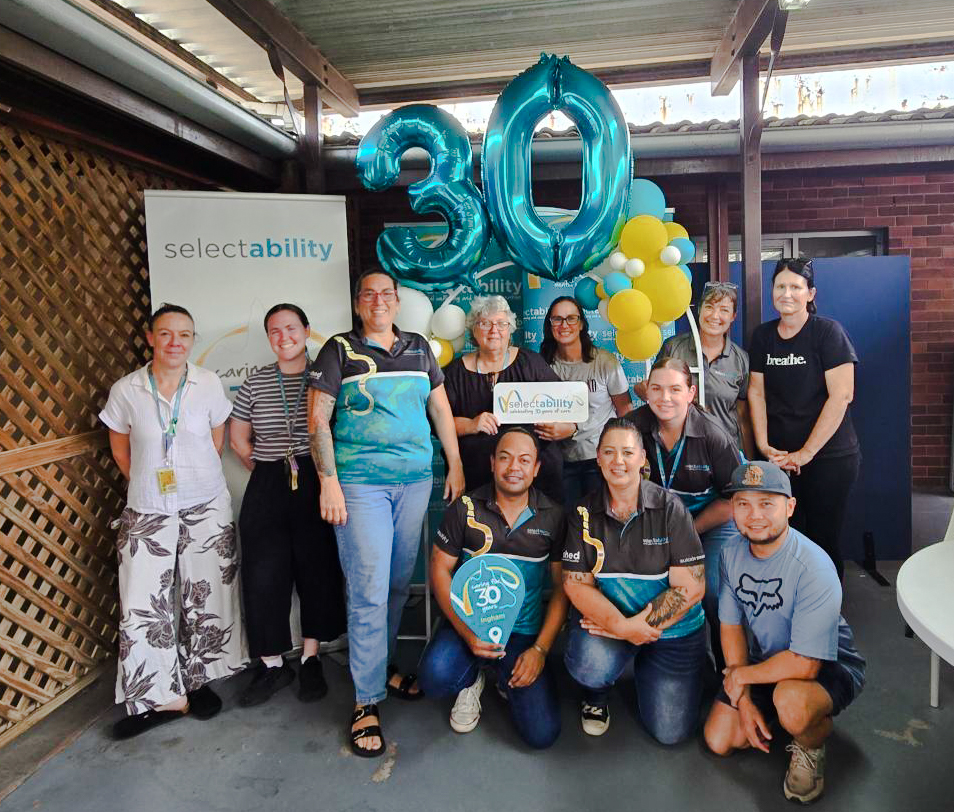
For 30 years, selectability has stood alongside regional Queensland communities — adapting, evolving and continuing to deliver care where it is needed most.
In 2026, the organisation marks three decades of supporting people and communities in regional, rural and remote Queensland.
Ingham regional coordinator, Julie Ross, said while selectability established a permanent brick-and-mortar presence in Ingham five years ago, their connection to the community began well before that.
“selectability’s work has always been grounded in trust and a strong commitment to ensuring people can access support they need close to home,” said Julie.
“Our work has always been about connection; listening to the community and tailoring services to local needs.
“Like all service providers in regional communities, rising costs, including the current fuel pressures, mean we need to continually review how we operate to remain sustainable.
“Over three decades, selectability has successfully navigated economic shifts, funding changes and sectorwide challenges while continuing to deliver care where it is needed most.”
Julie said selectability’s commitment to Ingham remained strong.
“We are here for the long term,” she said.
“We will continue to support wellbeing, connection and care for the Ingham community, now and into the future.”
For more information about selectability Ingham visit selectability.com.au

“We are here for the long term” says Ingham regional coordinator, Julie Ross. Photos supplied

Celebrating Our Youth
Queensland Youth Week 2026
From 11-19 April, communities across the state will come together to celebrate Queensland Youth Week. A time dedicated to recognising the valuable contributions, achievements and voices of young people.
Here in Hinchinbrook Shire, we are proud to be surrounded by incredible young people who show kindness, resilience, leadership and courage in their everyday lives. Whether it’s supporting friends, helping family members, contributing to school or community activities, or simply showing up each day and doing their best: our young people deserve to be seen, heard and celebrated.
Youth Week is not just about acknowledging achievements, but also about recognising the challenges young people face. Today’s young people are navigating a complex world, and it’s important that as a community, we continue to create spaces where they feel valued, encouraged and empowered.
At Hinchinbrook Community Support Centre, we are committed to working alongside young people across our region through a range of services. Under the banner of the Safer Families Children’s Counselling Program, we offer a variety of supports, including our Victory Kids Program and Emerge Program, both for children and young people aged 5-18 years, with the Emerge Program designed to assist children affected by domestic and family violence. We also offer our Teen Support Program for Youth at Risk, for young people aged 12–24 years.
We provide a flexible approach, with both individual and group-based options delivered through centre-based sessions or outreach within the community.
These programs provide opportunities for young people to build social connections, develop positive coping skills and grow in confidence within an inclusive environment. By investing in our young people, we are investing in the future strength and wellbeing of our entire community.
We would also like to take this opportunity to give a special shout-out to one of our local Youth Heroes of Hinchinbrook - the Gilroy Santa Maria College Young Vinnies group.
This incredible group of young people generously prepare and deliver delicious frozen, home-cooked meals to our Centre, providing vital assistance to those in need within our community. We are so very grateful for their kindness, generosity, and the positive difference they continue to make.
If you would like to learn more about the services available for young people and families in our community, we encourage you to reach out.
Please contact Hinchinbrook Community Support Centre on 4776 1822 or email communitysupport@hcsc.org.au for more information.
Our young people are not just the future; they are an important part of our community right now. By recognising and investing in them, we help build confidence, connection and a sense of belonging that can last a lifetime.

A series of recent reforms is reshaping how child safety is managed across Queensland, with new powers, improved information sharing and greater public access to safety tools all playing a role in strengthening protections for children.
One of the most significant updates relates to the state’s blue card system, which regulates who can work with children. Since new powers came into effect on 20 September 2025, a total of 543 blue and exemption cards have been suspended as of 28 February 2026. These changes allow authorities to take immediate action when a risk to children is identified, rather than waiting for lengthy assessment processes to conclude.
Of those suspensions, 269 individuals were stopped before they could begin employment in child-related roles, while a further 274 were already working across regulated sectors. The suspensions have impacted a wide range of industries, including disability services, health care, counselling, sport and recreation, gyms and play facilities.
Triggers for suspension can include allegations of sexual or violent behaviour involving a child, as well as other concerning conduct within child-related environments. The aim is to ensure potential risks are addressed quickly and decisively.
Reforms have also strengthened how information is shared between agencies. Updates now allow the Early Childhood Regulatory Authority to provide more detailed information to Blue Card Services, including disciplinary actions such as staff suspensions, supervision requirements or mandated training. This improved flow of information is expected to support more informed and timely decision-making.
At the same time, expanded blue card requirements are being introduced for additional industries, including entertainment, photography and beauty services. Workers and businesses in these sectors have been required to comply with the new rules by 20 March 2026.
Another major development is the introduction of Daniel’s Law, which has established Queensland’s first public child sex offender register. Since launching on 31 December 2025, the website has recorded more than 205,000 visits, highlighting strong community interest in the new tool.
The register allows parents and carers to access information in three tiers. The first provides public details of offenders who have failed to meet reporting obligations and whose whereabouts are unknown. The second allows residents to apply to view offenders living in their local area, while the third enables parents or guardians to check whether a specific individual with unsupervised access to their child is a reportable offender.
Early use of the system has already produced results. Within the first ten weeks, nine reportable offenders were identified through the highest level of search, with some now facing charges for breaching their reporting obligations. Investigations have also been launched into additional individuals identified through the system.
Safeguards are built into the register to prevent misuse, including offences targeting vigilantism or the inappropriate sharing of information.
Together, these reforms represent a broader shift towards proactive child protection. By combining stronger screening powers, better information sharing and increased community awareness, Queensland’s child safety framework is evolving to respond more quickly and effectively to potential risks.
The landmark register honours the legacy of Sunshine Coast schoolboy Daniel Morcombe, whose abduction and murder in 2003 inspired two decades of advocacy for stronger child protection laws.
Premier David Crisafulli said the Government is delivering access to vital information to help keep kids safe.
“We promised reforms to make our community safer and that is exactly what Daniel’s Law is delivering,” Premier Crisafulli said.
“We owe this to Daniel, to his family, and to every Queensland child who deserves to grow up safe.”
The Daniel Morcombe Foundation founder, and Daniel’s father, Bruce Morcombe told last night's Dance For Daniel audience their fight to protect Queensland’s kids is far from over.
“A law is a law, but a law that makes a difference is truly something that we value,” Mr Morcombe said.
“To have it named in honour of our son is truly something special because it is making a difference, it’s protecting Queensland’s kids.”
More information about Blue Card changes and Daniels Law can be found at qld.gov.au/bluecardchanges and DanielsLaw.qld.gov.au
‘Protecting Queensland's Children’ Photo sourced: www.danielslaw.qld.gov.au

Tec-NQ House in Townsville is celebrated as one of Queensland’s premier boarding facilities, specially designed to support students enrolled in Tec-NQ's co-educational senior school program. This state-of-the-art facility accommodates up to 40 male students, offering a comprehensive boarding experience for students from across regional and remote Queensland.
The design of Tec-NQ House promotes inclusivity and social interaction, creating a nurturing and homely environment. The facility features advanced security systems, double occupancy rooms with semi-private areas, and modern indoor and outdoor communal spaces for students to relax and interact.
Tec-NQ House offers extracurricular activities, such as a half court, pool table, yarning circle, basic gym equipment, gaming console and more. Weekend activities can vary from group sports, to attending the movies or going to the beach.
For families passing through Townsville, personal and individual tours of our boarding house and senior school campus can be arranged by contacting our dedicated team on info@tecnq.com.au or (07) 4779 2199.
Tec-NQ is a Registered Training Organisation (RTO), independent senior secondary school and accredited boarding school with extensive industry networks to deliver trade-based career opportunities for North Queensland students.
Delivering Queensland Certificate of Education (QCE) outcomes, Tec-NQ offers Senior School and Boarding School for Years 10 to 12, providing an alternative to traditional schooling while achieving comparable outcomes in a work-based training setting.
The school’s curriculum is designed to support ‘active’ learning, engaging students directly with professional academic and trade-qualified facilitators. With integrated work placements woven into the school timetable, Tec-NQ presents a compelling option for students seeking a distinctive educational experience that prepares them for both academic and vocational success.
For a unique senior school and boarding solution with an out-of-the-box approach, you can’t look past Tec-NQ.
Publishers Indemnity. Any individual or entity that places advertising, supplies copy material, or submits editorial content to Life Publishing agrees and undertakes to ensure that all such material:- Does not infringe upon any copyright, trademark, or other intellectual property rights;- Is free from any content that could be considered defamatory, libelous, or slanderous;- Does not infringe upon any rights related to privacy or breach of confidence;- Contains no obscene, indecent, or otherwise unlawful material;- Complies fully with the Trade Practices Act and all other applicable laws, regulations, or statutes. Furthermore, by submitting or placing such material, these individuals or entities agree to indemnify and hold harmless the publisher, Life Publishing and Events Pty Ltd, and/or its agents from and against any and all investigations, claims, demands, liabilities, damages, costs, or judgments arising out of or in connection with the material provided. All material is believed to be accurate at the time of printing and remains the copyright of Life Publishing and Events Pty Ltd.
© 2026 Life Publishing Group Ltd.
