
Independently Owned, Locally Grown, Community Loved

A major Bruce Highway upgrade is underway, with works at Gairloch, Ripple Creek, Ingham-Halifax-Bemerside Road and the Cardwell Range targeting safer travel and improved flood resilience. The long-awaited improvements aim to reduce the severity of flooding across key sections of highway and help prevent head-on crashes, addressing challenges that can disrupt communities and isolate motorists during the wet season.
Read the full story
This NQIB Country Cups Challenge Qualifier Race Day, racegoers are invited to embrace this year’s theme, Country Glamour. The Herbert River Jockey Club event will feature 10 Fashions on the Field categories, catering to everyone from junior entrants to experienced fashionistas. Categories include Forrest Beach Realty Fashions on the Field, Ingham Mazda Contemporary Lady of the Track, NQ Travel & Cruise Classic Lady of the Track, The Bloom Room Townsville Millinery and Lifelong Supports Best Dressed Man of the Track. Junior and youth categories, alongside Spotter’s Choice, will offer further opportunities to take part. Three judges will bring their individual fashion and racing experience to the competition. Amy Byrnes grew up immersed in racing, travelling to meetings with her family and making memories at Cluden Park. Now a racehorse owner herself, she enjoys attending meets across Queensland and internationally. Amy will be looking for confidence, personality and the joy an outfit brings to its wearer, with an appreciation for thoughtful accessories and finishing touches. Milliner Cat Murphy brings more than a decade of experience creating headwear worn at race meetings across Australia and in London. A passionate racing enthusiast, she values outfits that work cohesively with the theme, combining comfort, confidence and attention to detail. Millinery will naturally be a particular focus, whether a bold statement piece or a classic, understated design. Marnie Davidson brings a competitive edge, having collected 27 sashes during three years of Fashions on the Field competitions around Australia. Her achievements include finalist positions at Flemington’s Melbourne Cup Derby Day and Turnbull Stakes, as well as qualifying for several major fashion events. A self-confessed lover of coordinated looks, Marnie will be keeping an eye out for the little details that bring an outfit together. With experienced judges and a Country Glamour theme, racegoers are encouraged to bring their own interpretation of raceday style to the track. For event information and the full list of categories, visit hrjc.com.au. Dress to impress at the Country Cups this November. Photo sourced: Herbert Rivr Jockey Club
Read the full story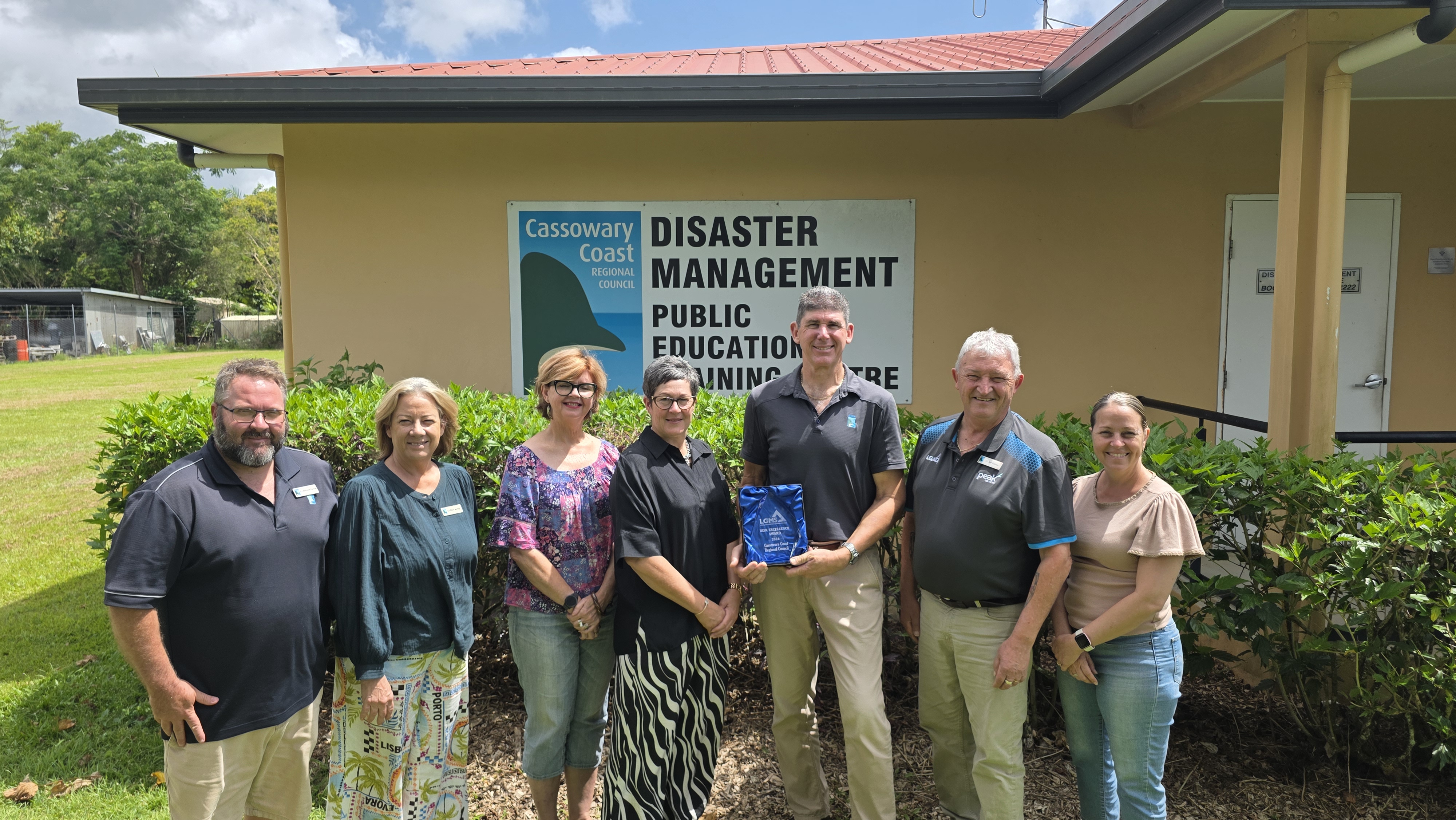
Cassowary Coast Regional Council has been recognised for its innovative approach to flood monitoring, taking home the Local Government Mutual Services (LGMS) Risk Excellence Award at the Local Government Association of Queensland (LGAQ) Conference on Tuesday evening. The award recognises Council's Flash Flood Sensor Network project, which uses radar technology to monitor water levels at known flood-prone locations across the region. The information from the flood sensors is integrated into Council’s Disaster Dashboard, giving residents, emergency services and Council access to local conditions as they change. Cassowary Coast Mayor Teresa Millwood said the recognition highlighted Council's commitment to finding practical ways to improve community safety and disaster preparedness. "Living on the Cassowary Coast, we know how quickly heavy rainfall can turn into dangerous flooding, particularly in areas where water levels can rise with very little warning," Mayor Millwood said. "These sensors give us another set of eyes on some of our known flood trouble spots, providing real time information without having to send staff out into potentially dangerous conditions. "What's particularly important is that this information isn't just for Council. Our residents in flood prone areas can also access this information on the Disaster Dashboard to help them asses their risk, get prepared and make plans in case flooding looks likely." The network has already supported information sharing with local police and State Emergency Service personnel around Mission Beach, helping emergency services monitor conditions at known flood-prone locations. Previously, monitoring these locations relied heavily on weather forecasts, community reports and staff inspecting conditions on the ground. The technology provides another source of information to support earlier identification of rising water levels, planning for potential road closures and coordinating responses during heavy rainfall. Council is continuing to assess the network through a three-year trial, using observations from residents and emergency services to verify sensor readings and evaluate its effectiveness. Residents can access flood monitoring information, road updates and other important disaster information on Council’s Disaster Dashboard by ticking *New Water Levels Visit: www.disaster.cassowarycoast.qld.gov.au Caption: Cassowary Coast Regional Council has been recognised for its innovative approach to flood monitoring. Photo supplied
Read the full story
I have spent sleepless nights since last Monday, praying for my long-term and good friend in the Parliament, Helen Haines, along with her family, staff and the first responders to an inexcusable act on a beautiful human being inside and out, who has brought much sparkling joy and enlightenment to the centre of the crossbench. Whilst we are at opposite ends of the country and representing significantly different electorates, my tremendous respect of Helen’s tenacious advocacy for what she believes in, matches my great appreciation of our genuine friendship. We don’t represent a political party based in Melbourne or Sydney or Brisbane – we represent the people who sent us to parliament: the people of our electorate. And there’s no doubt that a terrible blow has been struck against democracy and the people of Australia. A lady in every sense of the word, Helen is a true moderate of the highest regard across the political spectrum – with the ability to get on with people with very definite views like the teals on one hand, and people like himself on the other. And I cannot help but think of her smiling face, whenever I leave the Chamber and tap her on the shoulder to ask, “You right if I leave this all under your control, Helen?” and her cheerful reply, “Yes Bob,” both of us laughing. Not to mention her culinary skills in constructing the most delicate of sponge cakes. Though I react quite frankly with rage and fury at this evil that can have no exculpatory explanations, may we all pray that God’s blessings are with Helen and her family, staff and friends as we all rally around them to provide the support they need during this extremely difficult time. Hon. Bob Katter MP, Federal Member for Kennedy Federal Kennedy MP Bob Katter at Australian Parliament House with his independent crossbench colleague Helen Haines MP, the Member for Indi. Photo supplied
Read the full story

The first six monthly rates notices for the 2026-2027 financial year will begin distribution this week and for many in the community this is a time of year where it will have impact on their family and business budgets.
This year, Council has made some modification in a number of categories within the rating system and some rate payers may notice changes to their rates notices.
I appreciate that opening a rates notice is never anyone's favourite part of the year, and for some ratepayers, particularly within the Sugar Cane and Forestry and Other Rural Land category, this year's notice may look quite different to previous years.
For many years, Council has worked hard to keep rate increases as low as possible, recognising the unique challenges our community faces.
We understand the pressures on households, businesses and primary producers, particularly after recent years of natural disasters, rising living costs and increasing operational expenses.
Like many families and businesses, Council has experienced significant increases in costs. In the past financial year alone, the cost of delivering essential services and maintaining infrastructure increased substantially, driven by inflation, rising material and contractor costs, and other external pressures.
As part of preparing the 2026-27 Budget, Council engaged an independent financial specialist to review Council's long-term financial sustainability. The findings confirmed that changes were needed to ensure Council can continue delivering the essential services and infrastructure our community relies upon both now and into the future.
Following this review, Council adopted a number of changes, including a 4.5 per cent general rate increase, the introduction of a single residential rating category, adjustments to multi-unit rates, and an increase in the rate capping threshold for properties within the Sugar Cane and Forestry and Other Rural Land category.
For many years, rate capping has helped reduce the impact of increasing State Government land valuations on rural properties.
This year, Council increased the capping threshold from 10 per cent to 30 per cent as part of its financial sustainability strategy. While rate capping continues to apply, some rural properties may experience a larger increase than they have seen in previous years due to changes in land valuations and the revised cap.
Council acknowledges that these increases may present challenges for some ratepayers. These decisions were not taken lightly; however, they were considered necessary to ensure Council remains financially sustainable and can continue maintaining critical infrastructure and delivering the services our community expects.
I also want to reassure residents and landowners that support is available. Council is offering payment arrangements that allow rate increases above last year's rates notice to be paid over a 12-month period, with interest waived on approved arrangements for the duration of the agreement.
If you have questions about your rates notice or would like to discuss available support options, I encourage you to contact Council's Revenue Team on (07) 4776 4600 or email Revenue@hinchinbrook.qld.gov.au.
While these decisions are never easy, taking action now helps ensure Council can continue to provide essential services, maintain infrastructure and support the future growth and prosperity of the Hinchinbrook Shire.
Thank you for your understanding and your continued contribution to our community.
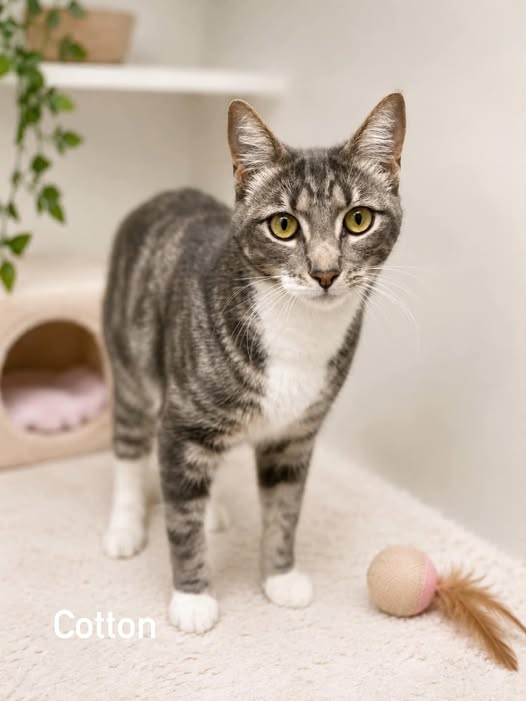
An adorable and playful furball full of youthful spirit and boundless energy! At just eight months old, this charming kitty is looking to join a loving family where her friendly demeanor and zest for life can truly shine. Cotton delights in capturing your attention, whether it's by cozying up next to you during a TV show or playfully zooming around the room like a whirlwind of joy.
She has shown that she prefers being the only cat in the household, but she's comfortable around dogs, making her a fantastic addition if you have a canine companion. Cotton is an easy-going feline who thrives in an environment where she can participate in everyday life with her humans.
If you’re looking for an affectionate and entertaining feline friend, Cotton could be the perfect match for your home! Don't miss the chance to create beautiful memories with this delightful young cat. Inquire about Cotten at angelpawsinc.com.au/pets-for-adoption/cats
Included in adoption fee of $225: DESEXED, MICRO-CHIPPED, up to date VACCINATIONS, FLEA/TICK/INTESTINAL WORM treated.
DOB: 24/10/2025
Sex: Female
Breed: DSH
Colour: Tabby & White
Cat Friendly: No
Dog Friendly: Yes
Kid Friendly: Yes

Hinchinbrook Shire Council is seeking Expressions of Interest from individuals with relevant experience, local knowledge, or an interest in joining the Cemetery Advisory Reference Group.
The purpose of the group is to provide advice and feedback to Council on matters relating to cemetery planning, maintenance, heritage preservation, service delivery and future development.
Council welcomes Expressions of Interest from community members, local historians, funeral and memorial service providers, volunteers, and others interested in preserving and enhancing the Shire's cemeteries.
Local knowledge, community connections, and a commitment to helping shape the future of these important community spaces will be highly valued.
The Cemetery Advisory Reference Group will provide an opportunity for community members and industry stakeholders to contribute to the future planning, management and preservation of cemeteries across the Hinchinbrook Shire.
Through informed discussion and local knowledge, the group will assist Council in identifying priorities, improving services, protecting heritage values, and ensuring cemeteries continue to meet the needs of current and future generations.
Individuals with experience, skills or an interest in cemetery services, heritage preservation, funeral and bereavement services, community engagement, governance, planning, infrastructure, local history, or community development are encouraged to apply.
Expressions of Interest are open for two weeks and close at 5:00pm Friday 21st August 2026.
The forms can be downloaded on the online version of this article at Hinchinbrooklife.com - Terms of Reference and Expression of Interest Form
Completed forms can be submitted by email to council@hinchinbrook.qld.gov.au or delivered to Council’s office, 25 Lannercost Street, Ingham. For further information, contact Council’s customer service centre on (07) 4776 4600.
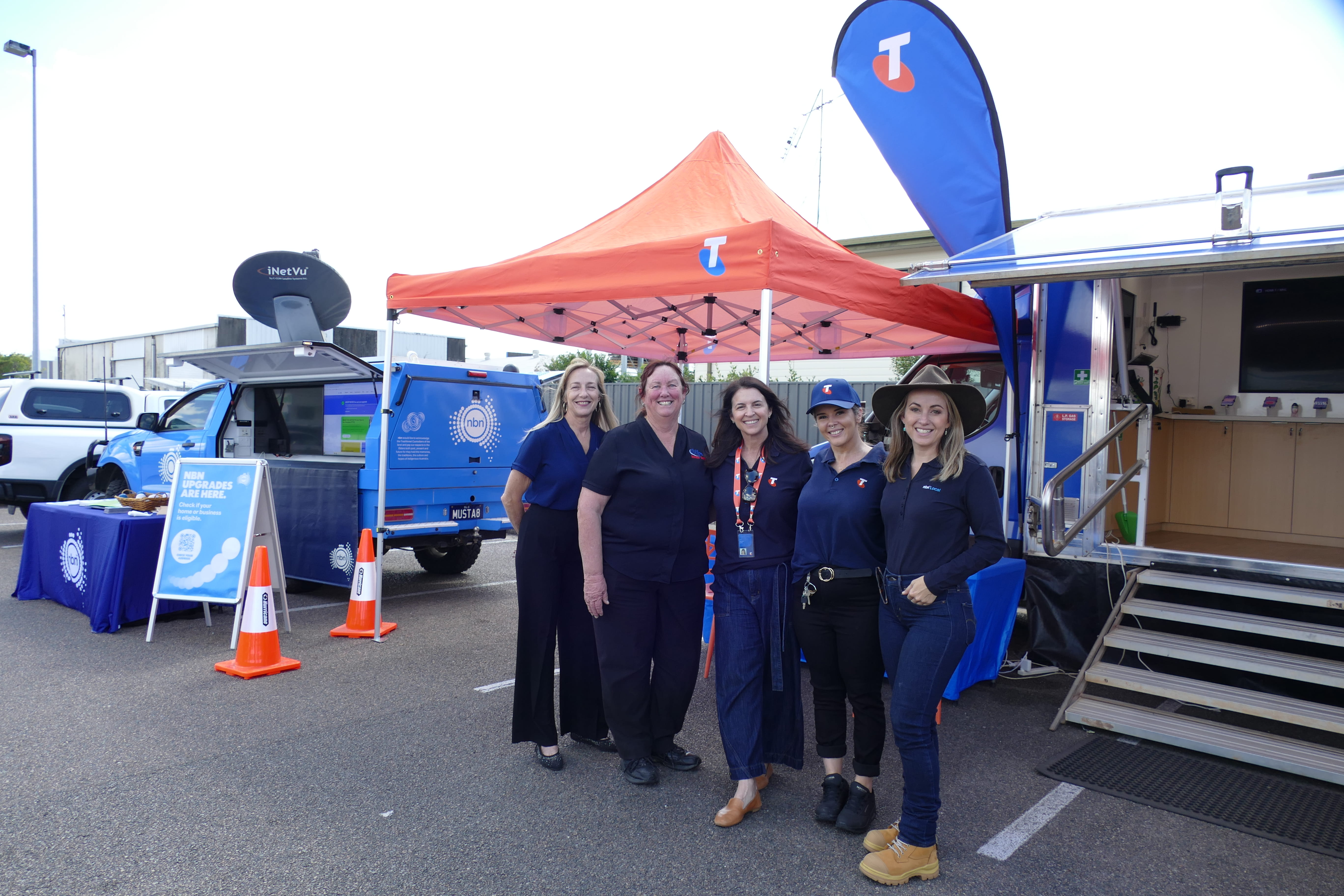
Recovery Officer Jane Carne, Chamber of Commerce Industry and Tourism President Mary Brown, Rachael Cliffe and associate from Telstra, and Casie Scott from nbn. Photo credit: Victoria Velton
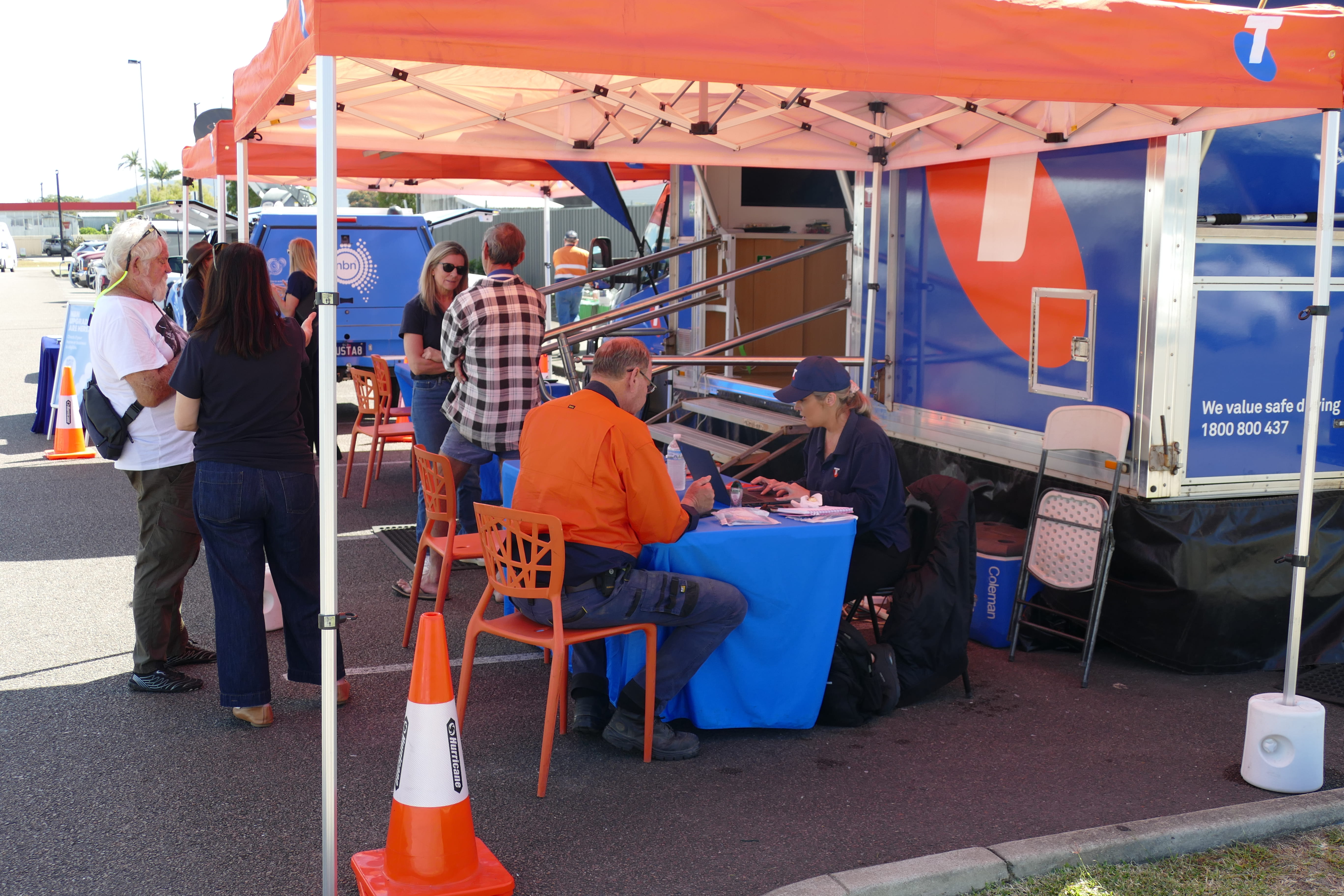
Hinchinbrook residents had the opportunity to put their connectivity questions directly to nbn and Telstra representatives during a pop-up event at the Woolworths carpark in Ingham on Wednesday 5th August.
The event was an opportunity for Testra to work alongside nbn to help locals better understand the services available to them.
Both organisations provided face-to-face advice on internet services, mobile coverage, account options and new technology, while also highlighting upgrades and changes taking place across the region.
“Great to partner with nbn today. There’s a bit of myth busting on both sides, I think, as to whose network does what, and who's responsible for what.” said Telstra’s Rachael Cliff.
Chamber of Commerce, Industry and Tourism President Mary Brown said the opportunity was particularly valuable as Hinchinbrook continues its recovery.
“Since recovery, we’ve had nbn in town doing work around the hardware that’s needed, and people being able to come in and actually talk to someone face-to-face is really important, especially with our older demographic,” Mary said.
nbn Representative Cassie Scott said there were plenty of positive developments to share with communities across Hinchinbrook, highlighting significant upgrades to fixed wireless networks in coastal and inland communities, including Forrest Beach, Taylors Beach and Abergowrie, with higher-speed plans now available to eligible residents.

Residents were encouraged to check their addresses to see whether they are eligible for a free nbn Fibre to the Premises upgrade.
The upgrade can provide fibre all the way from the exchange to the individual home or business, offering faster speeds, less buffering and greater capacity for multiple people to be online at once.
“Fibre to the premises is a lot more resilient, and particularly in a flood region like Ingham,” Cassie said.
Representatives from Telstra were also on hand to discuss changes in mobile technology, including the company's satellite-to-mobile services.
Eligible Telstra customers with compatible devices and plans can now send and receive SMS messages via satellite when outside mobile coverage, provided they have a clear view of the sky. For people who regularly travel, work remotely, head offshore or spend time in areas without mobile reception, the technology could provide an additional way to stay connected.
Rachael Cliff also used the event to remind customers about upcoming changes to older telecommunications services, including the retirement of the CDMA radio network and ADSL network.
Customers receiving communications about these changes were encouraged not to dismiss them as potential scams, with Rachael confirming the notifications are legitimate and designed to help customers transition to newer services.

The pop-up also gave locals the chance to review their accounts, discuss available plans, explore handset options and ask questions about who is responsible for different parts of the telecommunications network.

Historic photos of the 103 Squadron Australian Air Force Cadets. Photos supplied: 103 Squadron Australian Air Force Cadets Archives
For 75 years, the 103 Squadron of the Australian Air Force Cadets has been helping shape generations of young people across the Hinchinbrook.
From humble beginnings the squadron has grown into an enduring local institution, providing countless cadets with opportunities to develop confidence, resilience and lifelong skills.
As the squadron prepares to celebrate its milestone anniversary, members are reflecting on a proud history while inviting past and present cadets, volunteers and supporters to help commemorate seven and a half decades of service to the community.

Many of the variety packs offer different cuts to make meal planning easy with all the options. Photo credit: Halifax Meats
There's no longer any need to make the trip to the butcher, with Halifax Meats bringing premium-quality meat straight to your doorstep.
The family-owned business now offers a convenient home delivery service, making it easier than ever for customers across the region to stock up on fresh meat, handcrafted smallgoods and freezer favourites without leaving home. Deliveries are available every Monday and Wednesday, with orders required before 11am on the day of delivery. Even if no one is home, customers can have peace of mind knowing their order will be packed on ice in insulated foam boxes to keep products fresh until they arrive.
Hold the tongs! Are you planning a family gathering? Organising a Father's Day backyard barbecue? Or simply looking to fill the freezer and save yourself extra trips to the shops? Halifax Meats has a wide range of fresh cuts, barbecue favourites, handcrafted sausagesand value packs to suit every occasion.
Halifax Meats has built a strong reputation since opening in 2009, offering locally prepared products, fresh Tablelands grass-fed beef cut in-store each week and an extensive range of meats, game and handcrafted Hinchinbrook smallgoods. From everyday family dinners to entertaining guests, there's an option to suit every household.
Customers can also choose from a variety of value packs designed to make meal planning easy, whether feeding a couple, a growing family or stocking the freezer for the weeks ahead.
To browse the full range or place a home delivery order, visit www.halifaxmeats.com.au or call (07) 4777 7711.

The Halifax Hotel’s traditional horseshoe bar also stocks all your favourite spirits. Photo credit: Victoria Velton
First licensed in 1882, the Halifax Hotel has stood at the heart of the Hinchinbrook community for 144 years. Throughout its history it has endured devastating fires, cyclones, tropical monsoons, severe storms and changing generations. Through every challenge, it has remained a place where people gather, celebrate milestones and support one another.
Today, another chapter in that history is unfolding.
Three months after reopening its bar and bottleshop, the Halifax Hotel is once again welcoming locals and visitors while restoration work continues throughout the remainder of the building.
For owners Luke and Joe, the past 17 months have been both challenging and rewarding.
"We've learnt very quickly that restoring a heritage hotel is never straightforward," Luke said.
"There have been many moving parts along the way. Insurance settlements, coordinating trades, engineering, material supply and restoration timeframes have all played a part in the journey. At times it has felt like navigating a maze, but we've simply kept moving forward one step at a time."
Planning is now focused on reopening the kitchen, dining room, pool room and beer garden. Rather than replacing what was lost, the owners have worked alongside builders, engineers and consultants to restore the hotel in a way that respects its heritage while preparing it for the future.
The project also includes practical improvements such as enhanced flood mitigation and improved stormwater runoff to help the hotel better withstand future weather events.
"When we lost the kitchen after the weather event, it honestly felt like we'd lost the heart of the hotel," Luke said.
"But through all of that, we saw the very best of this community.
"During the emergency, the Halifax Hotel became home to more than 30 emergency service personnel, including SES volunteers, Queensland Police and Queensland Ambulance crews who were working tirelessly to protect our region.
"At the same time, many locals quietly turned up with tools, equipment, advice or simply a willingness to lend a hand. As the new custodians of the Halifax Hotel, Joe and I will never forget that generosity. It reminded us that this hotel has always been about people."
The restoration has also uncovered reminders of the hotel's history, including a beautifully crafted arched window hidden behind a wall upstairs for decades. Positioned above the original timber staircase, the feature is now being carefully restored.
"It was one of those moments where you stop and appreciate the people who built this place all those years ago," Luke said.
"Finding original features like that reminds us that we're not creating something new—we're simply uncovering and preserving the history that was always there. We hope people will walk through the doors and feel that history has been respected."
The next milestone is the reopening of the kitchen, with dine-in and takeaway meals anticipated between late September and mid-October, subject to restoration progress.
"We don't really see ourselves as owners," Luke said.
"We see ourselves as custodians.
"This hotel has stood here long before us, and with God's grace it will still be standing long after we're gone. Our responsibility is simply to care for it, respect its history and leave it in a better position for the next generation.
"We're thankful for how far we've come, grateful for the support we've received, and we're looking forward to welcoming everyone back as each stage of the restoration is completed."

Wet Tropic Waterways Chair Simon Costanzo and Wet Tropic Waterways Partnership Executive Officer Rowan Hutchinson with the 2026 Wet Tropics Waterways Health Report Card and Reef & Rivers Magazine. Photo supplied: Terrain NRM
The Herbert River catchment has continued to demonstrate resilience despite one of the region's most significant flood events in recent years, according to the latest Wet Tropics Waterway Health Report Card.
Released this week, the report found waterways across the Wet Tropics continue to record "good" to "moderate" health, with long-term monitoring showing conditions have remained relatively stable despite repeated climate challenges.
The report highlights the impact of February 2025's extreme rainfall, when more than two metres fell across parts of the lower Herbert region, triggering widespread flooding around Ingham.
"This pushed low-salinity flood waters onto inshore coral reefs, impacting coral condition," Wet Tropics Waterways Chair Dr Simon Costanzo said.
Despite the impacts of flooding, the report found the region's waterways have remained resilient over time.
"With more than a decade of consistent, independent monitoring, we can look beyond seasonal fluctuations and better understand how our waterways are faring over time. So far, they seem to be holding ground, which highlights how important it is for everyone to stay focused on taking action," Dr Costanzo said.
The report card draws on 11 years of scientific monitoring to assess the health of rivers, estuaries and coastal waters throughout the Wet Tropics, providing valuable insights into long-term environmental trends.
Queensland Environment and Tourism Minister Andrew Powell said continued investment in improving water quality remained vital to protecting the Great Barrier Reef and the waterways that feed into it.
The Wet Tropics Waterway Health Report Card is released annually by Wet Tropics Waterways as part of ongoing efforts to monitor and improve the health of waterways across North Queensland.
More detailed information about the Wet Tropics Waterway Health Report Card and results can be found at wettropicswaterways.org.au/wet-tropics-report-card
(Contributed with thanks by Terrain NRM)

EVE EXELBY Accepting Bursary from Geoff Low, Member of Herbert River Farmers League. Photo supplied
On Saturday 4th July, the Herbert River Farmers' League hosted its Annual Bursary Presentation Evening at the Herbert River RSL. This year's bursary recipients were Gemma Di Bella and Eve Exelby.
Gemma is now enrolled in the Faculty of Agricultural Science at the University of Queensland's Gatton campus, while Eve is studying Paramedicine at Central Queensland University in Rockhampton.
Both students were accompanied by their parents, Mr and Mrs L. Di Bella and Mr and Mrs B. Exelby. A special moment in the evening came when it was revealed that Mr B. Exelby was himself a recipient of a Herbert River Farmers' League bursary in 1982, when he studied at Burdekin Agricultural College.
This year marks the presentation of the 120th and 121st bursaries since the Herbert River Farmers' League shifted its focus from representing farmers' interests to supporting educational pursuits. The origin, growth and development of the Herbert River Farmers' League is both fascinating and historically significant.

The Farmers' League was formed in 1897, comprising delegates from various Planters' Clubs, beginning with the Halifax Planters' Club, which was associated with the sugar cane industry. The Farmers' League became a company in 1923, enabling it to purchase farmers' equipment at more affordable prices than those offered by commercial suppliers at the time.
In 1977, the League began its educational support program, agreeing to assist students from the district who wished to attend the Queensland Agricultural College in the Burdekin. With the closure of the Halifax Planters' Club in 2008, the Herbert River Farmers' League Incorporated became the last surviving link with the early cane planters of the Herbert River district.
From a small beginning in 1977, the League has invested more than $400,000 in bursaries to support the education of local students. The League congratulates this year's bursary recipients on their outstanding academic achievements and trusts this financial assistance will contribute to successful and rewarding careers.
(Contributed with thanks by Maurice Filei, with assistance by Victoria Velton)

Pop in and have a chat with Telstra in the Woolworths Ingham carpark. Photo supplied: Telstra
Contributed by Telstra
Telstra is looking forward to meeting locals in Hinchinbrook, answering connectivity questions, and helping customers get the most from their services. Whether you're considering a mobile upgrade, improving your home internet, or simply exploring your options, our team will be on hand to help.
We're especially excited to showcase Telstra Satellite Messaging and Telstra Satellite Apps. Introduced in partnership with SpaceX's Starlink Direct to Cell network, Satellite Messaging allows eligible customers with compatible devices to send and receive SMS when outside mobile coverage, provided they have a clear view of the sky. Telstra Satellite Apps builds on this capability by providing lite data access to selected Telstra apps beyond the reach of the mobile network.
For many people across regional and rural Australia, connectivity is more than a convenience, it's essential. Whether you're working on a property, travelling, exploring the outdoors, or faced with an unexpected situation, satellite connectivity can provide a way to connect when mobile coverage isn't available.
Technology continues to evolve rapidly, and understanding the options can be challenging. That's why our team will be available in the Woolworths carpark this Wednesday to provide practical advice and support. Whether you'd like a bill health check, information on Telstra Plus rewards, guidance on mobile coverage solutions, or advice for your home or small business, we're here to help.
Come and have a chat with the team. We'd love to see you there.
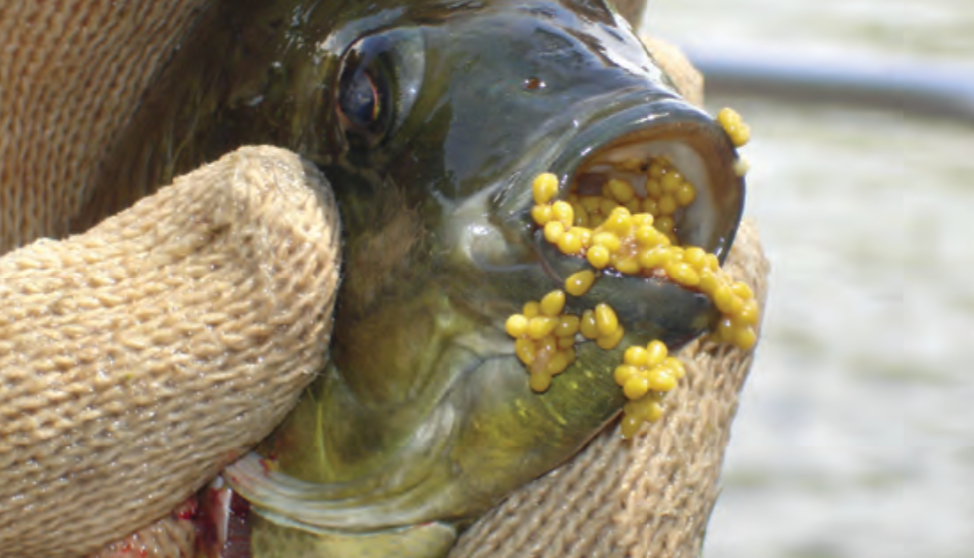
Tilapia are mouth brooders, carrying and protecting the next generation. The young can survive if the dead mother fish is thrown back into the water. Photo source: DPI QLD
Invasive Tilapia Raise Concerns In Hinchinbrook
By Victoria Velton
Local fishers say one of Australia's most destructive pest fish is becoming an increasingly common sight in Hinchinbrook waterways, raising concerns for native fish and the future health of the region's aquatic ecosystems.
For nearly five decades, Jeff Snell has watched the waterways of the Hinchinbrook region change.
A member of the Cardwell Sportfishing Club since 1978, Jeff grew up fishing alongside his father and has spent a lifetime learning the rhythms of local rivers, estuaries and creeks. While changing seasons, weather and fish populations are all part of life on the water, one change has increasingly caught his attention in recent years: the spread of tilapia.
“People are seeing more of them,” Jeff said.
“It's throwing the ecosystem out of balance.”
Once kept as ornamental aquarium fish, tilapia are now regarded by Queensland's Department of Primary Industries as one of Australia's greatest threats to native freshwater biodiversity. Established populations now exist throughout much of Queensland's east coast, with the hardy fish capable of surviving in rivers, creeks, drains, dams and even tidal estuaries.
Jeff believes many of the infestations now being seen across North Queensland can be traced back decades, when aquarium fish were released into waterways around Townsville before gradually spreading through connected catchments during floods and wet seasons.
"People think they're only a freshwater fish, but they actually adapt to saltwater as well. Once you get floods and waterways connecting, they can move into new areas very quickly."
That ability to survive in both fresh and brackish water has helped make tilapia one of Queensland's most successful invasive fish.
Unlike many native species, tilapia tolerate poor water quality, low oxygen levels and a wide range of temperatures. They reproduce rapidly, with female tilapia protecting fertilised eggs by carrying them in their mouths until the young are developed enough to survive.
"It's one of the reasons they spread so easily," Jeff explained.
"If the female moves into another creek during a flood, she's carrying the next generation with her."
The Department of Primary Industries says tilapia can quickly dominate waterways thanks to their prolific breeding, simple diet and ability to adapt to almost any aquatic environment. They compete with native fish for food and habitat, aggressively defend breeding sites and disturb aquatic vegetation while building nests, crowding out other fish.
For recreational anglers, the growing population is becoming increasingly noticeable.
Jeff recalls hearing of tilapia being caught near the mouth of Fisher Creek as far back as the 1980s, demonstrating their ability to move through tidal systems as well as freshwater habitats.
He also points to established populations in places such as Warrina Lakes near Innisfail, where community fishing competitions are held to help reduce local numbers.
"They're not put back into the water," he said.
"That's part of the rules. Once you catch one, it stays out."
Under Queensland's Biosecurity Act, tilapia are classified as restricted invasive fish. They must not be returned to the water, used as bait, kept alive or moved between waterways. Anyone catching one is required to humanely destroy the fish before disposing of it appropriately.
Despite being considered good eating in many parts of the world, Jeff said their value as a food fish is outweighed by the environmental risk they pose.
"There's nothing wrong with eating them," he said, "The important thing is that they don't go back into the water."
While there is currently no practical broad-scale method of eradicating established tilapia populations, Jeff believes public awareness remains one of the strongest tools available.
"People need to understand why you can't just release unwanted aquarium fish into local creeks or rivers. What seems like one harmless fish can become thousands over time. Destroying habitats and the loss of millions of native fish for that one pet fish.”
His concerns come as the Queensland Government strengthens its frontline response to invasive species across the state, with additional biosecurity officers being deployed across regional Queensland and an increased ranger presence across North Queensland to help protect the state's natural assets.
For Jeff, however, protecting Hinchinbrook's waterways will require more than government resources alone.
"It's something the whole community has to be aware of," he said.
"If we all do the right thing, we've got a better chance of protecting the native fish that belong here."
"It's about everyone understanding what's at stake," he said.
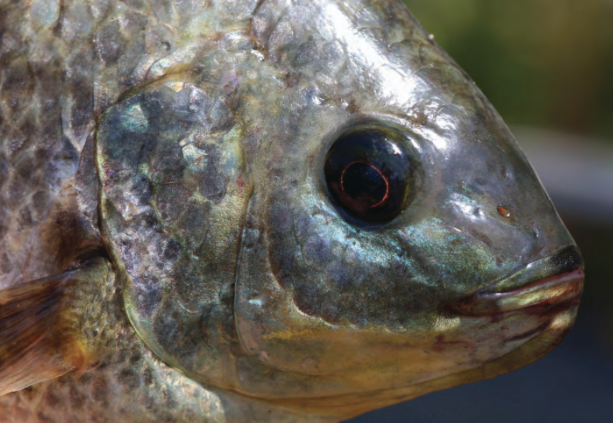
One of the more surprising places tilapia are turning up is inside local prawn farms.
Jeff recently spoke with a worker responsible for water management at one of Cardwell's prawn farms, who described the number of tilapia appearing in production ponds as "unbelievable".
Interestingly, the fish are not considered a major threat to prawn production.
"They're algae eaters," Jeff explained.
"They're not there eating the prawns. They're feeding on algae growing in the ponds."
While farm filtration systems prevent fish escaping back into surrounding waterways, their presence demonstrates just how widespread tilapia have become throughout the region.
Perhaps the strongest message Jeff hopes people take away is that many invasive species begin with people trying to do what they think is the right thing.
He imagines a family moving house, unsure what to do with a child's pet fish.
"They think, 'We'll let it go in the creek.'"
"It seems harmless, but that's how these things start."
He believes aquarium owners should never release unwanted fish into local waterways, no matter the species.
"That information should be given to everyone who buys aquarium fish," he said.
"When you don't want it anymore, don't let it go."
Know The Rules
If you catch a tilapia in Queensland:
Do not release it back into the water.
Humanely destroy the fish immediately.
Do not use it as bait.
Do not move it to another waterway.
Dispose of it by burying it away from the waterway or placing it in a rubbish bin.
How To Identify A Tilapia
While several species exist, tilapia share some distinctive features:
A deep, laterally compressed body.
One long, continuous dorsal fin running almost the full length of the back.
Dark bars, blotches or spots depending on the species.
Commonly found in slow-flowing creeks, drains, dams, rivers and tidal estuaries.
Able to survive in both fresh and brackish water.
As Jeff sees it, the battle against tilapia won't be won with a single fishing competition or government program.
"Once they're established, they're almost impossible to remove. The best thing we can do now is stop them spreading any further."
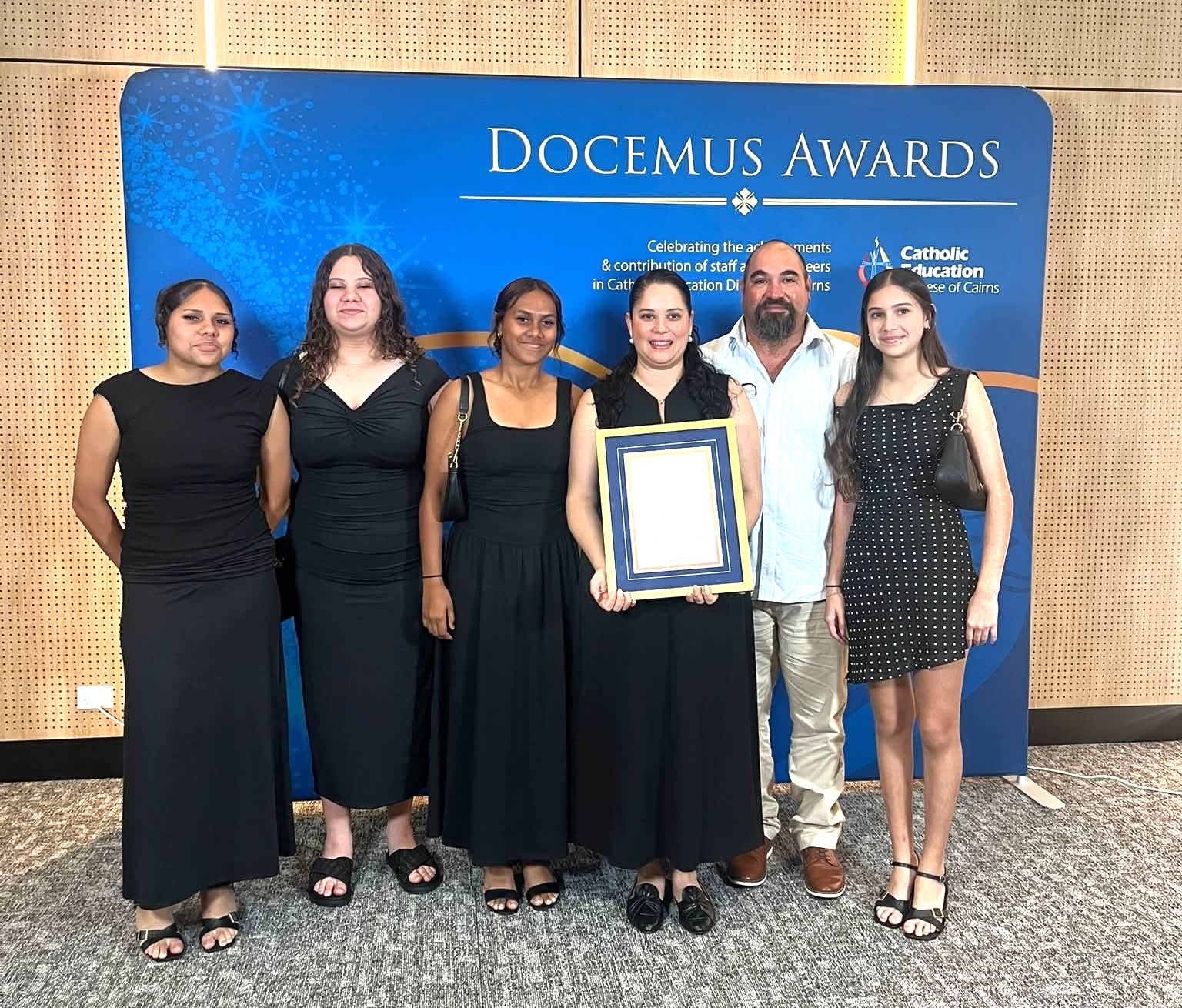
Mrs Maryjane Masina of St Rita's School Babinda was named Teacher of the Year at the 2026 Docemus Awards. Photo source: St Rita's School, Babinda
St Rita's School, Babinda, has been busy celebrating after one of its own was named Primary Teacher of the Year at the prestigious 2026 Docemus Awards held over the weekend.
Mrs Maryjane Masina received the honour during Catholic Education Week after being selected from nine nominees in the Primary School Teacher category at the ceremony hosted by St Mary’s Catholic College in Cairns.
Since its inception in 2002, the Docemus Awards, meaning "to teach", have recognised the outstanding commitment, achievements and contributions of staff, volunteers and supporters across Catholic education.
Held annually, the awards celebrate excellence across seven categories, including Primary Teacher, Secondary Teacher, Early Career Teacher, Leadership, School Officer, Volunteer and Lifelong Contribution.
Sharing the news on social media, St Rita's School congratulated Mrs Masina on the achievement.
"Congratulations Mrs Maryjane Masina. We are so proud. Teacher of the Year 2026. So well deserved," the school wrote.
As part of the award, recipients receive a professional development grant to support their continued growth and excellence in education.

Cassowary Coast Regional Council has secured $5.1 million to support future residential development at Coquette Point. Photo supplied
The Cassowary Coast is set to benefit from a $5.1 million State Government investment to help unlock future residential development at Coquette Point through the second round of the Residential Activation Fund.
The funding will deliver essential trunk infrastructure, including a new water pump station, a 4.75-kilometre water main and associated works, paving the way for future housing in the region.
The project forms part of the Queensland Government's Residential Activation Fund, which invests in the roads, water and sewerage infrastructure needed before new residential developments can proceed.
The Coquette Point project is one of two Far North Queensland initiatives announced under Round 2 of the fund, with a total of $9.6 million allocated across the region. The program has now unlocked capacity for more than 100,000 homes across Queensland in less than 18 months.
Deputy Premier and Minister for State Development, Infrastructure and Planning Jarrod Bleijie said the fund was removing key barriers to increasing housing supply.
"The Residential Activation Fund is pulling every lever to increase housing supply because you can't build homes without the roads, water and sewerage infrastructure to support them," Mr Bleijie said.
"The Residential Activation Fund has now unlocked more than 100,000 homes across Queensland, demonstrating exactly what's possible when government partners with councils, landowners and developers to remove barriers to housing."
Member for Hinchinbrook Wayde Chiesa said the investment would support the region's future growth.
"Communities across the Far North need more homes, and that starts with investing in the essential infrastructure that makes new housing possible," Mr Chiesa said.
"The Crisafulli Government is delivering the critical water infrastructure needed at Coquette Point to unlock future residential development and support the Cassowary Coast's continued growth."
"We're investing in the infrastructure our communities need to create more housing opportunities for Queenslanders."
Cassowary Coast Regional Council Mayor Teresa Millwood welcomed the funding, describing it as a significant step towards unlocking new residential land.
"By supporting the delivery of essential trunk infrastructure, this funding will help unlock land for future residential development and provide more housing opportunities for our growing community," Mayor Millwood said.
"We thank the Queensland Government for recognising the importance of infrastructure-led housing growth in the Cassowary Coast."
"This funding will enable Council to advance the trunk infrastructure needed to open up Coquette Point, support new development and give greater confidence to landowners, developers and future residents."
Across the first two rounds of the Residential Activation Fund, the Queensland Government has committed almost $117 million to 23 projects across Far North Queensland, unlocking capacity for more than 3,280 new homes. The Coquette Point project is among the first rural and remote Queensland projects announced under Round 2.

Environmental restoration projects are continuing across Mission Beach, including works to restore Jingu Creek and improve the health of surrounding coastal ecosystems. Photo source: Shutterstock
$100,000 has been dedicated to restoration of Jingu Creek; a small waterway in Mission Beach damaged during the 2025 North and Far North Tropical Low.
Running from the Wet Tropics to the coast, Jingu Creek was among several waterways significantly impacted by the disaster, which affected Queensland between 29th January and 28th February 2025. The funding will enable the council to remove inorganic debris from the creek, restore surrounding habitat, improve water quality and support the long-term recovery of the waterway's ecosystem following the natural disaster.
As per the funding application guidelines, the restoration of Jingu Creek must be completed by 31st March 2027.
Jingu Creek’s recent restoration exists as one of several environmental recovery projects underway across the region, aimed at repairing waterways damaged by recent flooding and severe weather while protecting local ecosystems and improving water quality entering the Great Barrier Reef.
The project was funded through the Queensland Government's Environmental Recovery and Stewardship Grants Program, which has also dedicated $9,990 to Community for Coastal and Cassowary to undertake environmental clean-up and weed control works along the Mission Beach Foreshore.
Stunning View Beach Mission Beach Cassowary Stock Photo 607262039 | Shutterstock
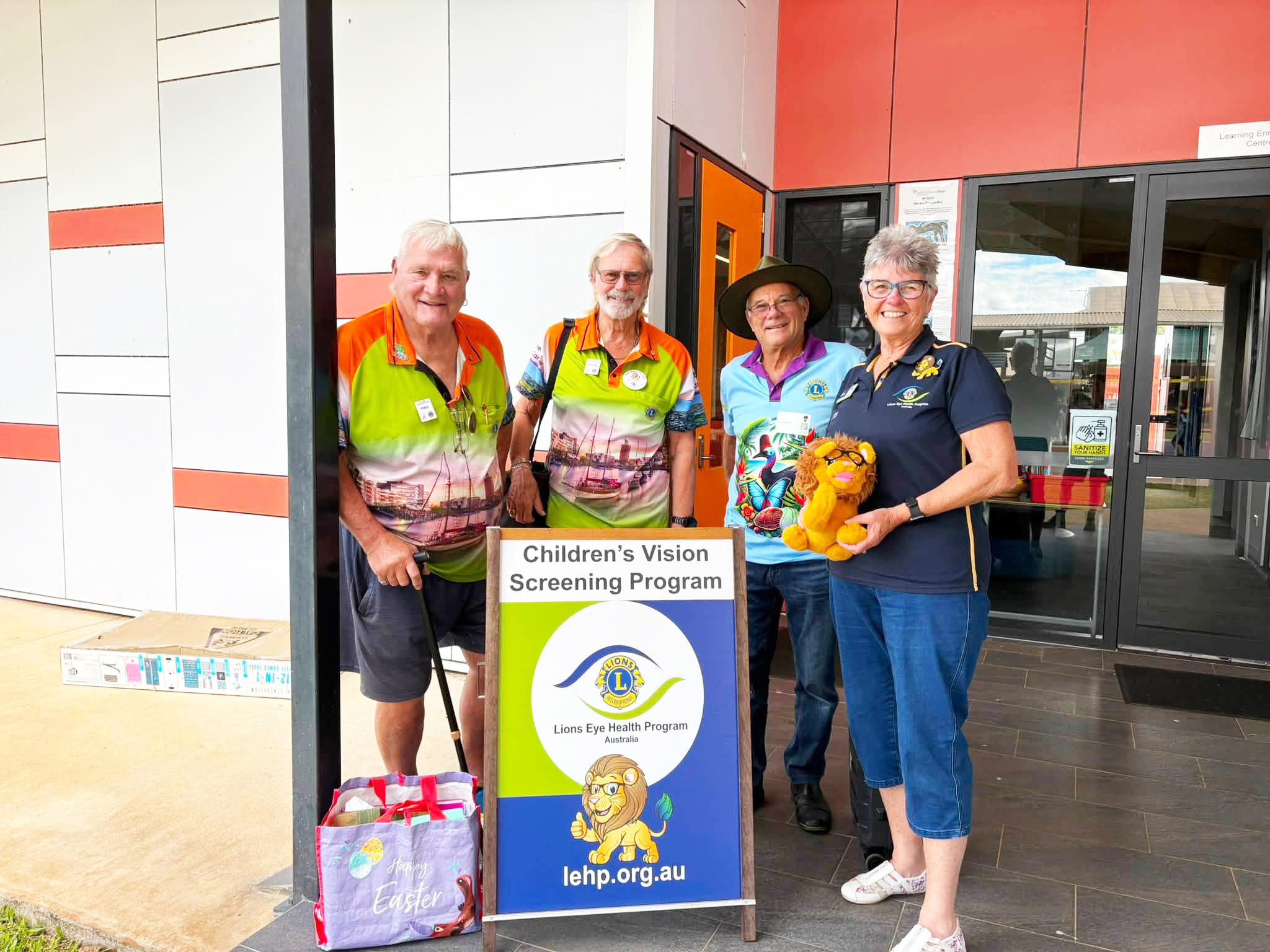
Lions Club of Tully recently visited Normanton’s Gulf Christian College as part of the Lions Children's Vision Screening Program. Photo supplied
The Lions Club of Tully is continuing its long tradition of community service by helping protect the eyesight of local children through the Lions Children's Vision Screening Program.
As part of the Australia-wide initiative, club members have been visiting local primary schools to conduct free vision screenings, helping identify potential eye conditions that may otherwise go unnoticed during a child's early years.
The program is designed to detect vision issues before they begin affecting a child's learning, development and everyday life, allowing families to seek further assessment and treatment if required.
Lions Club of Tully Secretary Irene Braddick said supporting the local community had always been at the heart of the club's mission, with children's eye health becoming one of its many valued community initiatives.
Members also support programs including childhood cancer research, eye health, children's mobility, wellbeing initiatives and assistance dogs.
Publishers Indemnity. Any individual or entity that places advertising, supplies copy material, or submits editorial content to Life Publishing agrees and undertakes to ensure that all such material:- Does not infringe upon any copyright, trademark, or other intellectual property rights;- Is free from any content that could be considered defamatory, libelous, or slanderous;- Does not infringe upon any rights related to privacy or breach of confidence;- Contains no obscene, indecent, or otherwise unlawful material;- Complies fully with the Trade Practices Act and all other applicable laws, regulations, or statutes. Furthermore, by submitting or placing such material, these individuals or entities agree to indemnify and hold harmless the publisher, Life Publishing and Events Pty Ltd, and/or its agents from and against any and all investigations, claims, demands, liabilities, damages, costs, or judgments arising out of or in connection with the material provided. All material is believed to be accurate at the time of printing and remains the copyright of Life Publishing and Events Pty Ltd.
© 2026 Life Publishing Group Ltd.
