Independently Owned, Locally Grown, Community Loved

Researchers at James Cook University are developing a new tool that could transform the way sugarcane farmers detect disease, using artificial intelligence and free satellite data to identify infections before any visible symptoms appear.
Led by Professor Mostafa Rahimi Azghadi, the research team has created a crop health monitoring system that analyses satellite imagery to assess sugarcane health and detect Ratoon Stunting Disease (RSD) at its earliest stages. RSD is one of the industry’s most damaging diseases and can significantly reduce yields if left undetected.
“RSD can affect the yield of sugar by up to 60 per cent and it’s highly contagious. But being asymptomatic, you can't see it with the naked eye until the latter stages of the growing season,” Prof Azghadi said.
The team’s latest study tested the tool’s ability to distinguish between healthy and diseased crops using multispectral satellite imagery and machine learning. Results showed accuracy rates between 86 and 97 per cent, depending on the sugarcane variety.
“Depending on the sugarcane variety, our method was between 86 and 97 per cent accurate … which is on par or better than other crop disease detection tools,” Prof Azghadi said.
Currently, farmers must manually cut and test cane samples and send them to laboratories for DNA analysis, a process that is both costly and time-consuming.
“It’s time consuming and expensive, especially if you want to do it at larger scale as every test costs about 10-15 dollars,” Prof Azghadi said.
The project was developed in collaboration with Herbert Cane Productivity Services, which provided on-the-ground data from the Herbert River region.
“They provided data on both diseased and disease-free plants, which has been critical in helping us develop our technology,” said lead author and JCU engineering graduate Ethan Waters.
Mr Waters said the technology relies on subtle differences invisible to the human eye.
“There are subtle differences between a healthy crop and a diseased crop. The naked eye can't see all the subtleties and only a well-trained machine learning algorithm can spot those differences,” he said.
The research is supported by Australia’s economic accelerator program and could be expanded to other crops in the future.
“RSD in sugarcane is just our first successful case study … our approach can be extended to other crops and other crop health challenges,” Prof Azghadi said.
“The long-term objective is to develop an early-warning tool that identifies disease risk and tracks overall crop health. It’ll be a bit like a regular check-up with your GP, but for sugarcane and other crops.”
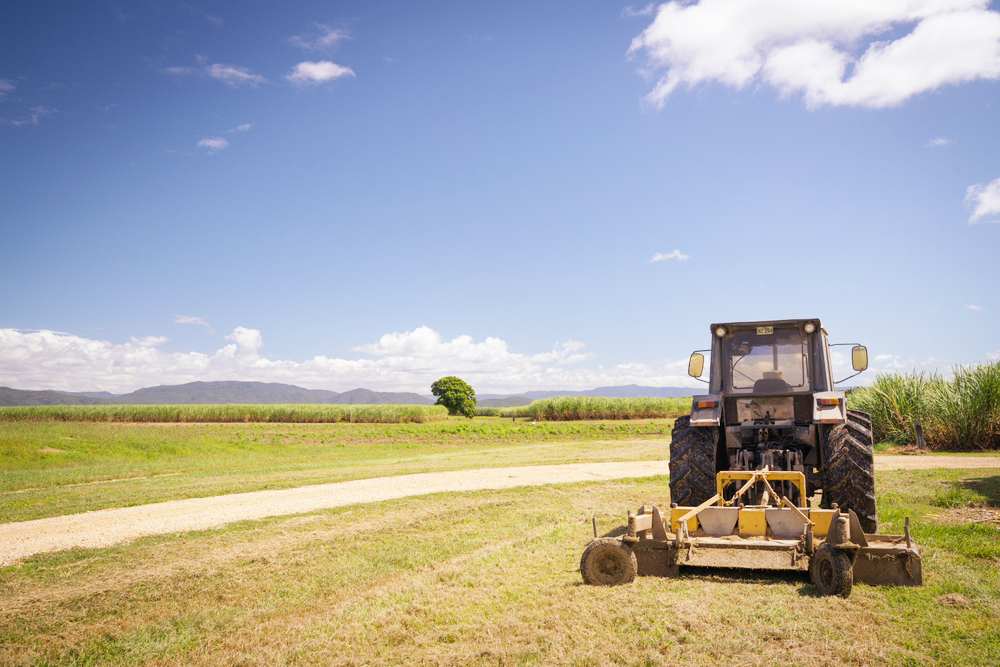
JCU researchers are developing a new tool to help farmers monitor crop health and accurately detect diseased sugarcane. Photo source: Shutterstock
Publishers Indemnity. Any individual or entity that places advertising, supplies copy material, or submits editorial content to Life Publishing agrees and undertakes to ensure that all such material:- Does not infringe upon any copyright, trademark, or other intellectual property rights;- Is free from any content that could be considered defamatory, libelous, or slanderous;- Does not infringe upon any rights related to privacy or breach of confidence;- Contains no obscene, indecent, or otherwise unlawful material;- Complies fully with the Trade Practices Act and all other applicable laws, regulations, or statutes. Furthermore, by submitting or placing such material, these individuals or entities agree to indemnify and hold harmless the publisher, Life Publishing and Events Pty Ltd, and/or its agents from and against any and all investigations, claims, demands, liabilities, damages, costs, or judgments arising out of or in connection with the material provided. All material is believed to be accurate at the time of printing and remains the copyright of Life Publishing and Events Pty Ltd.
© 2026 Life Publishing Group Ltd.