Independently Owned, Locally Grown, Community Loved


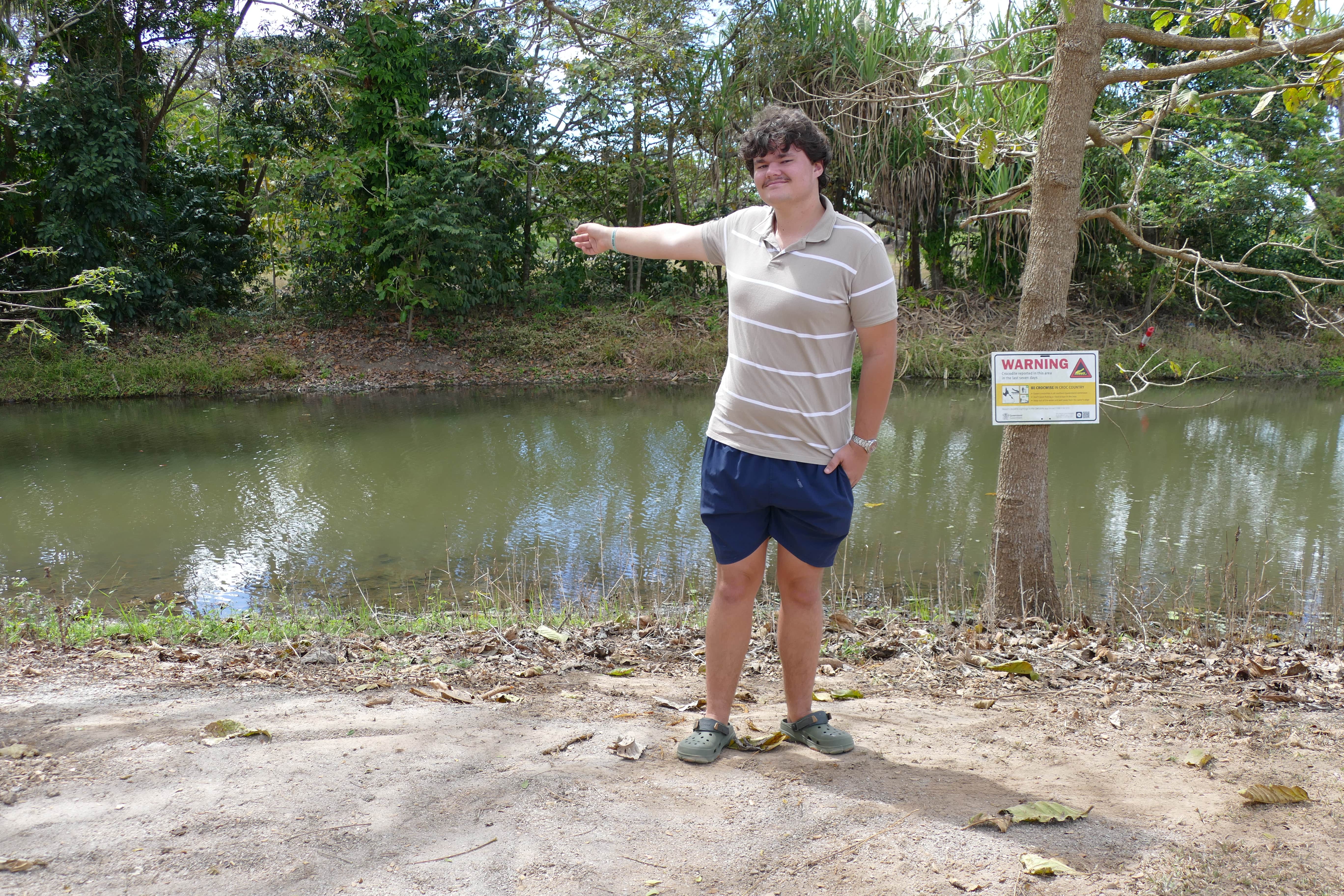
Local resident Coen Luxford indicating to the dirt spot on the far bank where the crocodile would often bask. Photo credit: Victoria Velton
By Victoria Velton
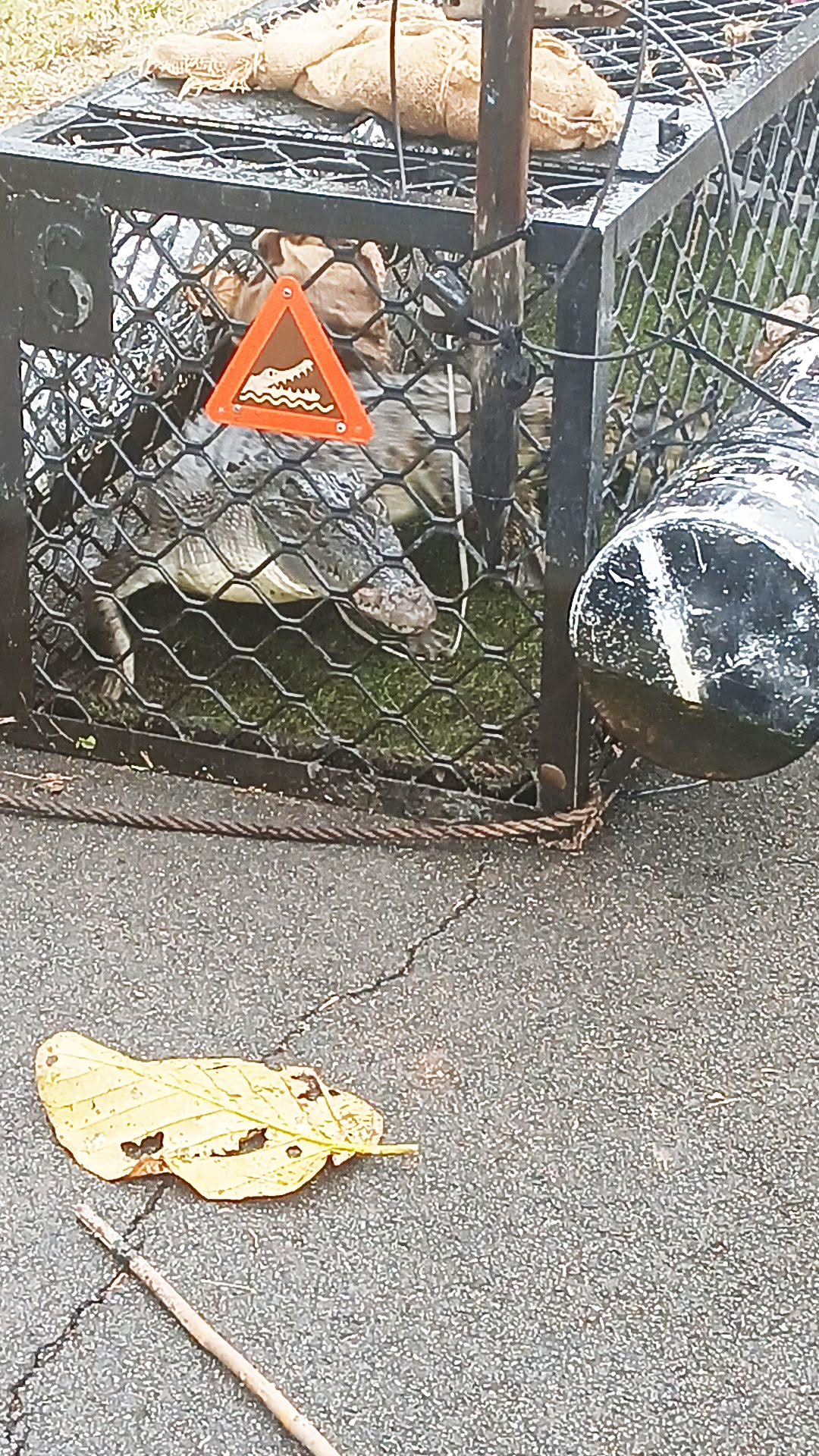
A juvenile crocodile was removed from the waterway near Ingham State High School on the afternoon of the 1st September. Reportedly, it had become a too familiar sight to locals and visitors using the area, with signs warning of its presence.
The crocodile, estimated to be around one to one-and-a-half metres long, was captured by the Department of Wildlife during an operation witnessed by local resident Coen Luxford.
Coen regularly walks through the area and happened to be nearby when he noticed Department of Wildlife vehicles arriving.
“I saw some Department of Wildlife utes come down the side. I thought, oh - let's go check that out and see what’s going on,” Coen said.
He soon spotted the crocodile trap sitting in the water, with the operation already underway.
“It was a very interesting exercise watching them trying to get him out,” he said.
The removal has provided some reassurance for people who use the pathway, particularly those concerned about children or dogs being close to the water's edge.
“There’s no guardrails or such between the pathway and the water, and I can understand some people’s concerns if they were worried about the crocs sitting on the water bank near the path and snatching up Fido,” Coen said.
However, Coen said the arrival of crocodiles in the waterway is nothing particularly unusual, with the animals often moving into the area following floods.
“Crocs move into the pond every year after every flood. They always come in, and the Department of Wildlife always does a good job catching them,” he said.
Coen estimated that two or three crocodiles have been removed from the waterway over the past five years.
With the water currently low and visibility reduced, Coen said people should continue to take care around the waterway, regardless of whether a crocodile is currently known to be present.
“There’s always signs on the pond warning people of possible crocodiles, so it’s always good just to be wary, because you never know what’s under there,” he said.
The young crocodile had also become something of a local celebrity, with people regularly stopping to see if they could spot it from the pathway.
Its preferred position along the bank made it particularly easy to see, according to Coen.
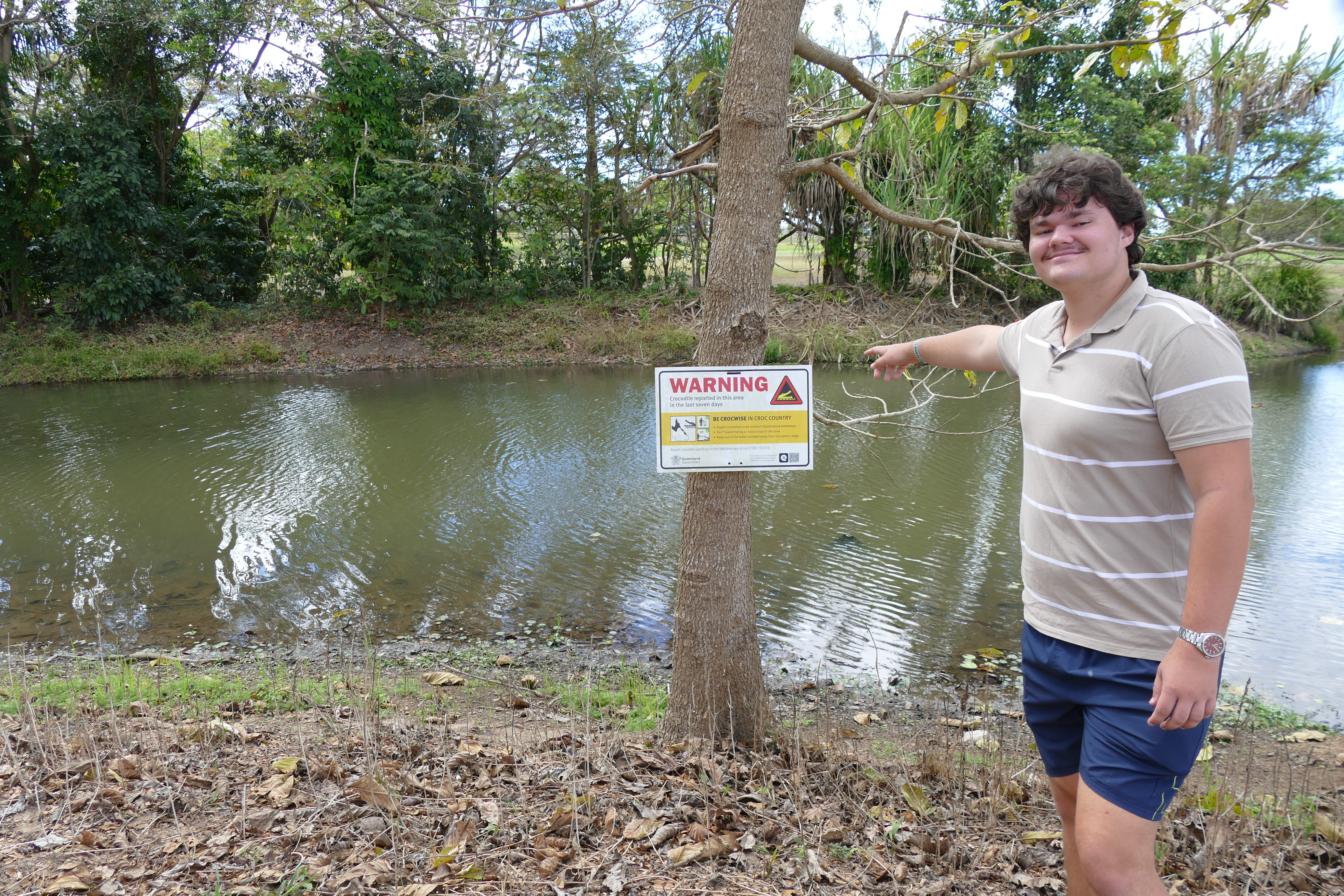
“He was really visible, a great tourist attraction,” he said.
While the removal has brought relief to some locals and upset to others who enjoyed the young croc's presence, Coen expects the waterway will once again attract a crocodile following the next significant rainfall.
"If you wanted to have a look at a croc in its natural habitat, this would probably be one of the safest places you could do it," he remarked, as long as people are respectful to the animal and maintain a safe distance.
With summer rains approaching, residents may not have to wait long before another reptilian resident makes an appearance.
Always be CrocWise, keep your distance, never approach or disturb a crocodile, and keep children and pets well away from the water’s edge. Remember: if you are near a crocodile habitat, always assume a crocodile could be nearby and heed warning signs.
Publishers Indemnity. Any individual or entity that places advertising, supplies copy material, or submits editorial content to Life Publishing agrees and undertakes to ensure that all such material:- Does not infringe upon any copyright, trademark, or other intellectual property rights;- Is free from any content that could be considered defamatory, libelous, or slanderous;- Does not infringe upon any rights related to privacy or breach of confidence;- Contains no obscene, indecent, or otherwise unlawful material;- Complies fully with the Trade Practices Act and all other applicable laws, regulations, or statutes. Furthermore, by submitting or placing such material, these individuals or entities agree to indemnify and hold harmless the publisher, Life Publishing and Events Pty Ltd, and/or its agents from and against any and all investigations, claims, demands, liabilities, damages, costs, or judgments arising out of or in connection with the material provided. All material is believed to be accurate at the time of printing and remains the copyright of Life Publishing and Events Pty Ltd.
© 2026 Life Publishing Group Ltd.