Independently Owned, Locally Grown, Community Loved


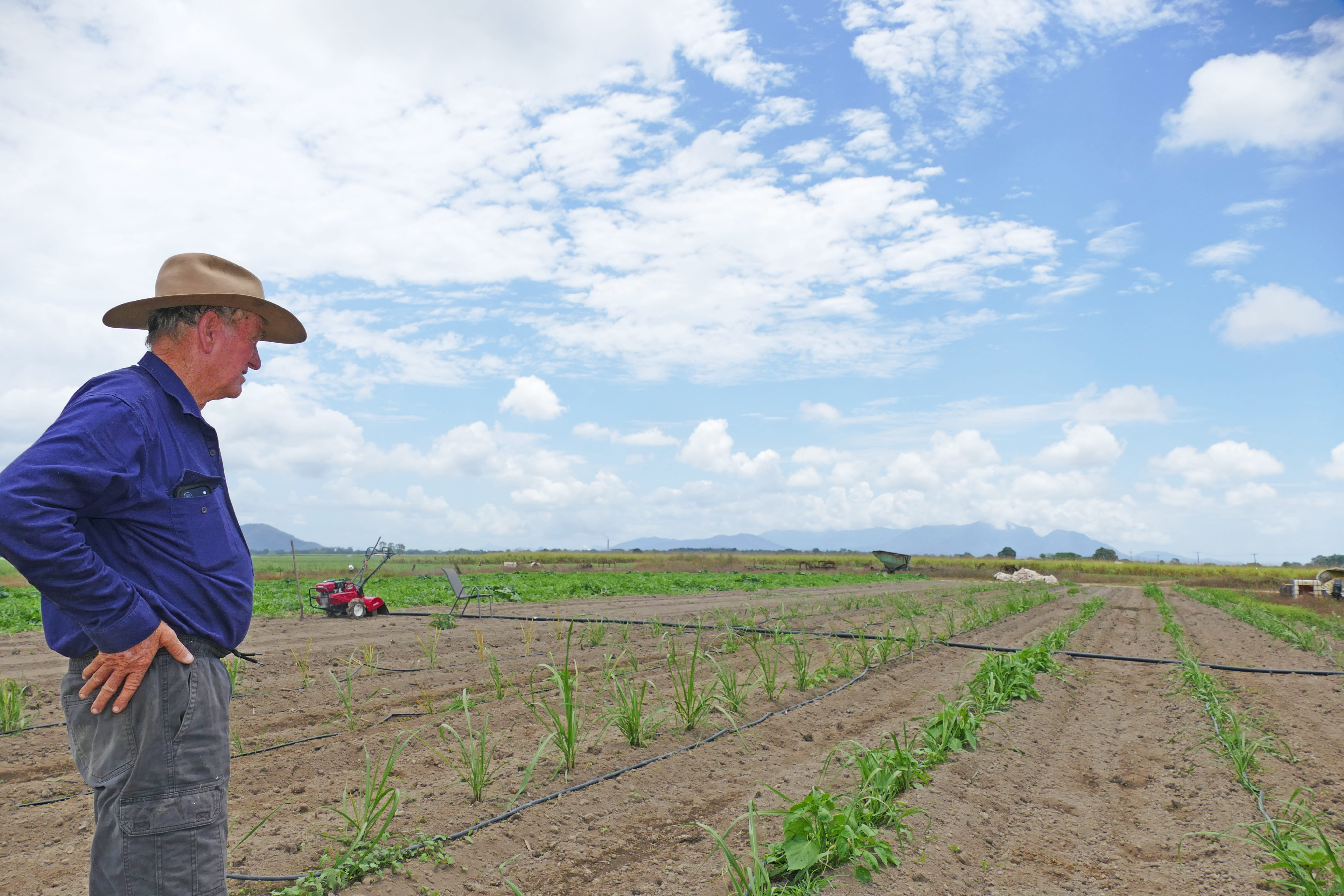
Photo credit: Victoria Velton
By Victoria Velton
Welcome to the Cutting The Cane, a column where we have a chat with those supporting the backbone of the local economy: the farmers behind the sugar. This week Dave Perkins, a farmer of 63 years, answered our questions on his trial tissue culture operations.
What stage are your paddocks at now?
The paddock, the normal plant, was planted about two and a half months ago, and the tissue culture was planted about five weeks ago.
What varieties of tissue culture are you trialling?
I've planted all the new varieties that SRA give us. But I still keep going on with the old ones. I went back to a few Q 96 this year. That's not tissue culture, but that was some plants I bought just to see how they would perform. We used to grow a lot of Q 96 here before.
So, I’ve got a mix of old variety and the new variety that's come out this year. I don't trust the new varieties too much. So, I always have a fallback one.
Why have you chosen the varieties that you've growing?
Because I know they grow well here. I got Q 96 this year because even though it's an old variety, our farm here used to grow about 60% Q 96. Though I might only have one trailer for next year. That's about it. It’s a very sweet variety.
When you look to buy or trial new cane varieties, what are your priorities?
I like to get a variety that's smut resistant. Other than that, I asked my friend Darrin Harrigan, who started me on tissue culture about four years ago and he hasn't led me astray. I like a variety that's going to ratoon well, that's the main thing: ratooning well. If it doesn't ratoon, it's not worth it.
And smut is like a virus on the cane. It gets a black sooty smudge on the leaf, and then the centre of the cane, and then it ends up killing it. The varieties that are not resistant to it, they will eventually get it.
Publishers Indemnity. Any individual or entity that places advertising, supplies copy material, or submits editorial content to Life Publishing agrees and undertakes to ensure that all such material:- Does not infringe upon any copyright, trademark, or other intellectual property rights;- Is free from any content that could be considered defamatory, libelous, or slanderous;- Does not infringe upon any rights related to privacy or breach of confidence;- Contains no obscene, indecent, or otherwise unlawful material;- Complies fully with the Trade Practices Act and all other applicable laws, regulations, or statutes. Furthermore, by submitting or placing such material, these individuals or entities agree to indemnify and hold harmless the publisher, Life Publishing and Events Pty Ltd, and/or its agents from and against any and all investigations, claims, demands, liabilities, damages, costs, or judgments arising out of or in connection with the material provided. All material is believed to be accurate at the time of printing and remains the copyright of Life Publishing and Events Pty Ltd.
© 2026 Life Publishing Group Ltd.