Independently Owned, Locally Grown, Community Loved


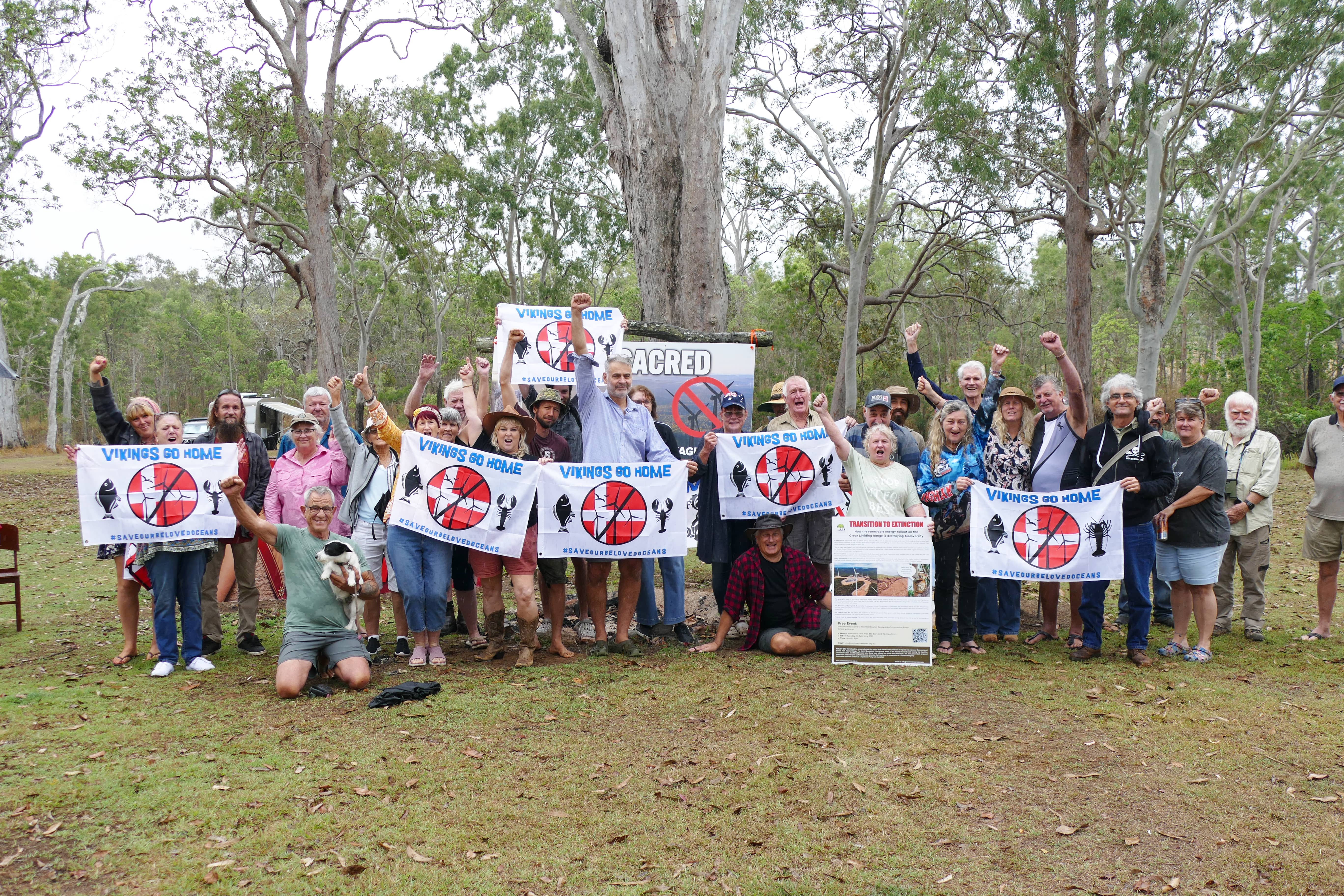
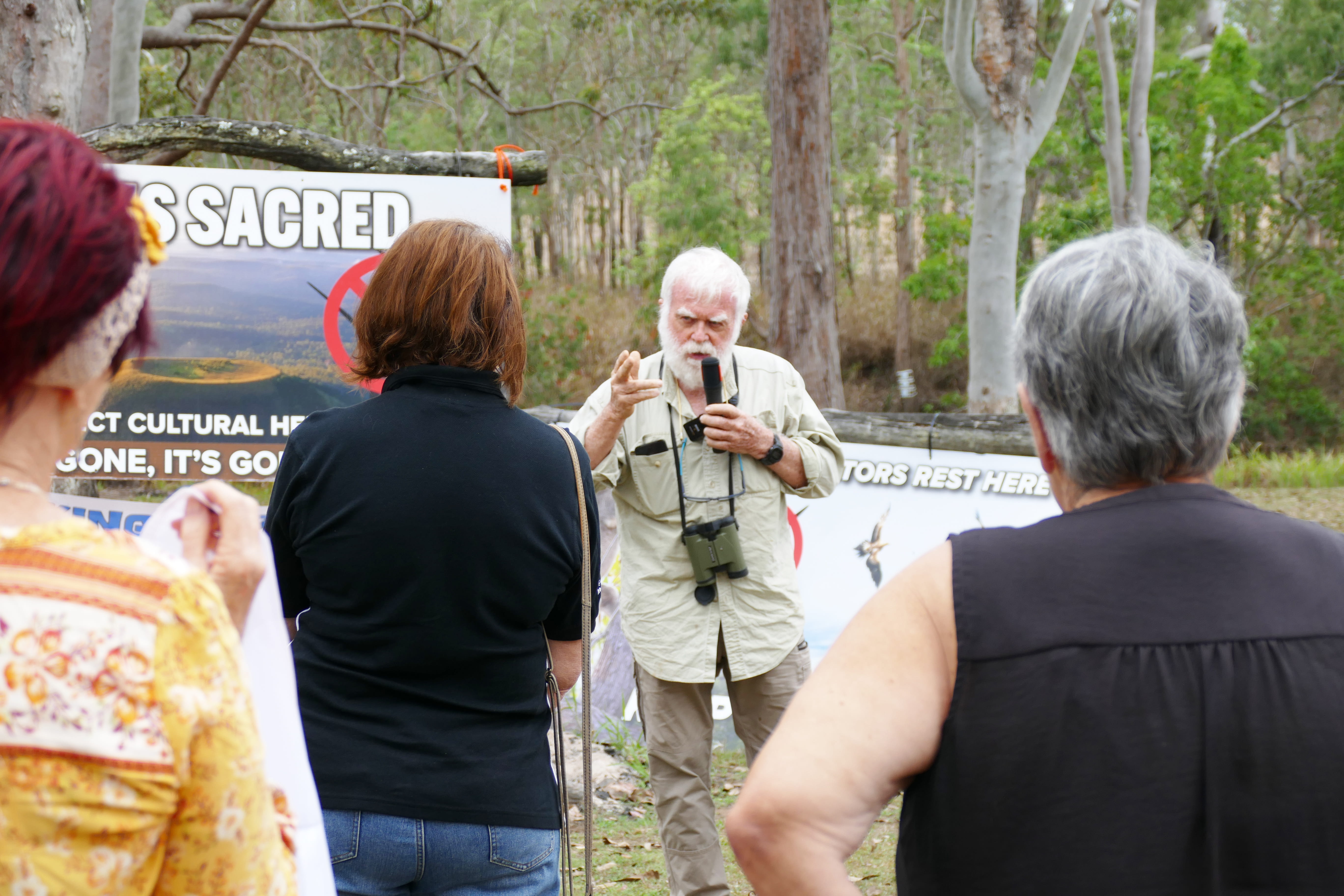
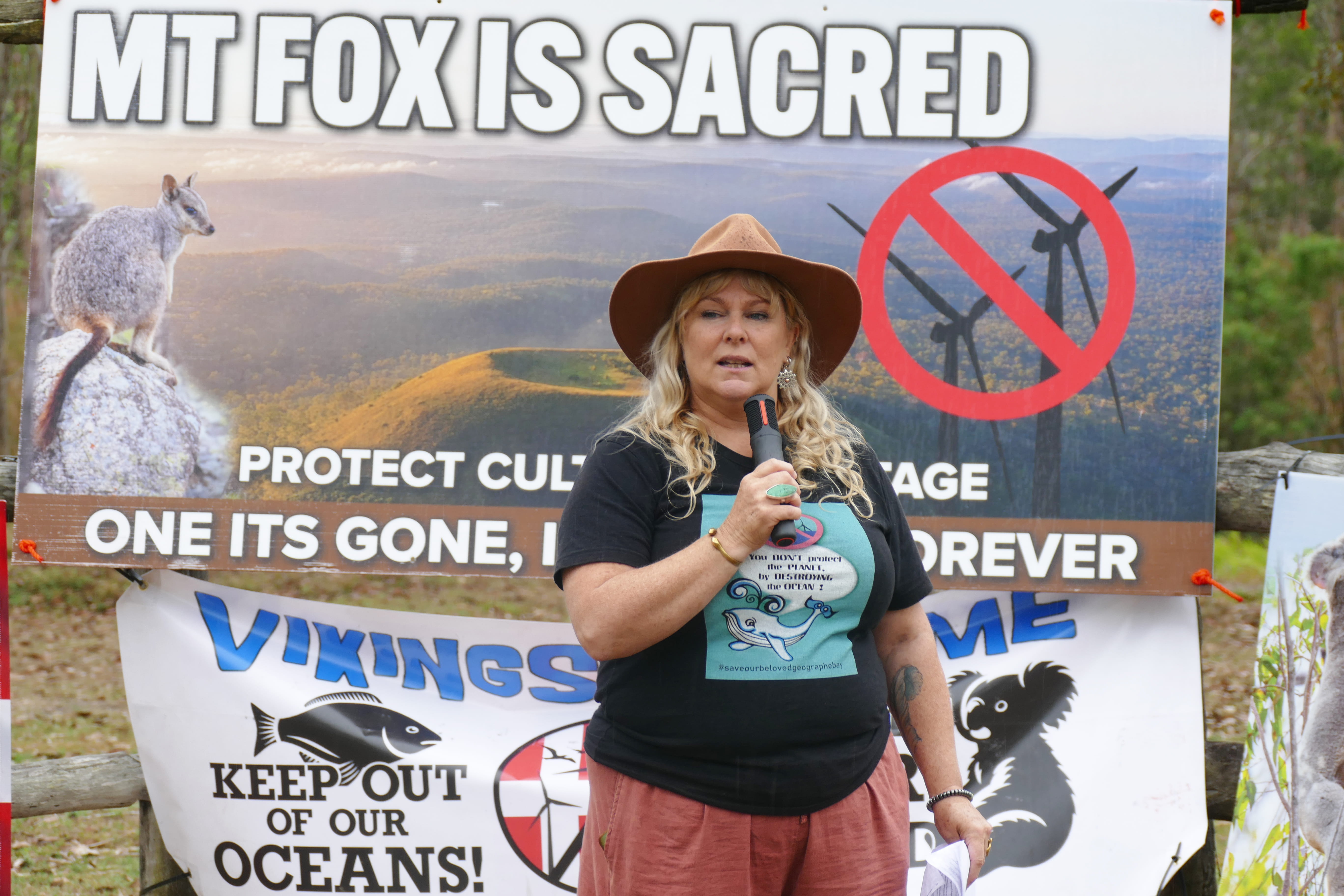
The Mt Fox community rally members holding their protest banners. Signs about the project are prevalent in the Mt Fox area. Photo credit: Victoria Velton
By Victoria Velton
Residents, wildlife carers and environmental advocates gathered at Mt Fox last Saturday to voice concerns about the proposed Gawara Baya wind farm, warning that the development, located just 4.8 kilometres from the Wet Tropics World Heritage Area, could permanently alter a landscape they say is critical to local wildlife and the survival of vulnerable species.
The concerns voiced by attendees who live and work among the surrounding bushland include the clearing of habitat, potential increased traffic on narrow rural roads, noise and disturbance to wildlife and the spread of feral predators.
Mt Fox Community Progress Association president Kim Armstrong said the community was facing a significant decision about the future of its environment.
“This is a very significant moment in our area. Do we stand up and protect our natural environment or do we stand by and allow it to be destroyed?” Ms Armstrong asked.
One of the most immediate concerns raised at the rally came from local wildlife carer Brandie Becke, who said the area had provided a relatively safe environment for releasing rehabilitated animals back into the wild.
Ms Becke said she had chosen Mt Fox because of its quiet roads, surrounding national park and extensive Crown land.
She fears the proposed wind farm's construction and operation could undermine those conditions, particularly if traffic increases substantially on the region's gravel roads.
“We might have around 50 cars at a really busy time, but we're going to end up with around 250, 300 vehicles travelling around on our roads,” Ms Becke alleged.
She described the roads as potholed and narrow, with limited separation between roadways, private properties and protected areas. She said increased traffic could pose a serious risk to animals accustomed to moving freely through the area, particularly if drivers unfamiliar with the roads were travelling through more frequently and at greater speed.
Ms Becke also stressed that land clearing could remove important habitat and leave animals with fewer safe places to move.
“I brought [the animals] up here so I could release our animals into a safe environment,” she said.
“What am I doing now? I'm just putting them back in the exact same situation that they came from in the beginning.”
Noise and disturbance were also raised as concerns, with Ms Becke arguing that the effects of industrial development on wildlife could extend well beyond what people are able to hear.
She said she feared the impacts would not be limited to mammals and marsupials, but could also affect frogs, lizards, birds and other wildlife, including through disruption to breeding.
The potential effects of low-frequency noise on animal communication were another focus of the rally. Dr Roger Martin, a wildlife ecologist and biologist who has studied koalas since 1977, spoke extensively on the noise effects of the turbines, arguing that wind turbine noise could mask calls used by native animals to communicate.
These concerns were raised alongside broader questions about habitat fragmentation and whether wildlife would continue to be able to move safely through the landscape if development expanded across the ranges.
Other speakers included photographer and bushwalker Steven Nowakowski, who spoke about development planned for the region, and poet and carpenter Ardi Arda, who attended to show support and love for the community. Mr Nowakowski also read a letter from Jeanette Kemp, a former Queensland Government principal botanist.
The rally also drew support from Martine Shephard, who travelled from Western Australia, where she is involved in campaigns concerning proposed developments at Geographe Bay and Kalbarri. She spoke about the experience of communities confronting large-scale industrial projects and brought a message of solidarity to the Mt Fox residents.
Ms Shephard was credited with the slogan “Vikings Go Home”, which appeared on banners held by protesters.
Beyond the immediate footprint of the proposed Gawara Baya project, speakers expressed concern about the cumulative effects of wind farm developments across mountain ranges, arguing that individual projects should not be considered in isolation when assessing their potential effects on wildlife corridors and connected ecosystems.
They also questioned the arrangements for rehabilitating land after construction and decommissioning turbines at the end of their operational lives. Speakers raised concerns about what would happen to infrastructure left behind and whether adequate restoration and rewilding plans would be in place.
The potential attraction of feral predators to construction and maintenance roads was another issue raised. Speakers warned that increased roadkill could provide an additional food source for predators such as cats, adding pressure to rare and endangered wildlife already affected by habitat disturbance.
According to Windlab, the company behind the proposal, biodiversity will be a key consideration throughout the project.
“Gawara Baya has been designed to preserve almost 99% of potential habitat across its host cattle property for the life of the project,” their resources state.
“More than that, Gawara Baya will be the first renewable energy project in Australia to be delivered with a robust, measurable program for achieving biodiversity net-gain.
“This is part of our long-term, beyond compliance commitment to doing more for nature. Our approach is informed by more than 8,000 hours of detailed ecology studies and four years’ in-depth stakeholder consultation, collaboration and codesign.
“In Australia, Australia’s energy generation sector is by far our nation’s biggest source of greenhouse gases emissions. Decarbonising our energy system is the clear action we must take to address the compounding effects of climate change, including biodiversity decline.
“At the same time, Windlab has committed to leading practice ecological restoration and threat abatement programs that not only address the local scale impacts of the project, but support overall better outcomes for regional biodiversity at a landscape scale.”
Publishers Indemnity. Any individual or entity that places advertising, supplies copy material, or submits editorial content to Life Publishing agrees and undertakes to ensure that all such material:- Does not infringe upon any copyright, trademark, or other intellectual property rights;- Is free from any content that could be considered defamatory, libelous, or slanderous;- Does not infringe upon any rights related to privacy or breach of confidence;- Contains no obscene, indecent, or otherwise unlawful material;- Complies fully with the Trade Practices Act and all other applicable laws, regulations, or statutes. Furthermore, by submitting or placing such material, these individuals or entities agree to indemnify and hold harmless the publisher, Life Publishing and Events Pty Ltd, and/or its agents from and against any and all investigations, claims, demands, liabilities, damages, costs, or judgments arising out of or in connection with the material provided. All material is believed to be accurate at the time of printing and remains the copyright of Life Publishing and Events Pty Ltd.
© 2026 Life Publishing Group Ltd.