Independently Owned, Locally Grown, Community Loved

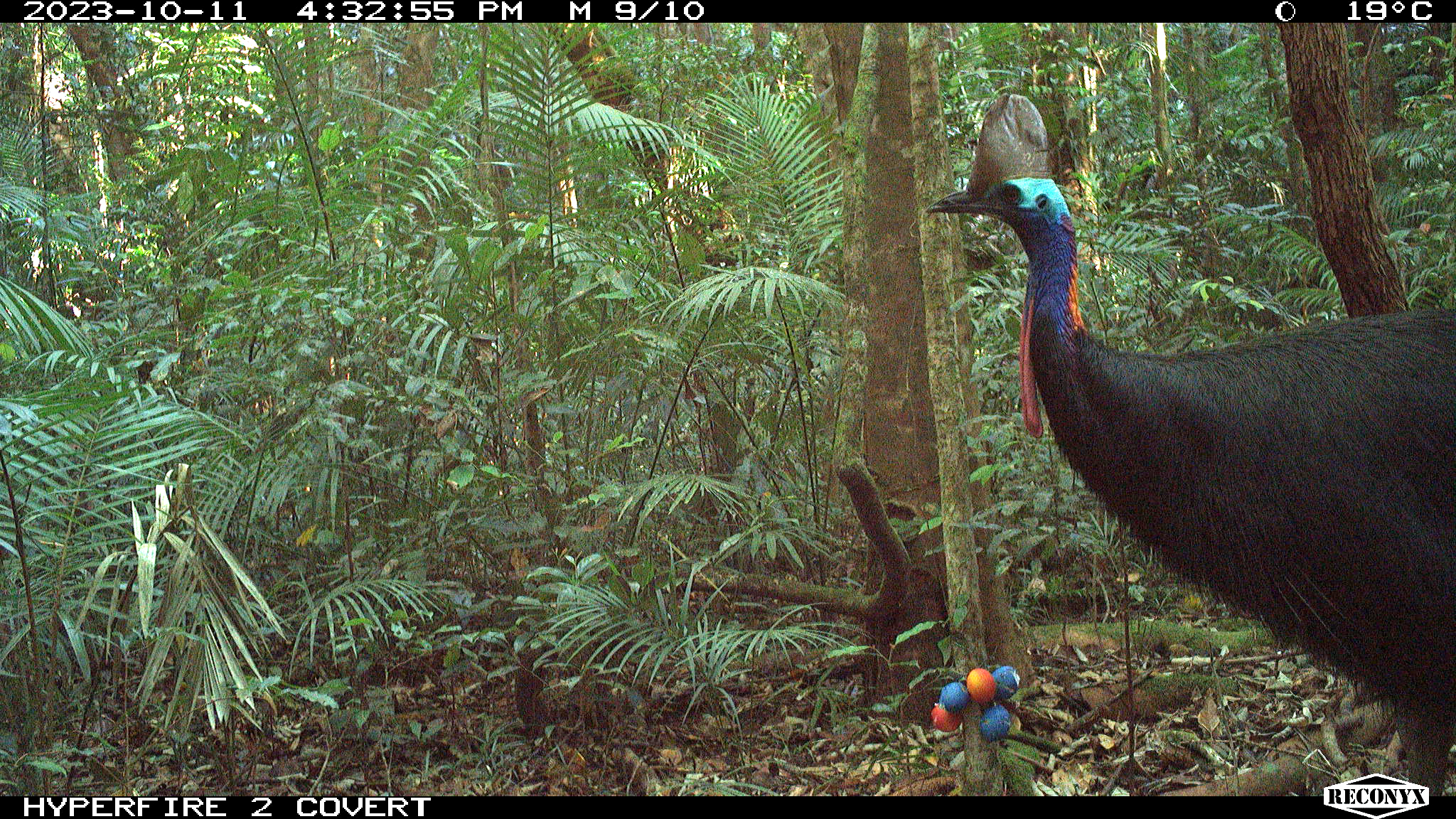
Southern Cassowaries spotted in the Paluma Range. Photos supplied: Wren R. McLean
By Wren McLean of the Southern Cassowary Research Project, Auspiced by BirdLife Townsville, in partnership with NQ Dry Tropics NRM
“Local knowledge could hold vital clues to whether our southernmost cassowaries are still connected to the core Wet Tropics population.”
For the past three years, with BirdLife Townsville, we’ve been quietly tracking the southernmost population of cassowaries in and around the Paluma Range using camera traps, sign surveys and a citizen science program to collect historical and current sightings.
Our concerns about the long-term health of this population, and their habitat, arose from the 2014 Wet Tropics Cassowary Census which flagged a notable decrease in the rate of sign (poop, footprints, vocalisations, sightings) in the Herbert River catchment and Paluma Range.
We knew that locals were still sighting them occasionally, but no-one was currently recording these sightings or specifically looked at how this population of endangered birds is tracking.
Our surveys have since confirmed at least 12 individual cassowaries, including chicks demonstrating a breeding population, clustered strongly around the Bambaroo and Jourama Tracks in the north-east of the Paluma range.
There have been no sightings in the south of the Paluma Range for over 23 years which indicates a potential contraction of their distribution. We’ve also found that birds regularly use lowland creeks and coastal vine scrub on freehold land beyond the National Park boundary in the late dry season. This habitat type provides high quantities of fruits of specific native trees and is evidence that this population still depends on various habitat types throughout the landscape for their survival.
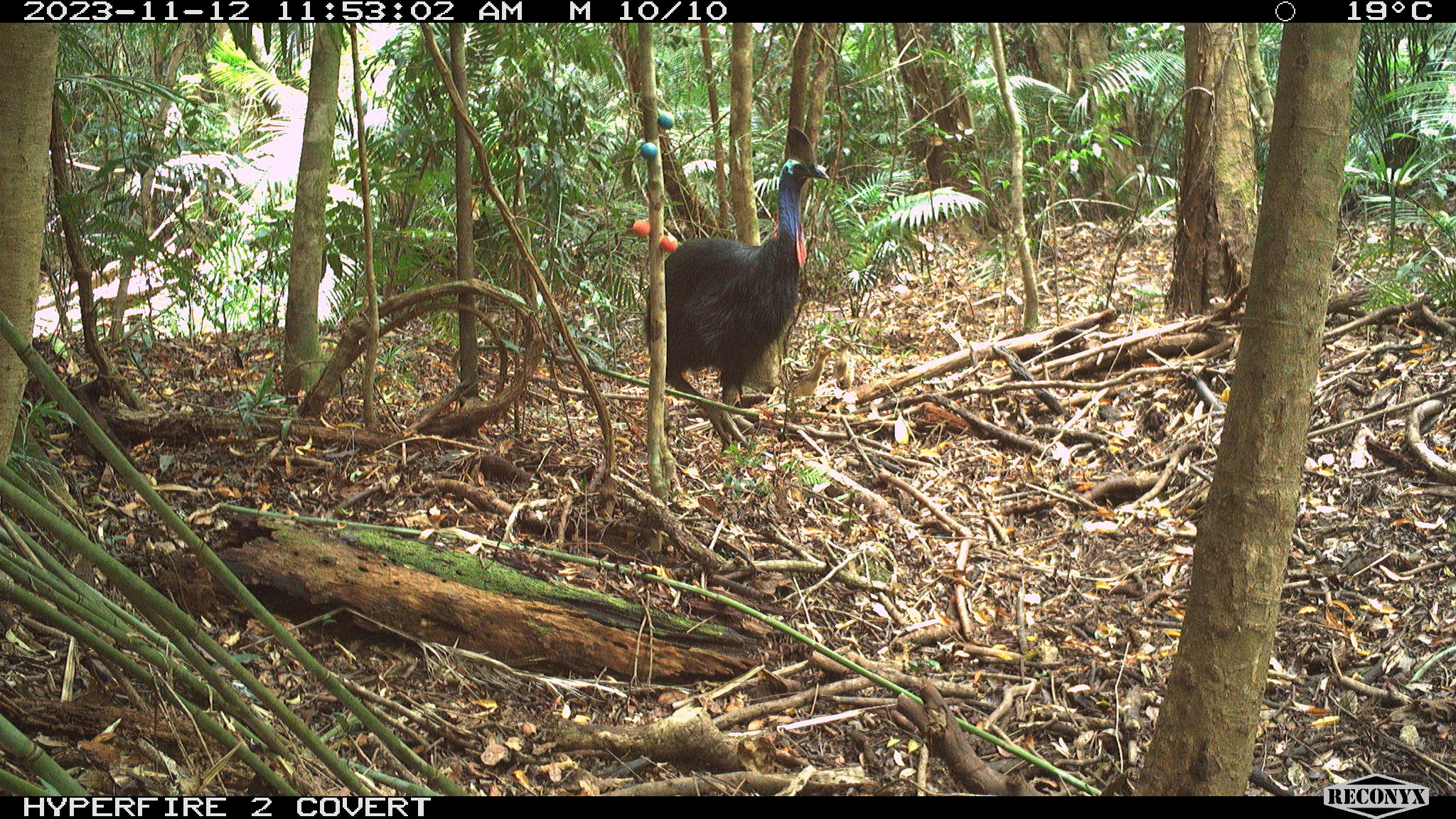
Now we need your help answering the next big question: are Paluma Range cassowaries still connected to the core Wet Tropics population to the north, around Girringun National Park and the Cardwell Range? Small, isolated populations lose genetic diversity over time, making them far more vulnerable to local extinction. If Paluma’s cassowaries are cut off from the larger northern population, this remarkable southern outpost could gradually disappear. If birds are still moving through, even occasionally, restoring those connections could be what saves them.
There are two most likely routes between these populations: an upland corridor of drier forest between Mt Fox and Hidden Valley, or a lowland route across the southern Herbert River floodplain, potentially along Waterview, Francis, Cattle or TrebonneCreeks. Much of the lowland now broken up by farmland and roads which would make it hard for a big black bird, or a smaller brown sub-adult, to cross unnoticed.
We already know cassowaries are present in the upper Herbert River and around Wallaman Falls, and some photographs have been submitted from Mt Fox Road, right at the edge of the dry upland corridor. What we don’t yet know is whether birds are actually making the crossing and that’s where local knowledge becomes invaluable. A camera only ever sees one gully; people who live and work this country see the whole region, season after season.
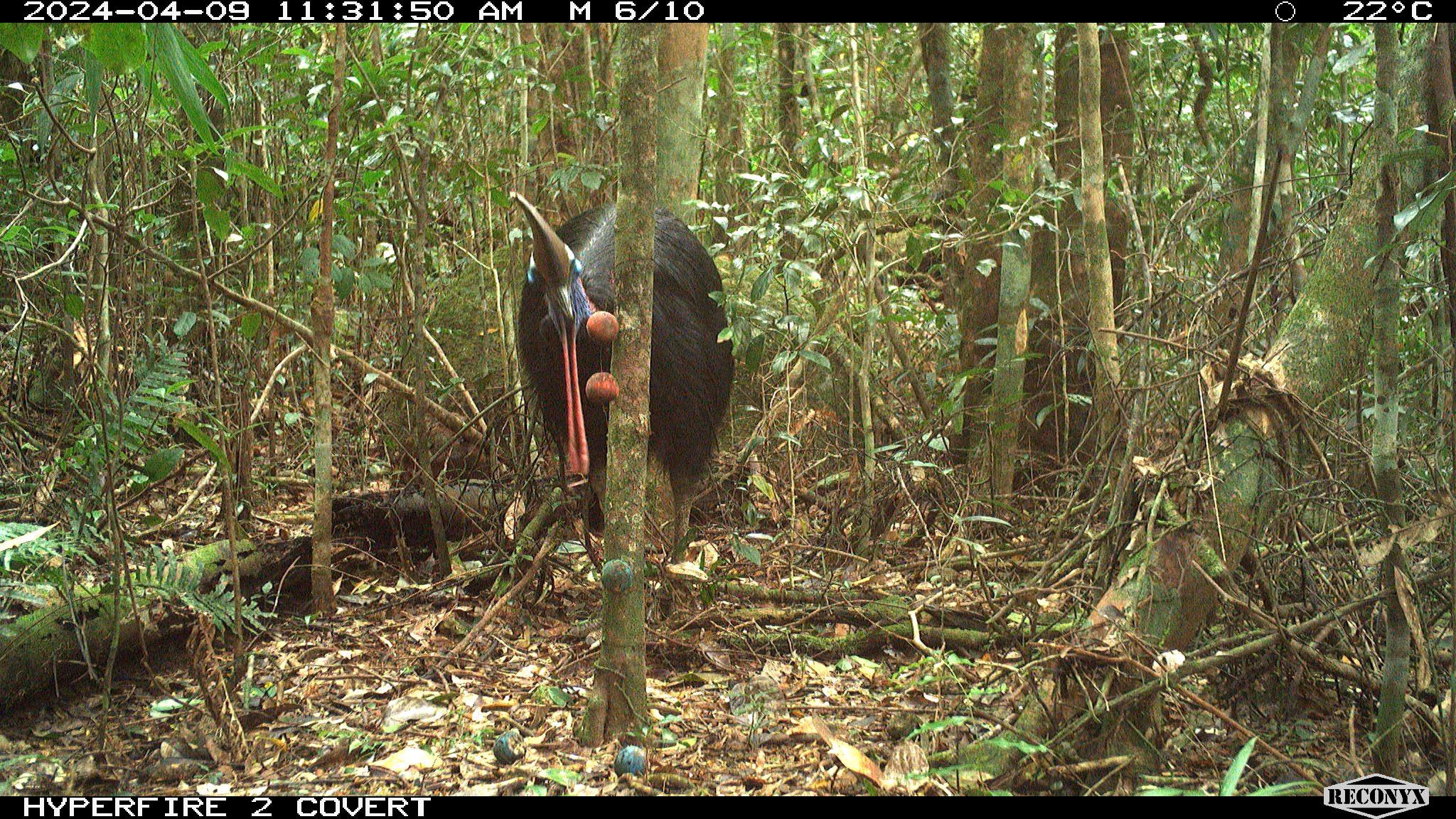
If you’ve ever seen a cassowary — or a big three-toed track, a distinctive dropping, or even just a story you remember — anywhere between Mt Fox and Hidden Valley, or along the creek lines and farmland of the southern Herbert floodplain, we’d love to hear about it. It doesn’t need to be recent: a clear memory from thirty years ago is just as valuable as a photo from last week. A general area and a rough date is genuinely enough — you don’t need an exact location.
To be upfront: this is about understanding whether cassowaries can still move and interbreed between these two populations. It is not about flagging your property for any kind of restriction, and a historical sighting on private land triggers no regulatory consequence.
You can share what you know by commenting on our Facebook posts on Everything Ingham or Mt Fox and Local Community, logging onto https://arcg.is/1vjLaq scanning the QR code to log a sighting directly
Every piece of the puzzle — recent or decades old — helps us build a genuine picture of whether this ancient rainforest gardener is still finding its way between the ranges to breed future generations of strong, healthy cassowaries.
Publishers Indemnity. Any individual or entity that places advertising, supplies copy material, or submits editorial content to Life Publishing agrees and undertakes to ensure that all such material:- Does not infringe upon any copyright, trademark, or other intellectual property rights;- Is free from any content that could be considered defamatory, libelous, or slanderous;- Does not infringe upon any rights related to privacy or breach of confidence;- Contains no obscene, indecent, or otherwise unlawful material;- Complies fully with the Trade Practices Act and all other applicable laws, regulations, or statutes. Furthermore, by submitting or placing such material, these individuals or entities agree to indemnify and hold harmless the publisher, Life Publishing and Events Pty Ltd, and/or its agents from and against any and all investigations, claims, demands, liabilities, damages, costs, or judgments arising out of or in connection with the material provided. All material is believed to be accurate at the time of printing and remains the copyright of Life Publishing and Events Pty Ltd.
© 2026 Life Publishing Group Ltd.