Independently Owned, Locally Grown, Community Loved

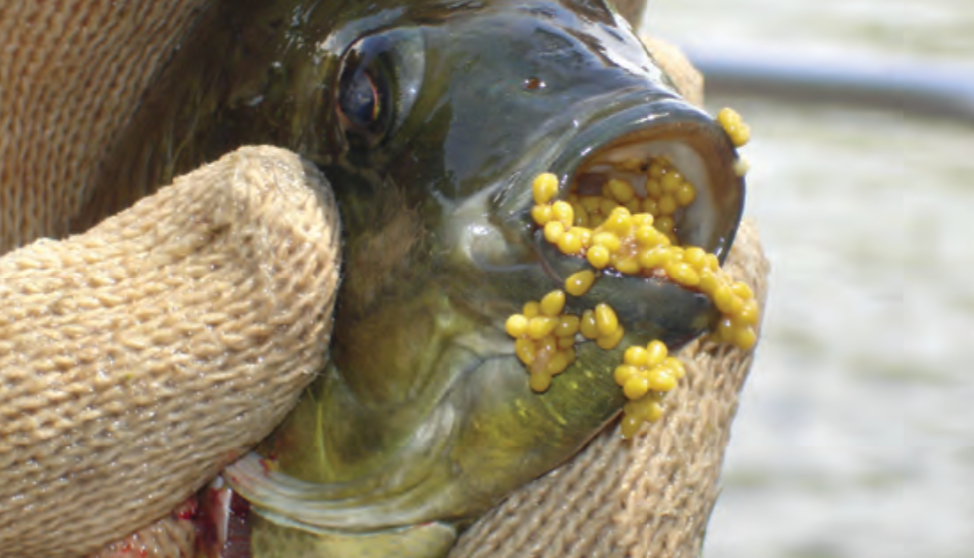
Tilapia are mouth brooders, carrying and protecting the next generation. The young can survive if the dead mother fish is thrown back into the water. Photo source: DPI QLD
Invasive Tilapia Raise Concerns In Hinchinbrook
By Victoria Velton
Local fishers say one of Australia's most destructive pest fish is becoming an increasingly common sight in Hinchinbrook waterways, raising concerns for native fish and the future health of the region's aquatic ecosystems.
For nearly five decades, Jeff Snell has watched the waterways of the Hinchinbrook region change.
A member of the Cardwell Sportfishing Club since 1978, Jeff grew up fishing alongside his father and has spent a lifetime learning the rhythms of local rivers, estuaries and creeks. While changing seasons, weather and fish populations are all part of life on the water, one change has increasingly caught his attention in recent years: the spread of tilapia.
“People are seeing more of them,” Jeff said.
“It's throwing the ecosystem out of balance.”
Once kept as ornamental aquarium fish, tilapia are now regarded by Queensland's Department of Primary Industries as one of Australia's greatest threats to native freshwater biodiversity. Established populations now exist throughout much of Queensland's east coast, with the hardy fish capable of surviving in rivers, creeks, drains, dams and even tidal estuaries.
Jeff believes many of the infestations now being seen across North Queensland can be traced back decades, when aquarium fish were released into waterways around Townsville before gradually spreading through connected catchments during floods and wet seasons.
"People think they're only a freshwater fish, but they actually adapt to saltwater as well. Once you get floods and waterways connecting, they can move into new areas very quickly."
That ability to survive in both fresh and brackish water has helped make tilapia one of Queensland's most successful invasive fish.
Unlike many native species, tilapia tolerate poor water quality, low oxygen levels and a wide range of temperatures. They reproduce rapidly, with female tilapia protecting fertilised eggs by carrying them in their mouths until the young are developed enough to survive.
"It's one of the reasons they spread so easily," Jeff explained.
"If the female moves into another creek during a flood, she's carrying the next generation with her."
The Department of Primary Industries says tilapia can quickly dominate waterways thanks to their prolific breeding, simple diet and ability to adapt to almost any aquatic environment. They compete with native fish for food and habitat, aggressively defend breeding sites and disturb aquatic vegetation while building nests, crowding out other fish.
For recreational anglers, the growing population is becoming increasingly noticeable.
Jeff recalls hearing of tilapia being caught near the mouth of Fisher Creek as far back as the 1980s, demonstrating their ability to move through tidal systems as well as freshwater habitats.
He also points to established populations in places such as Warrina Lakes near Innisfail, where community fishing competitions are held to help reduce local numbers.
"They're not put back into the water," he said.
"That's part of the rules. Once you catch one, it stays out."
Under Queensland's Biosecurity Act, tilapia are classified as restricted invasive fish. They must not be returned to the water, used as bait, kept alive or moved between waterways. Anyone catching one is required to humanely destroy the fish before disposing of it appropriately.
Despite being considered good eating in many parts of the world, Jeff said their value as a food fish is outweighed by the environmental risk they pose.
"There's nothing wrong with eating them," he said, "The important thing is that they don't go back into the water."
While there is currently no practical broad-scale method of eradicating established tilapia populations, Jeff believes public awareness remains one of the strongest tools available.
"People need to understand why you can't just release unwanted aquarium fish into local creeks or rivers. What seems like one harmless fish can become thousands over time. Destroying habitats and the loss of millions of native fish for that one pet fish.”
His concerns come as the Queensland Government strengthens its frontline response to invasive species across the state, with additional biosecurity officers being deployed across regional Queensland and an increased ranger presence across North Queensland to help protect the state's natural assets.
For Jeff, however, protecting Hinchinbrook's waterways will require more than government resources alone.
"It's something the whole community has to be aware of," he said.
"If we all do the right thing, we've got a better chance of protecting the native fish that belong here."
"It's about everyone understanding what's at stake," he said.
One of the more surprising places tilapia are turning up is inside local prawn farms.
Jeff recently spoke with a worker responsible for water management at one of Cardwell's prawn farms, who described the number of tilapia appearing in production ponds as "unbelievable".
Interestingly, the fish are not considered a major threat to prawn production.
"They're algae eaters," Jeff explained.
"They're not there eating the prawns. They're feeding on algae growing in the ponds."
While farm filtration systems prevent fish escaping back into surrounding waterways, their presence demonstrates just how widespread tilapia have become throughout the region.
Perhaps the strongest message Jeff hopes people take away is that many invasive species begin with people trying to do what they think is the right thing.
He imagines a family moving house, unsure what to do with a child's pet fish.
"They think, 'We'll let it go in the creek.'"
"It seems harmless, but that's how these things start."
He believes aquarium owners should never release unwanted fish into local waterways, no matter the species.
"That information should be given to everyone who buys aquarium fish," he said.
"When you don't want it anymore, don't let it go."
Know The Rules
If you catch a tilapia in Queensland:
Do not release it back into the water.
Humanely destroy the fish immediately.
Do not use it as bait.
Do not move it to another waterway.
Dispose of it by burying it away from the waterway or placing it in a rubbish bin.
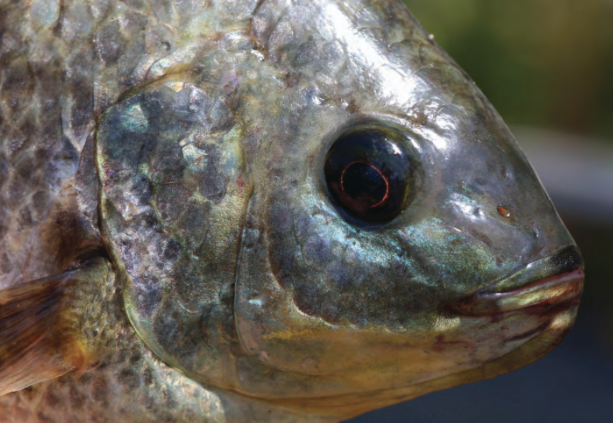
How To Identify A Tilapia
While several species exist, tilapia share some distinctive features:
A deep, laterally compressed body.
One long, continuous dorsal fin running almost the full length of the back.
Dark bars, blotches or spots depending on the species.
Commonly found in slow-flowing creeks, drains, dams, rivers and tidal estuaries.
Able to survive in both fresh and brackish water.
As Jeff sees it, the battle against tilapia won't be won with a single fishing competition or government program.
"Once they're established, they're almost impossible to remove. The best thing we can do now is stop them spreading any further."
Publishers Indemnity. Any individual or entity that places advertising, supplies copy material, or submits editorial content to Life Publishing agrees and undertakes to ensure that all such material:- Does not infringe upon any copyright, trademark, or other intellectual property rights;- Is free from any content that could be considered defamatory, libelous, or slanderous;- Does not infringe upon any rights related to privacy or breach of confidence;- Contains no obscene, indecent, or otherwise unlawful material;- Complies fully with the Trade Practices Act and all other applicable laws, regulations, or statutes. Furthermore, by submitting or placing such material, these individuals or entities agree to indemnify and hold harmless the publisher, Life Publishing and Events Pty Ltd, and/or its agents from and against any and all investigations, claims, demands, liabilities, damages, costs, or judgments arising out of or in connection with the material provided. All material is believed to be accurate at the time of printing and remains the copyright of Life Publishing and Events Pty Ltd.
© 2026 Life Publishing Group Ltd.