Independently Owned, Locally Grown, Community Loved


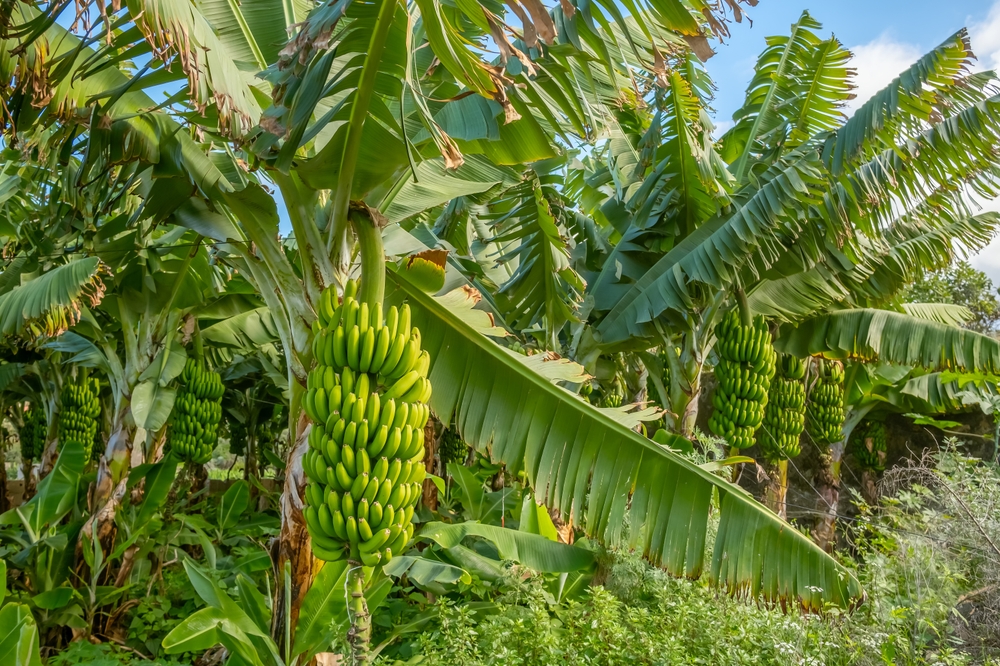
Tully banana grower and Australian Banana Growers' Council director Leon Collins says Panama disease TR4 is an extremely difficult disease to manage, with 11 farms now affected in the Tully Valley. Photo source: Shutterstock
A devastating fungal disease is continuing to spread through the Tully Valley, with 11 banana farms now affected by Panama disease tropical race 4 (TR4).
For local growers, the detections are particularly concerning, with the Cassowary Coast, including Tully and Innisfail, forming the heart of Australia's banana-growing industry, while Queensland accounts for about 94 per cent of national production.
Australian Banana Growers' Council director and local banana grower Leon Collins said TR4 attacks the plant's vascular system, eventually causing it to wilt and die.
“It’s a fungus that attacks the tree. It starves the tree of its nutrients and water, and the tree will wilt and die,” Mr Collins said.
“It’s a very hard disease to manage. It’s very variable, and it can turn up anywhere in your property at any time. It is a truly terrible disease to have.”
First detected in the Tully Valley in 2015, TR4 cannot currently be eradicated once it becomes established. The fungus can survive in contaminated soil for more than 50 years and can be moved through infected plant material, soil and water.
Mr Collins said the Tully Valley had borne the brunt of local detections.
“Tully Valley has been where the detections have been and every farm on the Tully River is now affected,” he said.
Despite the growing challenge, Mr Collins said the geographical spread of North Queensland's banana industry offered some protection.
“We are diverse and spread out and this will help us get through the problems we have with TR4,” he said.
Attention is also firmly on finding banana varieties capable of surviving the disease.
QUT researchers have spent decades investigating TR4 resistance, including developing QCAV-4, a genetically modified Cavendish banana that has demonstrated high resistance to the disease in field trials and has been approved for commercial planting and consumption in Australia. Researchers are also investigating gene-edited, non-GM bananas and improvements to the naturally TR4-resistant Goldfinger variety.
But for growers already dealing with the disease, Mr Collins said a practical solution cannot come quickly enough.
“It’s not soon enough for most growers, especially those in the valley,” he said.
“Everyone’s hell for leather trying to find a resistant variety around the world now, and at the moment, no one’s got one.”
For an industry so heavily concentrated in Far North Queensland, the race to find a long-term answer has implications well beyond the Tully Valley.
Publishers Indemnity. Any individual or entity that places advertising, supplies copy material, or submits editorial content to Life Publishing agrees and undertakes to ensure that all such material:- Does not infringe upon any copyright, trademark, or other intellectual property rights;- Is free from any content that could be considered defamatory, libelous, or slanderous;- Does not infringe upon any rights related to privacy or breach of confidence;- Contains no obscene, indecent, or otherwise unlawful material;- Complies fully with the Trade Practices Act and all other applicable laws, regulations, or statutes. Furthermore, by submitting or placing such material, these individuals or entities agree to indemnify and hold harmless the publisher, Life Publishing and Events Pty Ltd, and/or its agents from and against any and all investigations, claims, demands, liabilities, damages, costs, or judgments arising out of or in connection with the material provided. All material is believed to be accurate at the time of printing and remains the copyright of Life Publishing and Events Pty Ltd.
© 2026 Life Publishing Group Ltd.