Independently Owned, Locally Grown, Community Loved

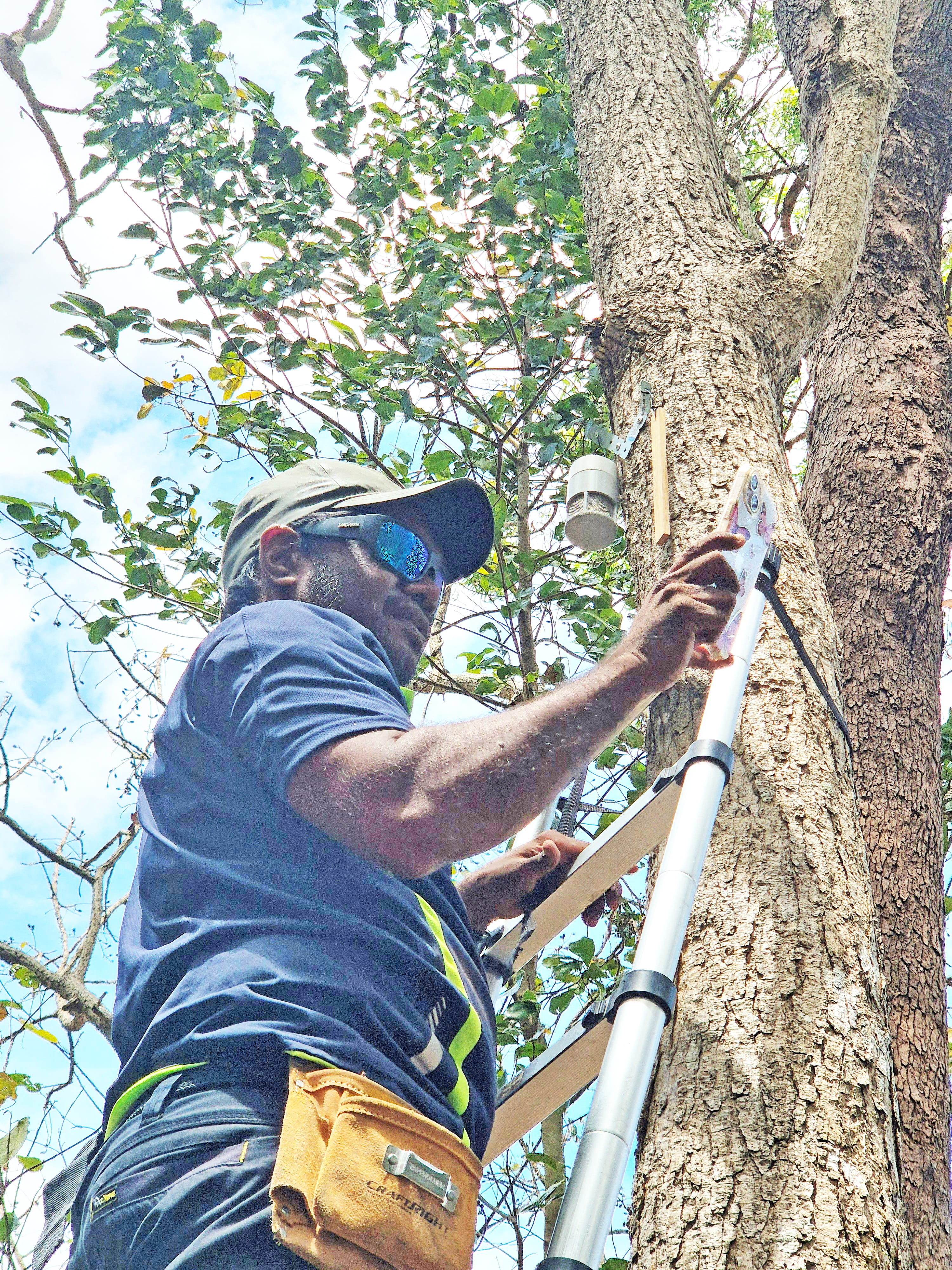
Installing wildlife cameras along the creek: Chris Muriata, Girringun Rangers
A small population of endangered mahogany gliders is living in narrow strips of forest on farmland south of Ingham. Wildlife cameras have captured mahogany gliders for two years in a row at four spots in the Bambaroo-St Helens area.
Terrain NRM’s Evizel Seymour said the gliders were in forest along creeks where vines and woody weeds have been removed to improve its “glideability” and condition. Coupled with scientists’ findings from genetic research in recent years, it shows the critical need for more habitat restoration.
“Mahogany gliders are only found between the Hull River near Tully and Ollera Creek north of Townsville, with an estimated total population of about 2500,’’ Evizel said.
“The woodlands they live in are often narrow fragments of forest. To help this species, a big focus is restoring and connecting their habitat.”
Recent genetics research by James Cook University researcher Eryn Chang found the species was retaining moderate genetic diversity despite decades of habitat loss. But it also identified inbreeding in northern parts of the mahogany glider’s habitat and researchers fear the increasing fragmented mahogany glider population could lead to serious genetic health issues.
During Terrain NRM’s recent ‘Keeping Country Connected for Mahogany Gliders’ project, crews from Hinchinbrook Shire Council removed woody weeds and vines from 15 kilometres of forest along Waterview Creek, Easter Creek and two unnamed creeks on cane farming land in the Bambaroo-St Helens area.
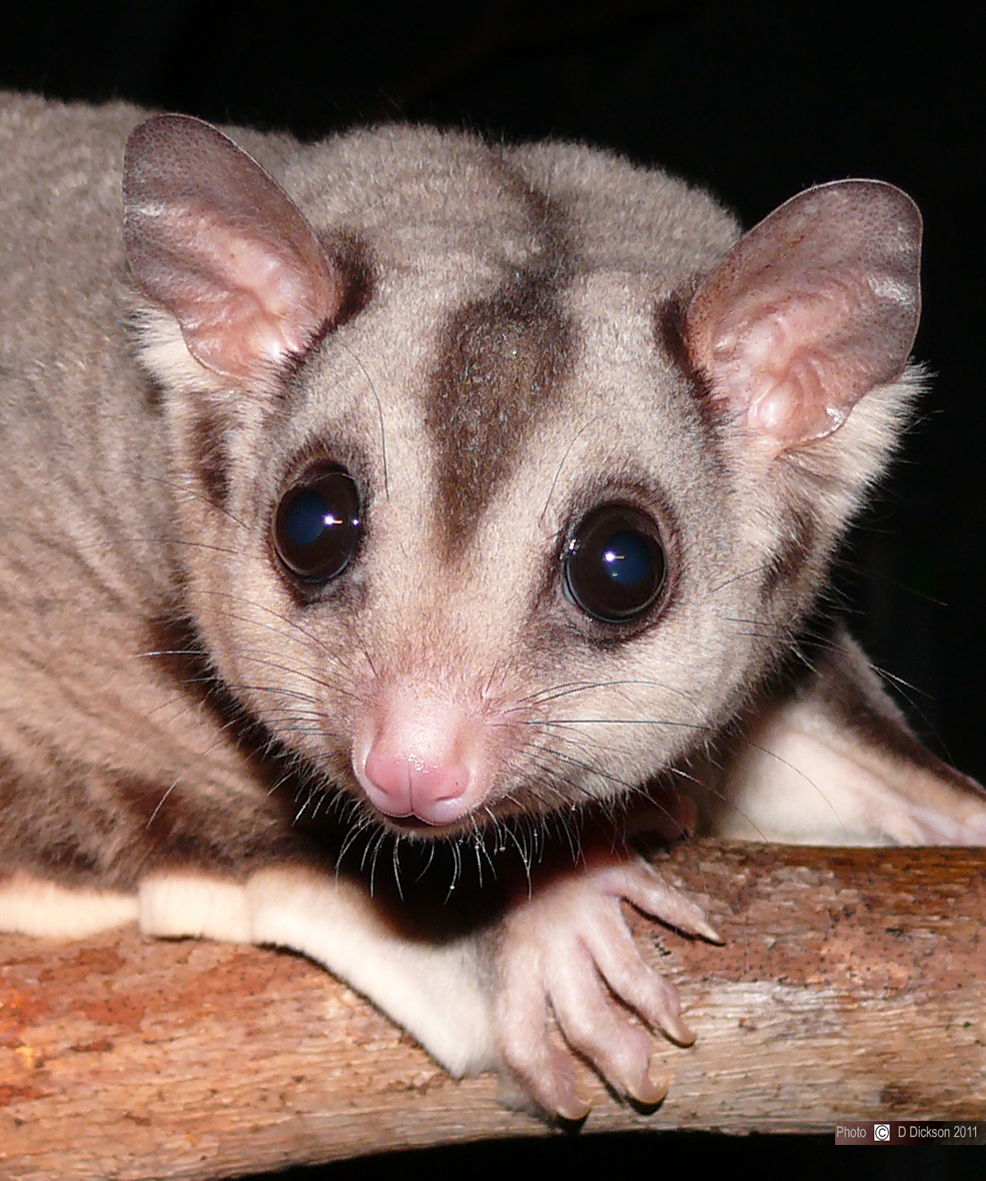
Evizel said wildlife cameras, installed twice at 30 spots along the creeks for six-week periods over two years, had led to mahogany glider detections across 15 locations.
“Of these, four locations recorded mahogany gliders during both survey periods, indicating consistent use of those areas,” she said.
“The narrow strips of woodland are between sugar cane land and waterways and they’re close to Paluma and Halifax Bay national parks. The aim is to link more coastal patches of mahogany glider habitat to foothills in national parks via vegetated waterway areas, so there is a functional corridor for this endangered species.”
This work follows a series of Australian and Queensland government-funded mahogany glider projects led by Terrain NRM over the past 15 years.
Mahogany Glider Recovery Team Chair Jacqui Diggins said that the multifaceted recovery teams members had strategically used their resources to improve habitat management and raise awareness of the species’ fight for survival.
Ms Diggins said habitat connectivity remained the big issue.
“The only north-south corridor for mahogany gliders is on the edge of national park and it’s a really narrow band of woodland abutting a steeper range that’s inaccessible to the species,’’
“Land was historically cleared to the edge of the foothills. The forest areas that remain are progressively declining with the creep of rainforest species, woody weeds and sclerophyll making the narrow bands of habitat even less traversable for mahogany gliders.
“Mahogany gliders can glide about 30 metres. Sometimes connecting relatively small sections of land can make a huge difference. It helps these gliders to move between habitat areas for feeding and it can also help the flow of genes.”
The recent ‘Keeping Country Connected for Mahogany Gliders’ project, which ended this month, was proudly funded by the Queensland Government’s Threatened Species Recovery Action Grants program. It was delivered by Terrain NRM in partnership with Hinchinbrook Shire Council, Girringun and Nywaigi Indigenous Rangers and the Queensland Parks and Wildlife Service.
(Contributed with thanks by Terrain NRM)
Publishers Indemnity. Any individual or entity that places advertising, supplies copy material, or submits editorial content to Life Publishing agrees and undertakes to ensure that all such material:- Does not infringe upon any copyright, trademark, or other intellectual property rights;- Is free from any content that could be considered defamatory, libelous, or slanderous;- Does not infringe upon any rights related to privacy or breach of confidence;- Contains no obscene, indecent, or otherwise unlawful material;- Complies fully with the Trade Practices Act and all other applicable laws, regulations, or statutes. Furthermore, by submitting or placing such material, these individuals or entities agree to indemnify and hold harmless the publisher, Life Publishing and Events Pty Ltd, and/or its agents from and against any and all investigations, claims, demands, liabilities, damages, costs, or judgments arising out of or in connection with the material provided. All material is believed to be accurate at the time of printing and remains the copyright of Life Publishing and Events Pty Ltd.
© 2026 Life Publishing Group Ltd.