Independently Owned, Locally Grown, Community Loved


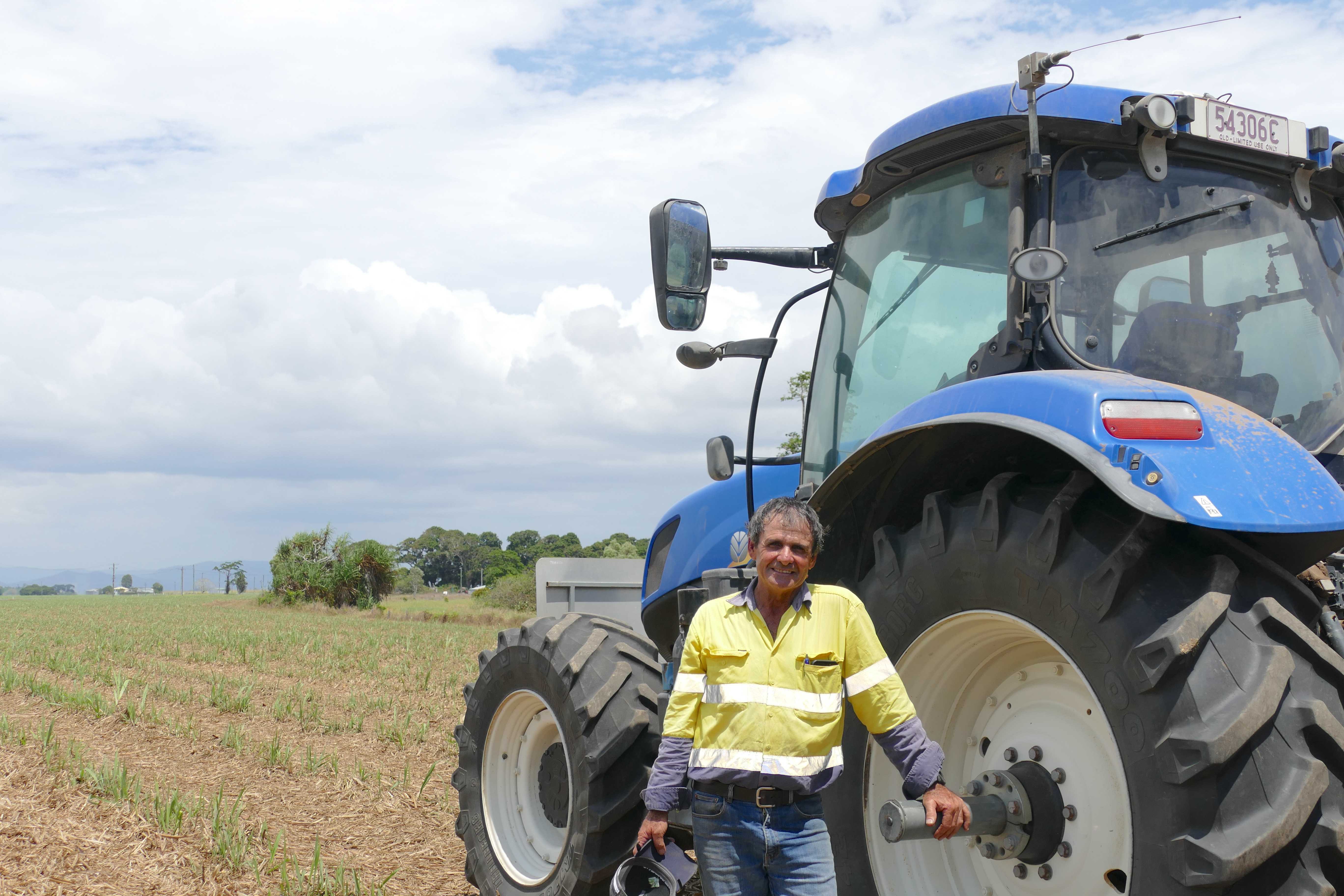
Photo credit: Victoria Velton
By Victoria Velton
Welcome to the Cutting The Cane, a column where we have a chat with those supporting the backbone of the local economy: the farmers behind the sugar. This week Sam Torrisi, the current Director of CANEGROWERS Herbert River, who has been growing cane in the region for over 40 years, answered our questions with his multi-farm operation in mind. His paddocks span Upper Stone, Fairford, Cordelia and Sunnybank Sub-Districts.
What stage are your paddocks at now?
With only around 4 weeks left of the crushing season, 2 of our 4 farms are cut out with around 10% of our total crop left to be harvested. The recent rain in the Lower Herbert and Central farms has allowed young ratoons and plant cane to grow nicely. But the Upper Stone farm, which missed out on those heavier showers, is looking for a drink. Sugar content has been very good this year, the best since 2019, but overall yield is down again.
This is very disappointing, with the Herbert district recording its fourth consecutive year crushing below four million tonnes of cane, despite having the capacity to crush nearly five million tonnes. Maximising the value of our crops must be a priority, and starting the season too early or finishing too late is not the answer. The focus must be on harvesting the majority of the crop between early July and late October.
Consistently returning crushing rates to more than 200,000 tonnes per week is also essential, and this is an achievable target.
What varieties of cane are you growing?
I try and spread the risk by planting a couple of varieties. Depending on soil type, the main varieties I’ve planted are Q253, Q200, Q208, SRA 28, SRA 6 and SRA 26. Unfortunately, SRA 26 which was showing promise, is now underperforming in older ratoons in heavy clay soils.
This year I am trying some of the newer varieties such as SRA 40 and SRA 43 to see how they will perform, but I also planted the older varieties like Q200 and Q253, which I’ve been able to still rely on. I also tried some tissue culture seedlings of SRA 32 and hope this variety will perform well.
What challenges have faced your crops this year?
The Upper Stone farm is by far the driest of all the farms, not only dry ground conditions but cane grub damage this year has affected a lot of plants causing them to die out and not ratoon there. SRA is currently doing trials to see how effective the current insecticides are performing and what possible new insecticides could be effective against controlling cane grubs.
With the wet season looming, how are you preparing to face the seasonal change?
With the possible wet season not far off, as a grower, I am very mindful of the potential flooding that can occur. If I know for certain that a ploughed-out block will be subjected to high waterflow across it, I will take the option to spray the ratoons out leaving it uncultivated with a trash blanket.
This is to preserve the topsoil from washing away, which was evident in the 2025 floods where many cultivated fallows blocks were badly eroded. Once that topsoil is gone it’s gone forever.
Publishers Indemnity. Any individual or entity that places advertising, supplies copy material, or submits editorial content to Life Publishing agrees and undertakes to ensure that all such material:- Does not infringe upon any copyright, trademark, or other intellectual property rights;- Is free from any content that could be considered defamatory, libelous, or slanderous;- Does not infringe upon any rights related to privacy or breach of confidence;- Contains no obscene, indecent, or otherwise unlawful material;- Complies fully with the Trade Practices Act and all other applicable laws, regulations, or statutes. Furthermore, by submitting or placing such material, these individuals or entities agree to indemnify and hold harmless the publisher, Life Publishing and Events Pty Ltd, and/or its agents from and against any and all investigations, claims, demands, liabilities, damages, costs, or judgments arising out of or in connection with the material provided. All material is believed to be accurate at the time of printing and remains the copyright of Life Publishing and Events Pty Ltd.
© 2026 Life Publishing Group Ltd.