Independently Owned, Locally Grown, Community Loved
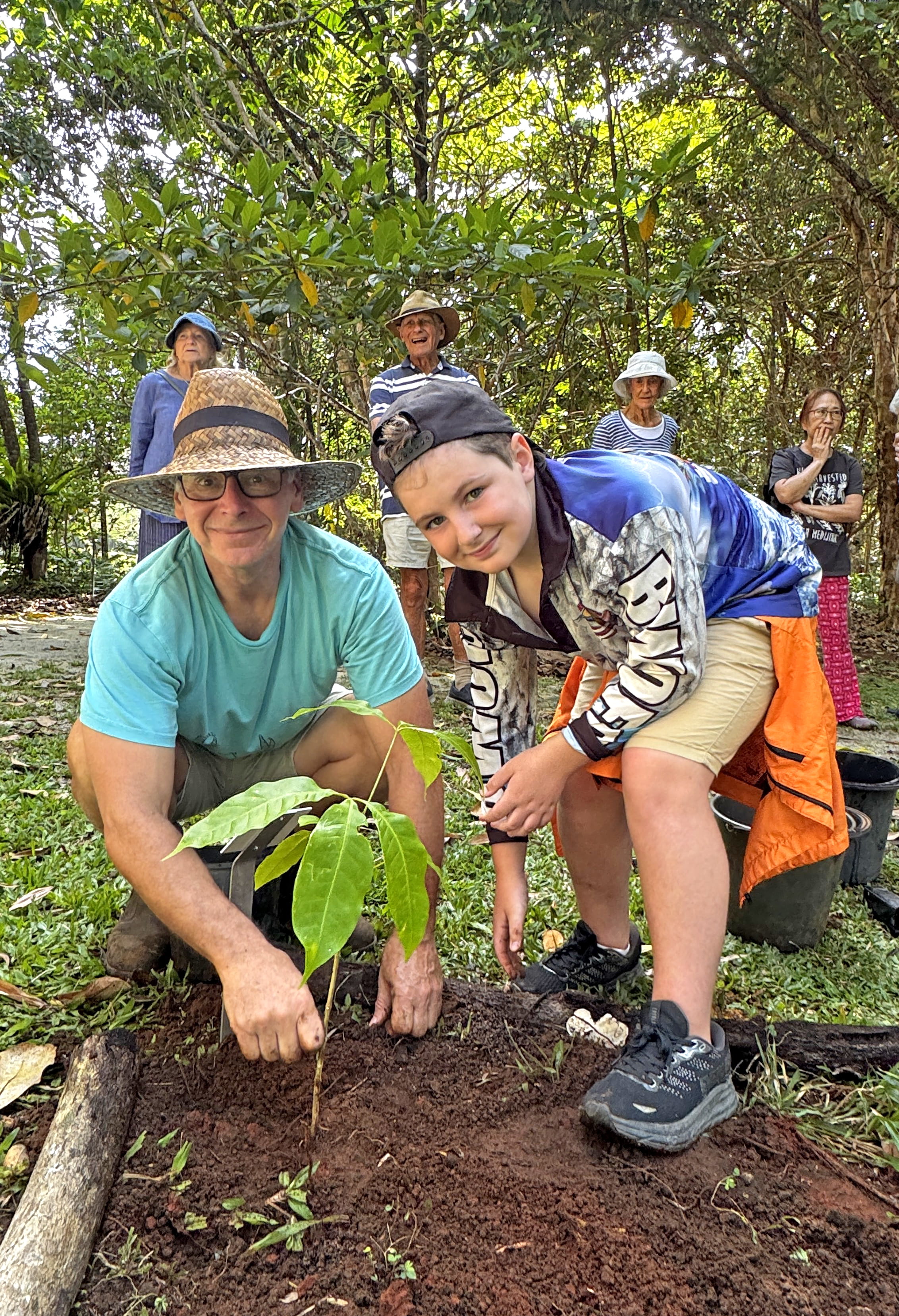

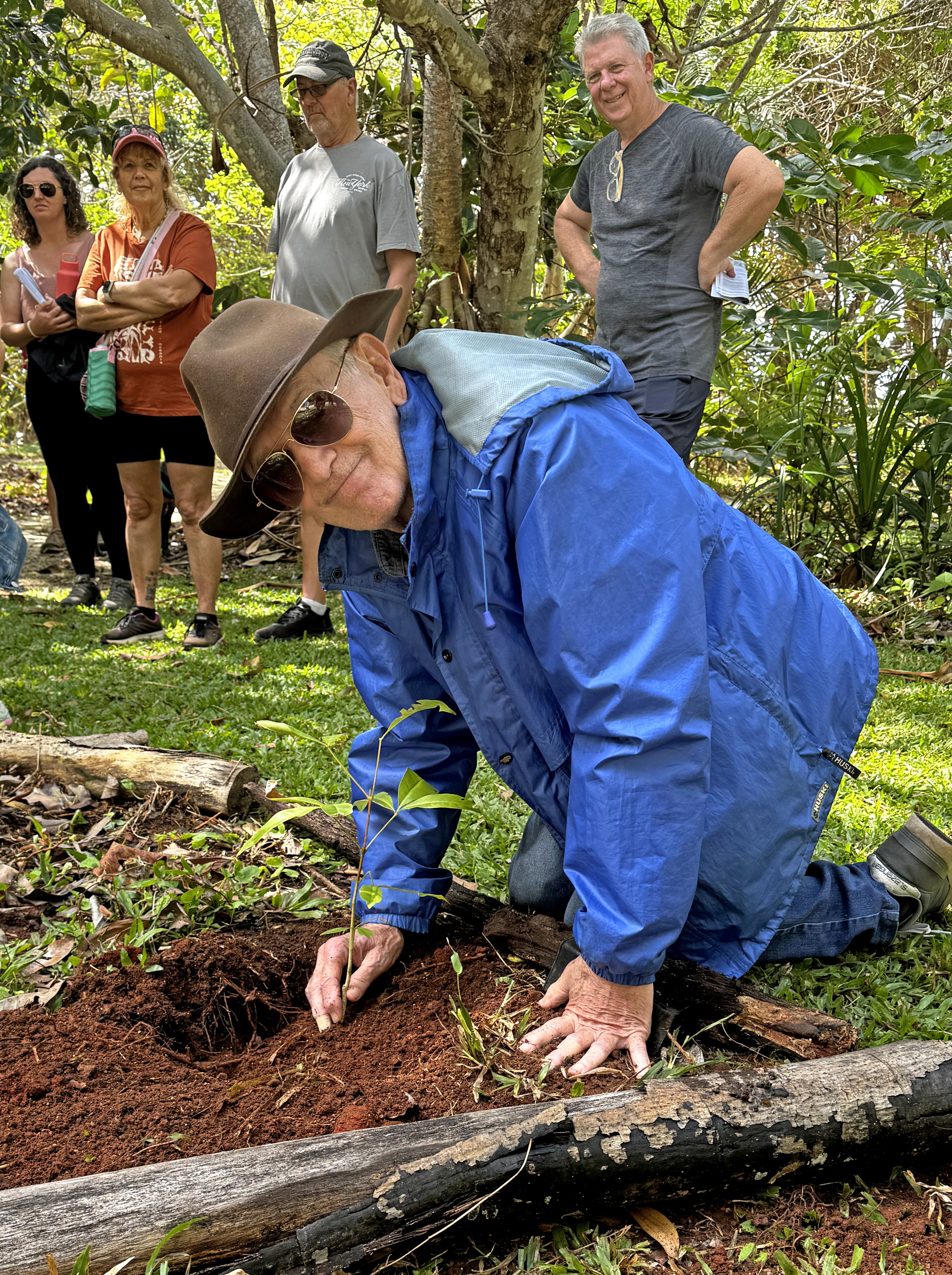
Ian Shankley helps Jaxon Krunes plant one of three Euodia trees
World Cassowary Day, held on 26 September, brought the Mission Beach community together on Saturday to celebrate its iconic bird and 25 years of a conservation project woven through the heart of the community.
Hosted by C4 – Community for Coastal and Cassowary Conservation – and Mission Beach Coastcare, the morning celebrated the Ulysses Link, first opened in 2001 and named after the brilliant blue Ulysses butterfly.
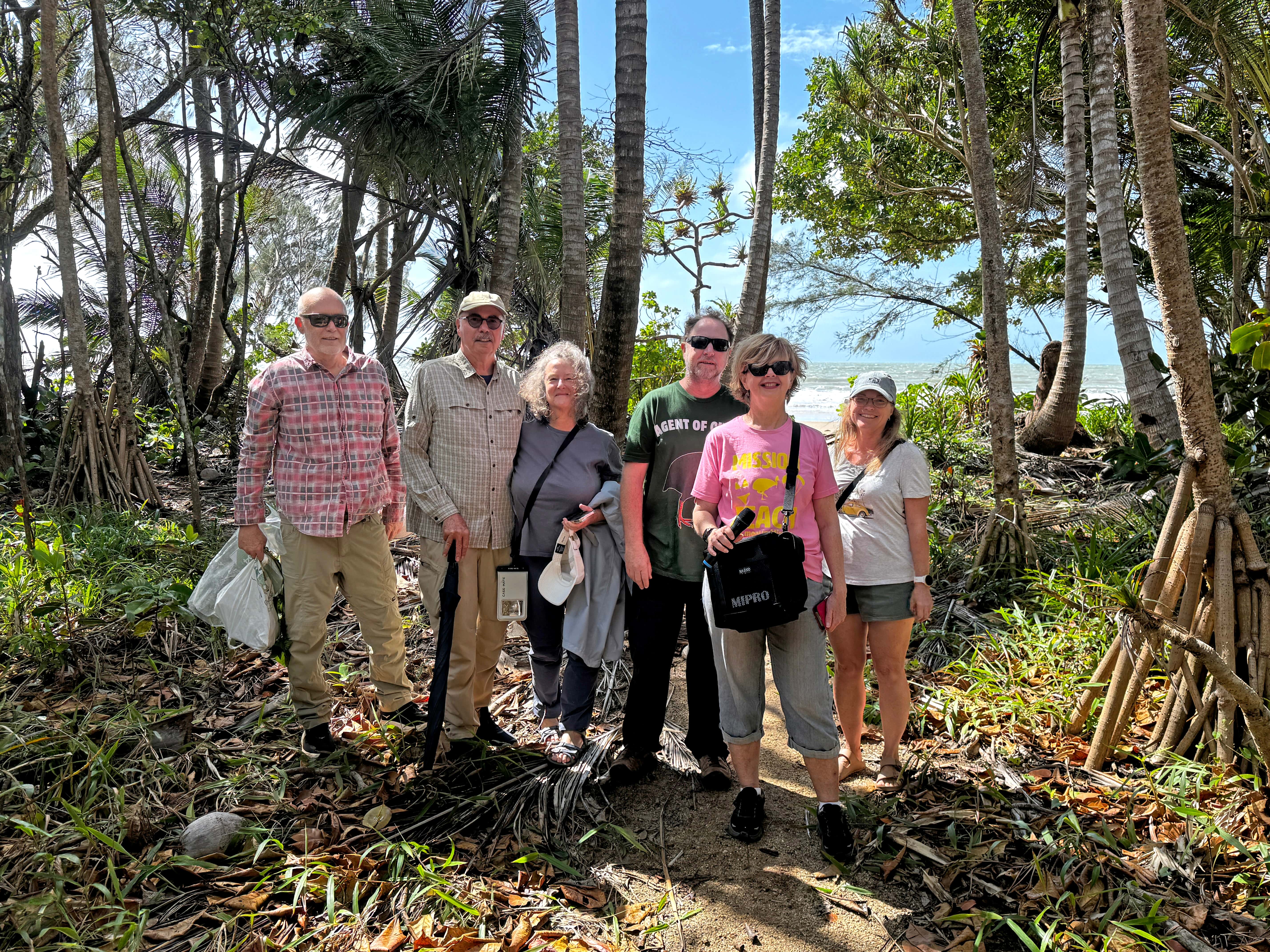
The celebration walk began at Perry Harvey Jetty, following the Cutten Brothers track through coastal rainforest and along the foreshore towards Mission Beach, before exploring the Ulysses Link and finishing at C4 and the Norm Byrnes Arboretum. Along the way, participants learned more about the habitat supporting cassowaries and other wildlife, and the conservation, revegetation and community projects that have shaped the area.
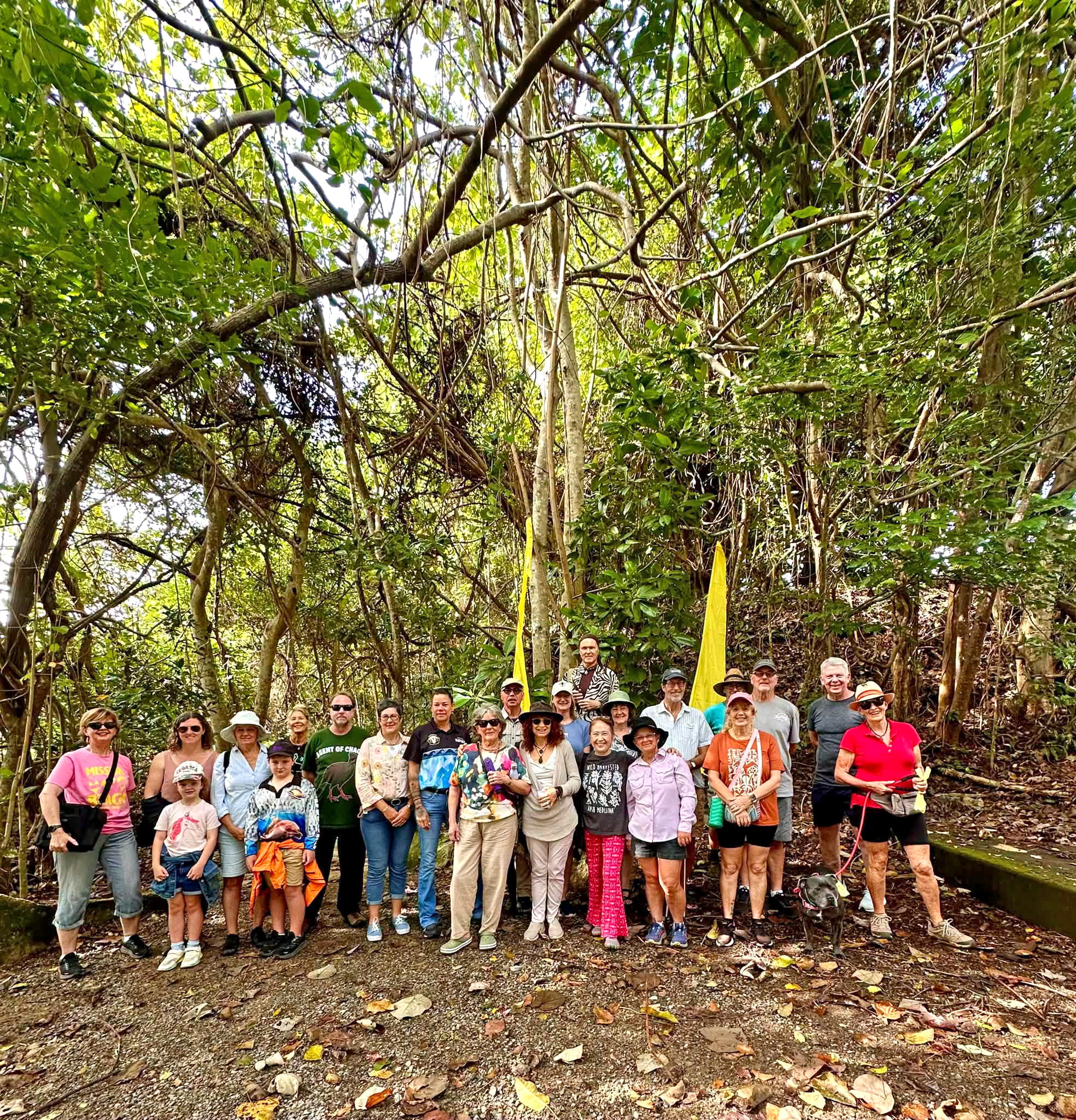
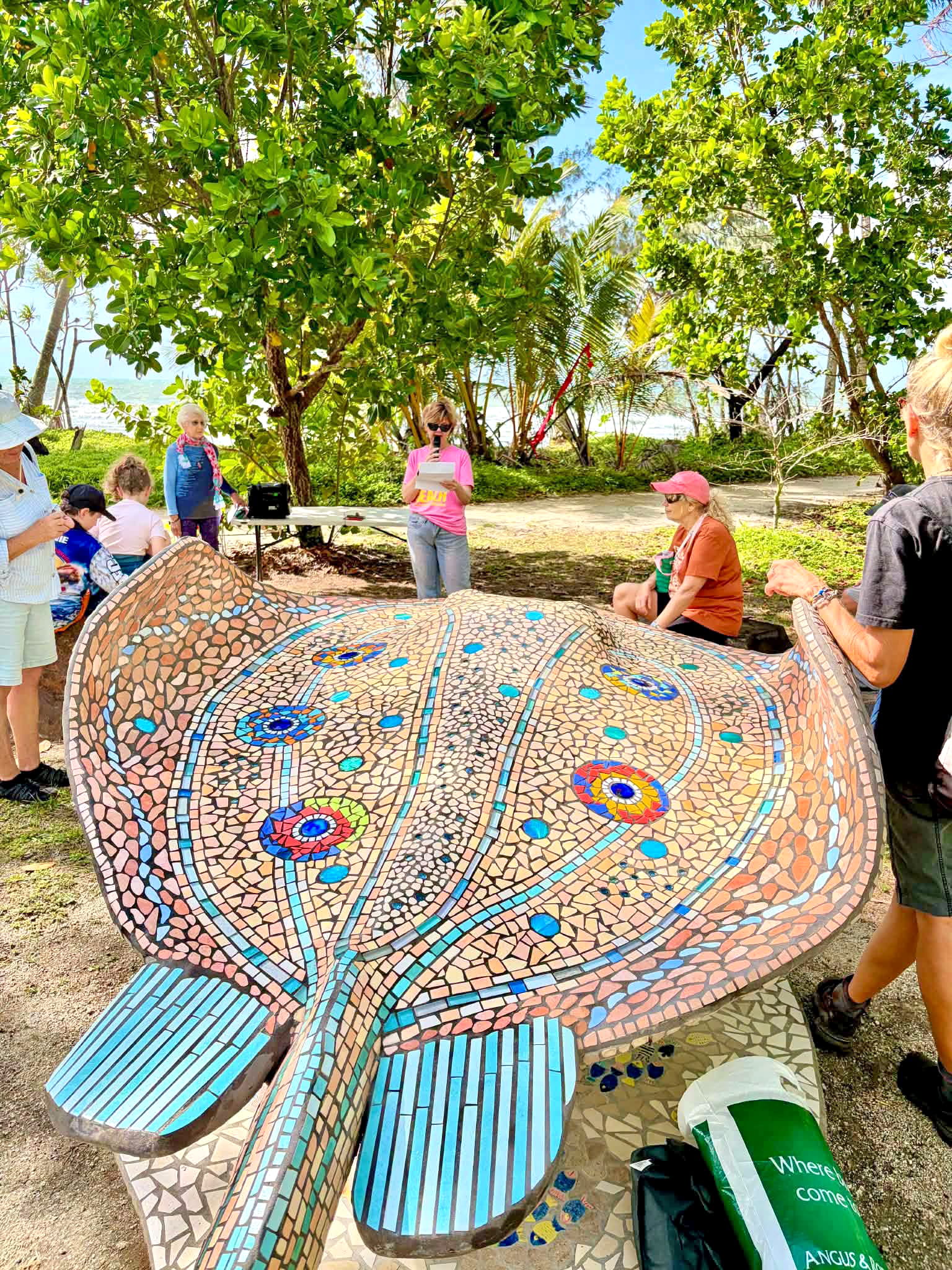
At the foreshore, the colourful mosaic stingray Raya provided a reminder of another important part of the Link’s history, community art. Local artists, school students and community members have contributed mosaics, ceramics and other artworks over the years, including Deanna Conti’s distinctive mosaic poles near the Porter Promenade entrance to the walk.
Mission Beach Coastcare’s Tony O’Malley led a walk and talk highlighting native plants and the continuing work to care for the coastal environment.
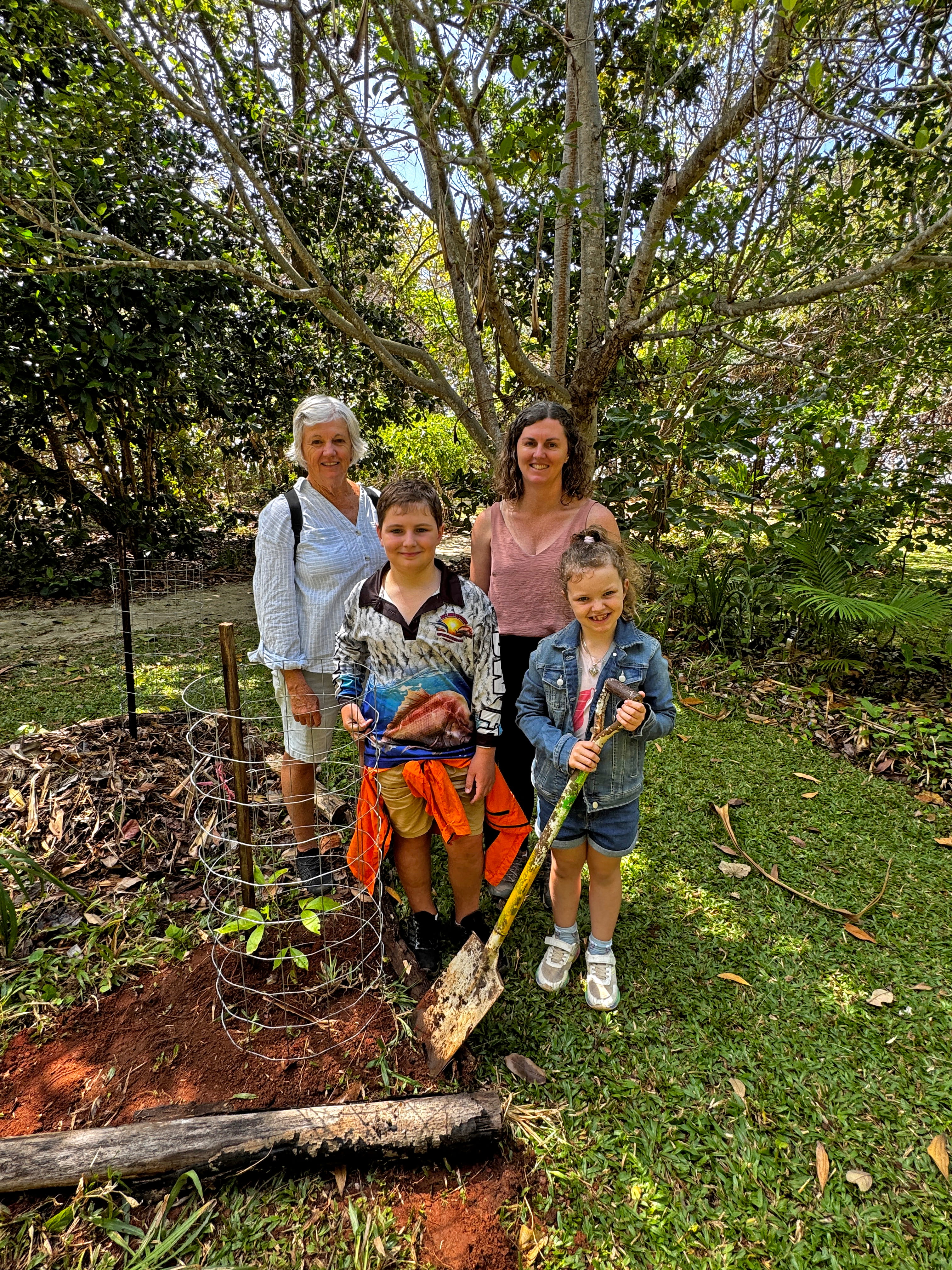
The anniversary celebrations continued at the Norm Byrnes Arboretum, beside C4, where participants planted three Euodia trees, an important host plant for the Ulysses butterfly.
Butterfly enthusiast Kath Vale brought the story of the Ulysses Link down to the smallest details, explaining just how closely the brilliant blue butterfly is tied to the plants growing through the Mission Beach landscape.
The arboretum itself honours C4 founding member Norm Byrnes and his passion for native plant conservation, with Dr Bob Jones, who planted one of the three trees, continuing that legacy through years of planting, identifying and caring for its collection.
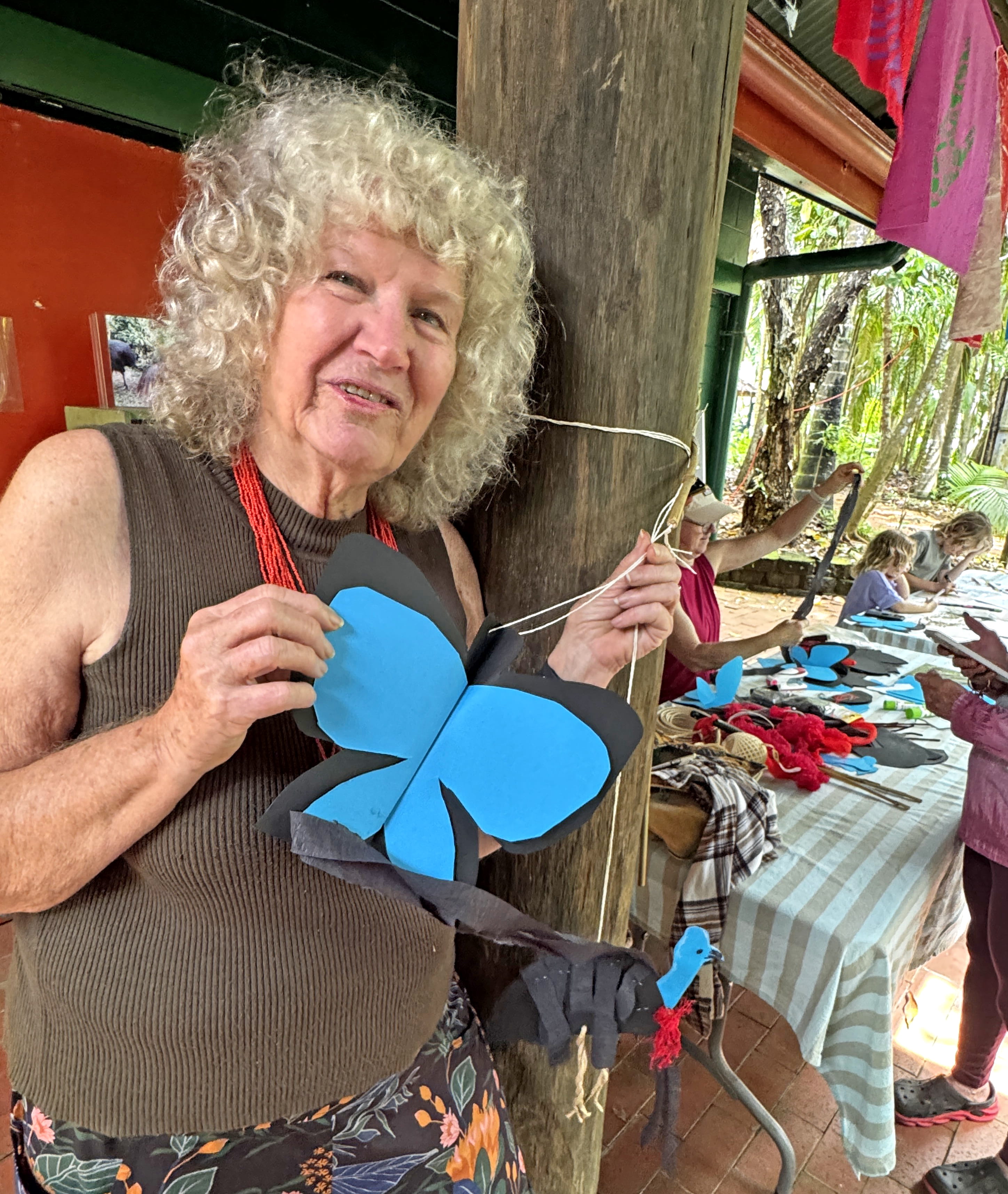
The morning finished at the C4 Environment Centre, where local artist Sally Maroney led cassowary and Ulysses butterfly activities for children, while Ulysses Link Goes Silver revisited 25 years of photographs, original designs, artworks and community stories.
Twenty-five years after the Link was created, Saturday’s celebrations showed that its story continues – through the rainforest, public art, volunteers and the next generation of trees being planted at Mission Beach.
C4 welcomes locals and visitors to learn more, volunteer, become a member or lend a hand with conservation projects. Drop into the C4 Environment Centre at 55A Porter Promenade, Mission Beach, phone (07) 4068 7197 or email hello@cassowaryconservation.org.
Clump Point Coastcare meets on the first Saturday of each month at 8am for an hour of caring for the local environment. Everyone is welcome – just bring a butter knife for tackling the weeds and meet at the C4 car park.
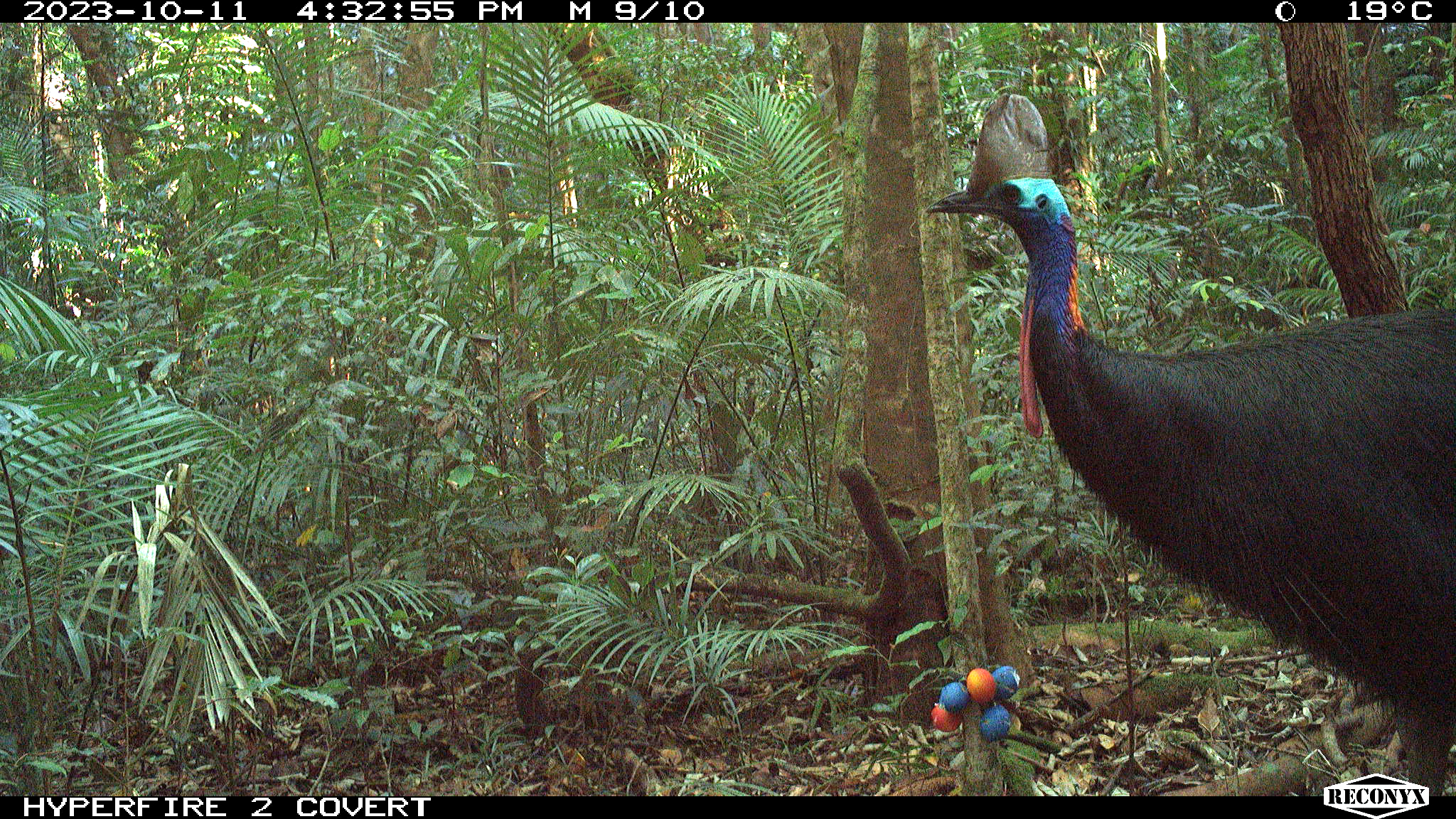
Cassowaries are large, flightless birds which stand as high as a human. They are highly endangered and only about 40 birds remain in the Mission Beach area. They are often seen on the Kennedy Bay, Licuala and Lacey Creek walks. If confronted they can become aggressive. If you encounter one – don’t run, back off slowly and wait for the bird to move on.
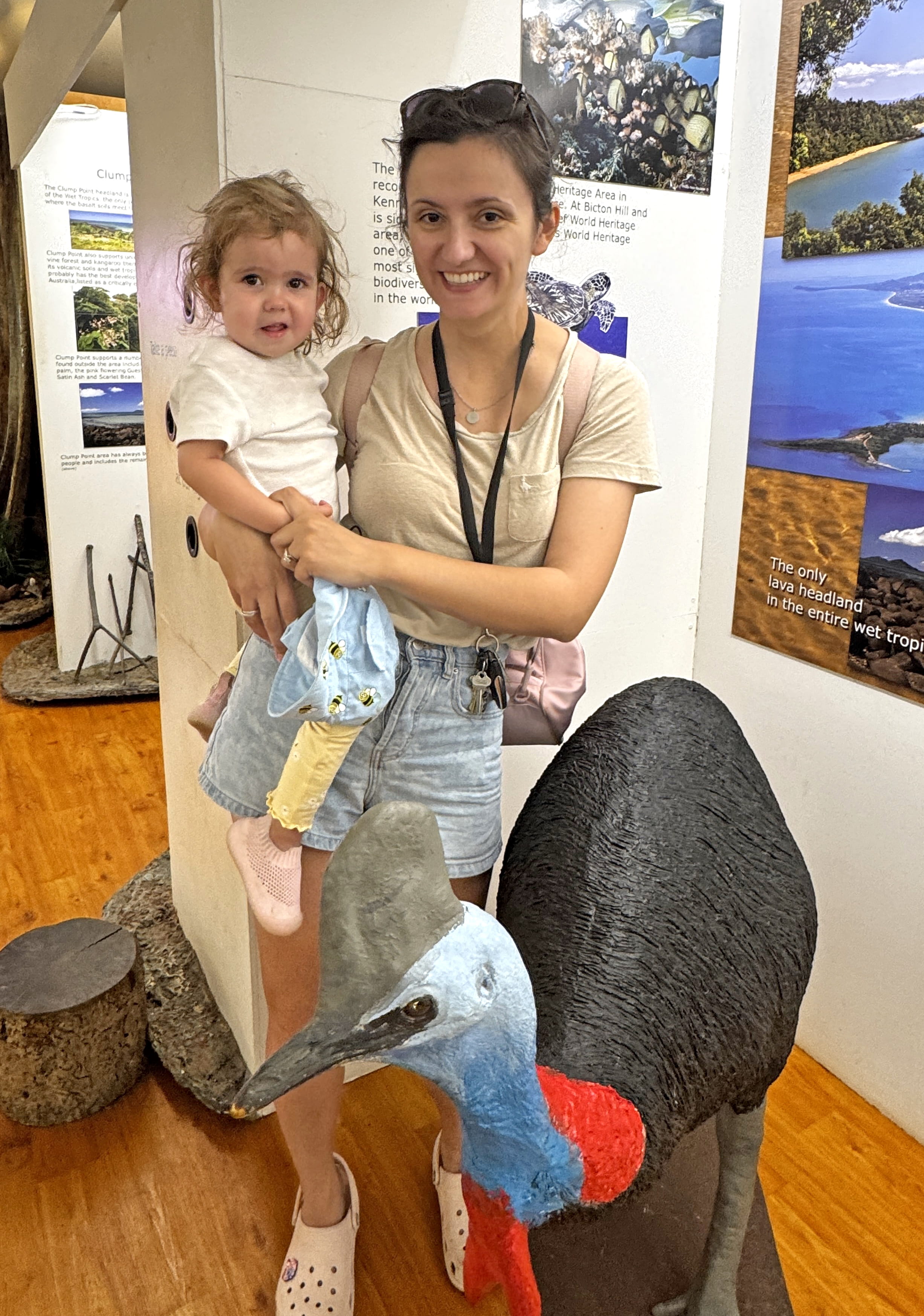
Clump Point, at Mission Beach, is the only place in the Wet Tropics where volcanic soils meet the ocean. The combination of rich soils, high rainfall and maritime climate produce unique ecosystems, including endangered littoral rainforest and kangaroo grassland. Clump point is significant to Djiru people,
Provided by Clump Point Coastcare
Publishers Indemnity. Any individual or entity that places advertising, supplies copy material, or submits editorial content to Life Publishing agrees and undertakes to ensure that all such material:- Does not infringe upon any copyright, trademark, or other intellectual property rights;- Is free from any content that could be considered defamatory, libelous, or slanderous;- Does not infringe upon any rights related to privacy or breach of confidence;- Contains no obscene, indecent, or otherwise unlawful material;- Complies fully with the Trade Practices Act and all other applicable laws, regulations, or statutes. Furthermore, by submitting or placing such material, these individuals or entities agree to indemnify and hold harmless the publisher, Life Publishing and Events Pty Ltd, and/or its agents from and against any and all investigations, claims, demands, liabilities, damages, costs, or judgments arising out of or in connection with the material provided. All material is believed to be accurate at the time of printing and remains the copyright of Life Publishing and Events Pty Ltd.
© 2026 Life Publishing Group Ltd.