
Independently Owned, Locally Grown, Community Loved
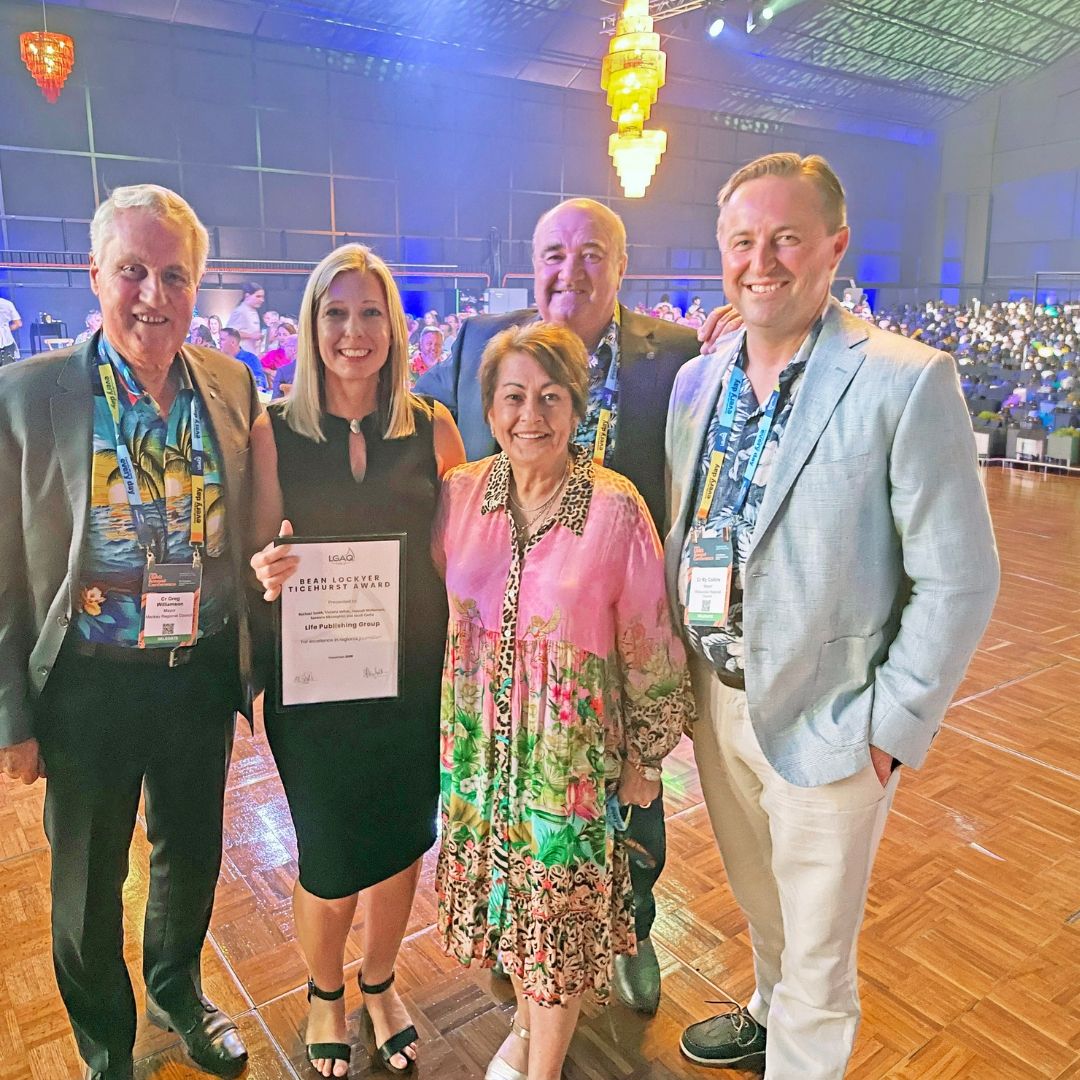
Hi Everyone, Exciting news from the Life Publishing Group team this week – we’ve won this year’s Local Government Association of Queensland Journalism Award! We’re particularly humbled by this achievement, especially given the competition with The Australian coming in second and the ABC third. This state award recognises excellence in regional journalism, and our positive, community-focused, hyperlocal coverage across the group took out the top accolade. I travelled to Cairns on Tuesday to accept the award on behalf of our team, and I would like to acknowledge all our journalists for the exceptional work they do every day across all the regions we serve. A big round of applause goes to Hannah McNamara, Victoria Velton, Jacob Casha, Zach Houtenville and our Editorial Team Leader Suzanna McLoughlin. As some of you may know, most of our journalists come to the regions as cadets, embarking on their first jobs in journalism. They are thrown into a new community and often become the only on-the-ground journalists covering local news. They are then supported by our fantastic team of professionals, and together we produce the papers our communities read every week. Every page is a team effort, from the advertising booked by our Sales Managers to the pages created by our designers, the production team bringing it all together and our journalists delivering the content. Thank you to the whole team for everything you do and well done to each journalist for collectively producing a body of work of such a high standard that we received this top gong. I would also like to mention the origins of this award, which are particularly meaningful. The LGAQ established it in honour of ABC cameraman John Bean, journalist Paul Lockyer and helicopter pilot Gary Ticehurst, who tragically died in a crash while on assignment in 2011. They were a well-liked and deeply respected crew who spent much of their time working in regional areas. Their loss sparked an outpouring of grief from regional leaders who understood the enormous contribution they made to ensuring regional Queensland was given a voice and its contribution to public life was recognised. It is an honour to continue their legacy in our own small way, ensuring regional Queensland communities remain connected and have a strong voice through positive, local free newspapers every week. The awards night was spectacular, with more than 500 Mayors, Councillors and local government staff in attendance and I was thrilled to meet up with five of the local Mayors from the regions we serve. When I was called up on stage to accept the award on behalf of the team, it was a moment that made all our dedication to regional journalism feel worthwhile. To my surprise, when I came off the stage, all our local Mayors came over to congratulate us. I was greeted by Mayor Greg Williamson from Mackay, Mayor Ry Collins from the Whitsundays, Mayor Pierina Dalle Cort from the Burdekin and Mayor Ramon Jayo from Hinchinbrook. I have to confess, I had tears in my eyes at that moment! I later found out that Mayor Ramon Jayo had nominated us for the award and that every Mayor had received a phone call from the judging committee, with each vouching for the incredible work our team does every day in their regions. Thank you to all the Mayors, including Mayor Teresa Millwood from Cassowary Coast, where we have recently expanded. It was a delight to share your table on the night! And finally, thank you to our incredible team, our Publisher Bec Douthwaite, the LGAQ for this significant recognition, and our wonderful readers and local businesses who are part of the Life community. Rach
Read the full story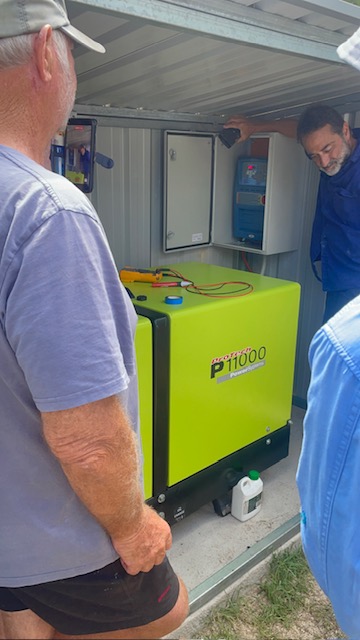
Cardwell RSL Sub Branch’s new back up generator is up and running! The generator was secured through FRRR funding, and will give the sub branch peace of mind and a contingency plan should extreme weather cause any outages come storm season. Electrician Adrian Cammeleri visited the branch this week to give RSL Members a tutorial on how to run the back up generator. “The Cardwell RSL is extremely grateful for the generous support given by the Foundation for Rural Regional Renewal (FRRR),” said Cardwell RSL Sub Branch President Robert Lang. “Without their grant funding this Gen Set compound & electrical connection would not be possible.” FRRR works with local organisations and community groups to help address regional needs, recognising the importance of locally led projects in building stronger, more resilient communities. Its funding supports a range of initiatives, from community infrastructure to disaster preparedness. Local electrician Adrian Cammeleri offered the RSL some guidance on how to use their brand new back up generator. Photo supplied
Read the full story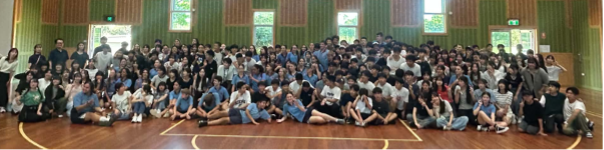
Tully State High School was delighted to welcome 162 students from Ohori Junior High School in Fukuoka, Japan, for a memorable day of cultural exchange and friendship. The visiting students spent the day getting to know our school community, sharing insights into their own school experiences, daily routines and interests. Tully SHS Year 8 students acted as buddies, proudly showing their Japanese visitors around the school and helping them feel welcome. A highlight of the visit was a range of Indigenous cultural activities facilitated by the Girringun Rangers. Students had the opportunity to try spear and boomerang throwing, hand painting and beading, providing a valuable insight into Indigenous culture and traditions. The day was filled with opportunities to learn from one another, celebrate cultural differences and build connections between the two school communities. A friendly game of dodgeball and Just Dance also brought plenty of fun and laughter! Tully State High School extends a heartfelt thank you to all the students, teachers, staff and the Girringun Rangers who contributed to making the visit such a wonderful and memorable experience. The visit was a fantastic opportunity to strengthen international connections, celebrate cultural diversity and create lasting memories for everyone involved.
Read the full story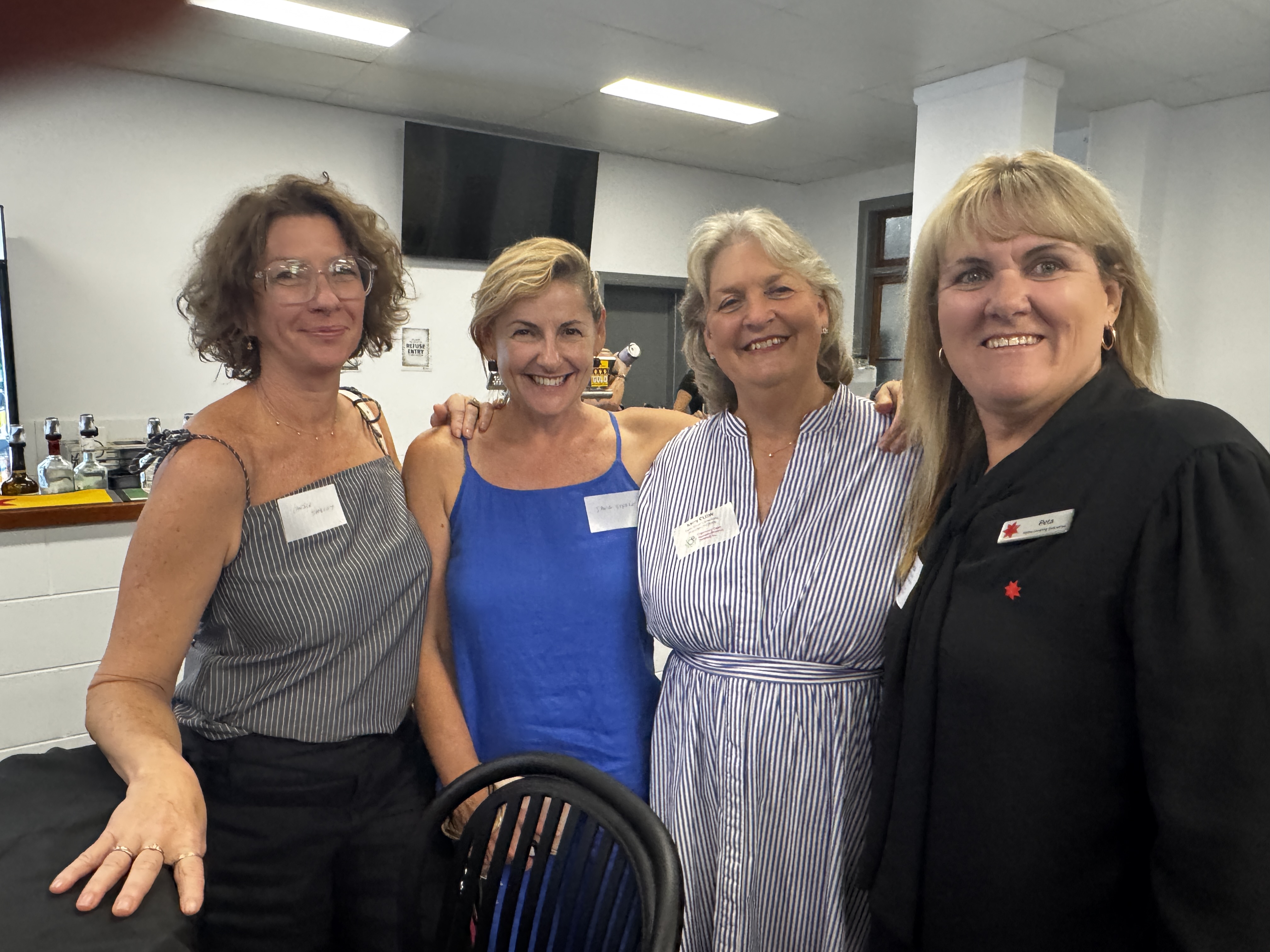
Photo credit: Helen Cook From copyright concerns to smarter booking systems, artificial intelligence is presenting both opportunities and challenges for Cassowary Coast businesses. Members of the Cassowary Coast Businesswomen’s Network (CCBWN) explored the rapidly evolving technology at an informative evening with Cairns-based digital specialist Nicky Jurd at the Mt Tyson Hotel in Tully on Tuesday 13th October. Photo credit: Helen Cook Under the theme Human vs AI, Nicky introduced participants to the growing range of artificial intelligence platforms, explaining how they differ, their practical applications and how dramatically their capabilities have improved in recent months. With technology advancing at remarkable speed, keeping up with developments is becoming a challenge in itself. The presentation explored how businesses can harness AI to improve productivity, streamline everyday tasks and work more efficiently, while also considering the risks and responsibilities associated with its use. Photo credit: Helen Cook Nicky, who established her digital business Precedence in 2000, has more than 25 years' experience helping businesses navigate technological change. CCBWN President Kerry Chow said the evening reflected the network's commitment to supporting local business women through learning, networking and shared experiences. photo credit: Susan Kelly photo credit: Susan Kelly "The Human vs AI event was exactly the kind of evening the Cassowary Coast Business Women's Network is here to create," she said. "An opportunity to connect, learn, share ideas, support one another and explore a business topic that is becoming increasingly relevant to all of us. photo credit: Susan Kelly "It was a terrific example of professional development that was practical, engaging and genuinely useful." photo credit: Susan Kelly Beyond the presentations, the network provides valuable opportunities for local businesswomen to build connections, exchange experiences, learn from one another – and enjoy a fun night out. photo credit: Susan Kelly Next month, CCBWN is supporting the ‘growHer Long Lunch’ event organised by the Tully Women in Ag group, which is an initiative focused on building awareness and understanding around wellbeing in our rural communities - Saturday 7th November at the Tully Country Club. Members and guests are welcome. Visit www.ccbwn.org.au for more information on this and future events. photo credit: Susan Kelly photo credit: Susan Kelly
Read the full story
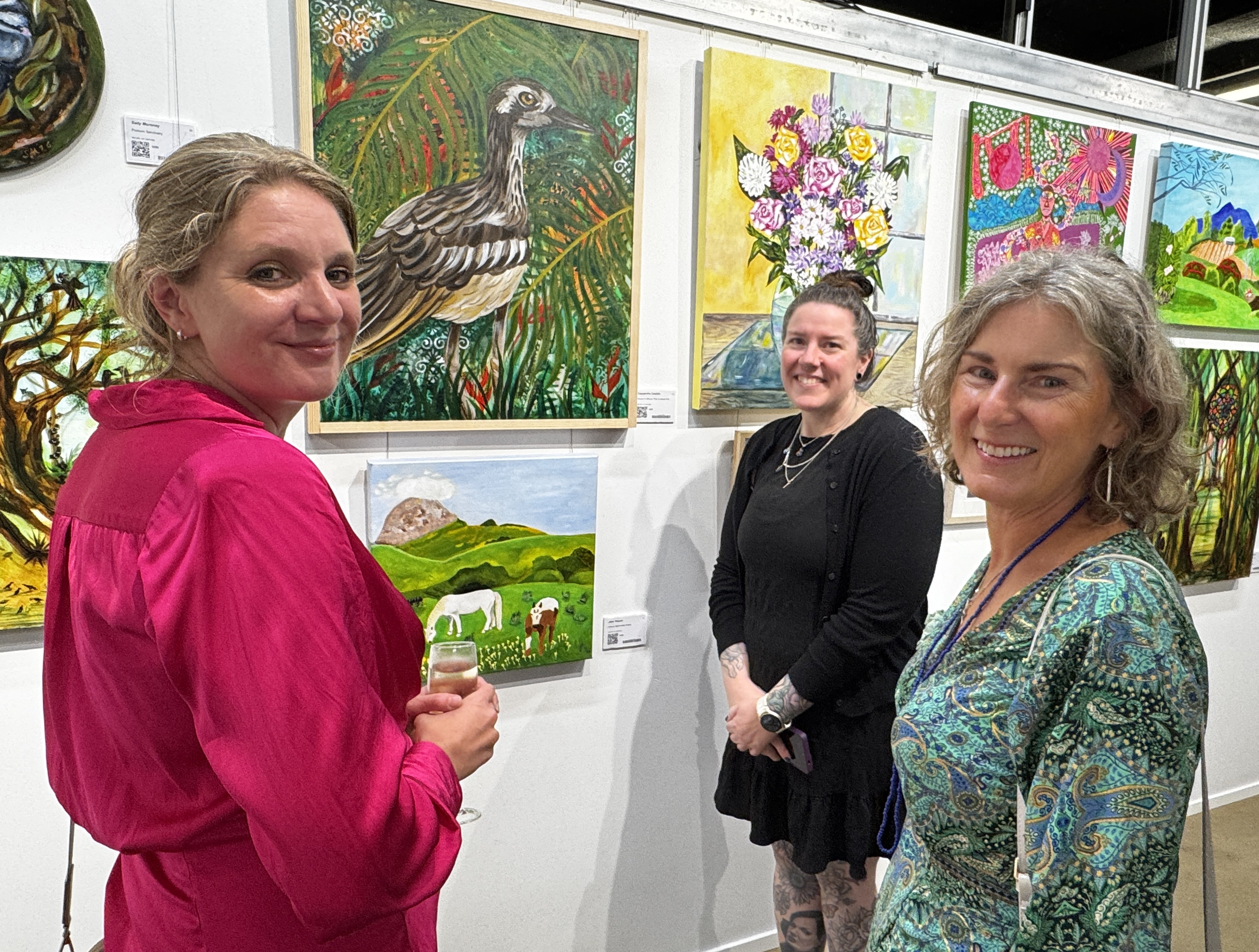
Sophie Turner, Cassandra Cataldo and Annie Hepner enjoy the many interpretations of Sanctuary at the exhibition’s opening night including Cassandra’s painting ’Home Is Where The Curlews Are’
More than 20 works by local artists are exploring the many meanings of Sanctuary in the latest exhibition to open at Mission Arts.
From the comfort of home and familiar wildlife to the peace found in nature and landscape, the exhibition reveals personal interpretations of what it means to find refuge, belonging and calm.
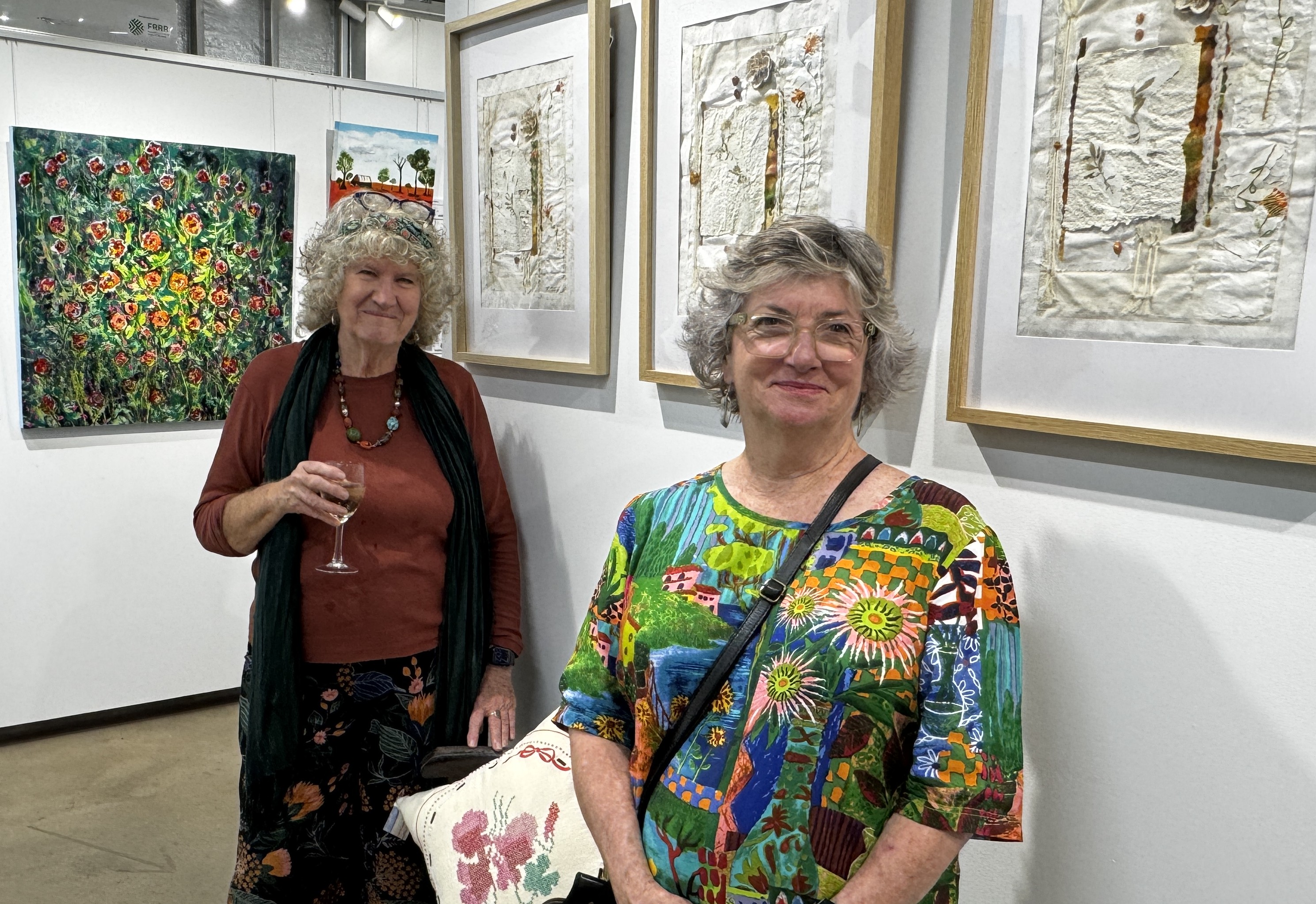
Opening the exhibition on Friday night, local artist Sally Maroney said the theme was deliberately chosen to challenge artists to explore their own interpretation of the topic.
“Sanctuary is a theme that can be interpreted in many different ways – safe and comfortable, for people or animals; or for refugees, a new home,” she said.
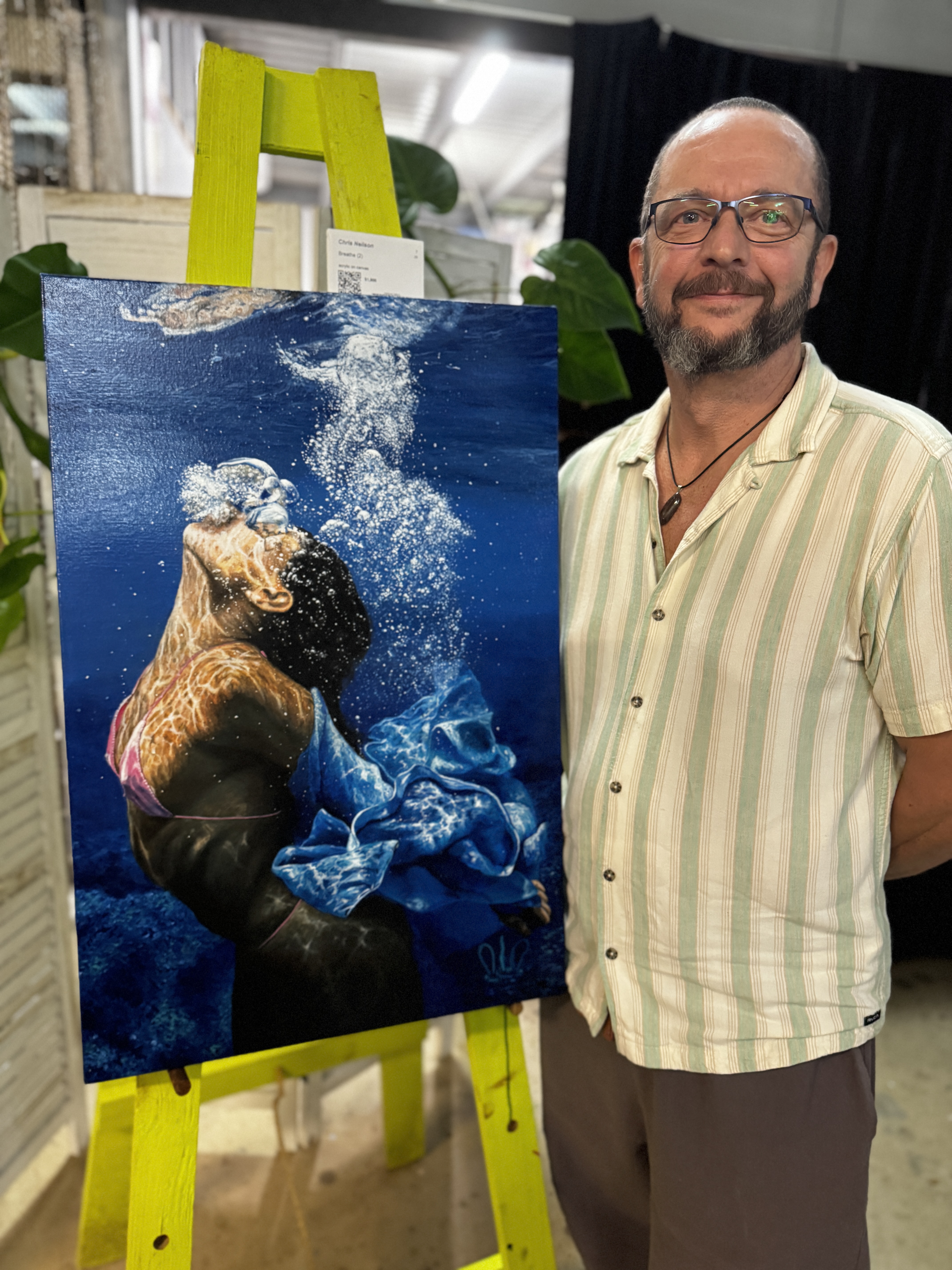
Each artist has also provided a statement to accompany their work, available on the Mission Arts website, offering an insight into the inspiration and meaning behind each piece.
For Cassandra Cataldo, sanctuary can be found close to home. Her acrylic painting, Home Is Where The Curlews Are, celebrates some familiar feathered residents.
“The curlews have been in our yard as long as we have – my sanctuary,” Cassandra wrote.
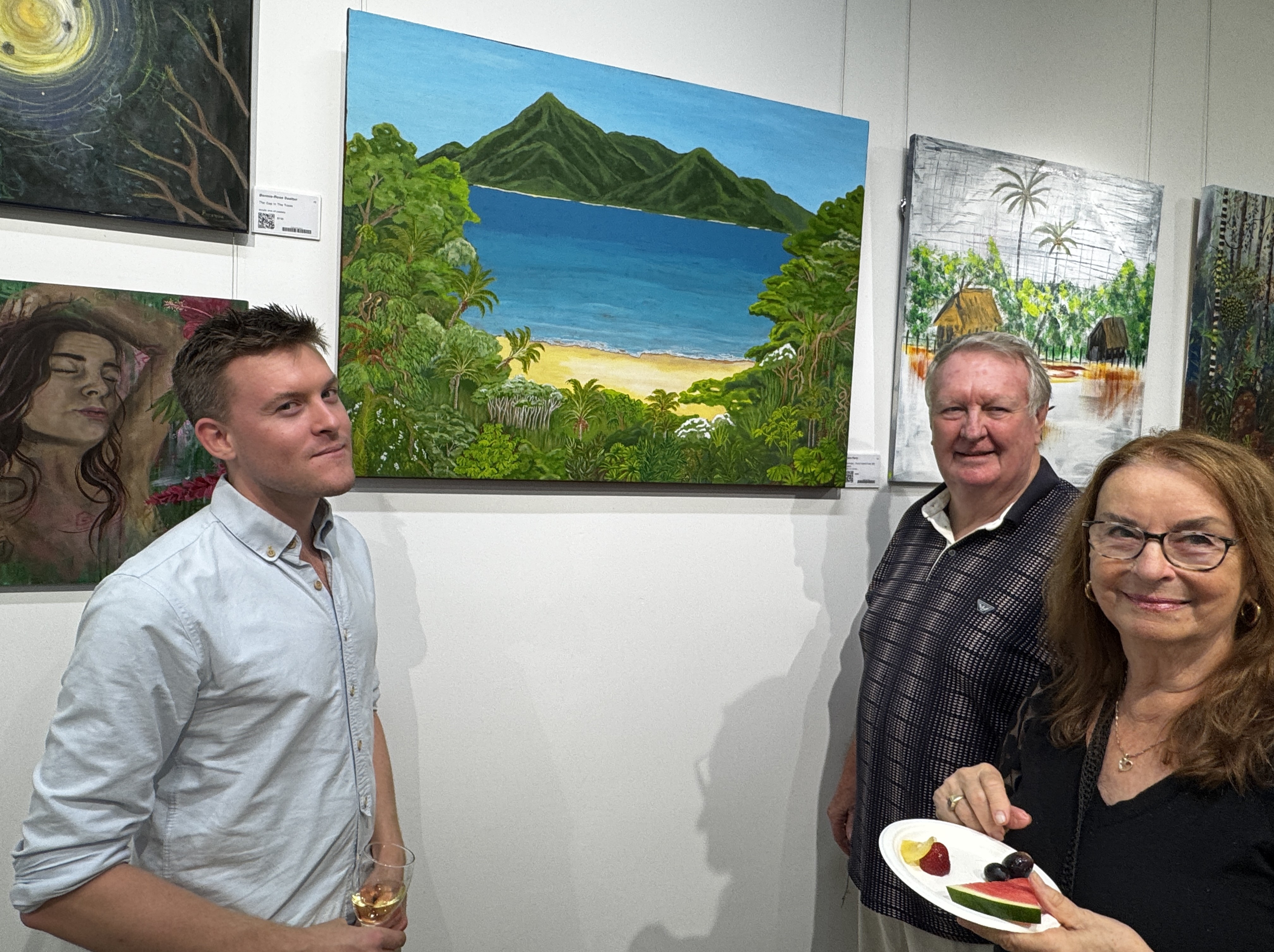
For Bruce Parry, his artwork Sanctuary – Dunk Island from South Mission is also closely connected to the natural world.
“For me, sanctuary means being surrounded by nature and being able to have the time to observe in great depth,” he wrote.
Sanctuary is on exhibition at Mission Arts until October 20. The gallery at the Mission Beach Community Arts Centre, MARCS Park, 2290 Tully Mission Beach Road, is open daily from 10am to 2pm. Entry is free.
Information about the exhibition and artists’ statements can be viewed at www.missionarts.au.
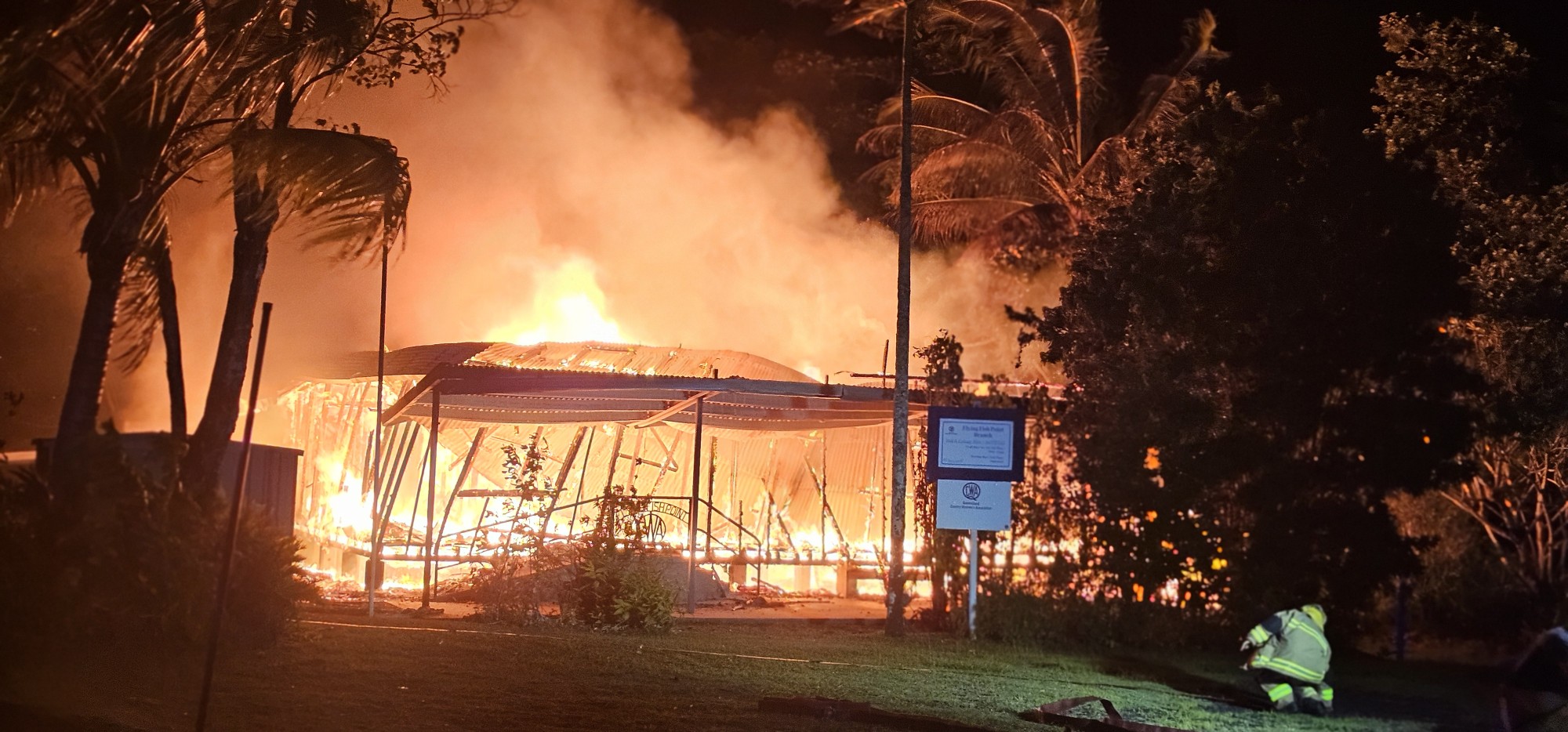
The QCWA Flying Fish Point hall was destroyed by fire following an electrical fault, leaving the branch working to rebuild its facilities. Photo supplied by QCWA Flying Fish Point
Queensland Country Women's Association (QWCA) Flying Fish Point is calling on the community to come together for a day of fundraising as the group works to recover from a devastating fire.
Members will be holding a Cent Sale at Innisfail’s Queens Hotel on Saturday 21st November, with proceeds helping fund repairs and refurbishment of the branch’s cottage on Alice Street, as well as plans to eventually rebuild its hall.
“Unfortunately, our hall was destroyed by the fire due to electrical fault, leaving us without the larger meeting and community space that was such an important part of our Branch,” said 2026 QCWA Flying Fish Point President Deborah Blennerhassett.
“We are determined to keep moving forward and restore the Cottage as a welcoming space for our members and the wider community.”
Since the fire, the cottage has faced several attempted break-ins, creating further repair costs and leaving the branch in need of new furnishings.
QCWA Flying Fish Point is the only remaining QCWA branch in the Innisfail area, with members keen to ensure the organisation keeps going. Broader fundraising efforts have included selling raffle tickets and Hundred Boards through local businesses and community events.
“Our future plans include restoring our cottage, working towards rebuilding our hall and eventually promoting the cottage and hall as a community venue and destination for functions and weddings,” Deborah said.
“We would love to see the cottage become a place where people can gather, hold events and enjoy the beautiful Far North Queensland area.
“We want to get back to doing what we love — supporting our community. Over the years, our Branch has supported many local causes and community organisations, and having our cottage and hall back up and running will allow us to become even more involved and continue giving back to the community.”
Members have continued to meet despite the loss of their facilities, with regular meetings and craft days taking place. The branch is welcoming new members from Innisfail and surrounding areas, with no previous QCWA experience required.
November’s Cent Sale will feature a range of prizes, with doors opening at 9am ahead of the first call at 10:30am. Entry is $10 per person, with numbers limited. Attendees will need to bring their numbered invitation, which will also serve as their lucky door prize number.
A pre-sale afternoon will also be held on Friday, 20th November, from 3pm to 6pm for people without a booked seat who would like to purchase their tickets ahead of the event. Bookings are required before the event, with the branch encouraging people to secure their places early by emailing admin@qcwaffp.com or calling 0457 971 111.
“Every ticket purchased, donation made and person who comes along to one of our fundraising activities helps us take another step towards restoring our Cottage and rebuilding our hall,” Deborah said.
“For our members, this is about much more than simply raising money. It is about bringing our Branch back to life, creating a place for our members and community to come together, and getting back to supporting the many local causes that are so important to us.”
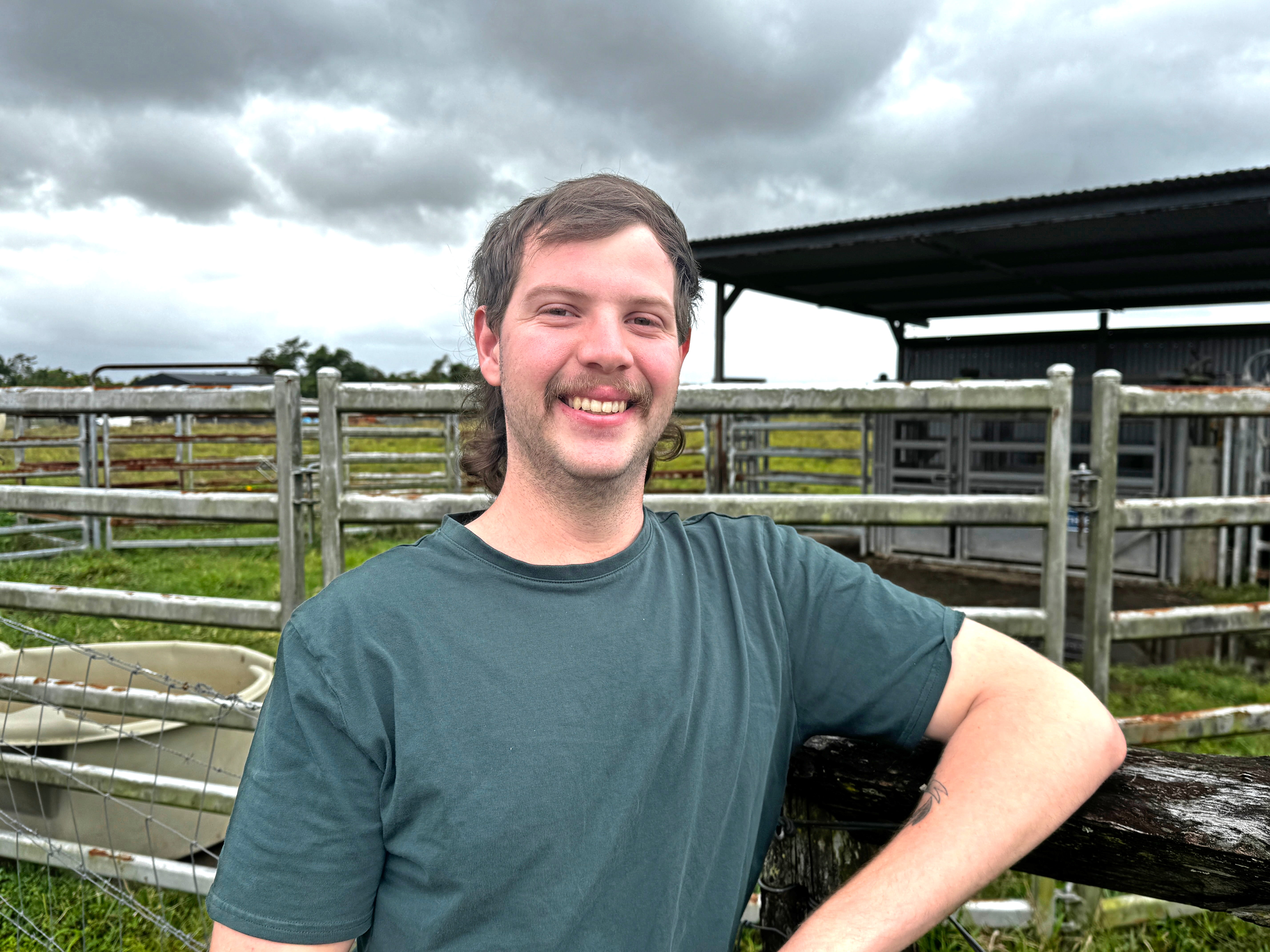
Cameron Anderson standing and speaking up for the district’s youth
At just 20, Innisfail’s Cameron Anderson has already spent several years putting his hand up for his community, joining the inaugural Cassowary Coast Youth Advisory Committee (YAC) in 2023 to help give young people a voice across the region.
Cameron joined YAC while school captain at Innisfail State College, after encouragement from his uncle.
“He said, ‘You’ve always had a passion for volunteering. You’ve always wanted to get yourself out there. So put in for this and just see if you get anywhere with it.’”
One initiative Cameron is particularly proud of came during YAC’s early meetings, when members raised the need for better access to university study locally.
“We had the Vocational Pathways Group come in to talk with us because we had an idea to create the Rural Study Hub,” Cameron said. “We were all in agreement. We prefer for youth to stay here and study, if they want to.”
Today, Cameron is benefiting from that opportunity himself. He works four days a week at Innisfail Hospital while studying online through CQUniversity to be a paramedic and uses the university study hub at Innisfail Library.
His willingness to speak up has prompted others to suggest he might consider a more formal community leadership role in the future – something Cameron says he may consider one day. For now, he believes YAC offers young people an opportunity to become more involved in their own communities.
“You begin to have a deeper understanding in what’s going on within your community and what can go on, and what you can provide for your community,” he said.
Members meet regularly, either face-to-face or online via Teams, with Cameron describing it simply as “a group of mates” discussing what is happening locally and what they can do.
And he wants more young people, particularly young men, to get involved.
“More people means a louder voice,” Cameron said. “Which means more can be done for the youth of the Cassowary Coast.”
Young people aged 15 to 25 interested in joining YAC can contact Council on 1300 763 903, email enquiries@cassowarycoast.qld.gov.au, or visit Council’s Youth Advisory Committee page.
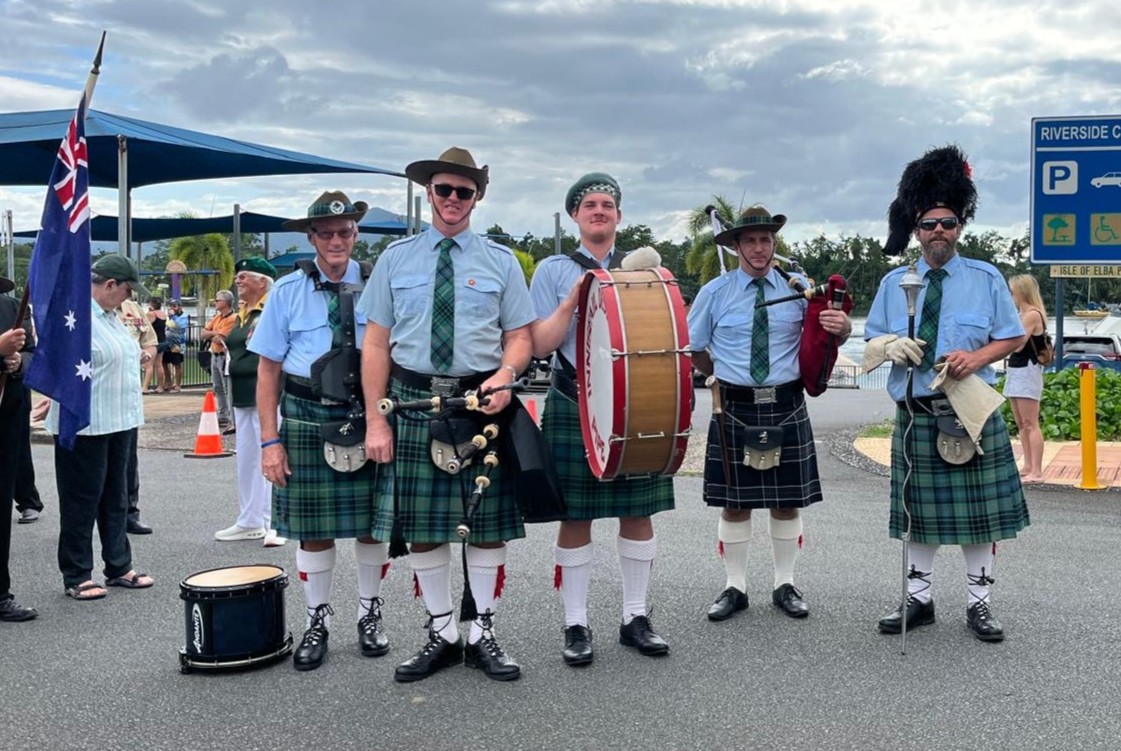
A $2,000 Council grant will help the long-running Innisfail and District Pipe Band Association purchase and safely store new equipment as it looks to attract new members. Pictured at Innisfail’s 2025 Anzac Day parade from left: David Cornish, Marc Darveniza, Elliott Ferguson, Michael Lindsey and Cameron Ferguson (Image supplied)
Community groups from Cardwell to Goondi will share in more than $200,000 of Cassowary Coast Regional Council grants, supporting everything from new pipe band equipment and community events to facility improvements and lawn care.
Council’s first round of its 2026–27 Community Grants and Support Program has backed six projects through its Community Programs and Initiatives stream, worth more than $24,000, along with 15 projects through the Community Infrastructure stream.
Among the recipients is the Innisfail and District Pipe Band Association, which will receive $2,000.
Band secretary, David Cornish, said the money would help purchase new equipment and provide suitable storage – an important investment for the small band as it looks to attract new pipers and drummers.
Formed in 1953, the band has a proud history in the district and once boasted a large membership. Today, membership has fallen to just six, but Mr Cornish hopes the grant will help breathe new life into the band and ensure the distinctive sound of the pipes continues to be heard at events across the district.
Elsewhere, the grants stretch across the region and cover a diverse range of local needs.
Cardwell UFO Festival will receive $7,500, Cardwell Sportfishing Club $3,630, Tully Women in Agriculture $2,000, Tully Motorcycle Club $4,942.40 and Goondi Scout Group $4,019.
Infrastructure funding includes $30,000 for Tully Show Society, $28,498 for Tully and District Men’s Shed, $25,400 for Mission Beach Rotary Club, $25,254 for Cardwell State School P&C Association and $19,064 for Garradunga Progress Association.
Mission Beach Community Arts, Innisfail golf and tennis clubs, Tully Girl Guides, QCWA Silkwood, Mission Beach Sailing Club and the Rotary Club of Tully are also among the successful recipients.
Mayor Teresa Millwood said the grants helped local organisations deliver projects that brought people together, encouraged participation and fostered local pride.
Further Community Grants and Support Program funding rounds will open soon, with details to be published on Council’s website and Facebook page.
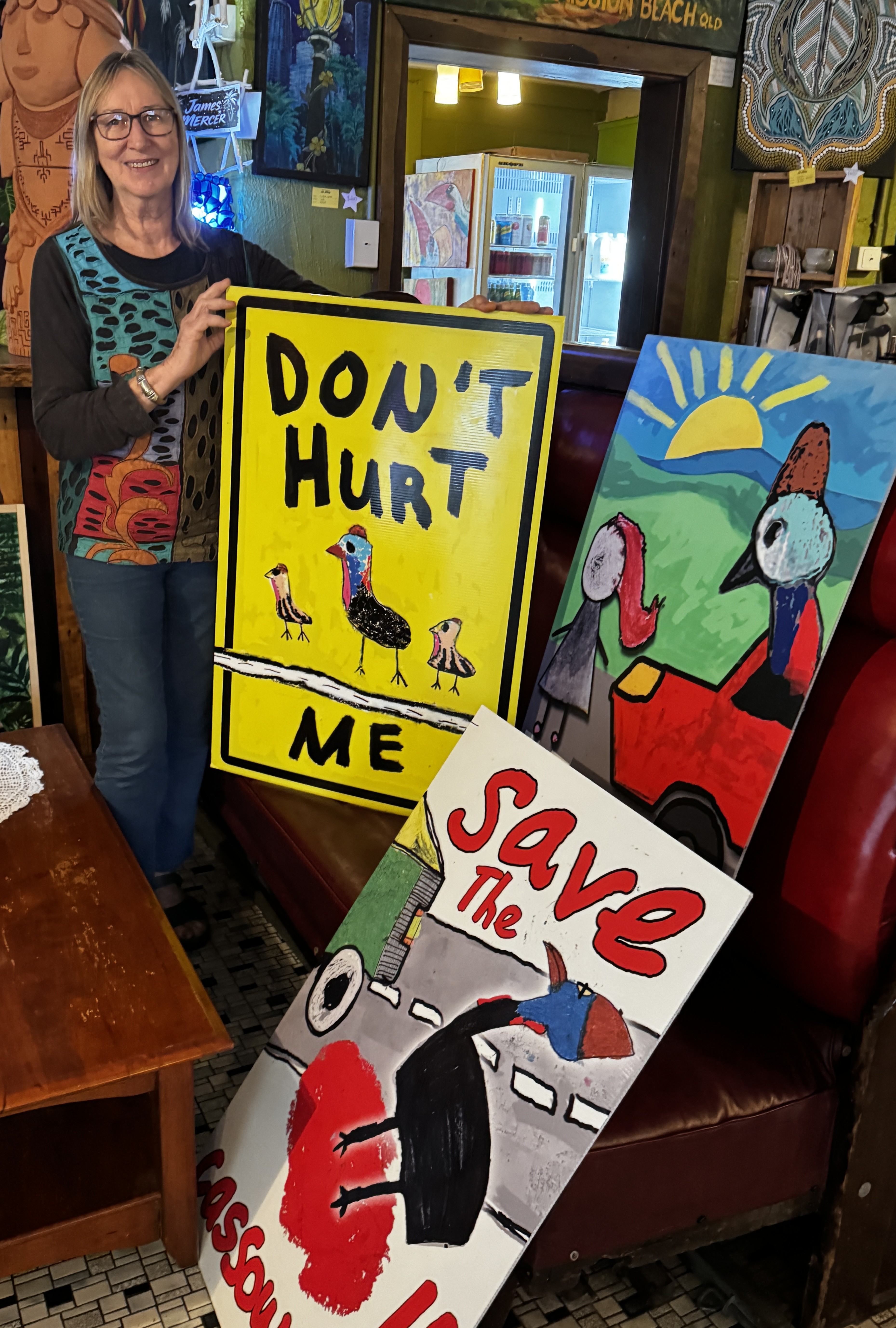
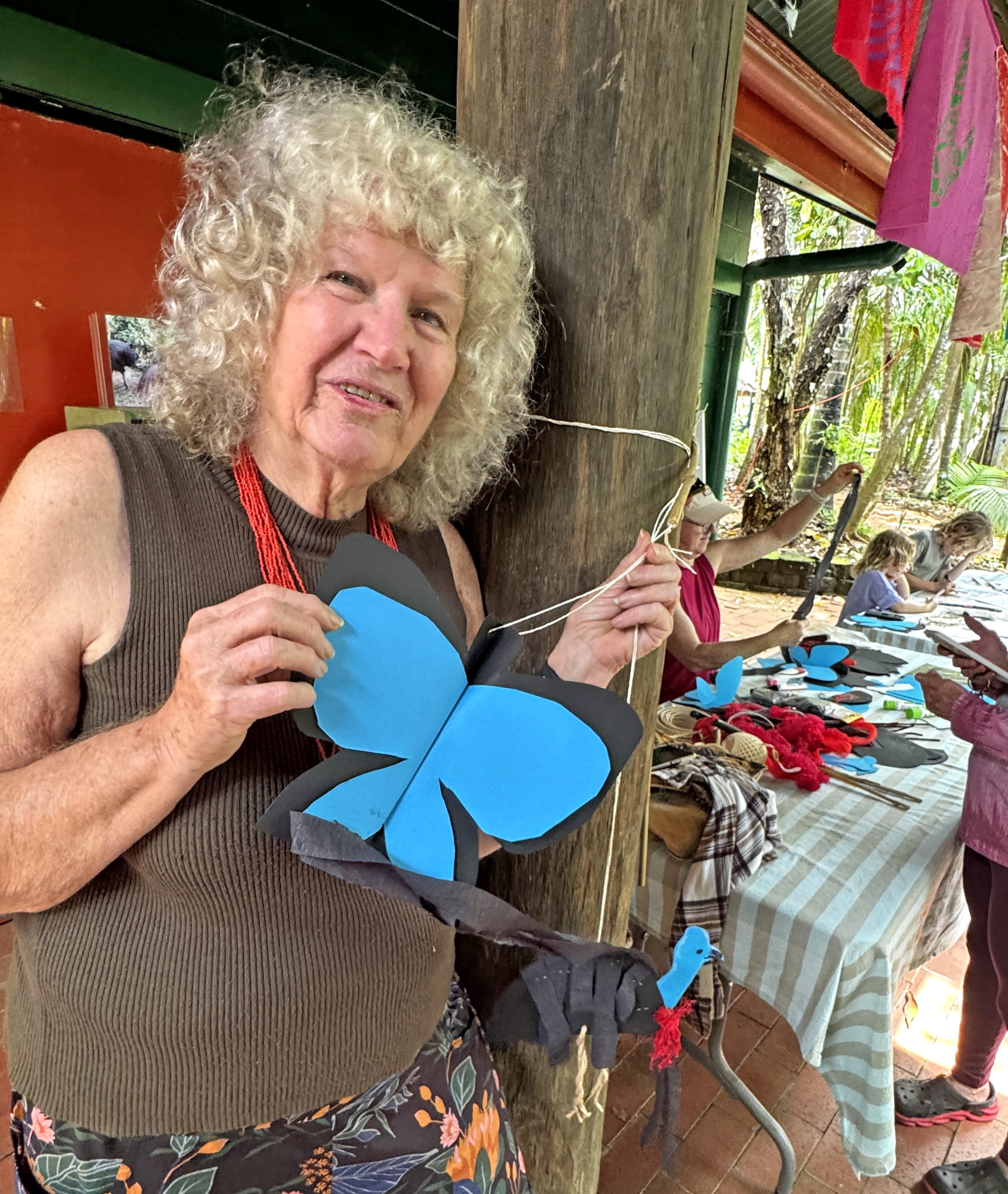
Liz Gaille with some of the colourful cassowary road signs created from Mission Beach State School students’ artwork, currently on display at the Bingil Bay Café. Photo credit: Helen Cook
When Liz Gaille first arrived at Mission Beach in the 1970s, she was captivated by the rainforest and wildlife. Decades later, that connection remains – particularly her love for the region’s most famous resident, the cassowary.
Living in cassowary habitat at Bingil Bay gave Liz plenty of opportunities to observe and photograph the birds – and discover just how different each one can be.
An original member of C4, Liz established Mission Beach Cassowaries in 2009, including its popular Facebook page, where she shares photographs, information and a gentle but persistent message about protecting the local cassowary population.
She’s also a lifelong creative – an artist and jewellery maker who admits she approaches most things with a “creative bent”. So perhaps it was inevitable that creativity, cassowaries and community campaigning would come together.
Around World Cassowary Day in 2017, Liz began working with Mission Beach State School students to create road-safety signs with a difference.
The children drew cassowaries and added their own messages to motorists. Liz then digitally transformed their artwork into printable signs, funded through donations, while making sure the distinctive drawings and handwriting remained.
“I tried to keep the drawing and writing exactly the way the children created the message,” she said.
Since then, Liz has produced several sets of signs featuring straight-to-the-point messages such as “Don’t Hurt Me” and “Save the Cassowary.”
Simple, colourful and hard to miss, they carry an important message from local children to motorists – slow down and look out for the true Mission Beach locals on World Cassowary Day, and every day.

This month, I want to update our community on three important issues we are continuing to advocate strongly for the Cassowary Coast.
Firstly, following a recent social media post I shared on behalf of our community regarding the incorrect disposal of used syringes and needles in our public spaces, Queensland Health has requested a meeting with Council to discuss the concerns that have been raised.
Representatives from Queensland Health, Cairns and Hinterland Drug and Alcohol Services, the Queensland Needle and Syringe Program, and the Queensland Injectors Health Network will attend.
The discussion will cover concerns regarding discarded injecting equipment in Innisfail, current program operations and supports, local impacts and community concerns, potential response options and partnership opportunities, and the next steps.
This is an important opportunity to ensurethe Cassowary Coast’s concerns are heard directly and that practical local responses are explored.Secondly, Council is establishing advisory stakeholder groups for both the Innisfail CBD Revitalisation Project and the future of the Warrina Lakes building.
These groups are about making sure community voices continue to help shape important local projects.
For the Innisfail CBD Revitalisation Project, the new Detailed Design Stakeholder Reference Group will help inform the next phase of planning for three priority areas identified in the 2023 Master Plan - Waterfront South Part A, Fitzgerald Esplanade Part A, and the Northern Gateway including ANZAC Memorial Park.
The group will include representatives from community organisations, business, youth, marine users, emergency services and key agencies, ensuring a broad range of perspectives are considered as detailed design work progresses.
For Warrina Lakes, we have proposed a Stakeholder Reference Group to support Council’s consideration of the building’s future.
Community feedback has shown just how strongly people value this facility.While no final decision has been made on whether the building will be refurbished or rebuilt, the advisory group will help review technical information, provide feedback on possible options, and contribute to the next stage of planning.
In both cases, these groups will be advisory only, but they will play an important role in helping Council make informed decisions.Finally, I want to acknowledge the growing concern across our region about insurance affordability and availability.
This is a very real issue for households, businesses and community organisations across the Cassowary Coast.
The rising cost of premiums, and in some cases the difficulty of obtaining cover at all, is placing additional pressure on communities already dealing with the challenges of living in a disaster-prone region.
This is not an issue Council can solve alone, which is why advocacy at all levels is so important.
I also acknowledge the involvement of Bob Katter, who has publicly raised these concerns and added his voice to calls for action on behalf of northern communities

Barry Lansdown with children, Nicholas, Julian, and Marina. Photo supplied
A unique reunion brought together eight former members of a Special Air Service Regiment (SASR) B Troop at the Cardwell RSL Sub Branch on Saturday, 19th September, to celebrate the 80th birthday of local identity Barry Lansdown.
B Troop served as a frontline Counter Terrorism Response Team in 1982, with the former members gathering in Cardwell to reminisce about their time together and the experiences they shared as young men.
Barry was Troop Sergeant and second-in-command during their 12-month cycle with B Troop, and reflected on the strong bond formed between the Navy and Army personnel.
He recalled how the two groups “integrated perfectly” and worked together as one team.
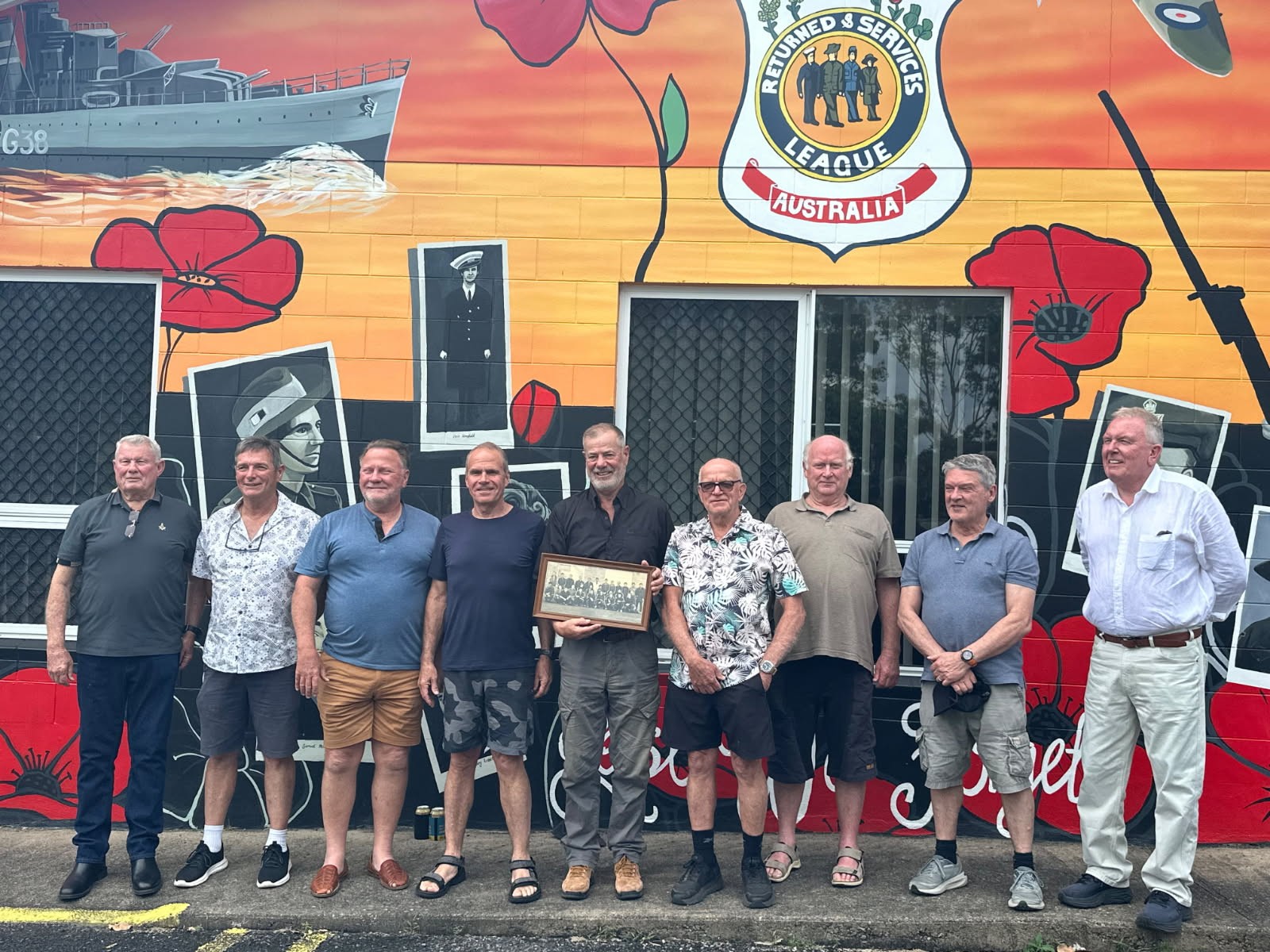
“Not Army, not Navy, just B Troop,” Barry said, describing the team as harmonious and the period as “the highlight of my career”.
Of the 25 operators pictured in the original Troop photograph, four went on to become Regimental Sergeant Majors, many became Warrant Officers Class 2, while one became a Brigadier and another a Commodore.
The eight former B Troop members who attended the reunion each indicated that Barry had played a significant role in their careers through his inspirational leadership.
The strength of the friendships formed during their training was evident as the group shared memories of their time serving together.
A small memorial service was also held at the Cardwell Memorial in honour of a B Troop member who died during training while the team was serving together.
The service provided an opportunity to remember those who did not return and the role the men held as a Counter Terrorist Response Team.
Barry’s 80th birthday was also a family occasion, with his son Nicholas travelling from Canada, son Julian from Townsville and daughter Marina from New York attending the celebrations.
Lest we forget.
Contributed with thanks by Cardwell RSL President, Robert Lang. Edited by Victoria Velton.
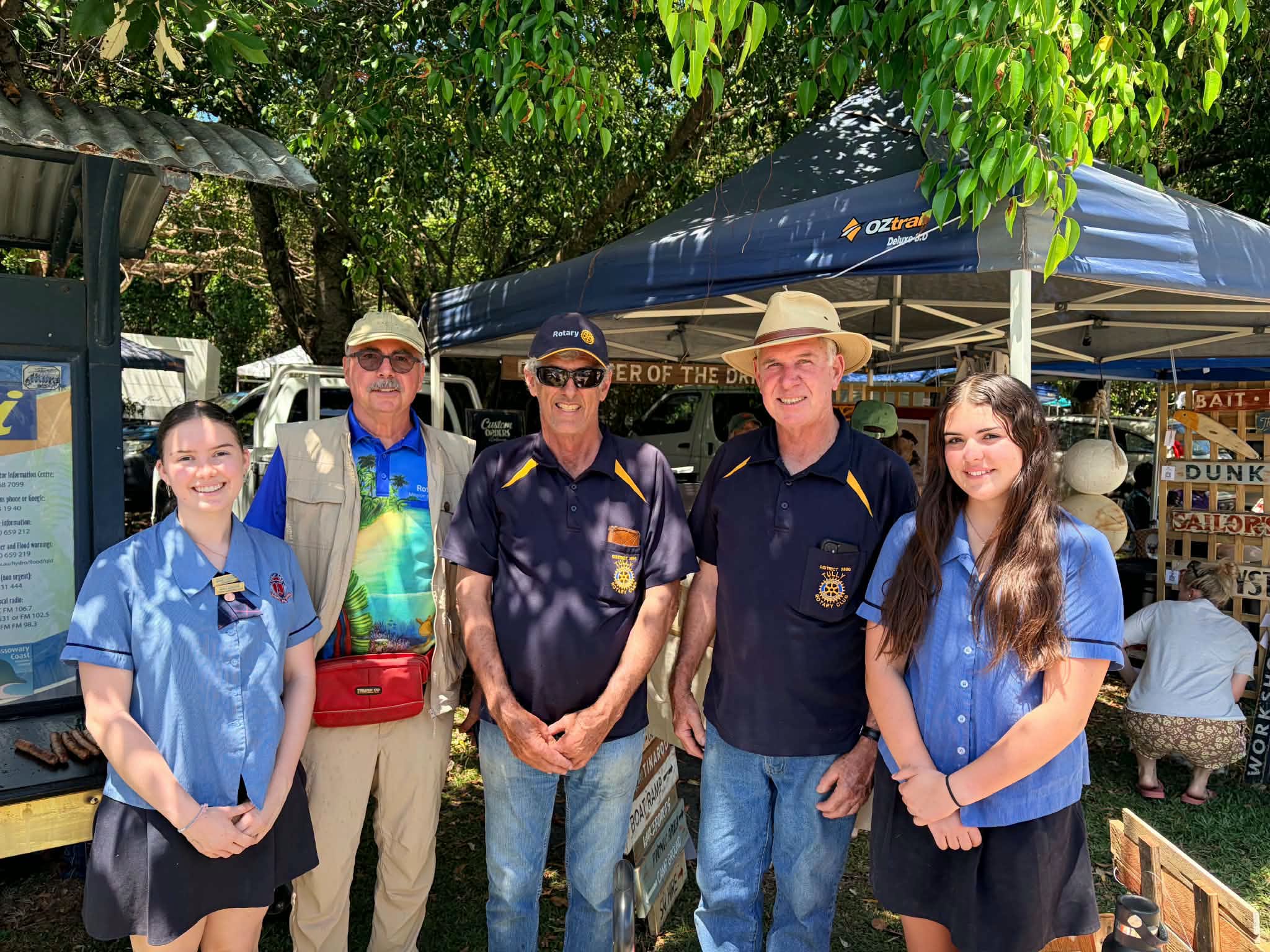
Jess and Lacey with members of the local Rotary. Photo: Tully State High School
They say it takes a village to raise a child, and that is certainly the case for two young students from Tully State High School, who were recently supported by a community group and local business in their fundraising efforts.
While many youngsters would have been enjoying a lazy first Sunday of the school holidays, Jess and Lacey hosted a sausage sizzle, with proceeds going towards their upcoming trip to the National Youth Science Forum in Brisbane in January 2027.
Proudly supported by Tully Rotary, which funded the sausage sizzle, along with a $100 meat tray raffle generously donated by Tully Tender Cuts Butcher, the girls raised an impressive $582.45 on the day.
“A huge thank you to everyone who stopped by, bought a sausage, purchased a raffle ticket, or simply showed their support.
“Every contribution is helping Jess and Lacey get one step closer to this exciting opportunity!”
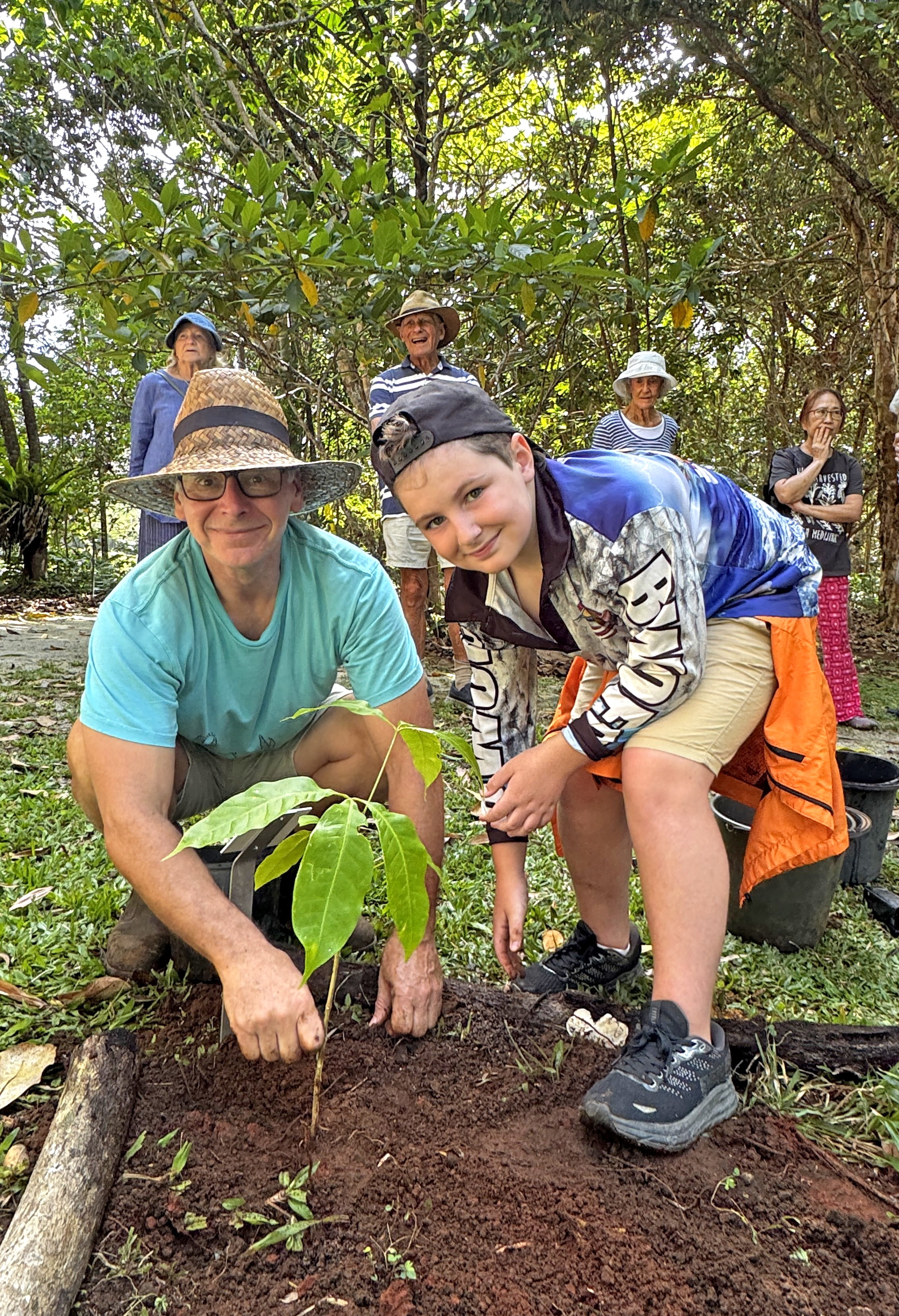
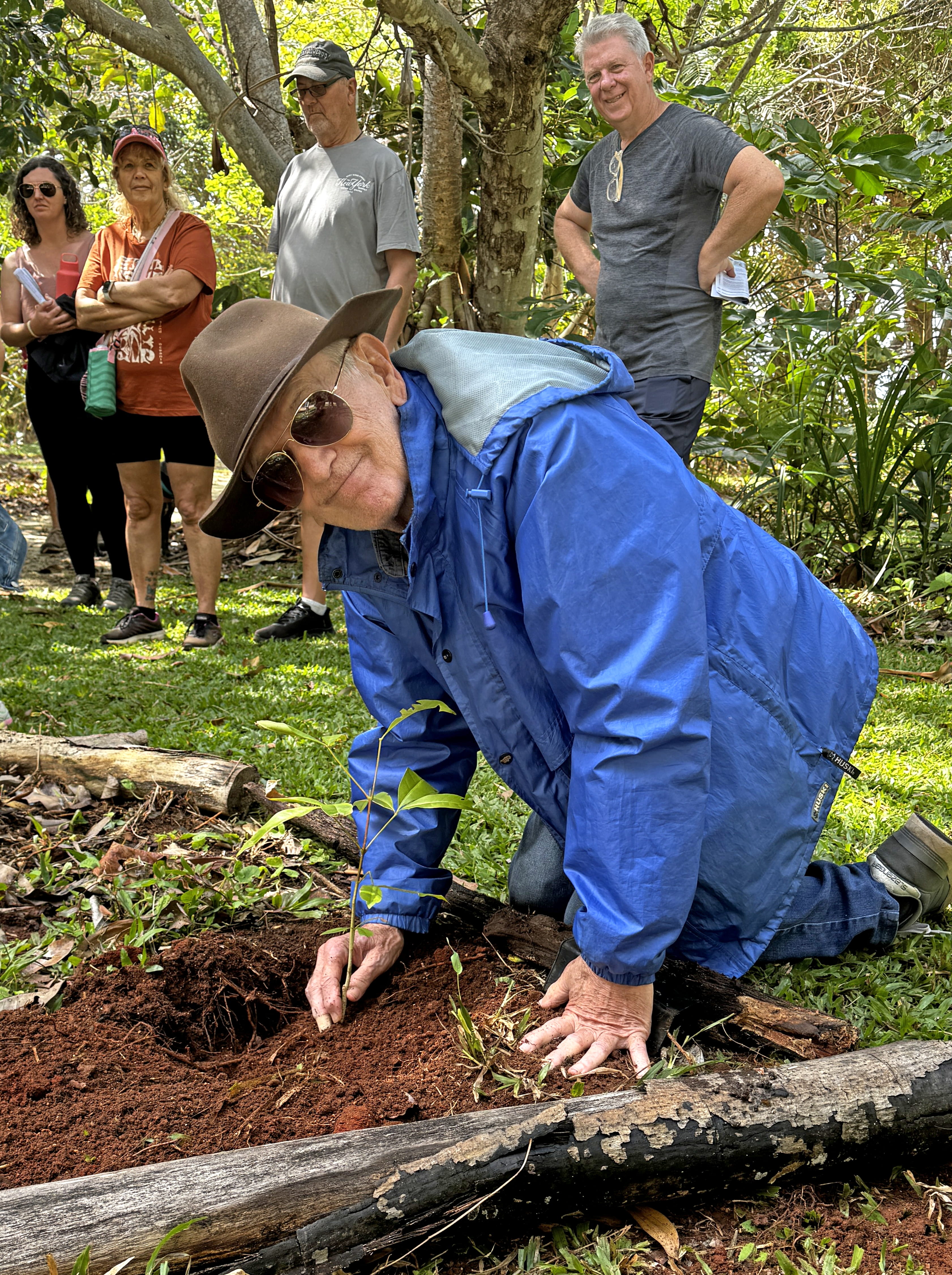
Ian Shankley helps Jaxon Krunes plant one of three Euodia trees
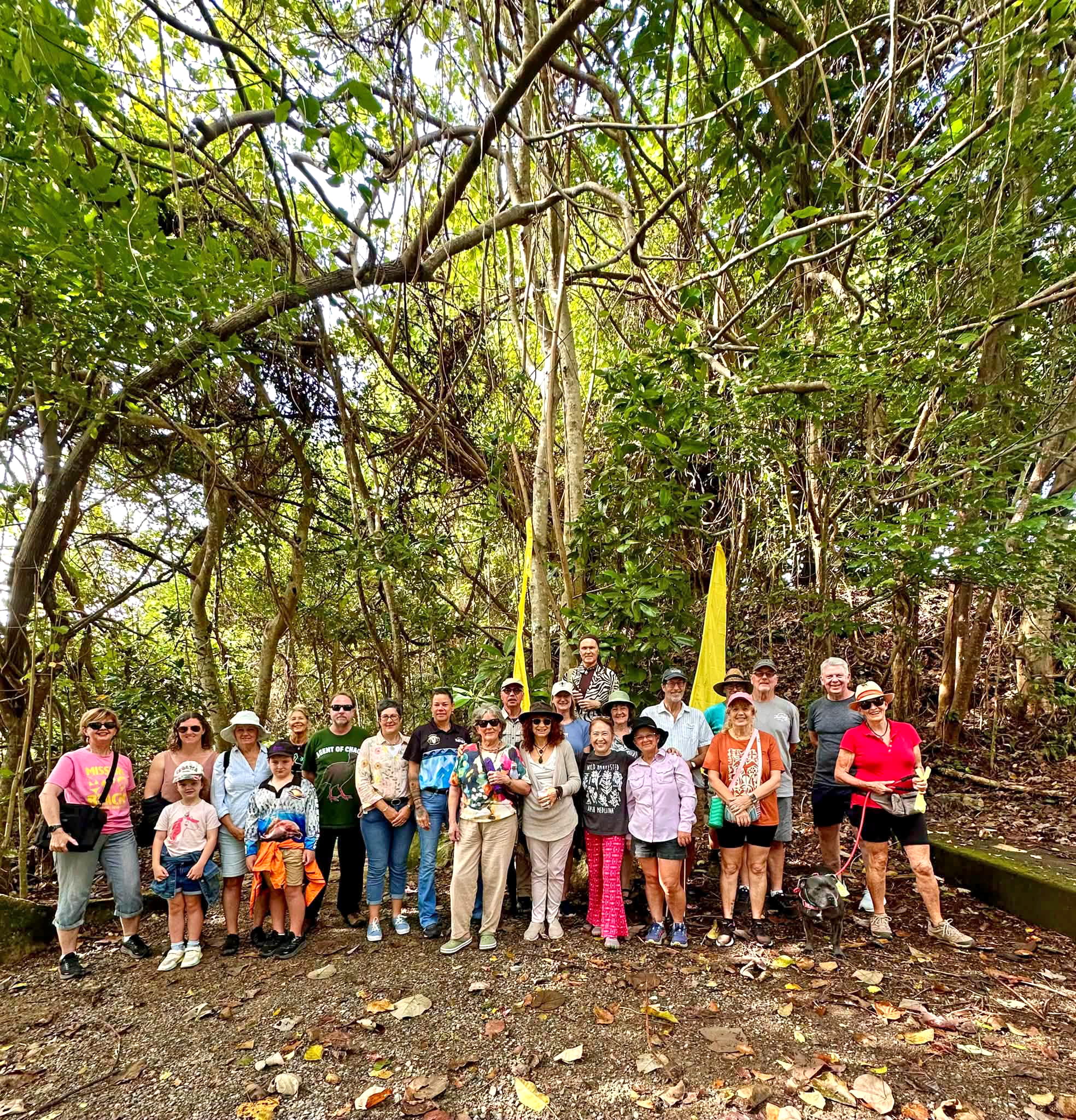
World Cassowary Day, held on 26 September, brought the Mission Beach community together on Saturday to celebrate its iconic bird and 25 years of a conservation project woven through the heart of the community.
Hosted by C4 – Community for Coastal and Cassowary Conservation – and Mission Beach Coastcare, the morning celebrated the Ulysses Link, first opened in 2001 and named after the brilliant blue Ulysses butterfly.
The celebration walk began at Perry Harvey Jetty, following the Cutten Brothers track through coastal rainforest and along the foreshore towards Mission Beach, before exploring the Ulysses Link and finishing at C4 and the Norm Byrnes Arboretum. Along the way, participants learned more about the habitat supporting cassowaries and other wildlife, and the conservation, revegetation and community projects that have shaped the area.
At the foreshore, the colourful mosaic stingray Raya provided a reminder of another important part of the Link’s history, community art. Local artists, school students and community members have contributed mosaics, ceramics and other artworks over the years, including Deanna Conti’s distinctive mosaic poles near the Porter Promenade entrance to the walk.
Mission Beach Coastcare’s Tony O’Malley led a walk and talk highlighting native plants and the continuing work to care for the coastal environment.
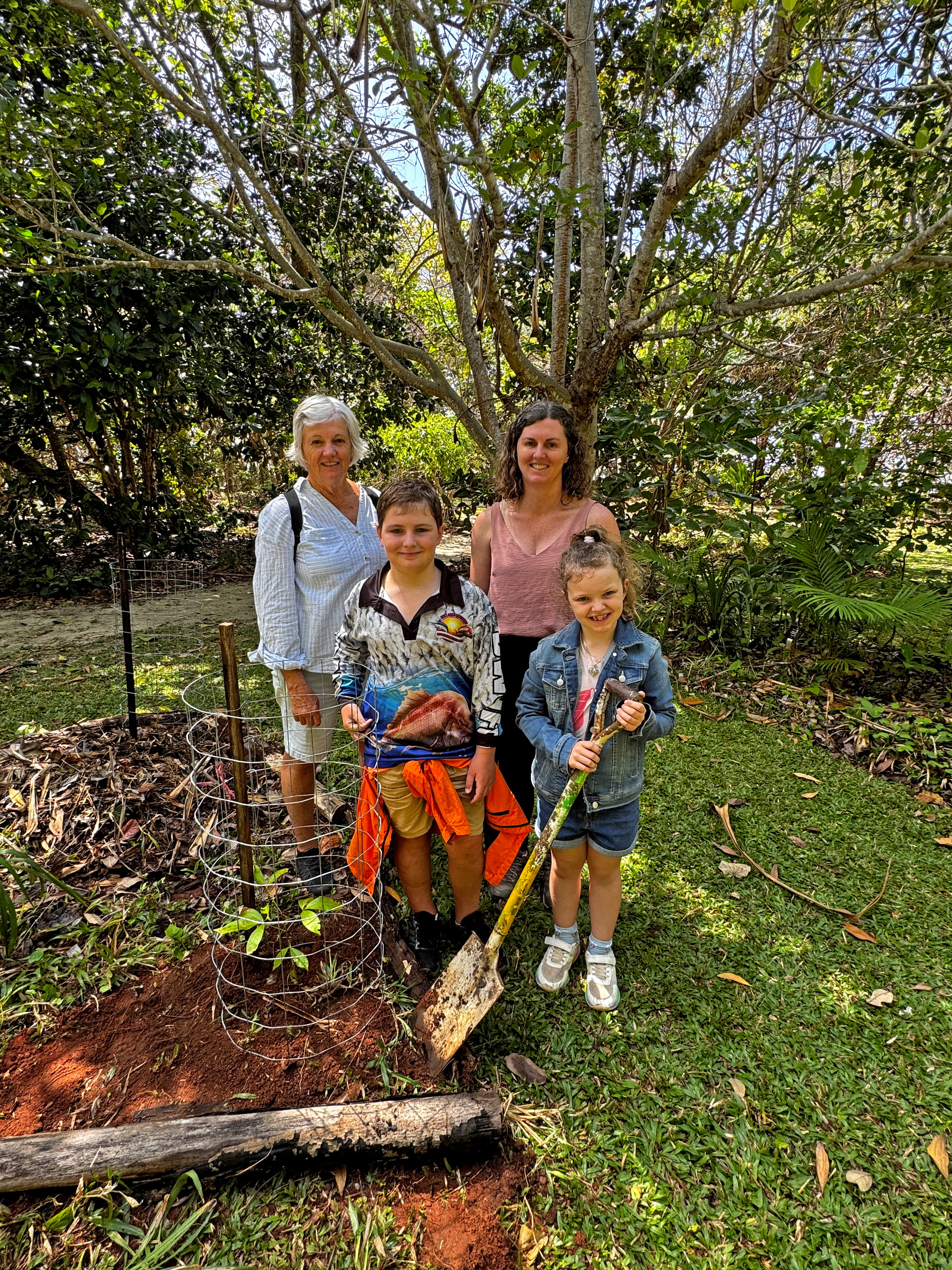
The anniversary celebrations continued at the Norm Byrnes Arboretum, beside C4, where participants planted three Euodia trees, an important host plant for the Ulysses butterfly.
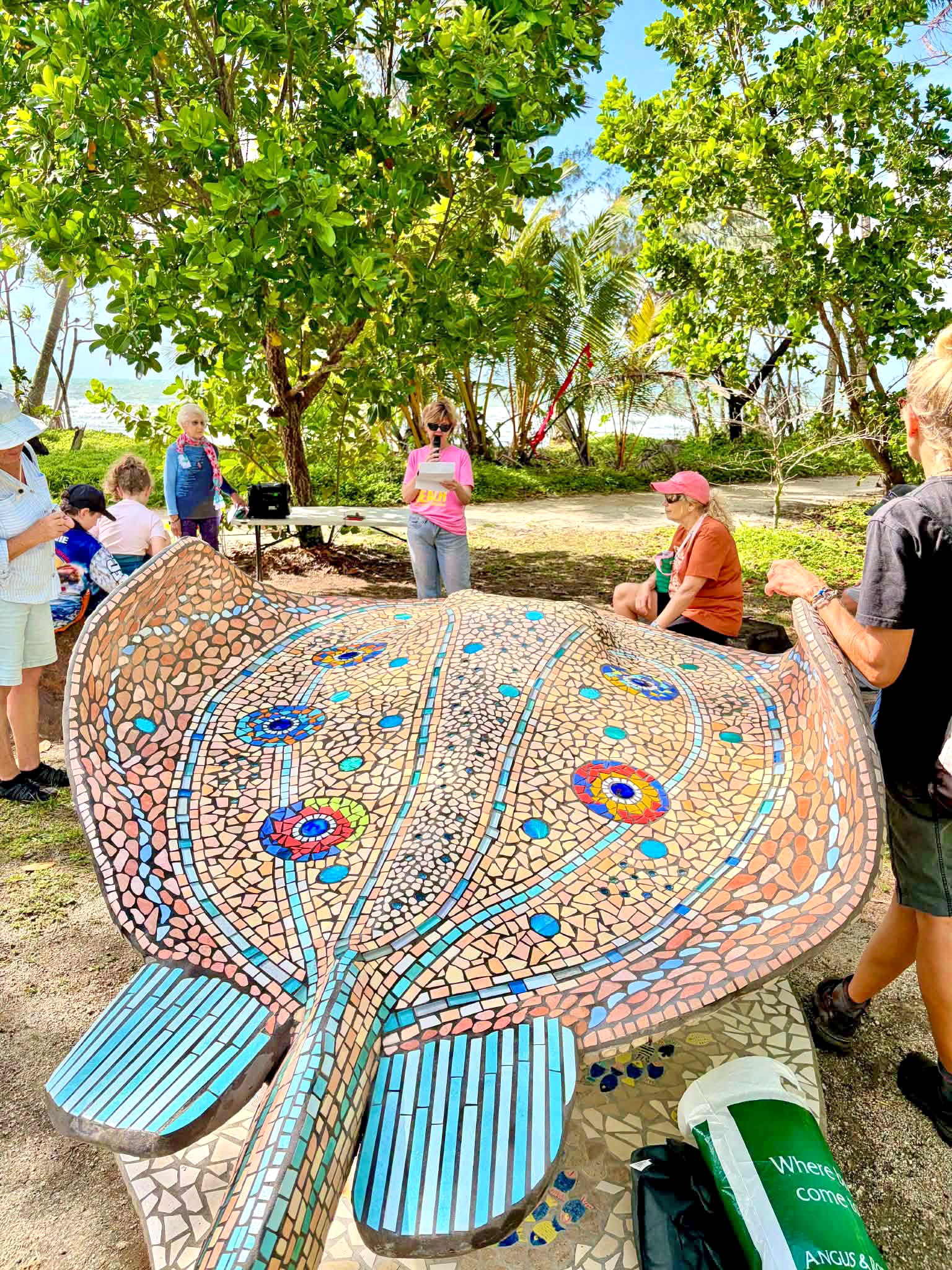
Butterfly enthusiast Kath Vale brought the story of the Ulysses Link down to the smallest details, explaining just how closely the brilliant blue butterfly is tied to the plants growing through the Mission Beach landscape.
The arboretum itself honours C4 founding member Norm Byrnes and his passion for native plant conservation, with Dr Bob Jones, who planted one of the three trees, continuing that legacy through years of planting, identifying and caring for its collection.
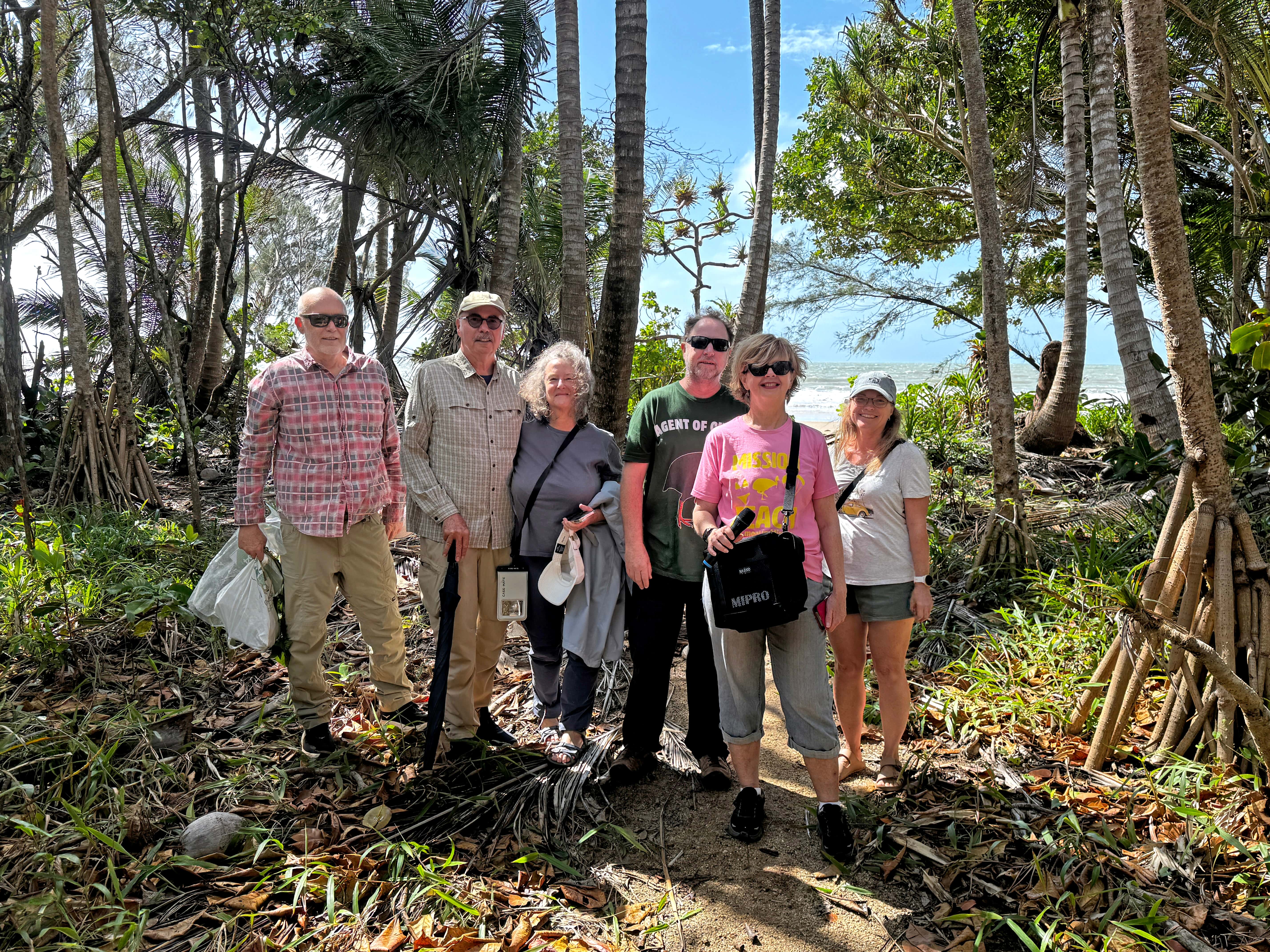
The morning finished at the C4 Environment Centre, where local artist Sally Maroney led cassowary and Ulysses butterfly activities for children, while Ulysses Link Goes Silver revisited 25 years of photographs, original designs, artworks and community stories.
Twenty-five years after the Link was created, Saturday’s celebrations showed that its story continues – through the rainforest, public art, volunteers and the next generation of trees being planted at Mission Beach.
C4 welcomes locals and visitors to learn more, volunteer, become a member or lend a hand with conservation projects. Drop into the C4 Environment Centre at 55A Porter Promenade, Mission Beach, phone (07) 4068 7197 or email hello@cassowaryconservation.org.
Clump Point Coastcare meets on the first Saturday of each month at 8am for an hour of caring for the local environment. Everyone is welcome – just bring a butter knife for tackling the weeds and meet at the C4 car park.
Cassowaries are large, flightless birds which stand as high as a human. They are highly endangered and only about 40 birds remain in the Mission Beach area. They are often seen on the Kennedy Bay, Licuala and Lacey Creek walks. If confronted they can become aggressive. If you encounter one – don’t run, back off slowly and wait for the bird to move on.
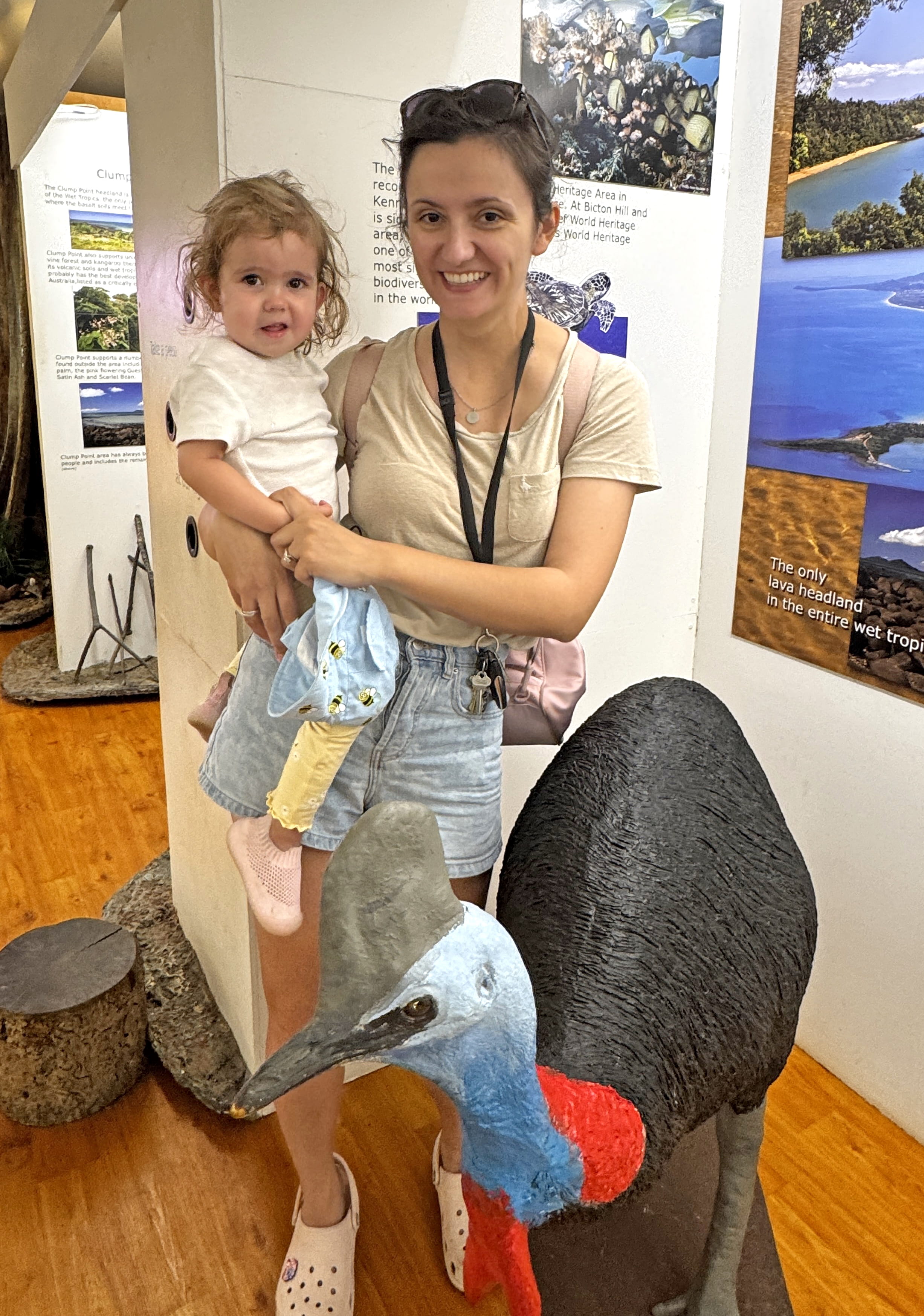
Clump Point, at Mission Beach, is the only place in the Wet Tropics where volcanic soils meet the ocean. The combination of rich soils, high rainfall and maritime climate produce unique ecosystems, including endangered littoral rainforest and kangaroo grassland. Clump point is significant to Djiru people,
Provided by Clump Point Coastcare
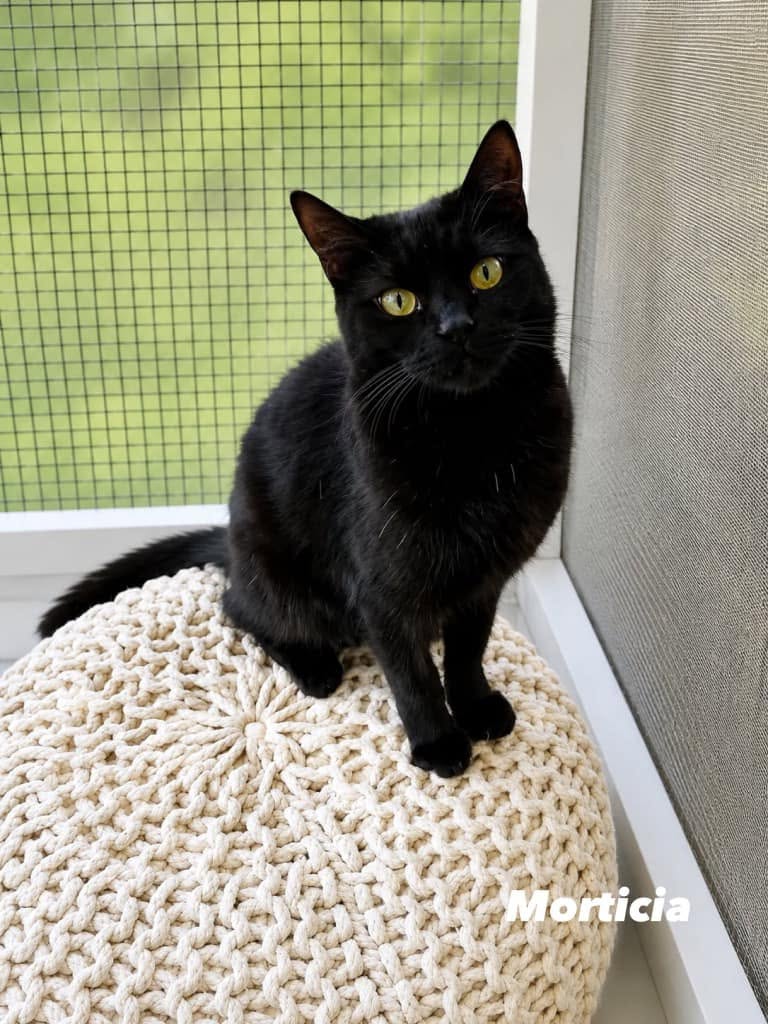
Introducing the captivating Morticia, a feline with a mysterious allure and a heart full of potential. With her stunning black fur, Morticia embodies elegance, much like her famous namesake. This charming cat certainly knows what she wants, and interacts with others on her own terms, but the right touch of patience and understanding will allow her true personality to shine.
Morticia’s a friendly, endearing companion who's now ready to bring her unique charm to a new household.
While her striking appearance may catch your eye, it's her journey that will capture your heart. Morticia's resilience and readiness for affection ensure that she will make a wonderful addition to a loving new place. If you can offer an environment of time, patience, and kindness, she will repay you with her own special brand of indoor-only companionship.
Included in adoption fee of $225 DESEXED, MICRO-CHIPPED, up to date VACCINATIONS, FLEA/TICK/INTESTINAL WORM treated. Enquire today at angelpawsinc.com.au/pets-for-adoption/cats/
Sex: Female
Breed: Domestic Short Hair
Colour: Black
DOB: 04/04/2025
Cat Friendly: Yes
Dog Friendly: No
Kid Friendly: Yes
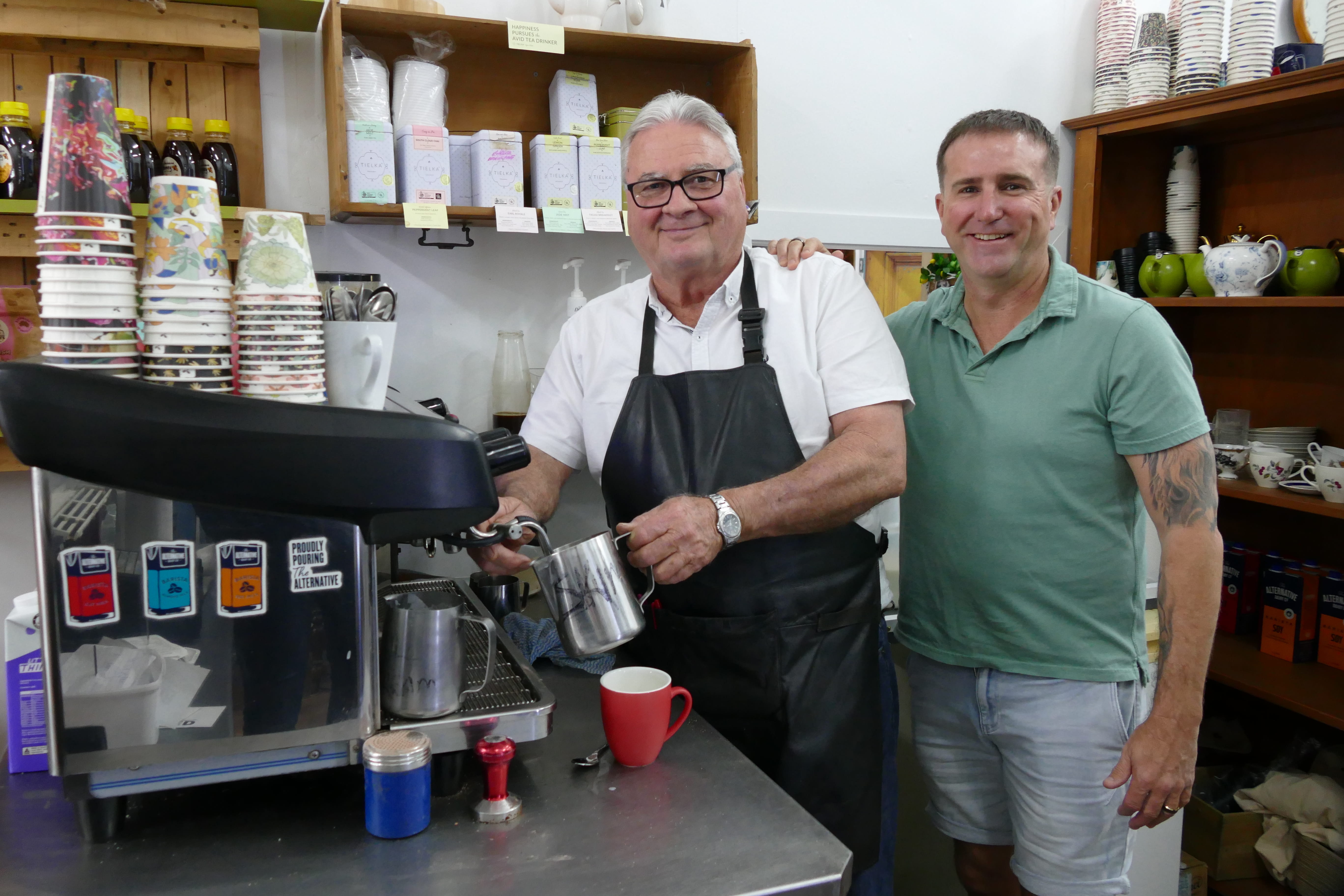
Anthony Zaghini and new owner Ben at the coffee machine. Photo credit: Victoria Velton
Local florist, cafe and gift shop Fiori with Love has been passed into new hands, after fifteen years of operating in the care of Louise and Anthony Zaghini. The pair said the journey has been challenging, but always underpinned by support from their staff, suppliers and loyal customers.
“Everyone contributes to a successful business,” they said, thanking their team and welcoming new owners Ben and Louise, who took over the Fiori with Love from Monday, 28th September.
Louise Zaghini said she was excited to see the business continue into its next chapter.
“It’s so great to see young people taking on the challenge,” Louise said.
“We’re really looking forward to introducing the new owners to our wonderful regular clients.”
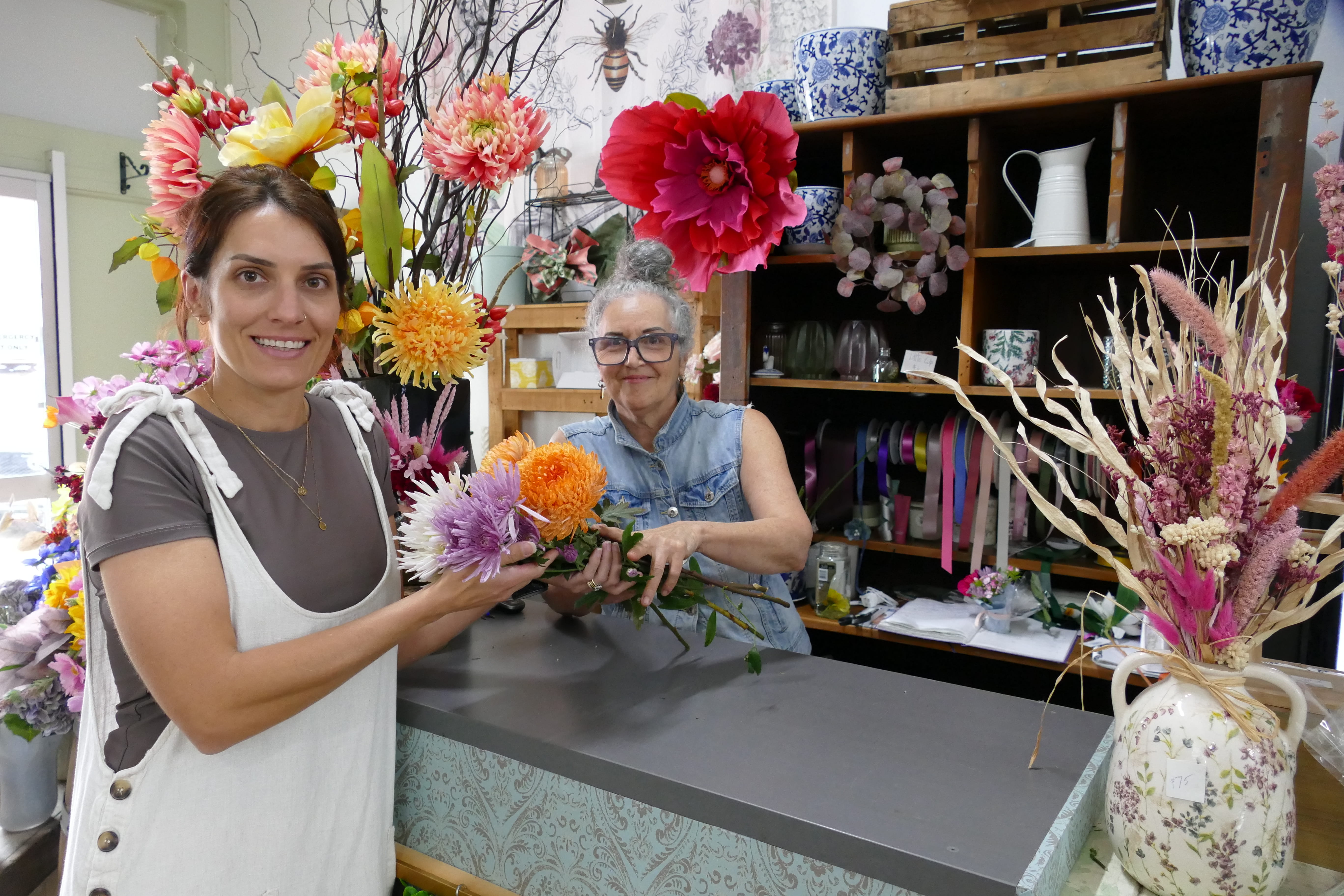
The new owners plan to retain the character and space of Fiori With Love, while finding space to bring their own personalities to the business.
Louise Zaghini will also remain involved in the floristry side of the business for the foreseeable future, continuing to be a familiar face for local customers.
Anthony will assist with barista training for the new owners, helping maintain the standard of coffee customers have come to expect during the transition.
After many years of running the business, Louise and Anthony are now looking forward to stepping back and having more time with their children and grandchildren, who live interstate.
While it is goodbye to Louise and Anthony as the owners of Fiori With Love, it won’t be farewell for good. Louise will remain a familiar face in the floristry, while the business begins its next chapter in the hands of Ben and Louise Smith.
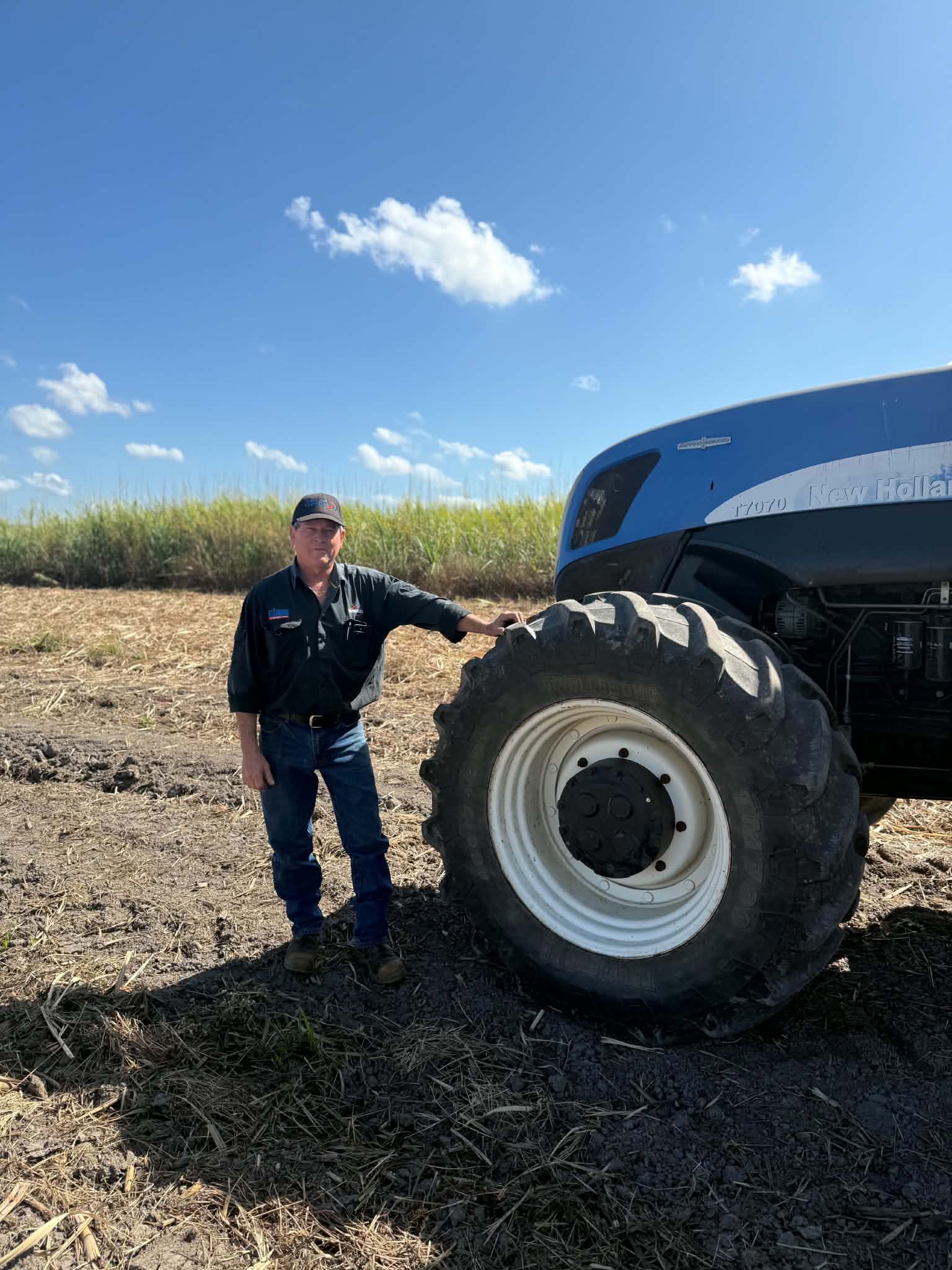
Photo supplied: Michael Pelleri
By Victoria Velton
Welcome to the Cutting The Cane, a column where we have a chat with those supporting the backbone of the local economy: the farmers behind the sugar. This week Michael Pelleri, farmer and business owner answered our questions about the 2026 season.
What stage is your paddock at now?
We have finished our fourth round of cutting and our farm is now currently sitting at 80% cut.
What are you expecting from your crop this year?
Our crop yield has been disappointing this year although CCS has been above average. Consistent wet years have played a big part in determining the quality of our cane. Our farm does better in drier years.
What can you tell about the crop just by looking at it?
I can get an idea of the cane's overall health, growth, and maturity.
Variety selection plays a large part in determining when to cut. We plant different varieties to enable cane to mature at different times throughout the cutting season to try to get the best sugar content and crop yield.
This is also affected by how wet or dry paddock conditions are and the daily temperature.
Has this season been different from what you expected at the start of the year?
This year's crop has been more or less what I expected. Our farm is in a wet area and gets heavily affected by wet growing conditions and lack of strong sunlight at the start of the year.
Low sugar pricing is concerning. Reduced tonnage and low pricing puts a strain on us as farmers and the community as a whole.
Once this year's crop is finished, what will you be thinking about next?
Next year’s crop has been planted. I will be looking to get fertilising up to date and a plan for the fallow blocks for next year.
Viability is a question that is thrown around a bit with low sugar prices, high fuel and fertiliser costs.
But for now, I can go back and concentrate on my regular day job.
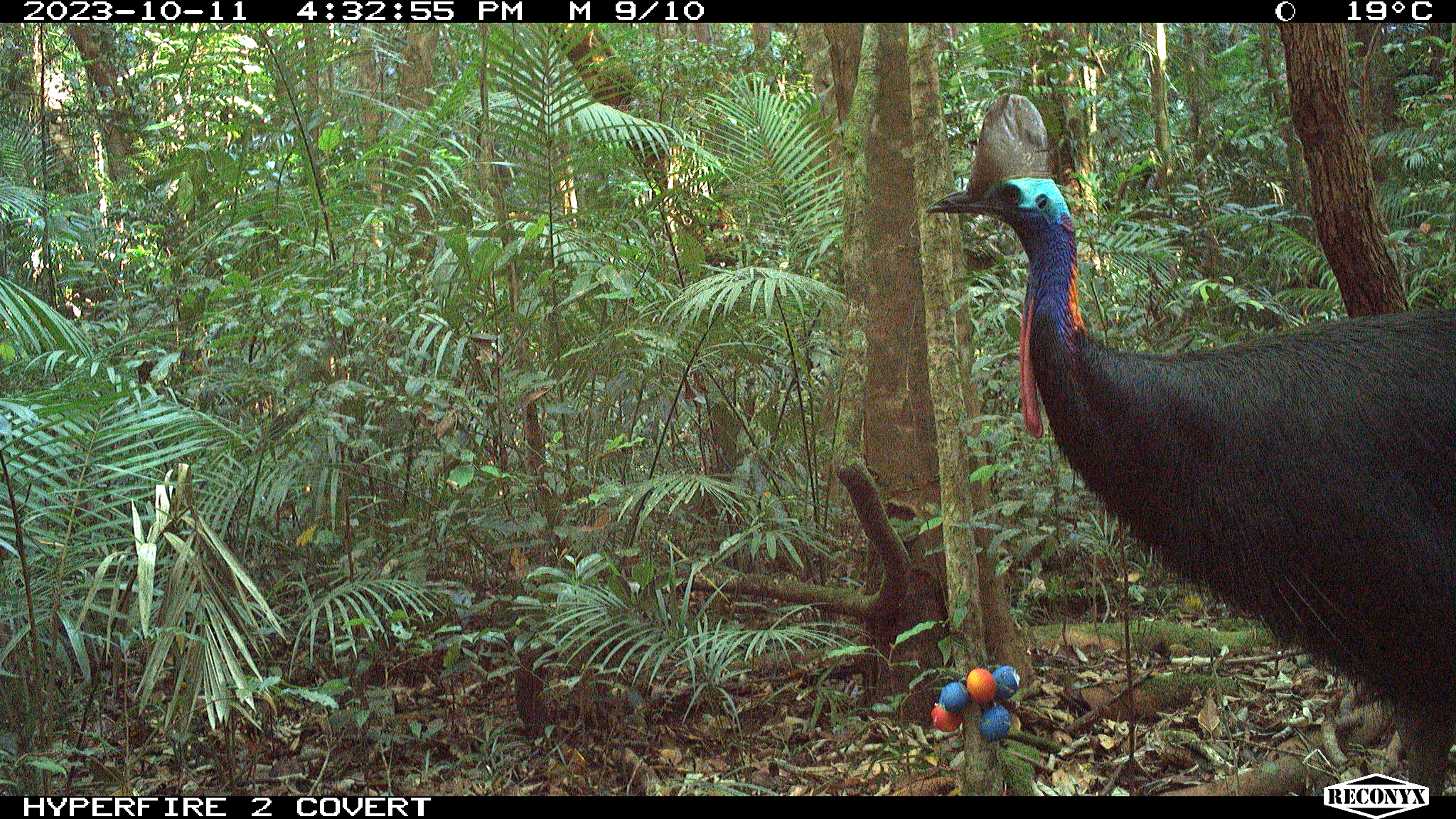
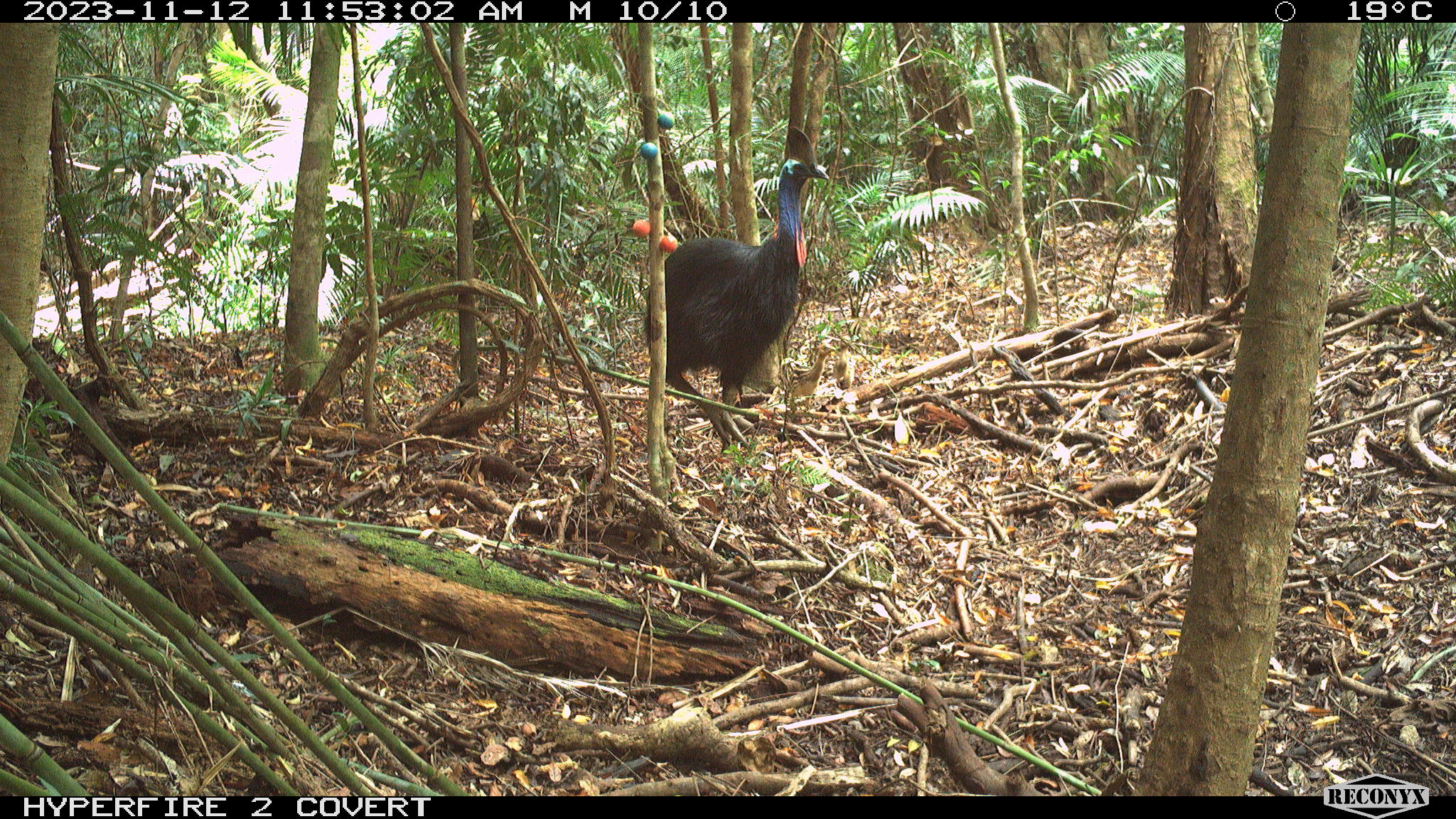
Southern Cassowaries spotted in the Paluma Range. Photos supplied: Wren R. McLean
By Wren McLean of the Southern Cassowary Research Project, Auspiced by BirdLife Townsville, in partnership with NQ Dry Tropics NRM
“Local knowledge could hold vital clues to whether our southernmost cassowaries are still connected to the core Wet Tropics population.”
For the past three years, with BirdLife Townsville, we’ve been quietly tracking the southernmost population of cassowaries in and around the Paluma Range using camera traps, sign surveys and a citizen science program to collect historical and current sightings.
Our concerns about the long-term health of this population, and their habitat, arose from the 2014 Wet Tropics Cassowary Census which flagged a notable decrease in the rate of sign (poop, footprints, vocalisations, sightings) in the Herbert River catchment and Paluma Range.
We knew that locals were still sighting them occasionally, but no-one was currently recording these sightings or specifically looked at how this population of endangered birds is tracking.
Our surveys have since confirmed at least 12 individual cassowaries, including chicks demonstrating a breeding population, clustered strongly around the Bambaroo and Jourama Tracks in the north-east of the Paluma range.
There have been no sightings in the south of the Paluma Range for over 23 years which indicates a potential contraction of their distribution. We’ve also found that birds regularly use lowland creeks and coastal vine scrub on freehold land beyond the National Park boundary in the late dry season. This habitat type provides high quantities of fruits of specific native trees and is evidence that this population still depends on various habitat types throughout the landscape for their survival.
Now we need your help answering the next big question: are Paluma Range cassowaries still connected to the core Wet Tropics population to the north, around Girringun National Park and the Cardwell Range? Small, isolated populations lose genetic diversity over time, making them far more vulnerable to local extinction. If Paluma’s cassowaries are cut off from the larger northern population, this remarkable southern outpost could gradually disappear. If birds are still moving through, even occasionally, restoring those connections could be what saves them.
There are two most likely routes between these populations: an upland corridor of drier forest between Mt Fox and Hidden Valley, or a lowland route across the southern Herbert River floodplain, potentially along Waterview, Francis, Cattle or TrebonneCreeks. Much of the lowland now broken up by farmland and roads which would make it hard for a big black bird, or a smaller brown sub-adult, to cross unnoticed.
We already know cassowaries are present in the upper Herbert River and around Wallaman Falls, and some photographs have been submitted from Mt Fox Road, right at the edge of the dry upland corridor. What we don’t yet know is whether birds are actually making the crossing and that’s where local knowledge becomes invaluable. A camera only ever sees one gully; people who live and work this country see the whole region, season after season.
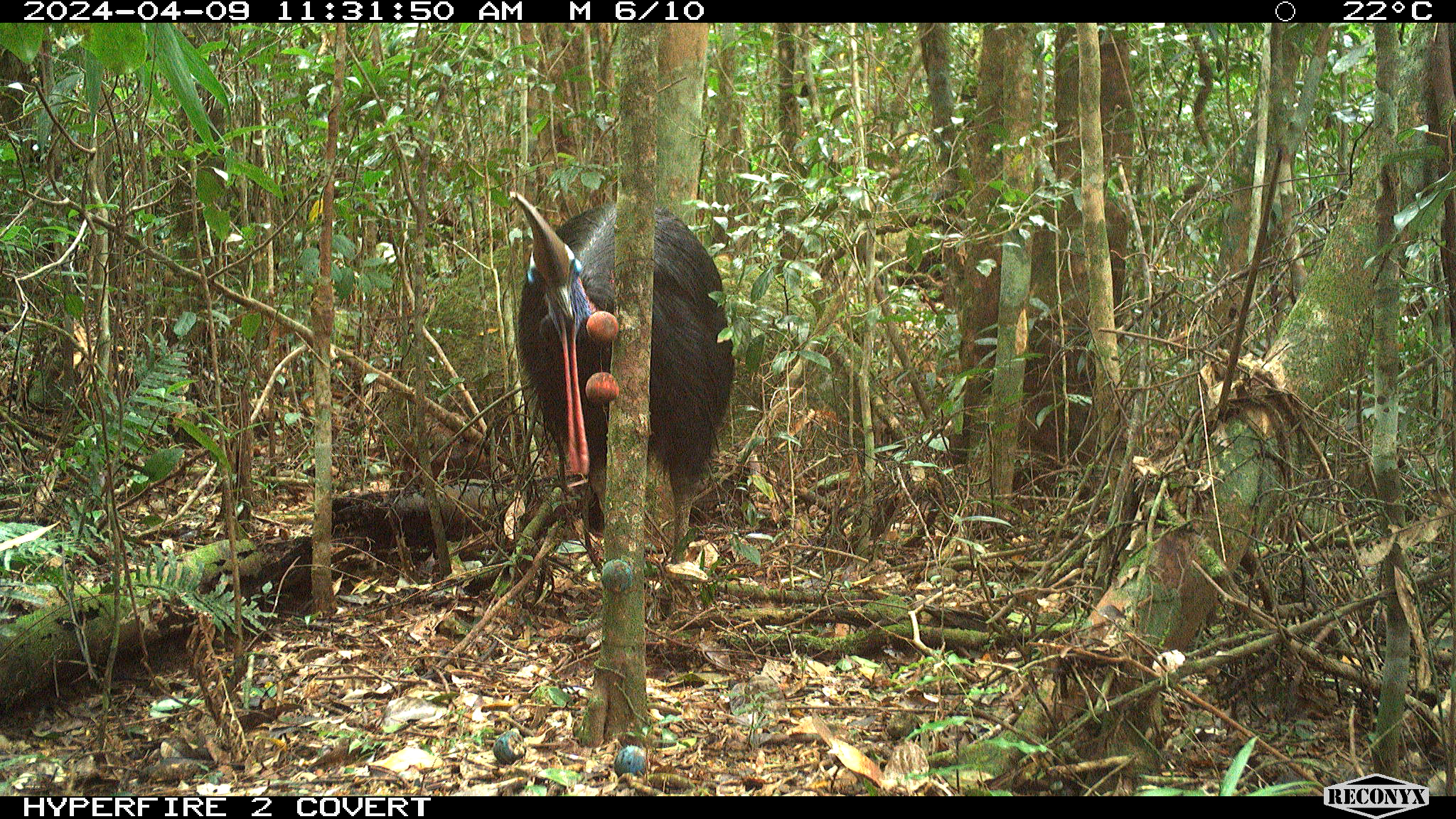
If you’ve ever seen a cassowary — or a big three-toed track, a distinctive dropping, or even just a story you remember — anywhere between Mt Fox and Hidden Valley, or along the creek lines and farmland of the southern Herbert floodplain, we’d love to hear about it. It doesn’t need to be recent: a clear memory from thirty years ago is just as valuable as a photo from last week. A general area and a rough date is genuinely enough — you don’t need an exact location.
To be upfront: this is about understanding whether cassowaries can still move and interbreed between these two populations. It is not about flagging your property for any kind of restriction, and a historical sighting on private land triggers no regulatory consequence.
You can share what you know by commenting on our Facebook posts on Everything Ingham or Mt Fox and Local Community, logging onto https://arcg.is/1vjLaq scanning the QR code to log a sighting directly
Every piece of the puzzle — recent or decades old — helps us build a genuine picture of whether this ancient rainforest gardener is still finding its way between the ranges to breed future generations of strong, healthy cassowaries.
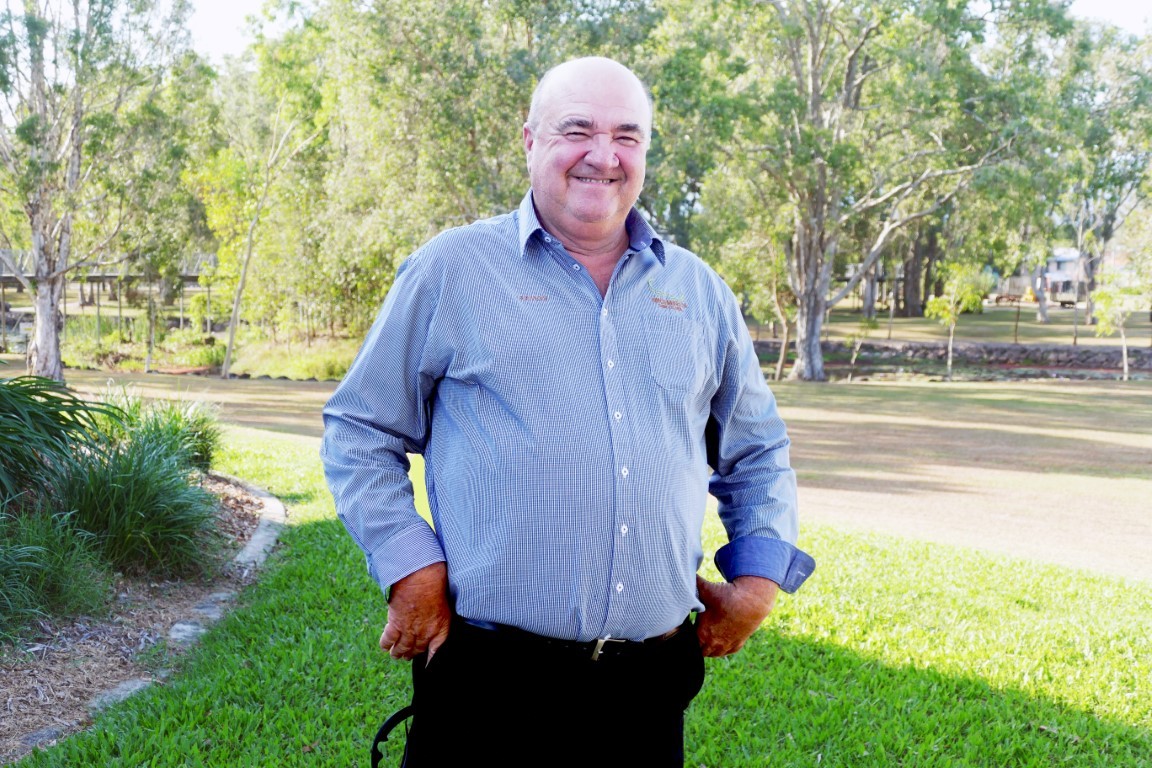
As many of you have noticed, fuel prices have increased significantly in recent weeks, with diesel now approaching $3 per litre in our district. These rising costs affect our entire community, from families and local businesses to farmers, harvesting contractors, mill workers and transport operators.
While current global events continue to influence fuel prices, it highlights the importance of reducing Australia's reliance on imported fuel and increasing domestic production.
Queensland's sugar industry presents a significant opportunity in this space. It is well recognised that Australia has the capacity to produce substantial volumes of bioethanol from sugarcane, strengthening fuel security while creating regional jobs and investment.
Queensland's sugar-producing regions already have the feedstock, infrastructure, skilled workforce and manufacturing expertise needed to support a stronger domestic biofuels industry.
A Bill currently before the Queensland Parliament, the Liquid Fuel Supply (Ethanol and Other Biofuels Mandate) Amendment Bill 2026, seeks to strengthen Queensland's ethanol mandate and encourage greater use of locally produced fuel.
This is not a political statement. It is an issue of economic importance to communities like ours.
The sugar industry remains at the heart of the Hinchinbrook economy, supporting growers, harvesting contractors, mill workers, transport operators, local businesses and families across our region. We must continue to advocate for policies that support the long-term sustainability and growth of this important industry.
A stronger and properly enforced ethanol mandate has the potential to:
As debate on this legislation continues, I encourage residents to stay informed and engage with the discussion about the future of Queensland's sugar industry and Australia's fuel security.

One of the most common enquiries Councillors receive relates to road maintenance.
Residents often ask why some roads seem to be graded more frequently than others, why repair timeframes can vary, and how Hinchinbrook Shire Council determines where its road maintenance resources are directed.
To help ensure these decisions are made consistently and transparently, Hinchinbrook Shire Council manages its road network through an adopted Road Register and Road Hierarchy.
The Road Register identifies which roads Council is responsible for maintaining, while the Road Hierarchy categorises roads according to their function, level of use and importance within the broader transport network.
Roads are classified into a number of categories, ranging from Local Roads of Regional Significance and key collector roads through to urban residential roads, rural roads, lower-order formed roads and unformed roads.
Each category has defined maintenance service levels and response times that reflect its role within the network and the resources available to Council.
Higher-order roads that connect communities, support industry, agriculture and freight movements, or carry larger traffic volumes generally receive a higher maintenance priority. Lower-order roads receive a lower level of routine maintenance, while unformed roads do not receive regular maintenance programs but are assessed when safety concerns are reported.
The policy also establishes inspection and response standards for a wide range of issues, including potholes, corrugations, drainage, signage, vegetation, guideposts and other road hazards.
These standards help Council respond in a fair and consistent manner across the entire road network.
Importantly, Council's road maintenance funding can only be spent on roads included in the maintained Road Register. Any addition or removal of a road from the Register requires a formal Council resolution.
Council is currently reviewing and updating its road management booklet, which will be released following endorsement of the updated Road Register to ensure it accurately reflects maintenance responsibilities, road classificationsand service levels.
As Councillors, we understand the importance of maintaining our extensive road network and appreciate the feedback we receive from residents.
The Road Register and Road Hierarchy help Council make informed decisions, prioritise limited resources and provide a fair, transparent and sustainable approach to road maintenance across the Hinchinbrook Shire.
If you notice a road defect or safety issue, please contact Council on (07) 4776 4600 so it can be inspected and addressed in accordance with the adopted service levels and maintenance standards.
Publishers Indemnity. Any individual or entity that places advertising, supplies copy material, or submits editorial content to Life Publishing agrees and undertakes to ensure that all such material:- Does not infringe upon any copyright, trademark, or other intellectual property rights;- Is free from any content that could be considered defamatory, libelous, or slanderous;- Does not infringe upon any rights related to privacy or breach of confidence;- Contains no obscene, indecent, or otherwise unlawful material;- Complies fully with the Trade Practices Act and all other applicable laws, regulations, or statutes. Furthermore, by submitting or placing such material, these individuals or entities agree to indemnify and hold harmless the publisher, Life Publishing and Events Pty Ltd, and/or its agents from and against any and all investigations, claims, demands, liabilities, damages, costs, or judgments arising out of or in connection with the material provided. All material is believed to be accurate at the time of printing and remains the copyright of Life Publishing and Events Pty Ltd.
© 2026 Life Publishing Group Ltd.
