
Independently Owned, Locally Grown, Community Loved
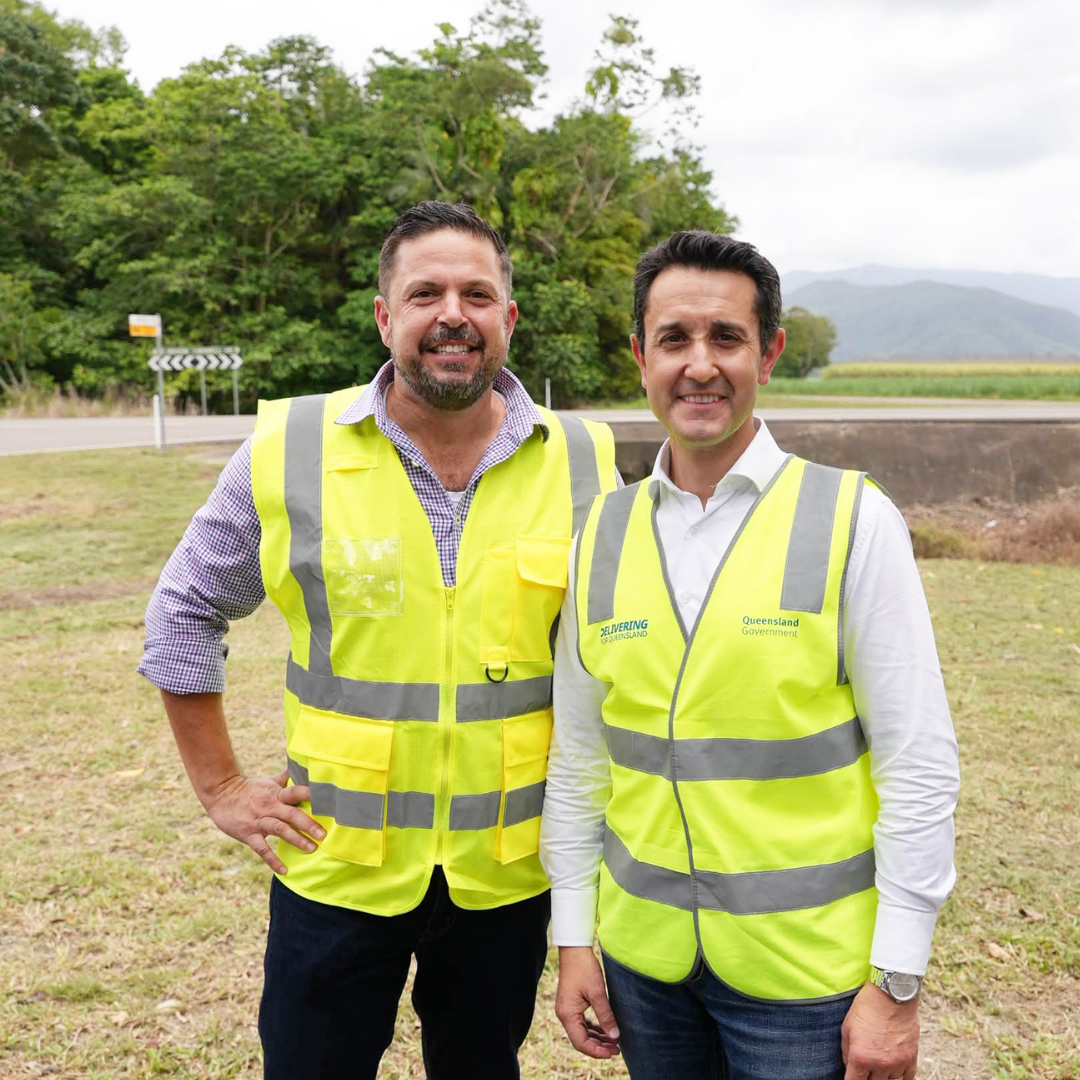
A major Bruce Highway upgrade is underway, with works at Gairloch, Ripple Creek, Ingham-Halifax-Bemerside Road and the Cardwell Range targeting safer travel and improved flood resilience. The long-awaited improvements aim to reduce the severity of flooding across key sections of highway and help prevent head-on crashes, addressing challenges that can disrupt communities and isolate motorists during the wet season.
Read the full story
This NQIB Country Cups Challenge Qualifier Race Day, racegoers are invited to embrace this year’s theme, Country Glamour. The Herbert River Jockey Club event will feature 10 Fashions on the Field categories, catering to everyone from junior entrants to experienced fashionistas. Categories include Forrest Beach Realty Fashions on the Field, Ingham Mazda Contemporary Lady of the Track, NQ Travel & Cruise Classic Lady of the Track, The Bloom Room Townsville Millinery and Lifelong Supports Best Dressed Man of the Track. Junior and youth categories, alongside Spotter’s Choice, will offer further opportunities to take part. Three judges will bring their individual fashion and racing experience to the competition. Amy Byrnes grew up immersed in racing, travelling to meetings with her family and making memories at Cluden Park. Now a racehorse owner herself, she enjoys attending meets across Queensland and internationally. Amy will be looking for confidence, personality and the joy an outfit brings to its wearer, with an appreciation for thoughtful accessories and finishing touches. Milliner Cat Murphy brings more than a decade of experience creating headwear worn at race meetings across Australia and in London. A passionate racing enthusiast, she values outfits that work cohesively with the theme, combining comfort, confidence and attention to detail. Millinery will naturally be a particular focus, whether a bold statement piece or a classic, understated design. Marnie Davidson brings a competitive edge, having collected 27 sashes during three years of Fashions on the Field competitions around Australia. Her achievements include finalist positions at Flemington’s Melbourne Cup Derby Day and Turnbull Stakes, as well as qualifying for several major fashion events. A self-confessed lover of coordinated looks, Marnie will be keeping an eye out for the little details that bring an outfit together. With experienced judges and a Country Glamour theme, racegoers are encouraged to bring their own interpretation of raceday style to the track. For event information and the full list of categories, visit hrjc.com.au. Dress to impress at the Country Cups this November. Photo sourced: Herbert Rivr Jockey Club
Read the full story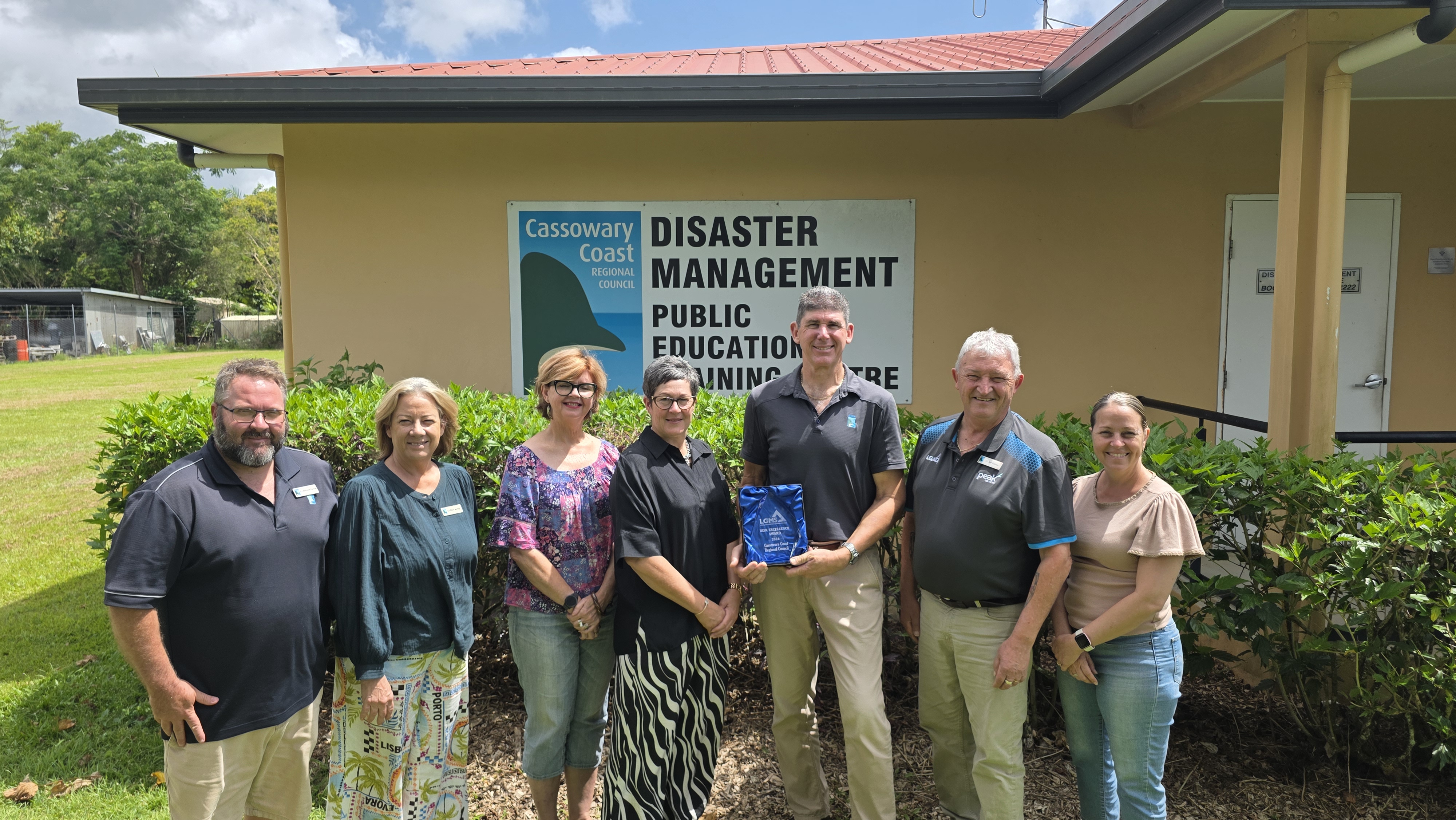
Cassowary Coast Regional Council has been recognised for its innovative approach to flood monitoring, taking home the Local Government Mutual Services (LGMS) Risk Excellence Award at the Local Government Association of Queensland (LGAQ) Conference on Tuesday evening. The award recognises Council's Flash Flood Sensor Network project, which uses radar technology to monitor water levels at known flood-prone locations across the region. The information from the flood sensors is integrated into Council’s Disaster Dashboard, giving residents, emergency services and Council access to local conditions as they change. Cassowary Coast Mayor Teresa Millwood said the recognition highlighted Council's commitment to finding practical ways to improve community safety and disaster preparedness. "Living on the Cassowary Coast, we know how quickly heavy rainfall can turn into dangerous flooding, particularly in areas where water levels can rise with very little warning," Mayor Millwood said. "These sensors give us another set of eyes on some of our known flood trouble spots, providing real time information without having to send staff out into potentially dangerous conditions. "What's particularly important is that this information isn't just for Council. Our residents in flood prone areas can also access this information on the Disaster Dashboard to help them asses their risk, get prepared and make plans in case flooding looks likely." The network has already supported information sharing with local police and State Emergency Service personnel around Mission Beach, helping emergency services monitor conditions at known flood-prone locations. Previously, monitoring these locations relied heavily on weather forecasts, community reports and staff inspecting conditions on the ground. The technology provides another source of information to support earlier identification of rising water levels, planning for potential road closures and coordinating responses during heavy rainfall. Council is continuing to assess the network through a three-year trial, using observations from residents and emergency services to verify sensor readings and evaluate its effectiveness. Residents can access flood monitoring information, road updates and other important disaster information on Council’s Disaster Dashboard by ticking *New Water Levels Visit: www.disaster.cassowarycoast.qld.gov.au Caption: Cassowary Coast Regional Council has been recognised for its innovative approach to flood monitoring. Photo supplied
Read the full story
I have spent sleepless nights since last Monday, praying for my long-term and good friend in the Parliament, Helen Haines, along with her family, staff and the first responders to an inexcusable act on a beautiful human being inside and out, who has brought much sparkling joy and enlightenment to the centre of the crossbench. Whilst we are at opposite ends of the country and representing significantly different electorates, my tremendous respect of Helen’s tenacious advocacy for what she believes in, matches my great appreciation of our genuine friendship. We don’t represent a political party based in Melbourne or Sydney or Brisbane – we represent the people who sent us to parliament: the people of our electorate. And there’s no doubt that a terrible blow has been struck against democracy and the people of Australia. A lady in every sense of the word, Helen is a true moderate of the highest regard across the political spectrum – with the ability to get on with people with very definite views like the teals on one hand, and people like himself on the other. And I cannot help but think of her smiling face, whenever I leave the Chamber and tap her on the shoulder to ask, “You right if I leave this all under your control, Helen?” and her cheerful reply, “Yes Bob,” both of us laughing. Not to mention her culinary skills in constructing the most delicate of sponge cakes. Though I react quite frankly with rage and fury at this evil that can have no exculpatory explanations, may we all pray that God’s blessings are with Helen and her family, staff and friends as we all rally around them to provide the support they need during this extremely difficult time. Hon. Bob Katter MP, Federal Member for Kennedy Federal Kennedy MP Bob Katter at Australian Parliament House with his independent crossbench colleague Helen Haines MP, the Member for Indi. Photo supplied
Read the full story
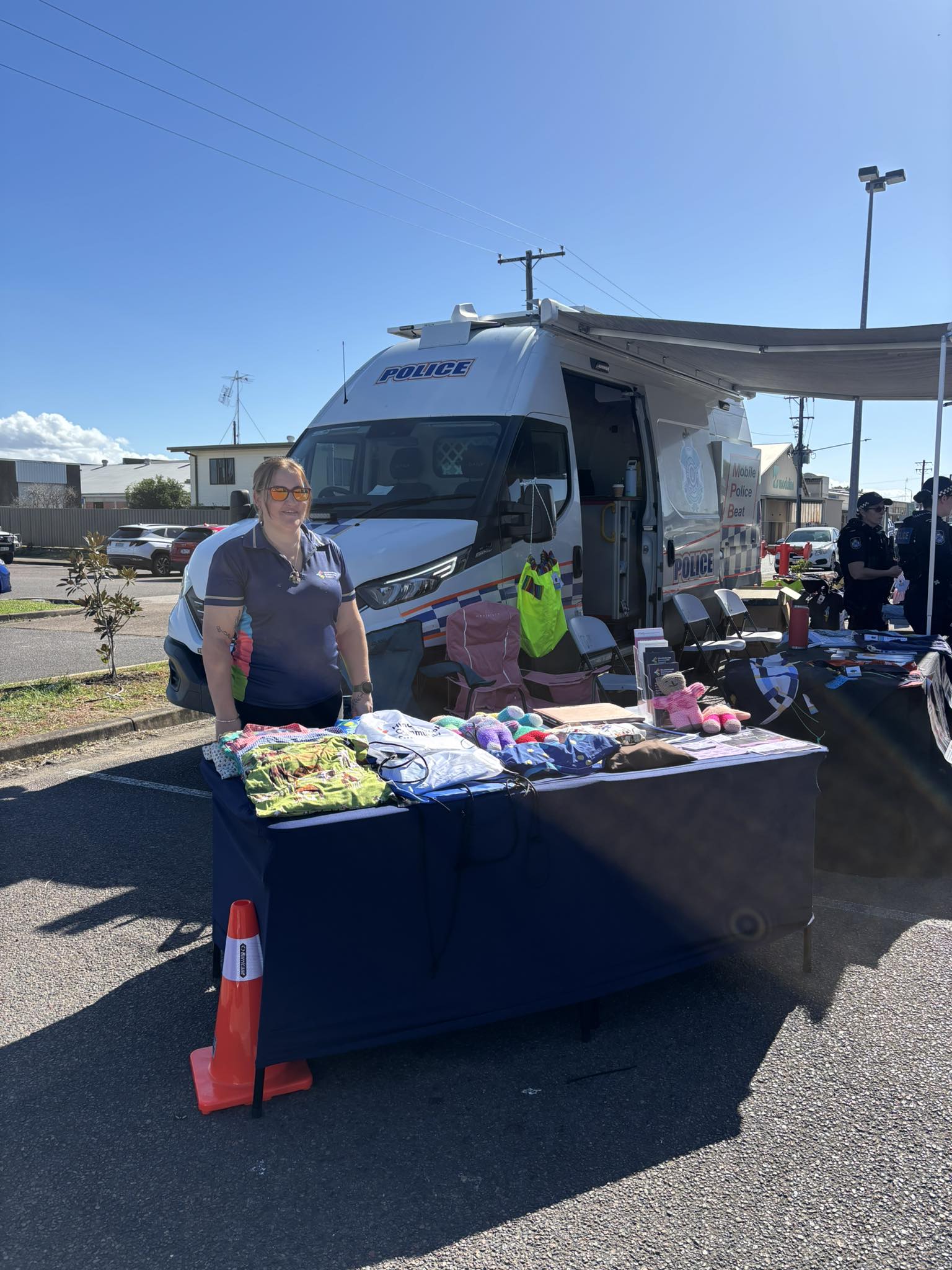
Alex and Glynis from HCSC were recently at Ingham Woolworths carpark handing out a selection of free children's clothes recycled from ex-service uniforms. Photo sourced: HCSC’s Facebook page
Across Australia, many individuals and families are continuing to feel the effects of rising living costs. Increasing grocery prices, housing pressures, fuel costs, electricity bills and unexpected expenses can place significant stress on households and wellbeing.
In regional communities, these pressures can often feel even greater. Financial stress not only impacts a person’s ability to meet day-to-day needs, but can also affect emotional wellbeing, relationships, mental health and a person’s sense of stability.
At times, asking for help can feel difficult. Many people worry they should simply “push through” or manage on their own. However, reaching out for support early can often help prevent situations from becoming more overwhelming and provide access to practical assistance, information and connection to additional services.
The team at Hinchinbrook Community Support understands that financial hardship can affect anyone at different stages of life and that everyone’s circumstances are unique.
One of the supports available through HCSC is the Emergency Relief Program, which assists people experiencing financial hardship to maintain their basic living needs. Alongside practical assistance, the service also recognises that individuals and families may benefit from emotional support, information and referral pathways during difficult times.
Emergency Relief appointments are available Monday to Friday from 1:00pm to 3:00pm by same-day appointment.
Community connection and early support can make a significant difference during challenging times. Whether someone requires practical assistance, support navigating available services, or simply a conversation about what options may be available, help is available locally.
If you or someone you know may benefit from support, the team at HCSC encourages community members to reach out and learn more about the services available.
.jpg)
The Federal Government is seeking feedback on proposed Right to Repair reforms that aim to repair access for agricultural machinery and support independent repairers. Photo source: Shutterstock
The Federal Government is seeking feedback on proposed Right to Repair reforms aimed at expanding repair options for farmers, drivers and small businesses while helping reduce machinery downtime and maintenance costs.
Released last Thursday, the discussion paper outlines plans to extend Australia’s existing Right to Repair framework to agricultural machinery and make improvements to the Motor Vehicle Information Sharing Scheme, which has operated since 2022.
The scheme requires vehicle manufacturers to provide independent repairers with access to service and repair information at a fair market price, supporting competition and consumer choice in the repair industry.
According to the Federal Government, a review of the scheme found it had been broadly successful, contributing to a $2.4 billion increase in annual turnover across the independent repair sector.
Under the proposed changes, farmers and regional businesses could gain faster access to repair information for agricultural machinery, helping reduce costly delays during critical periods such as planting and harvest seasons.
The Productivity Commission estimates expanding Right to Repair laws to agriculture could increase annual GDP by $97 million through increased grain outputs alone by reducing downtime during harvest.
Minister for Agriculture, Fisheries and Forestry Julie Collins said the reforms aimed to give farmers greater flexibility and support regional repair businesses.
“Our Government’s Right to Repair reforms will give farmers genuine choice about who repairs and services their machinery, while ensuring independent repairers have access to the information they need to compete fairly,” Ms Collins said.
“By extending Right to Repair laws to include agricultural machinery, these changes will help reduce downtime, lower repair costs and keep farm operations moving when it matters most. This is a win for farmers, a win for regional businesses and a win for competition.”
Minister for Small Business Anne Aly said the reforms would support small businesses and operators relying on machinery to stay productive.
“We know small businesses can’t afford to be out of action when machinery breaks, so we’re making it easier for small businesses, farmers and drivers to keep moving with access to fast and affordable repairs,” Ms Aly said.
Assistant Minister for Productivity, Competition, Charities and Treasury Andrew Leigh said the reforms were designed to strengthen competition and improve access to repair services.
“Whether it’s repairing a car or a tractor, Australian drivers and farmers deserve access to choice and competitive prices,” Dr Leigh said.
Treasury is now seeking feedback from stakeholders and industry representatives on the proposed expansion to agricultural machinery and other improvements to the existing scheme. The consultation period is open until Friday, 3 July, 2026, with further information available via consult.treasury.gov.au.
Concerning news out of Canberra last week was the Federal Government’s proposal to reduce federal funding for the Disaster Recovery Funding Arrangements to 50% for natural disaster events.
The apportionment of costs between the Federal and State Governments has historically been around a 65/35% split for larger infrastructure reconstruction funding arrangements.
For each disaster event, Local Government is required to meet an upfront cost of $130,000, which for a small council like ours — often in the firing line of Mother Nature — places an immediate and substantial financial burden on limited resources.
Councils also carry additional unfunded or partially funded recovery costs, may be required to contribute 20% or more towards betterment works, and are forced to absorb ongoing cash‑flow and insurance pressures.
We are yet to hear what impact the proposed changes will have, but they will undoubtedly result in a reduction in funds flowing from the Federal Government, and we will need to see whether the State will pick up that reduction or whether it will flow through to the ratepayer. For a small local authority like ours, with a small rate base and small population, this is simply an additional cost imposition that we cannot afford, and we will need to argue strenuously against it.
These support mechanisms have traditionally been in place to recognise that Local Government in Australia collects just 3% of the nation’s total taxation revenue. The Commonwealth Government is the dominant collector, raising roughly 81% of all national tax revenue, while State Governments recover the remaining 16%.
The 3% recovered by Local Government is derived entirely from property taxes, known as rates.
While councils raise only a tiny fraction of the total tax pool, they are responsible for a significant burden of local expenditure, managing nearly one‑third of all public infrastructure assets. These are the very assets required to be repaired or reinstated under the Disaster Recovery Funding Arrangements.
We have already seen a reduction in funding available from the Federal Government for betterment works. Betterment is grant funding made available to councils, on successful application, to reinstate assets to a stronger and more resilient standard rather than replacing them on a like‑for‑like basis.
This funding was previously provided by the Federal Government in full; however, councils are now required to contribute 20% of total costs. To make matters worse, our residents are finding it increasingly difficult, if not impossible, to maintain adequate insurance to protect their property due to ever‑rising insurance premiums.
Councils and communities are already grappling with the impacts of a high cost of living driven by inflation, high fuel prices and, for the farming sector, high fertiliser costs.
In all fairness, it must be acknowledged that councils do receive funding from the Federal Government each year through Financial Assistance Grants. However, this funding is failing to keep pace with CPI increases and has, in real terms, been significantly reduced over the past 10 years.
It has now fallen to less than 0.5% of total national tax revenue, down from a high of 1%.
As indicated several weeks ago, we did not receive any assistance from the Budget, nor any meaningful policy direction such as an ethanol mandate or incentive that could help deliver new manufacturing opportunities and economic development for our region.
Unfortunately, councils are being asked to do more with less. This is simply unsustainable.

Hi Readers, I’d like to highlight some of the support available through Council to help residents manage their rates bill in my column today.
With the ongoing cost-of-living pressures on yourself, families and businesses that we are facing in 2026, it’s important to know that help is available.
Council’s Hardship Policy may provide assistance to eligible residents and business owners who are experiencing genuine financial difficulty.
Council is committed to:
Residents who believe they may qualify for hardship assistance can apply through Council and will need to provide supporting documentation as part of the assessment process.
I would also like to draw your attention to another option that many residents may find helpful. Just as you can make regular payments towards other household bills, Council offers a direct debit payment facility that allows rates to be paid weekly, fortnightly or monthly. This can make budgeting much easier and removes the pressure of finding the full amount when rates fall due in March and September.
If paying your rates is becoming a challenge, I encourage you to contact Council and discuss the options available. Whether it is a payment arrangement or hardship assistance, there may be a solution that suits you, your family or your business budget.
Remember, asking for help early can make a significant difference, and Council staff are there to assist you. Please give them a call on (07) 4776 4600 or visit them at 25 Lannercost Street, Ingham.

Hinchinbrook is a region where cane fields stretch from a far as the eye can see. Photo credit: Victoria Velton
Submissions for the Federal Government's review of the Sugar Code of Conduct close at 5:00pm on Tuesday 16th June, with cane growers, contractors, harvesting operators, mill workers and industry organisations encouraged to share their views before the deadline.
The review is examining whether the Sugar Code should remain unchanged, be amended, or allowed to lapse when it sunsets in 2027. Feedback gathered through the review will help inform the future direction of the code and its role within Australia's sugar industry.
Senator Susan McDonald said the review was an important opportunity for people working throughout the industry to contribute their experiences and perspectives; to protect growers from unequal bargaining power and ensure fair commercial negotiations across the sugar industry.
“This Code was put in place for a reason and it has played a critical role in delivering certainty, transparency and fairness for cane growers,” Senator McDonald said.
“Now is the time for every grower, every harvesting group, every local cane organisation and every supporting industry body to make their voice heard.
“If regional communities stay silent, decisions will be made without the full picture of what is happening on the ground.”
Federal Member for Dawson, Andrew Willcox MP, said the review extends beyond growers and mills, with flow-on effects for many businesses and communities connected to the sugar sector.
“This is not just about growers and mills, it affects transport operators, local suppliers, engineering businesses, contractors, fuel distributors, regional retailers and entire communities that depend on a strong sugar sector.”
“I strongly encourage every cane farmer and every supporting industry body to have their say and ensure regional Australia is heard loud and clear.”
Consultation was especially important as the industry diversified into ethanol, biofuels and value-added manufacturing opportunities.
Industry groups including CANEGROWERS, AgForce and Queensland Cane Agriculture and Renewables representatives have all stressed the importance of retaining strong protections for growers and ensuring broad industry consultation.
“But that can only happen if people take the time to contribute to the review process.” Mr Willcox said.
Federal Member for Flynn, Colin Boyce MP, said it was vital that growers and industry participants engaged in the review process.
“The sugar industry is a key economic driver across our region, supporting local jobs and businesses right throughout the supply chain,”
“Growers are also facing increasing pressures from rising energy costs and ongoing challenges around water access and reliability, which directly impact productivity and long-term viability. Mr Boyce said.
“That’s why it’s so important this review gets the settings right - so growers are supported not just in negotiations, but in managing the real-world pressures affecting their operations every day.”
It’s critical that all growers take this opportunity to share their experiences and make sure their voices are heard. Submissions close 16 June 2026, the survey can be accessed here: https://haveyoursay.agriculture.gov.au/sugar-code-review
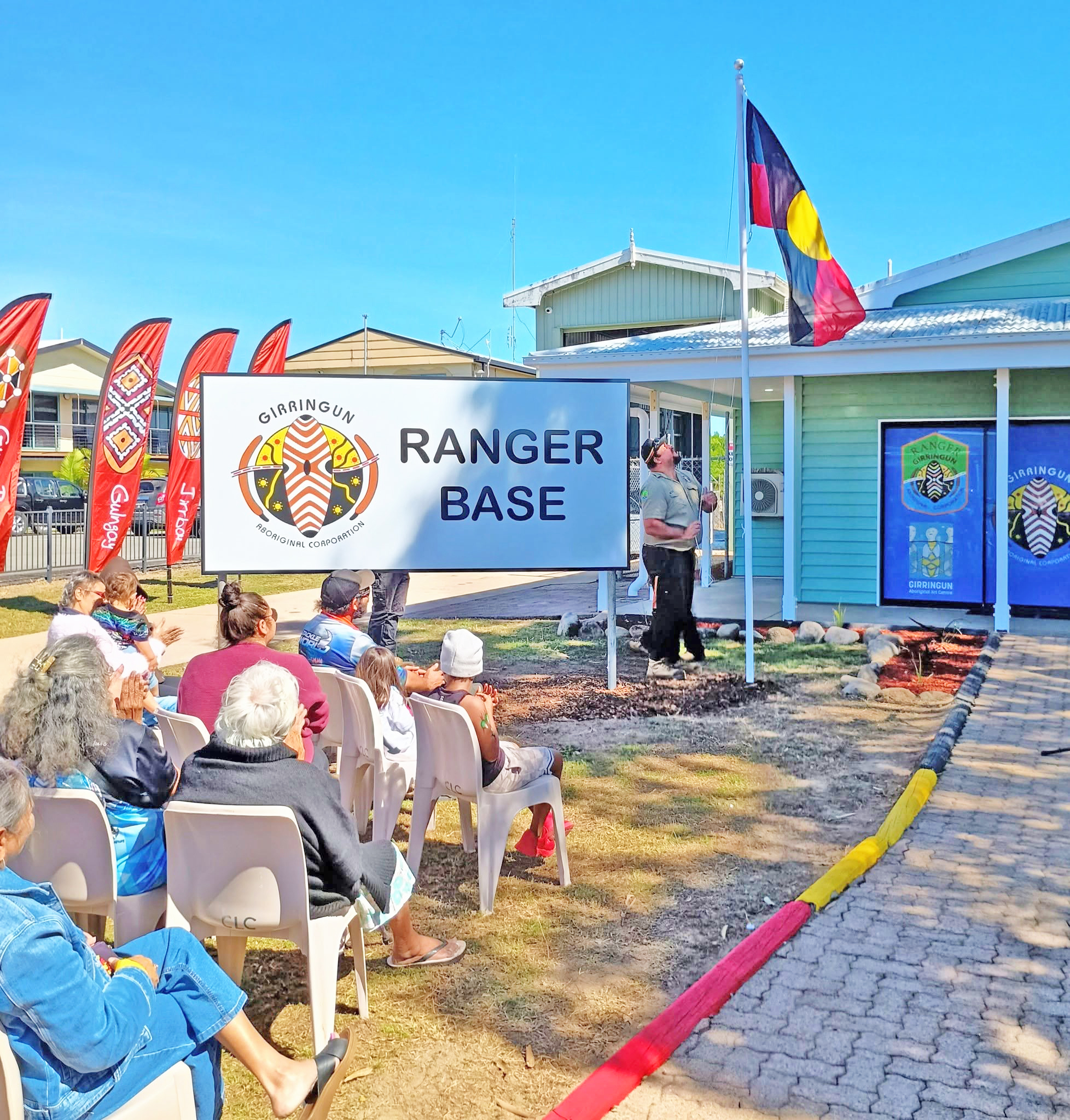
Opening ceremony of the new facilities at Dungeness. Photo source: Facebook
Community members, Traditional Owners, partner organisations and local supporters gathered at Lucinda on Saturday 6th June to celebrate the official opening of the new Dungeness Sea Rangers Base.
Hosted by Girringun Aboriginal Corporation, the community open day marked an important milestone for the organisation's Sea Rangers program, which plays a significant role in marine conservation, research, cultural stewardship and environmental protection across the Girringun Nation.
Located at Dungeness, the new base has been established with support from the Indigenous Land and Sea Corporation and the Great Barrier Reef Marine Park Authority, providing expanded facilities to support ranger operations and future growth.
Girringun Aboriginal Corporation CEO Whitney Rassip said the new facility represented much more than a building.
"This really means a lot to us. The Dungeness Sea Ranger Base isn’t just a building, it’s a place for our people, our culture, and looking after land and sea country the way our old people always have.
"We are creating a space to expand our sea country operations, open opportunities for our Traditional Owner groups and allow better access to our southern and inland management footprints.
"This day is about pride, honouring our Elders, and the future we’re building together."
The event also highlighted the work undertaken through TUMRA (Traditional Use of Marine Resources Agreements), which supports the sustainable management of protected marine species and contributes to important research and monitoring programs throughout the Hinchinbrook region.
Indigenous Land and Sea Corporation CEO Joe Morrison said the organisation was proud to support the project.
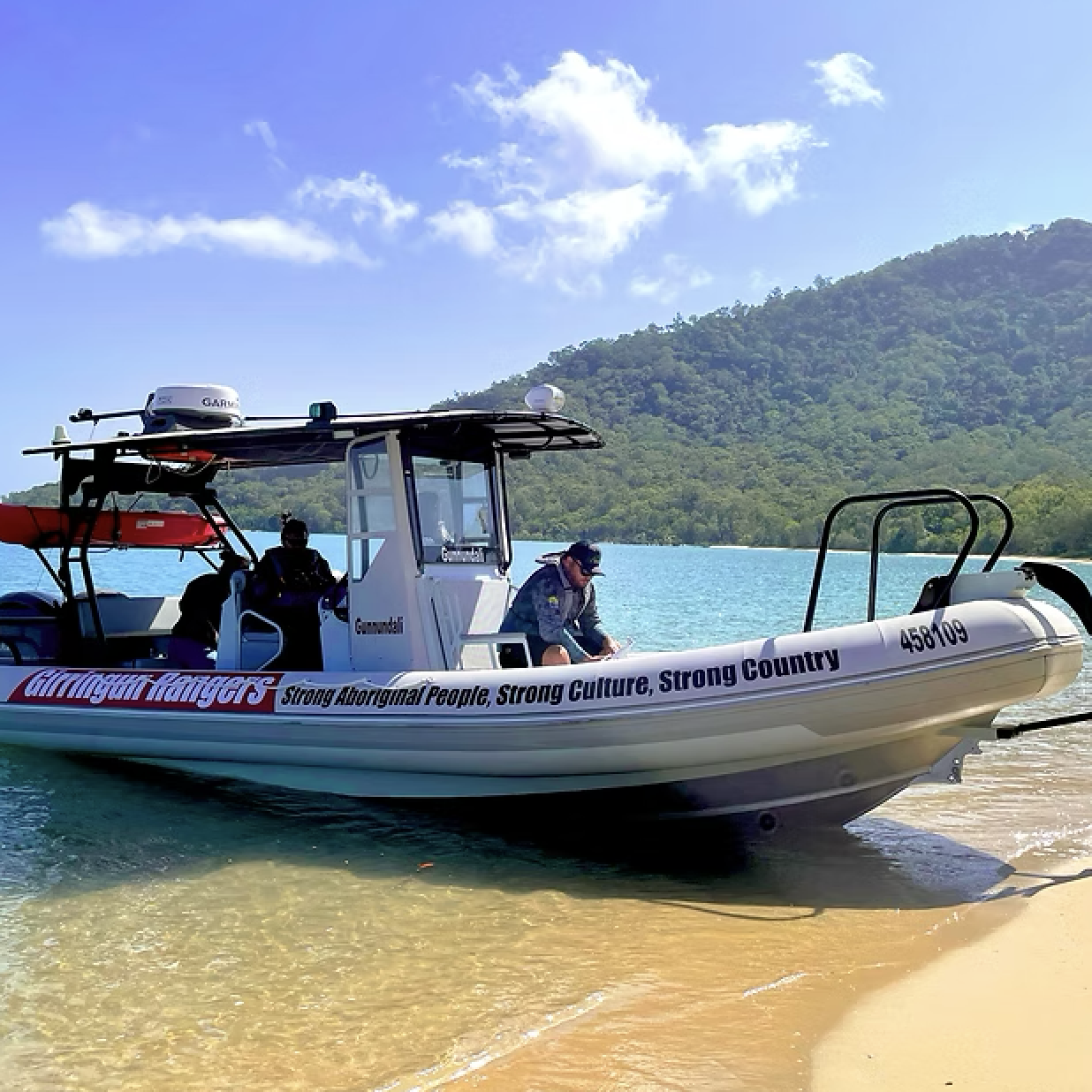
"The new Dungeness Sea Rangers Base will support the Girringun rangers to fulfill their innate responsibility to care, protect and manage Country."
Among those attending the opening were volunteers from the Lucinda Coast Guard, who congratulated the Sea Rangers on the milestone and welcomed opportunities for future collaboration on the water.
The Coast Guard acknowledged the Rangers' important role in providing stewardship of the traditional lands and waters around Hinchinbrook and the Palm Islands, while working alongside organisations including Queensland Parks and Wildlife Service and the Great Barrier Reef Marine Park Authority to protect local marine environments.
Volunteers also highlighted the pathways the Rangers create for young Indigenous people to gain recognised skills, qualifications and employment opportunities while remaining connected to Country.
Lucinda Coast Guard members said they looked forward to working alongside the Sea Rangers in the future through joint training exercises, on-water operations and search and rescue activities, strengthening partnerships between local organisations dedicated to protecting the region's waterways and supporting the community.
This spirit of cooperation was a fitting reflection of the day itself, which celebrated not only a new facility, but also the partnerships, cultural knowledge and shared commitment that will help guide the future of land and sea management across the Girringun Nation.

Members of the Lucinda Coast Guard receiving the cheque from H.E.L.P at Lucinda Hotel, standing in front of “JJ” and the new trailer. Photo credit: Victoria Velton
Community fundraising is set to benefit local marine safety for years to come, with Halifax Emergency Liaison Partnership (H.E.L.P.) donating $12,000 towards a new trailer for the Lucinda Coast Guard's RHIB vessel, "JJ".
As a not-for-profit organisation, the Lucinda Coast Guard relies heavily on grants, donations and community support to maintain its vessels and continue providing vital services on local waterways.

After 15 years of service, the trailer used to transport the Coast Guard's secondary rescue vessel had reached the end of its operational life and required replacement.
The funding, raised by through H.E.L.P.'s popular Friday night raffles at the Lucinda Hotel, has helped make this possible, ensuring "JJ" remains ready for service when needed.
The donation was formally presented during a gathering at the Lucinda Point Hotel, where Lucinda Coast Guard Commander Steve and Administration Officer Coral met with members of the H.E.L.P. team.
Lucinda Coast Guard members expressed their gratitude to the volunteer group and acknowledged the significant contribution the donation will make toward keeping the vessel operational, responding to incidents and assisting boaties throughout the region.

Additional disaster recovery funding has been announced for Queensland communities impacted by severe weather events, with regions like Hinchinbrook and the Cassowary Coast expected to benefit from new support programs targeting recovery, resilience and rebuilding efforts.
An extra $48 million through the Disaster Recovery Funding Arrangements (DRFA) to support long-term recovery following flooding, cyclones and severe weather events has been delivered across the state.
The funding package includes support for environmental restoration, damaged sporting and recreational facilities, vulnerable community members and primary producers recovering from recent disasters.
Among the new measures announced is a $10 million Sport and Community Recreational Assets Program to help repair and clean up impacted community sporting and recreational facilities across 22 local government areas.
A further $30 million boost to the Environmental Recovery Program will support coastline rehabilitation, catchment recovery and national park restoration projects.
“We stand by disaster weary communities to make sure they’re supported long after the storm has passed and floodwaters have receded,” Federal Emergency Management Minister Kristy McBain said.
The package also includes funding for community wellbeing services, financial guidance and support for vulnerable residents, along with additional assistance for primary producers managing pest, weed and business recovery challenges.
Federal Assistant Minister for Regional Development Anthony Chisholm said the funding aimed to reassure regional Queenslanders they would continue receiving support.
“Queenslanders know all too well that recovery from severe weather events can be long and complex,” Senator Chisholm said.
“Through this additional funding support, we want vulnerable Queenslanders, affected farmers and regional communities to know the Government will have your back every step of the way.”
More information on the DRFA packages and others can be found at www.qra.qld.gov.au.
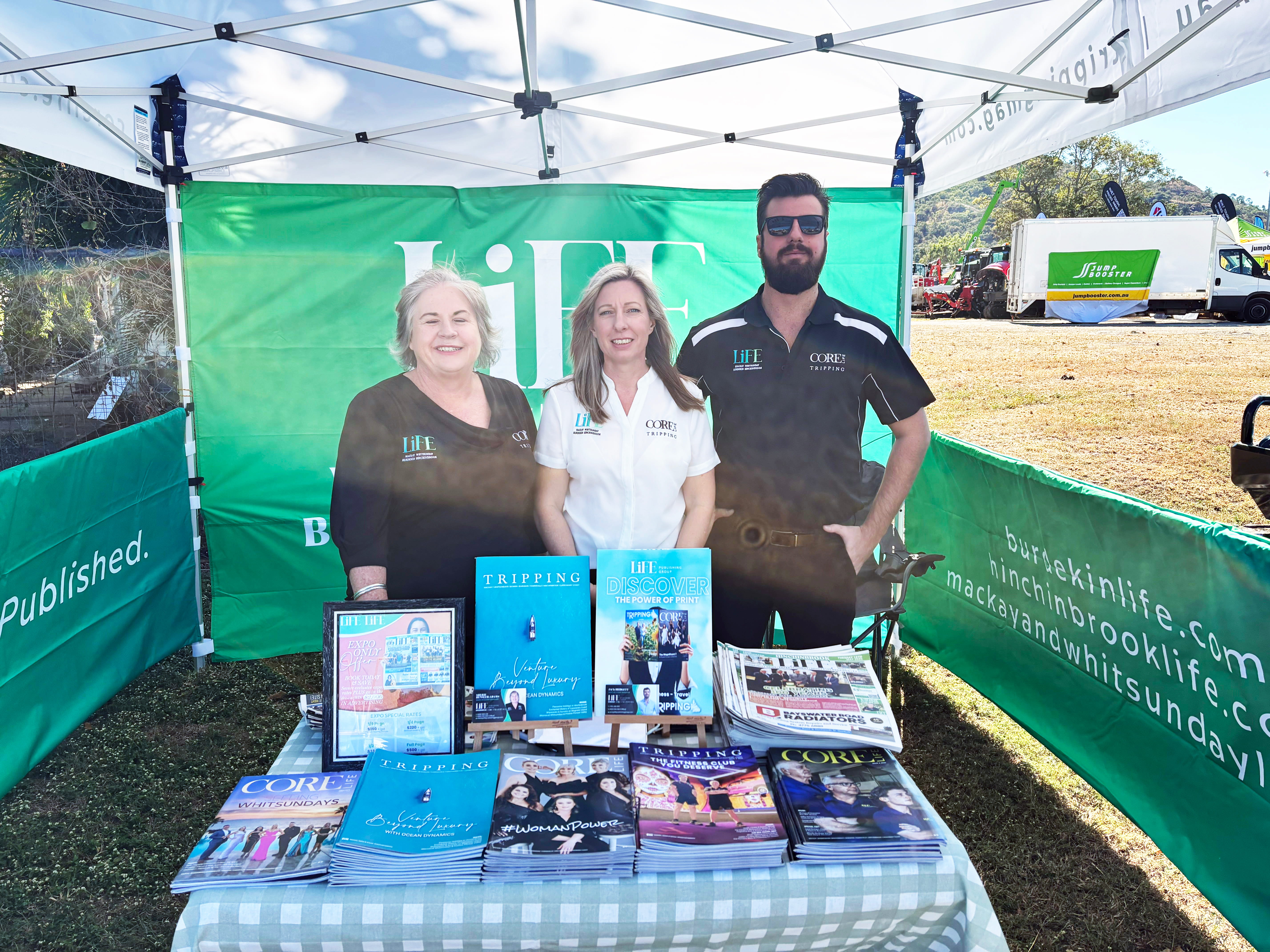
The team at Life Publishing Group with their new gazebo - Hinchinbrook Life Sales Manager Sherie Hensler-Adams, Life Publishing Group Editor in Chief Rachael Smith, Burdekin Life Sales Manager Jack Bridgett
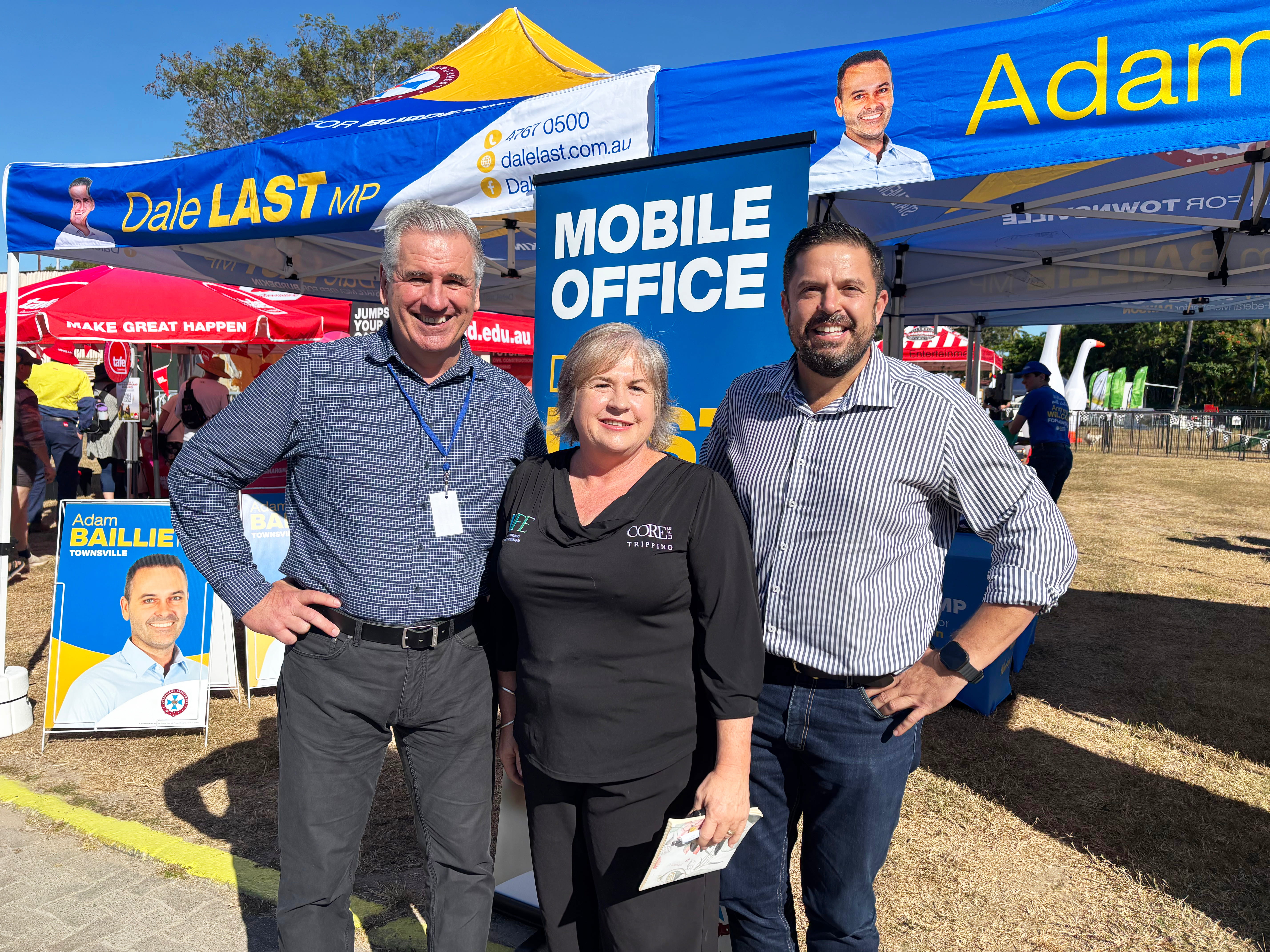
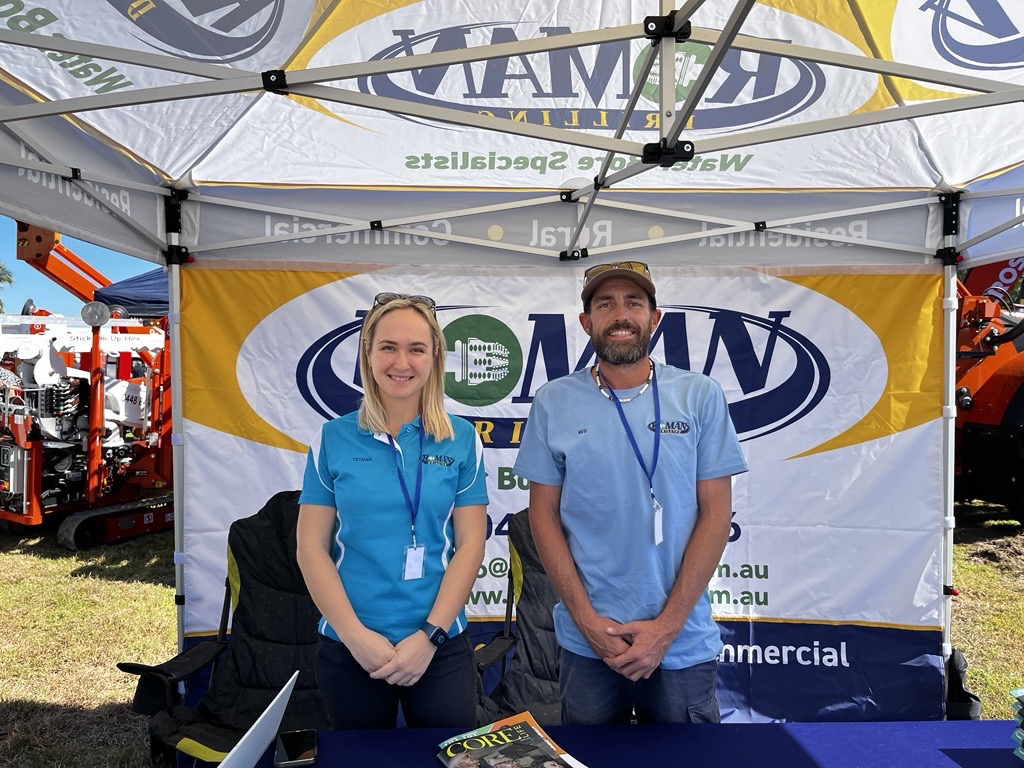
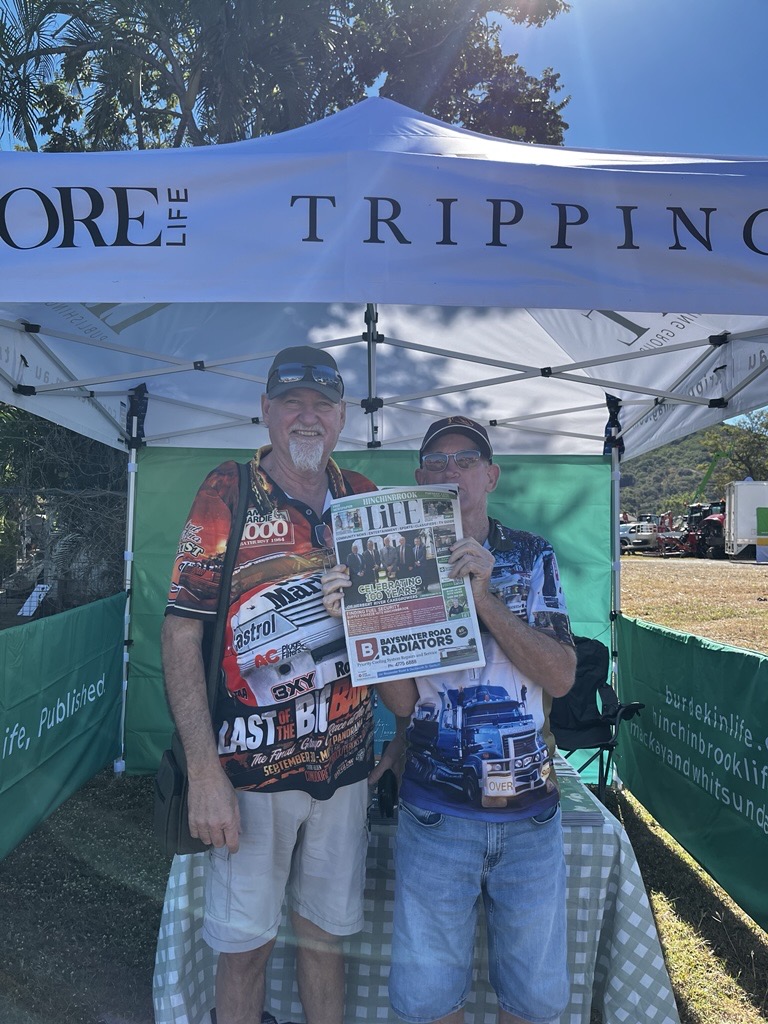
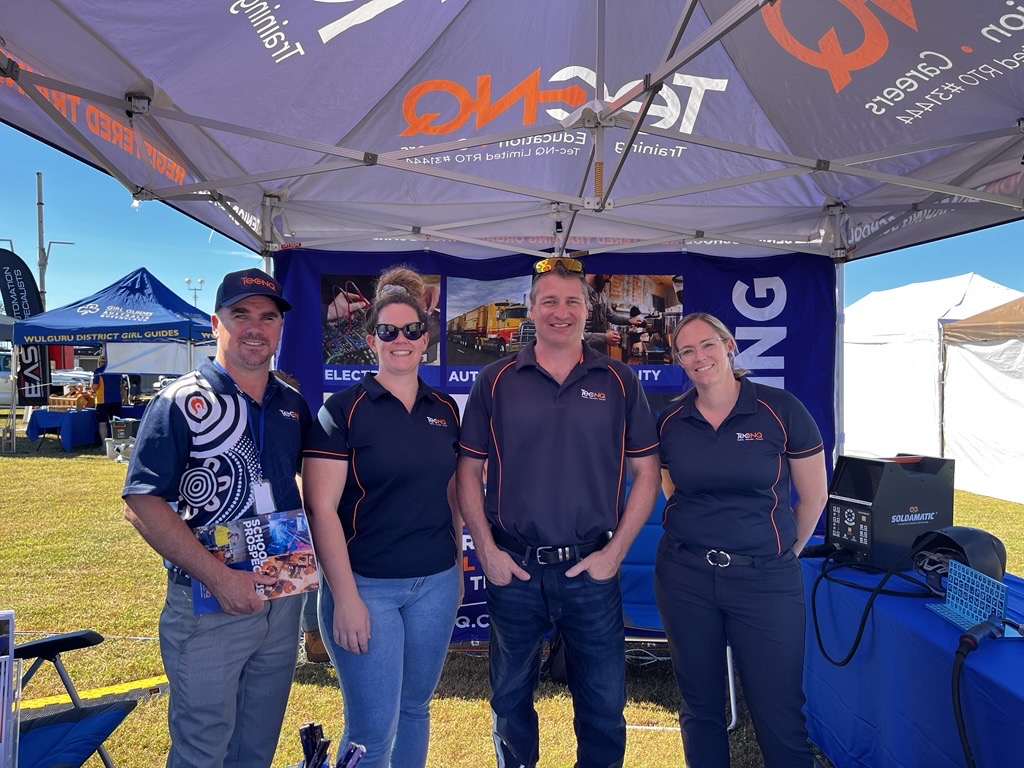
A stunning blue sky winter’s day greeted happy attendees at the Rotary NQ Field Days Exhibition held at the Townsville Show Grounds on Friday and Saturday last week.
Highlights included drone drop shows, chain saw demonstrations, the duck race and a robotic dog used to round up cattle.
In particular, the robotic dog drew crowds with its playful personality and impressive repertoire of tricks, including standing on two legs and forming a heart shape with its forearms, delighting children who squealed with excitement.
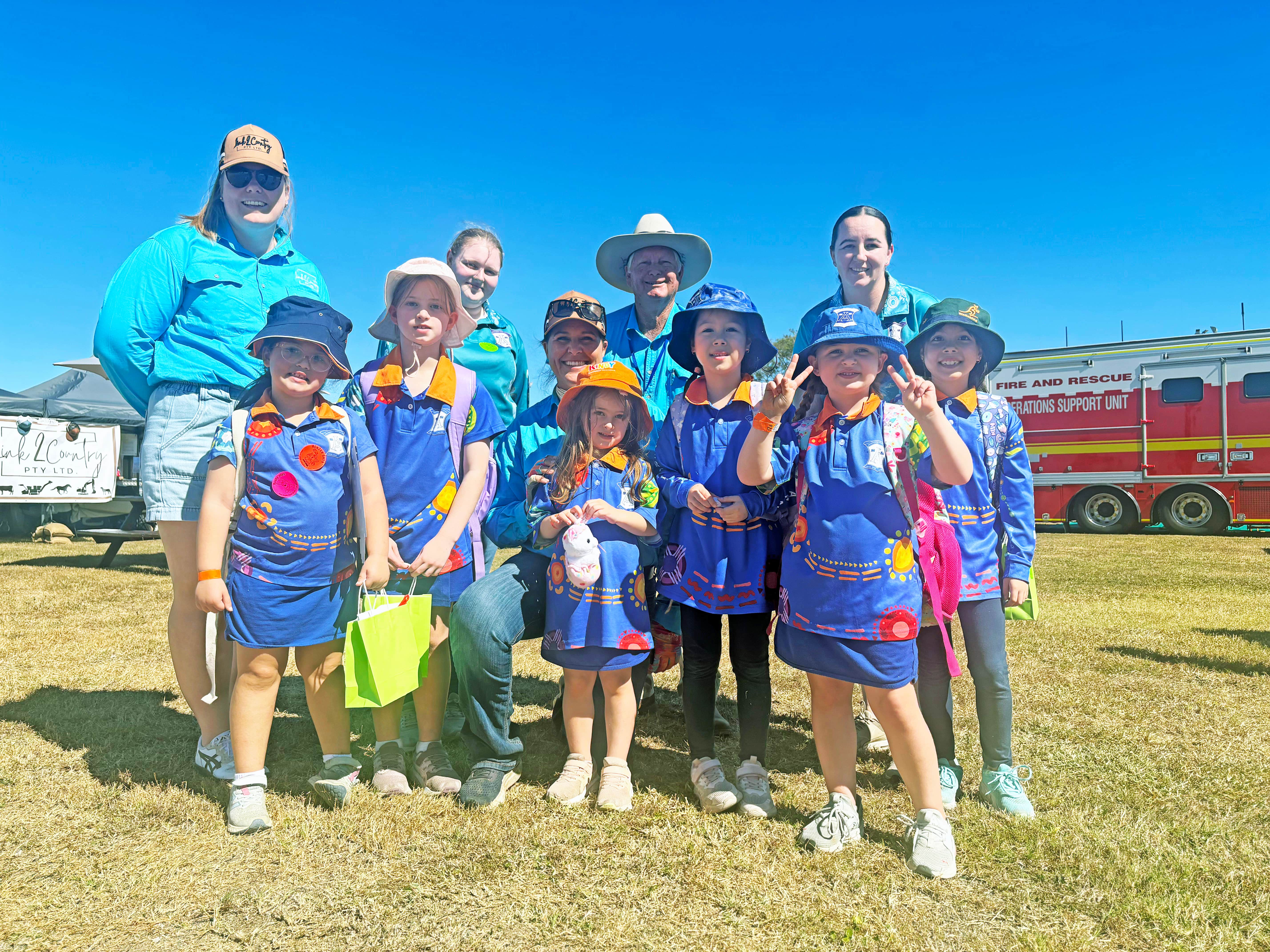
Mayor Nick Dametto officially opened the event at 10am on the Friday morning and crowds enjoyed exploring the engaging displays, petting the farm animals, learning more about bees and listening to the clickety clack of old machines from the Machine Preservationists Society.
Member for Hinchinbrook Wayde Chiesa was present on the day, greeting constituents and enjoying everything the event had to offer.
Link to Country was a big part of the event with Nicole Chiesa at the forefront of engaging with school students from across the region.
Orchestrating the attendance of 180 school children, including students from Abergowerie State School, Nicole organised 11 interactive stalls for the youngsters to explore.
These included the mini tractor-pull for students aged four to nine, the beehive educational stall, the old machines and VR headsets, to name a few.
Overall, attendees experienced a re-energised NQ Field Days event, full of country charm, bringing the regional communities together in the heart of Townsville.

Cinzia McEwen of CBA and Damian Firmi of the Ingham Dirt Bike Club. Photo supplied.
In recognition of their incredible contribution to the community, Commonwealth Bank Ingham Branch have nominated Ingham Dirt Bike Club for a $1,500 donation.
“Community organisations play an essential role in supporting people when it matters most, and we’re proud to support that work,” Branch Manager Cinzia McEwen says.
“Through our Community Donations program, our branches have seen firsthand how this support helps local organisations extend their reach and continue delivering vital services. Our teams live and work in the community and have a strong understanding of local needs and the organisations responding to them.”
“Ingham Dirt Bike Club plays an important role in the local community by providing a safe, inclusive and family friendly environment for riders of all ages and skill levels. Through organised events, training days and competitions, the club promotes active lifestyles and youth engagement, helping to develop skills, confidence and sportsmanship.
Beyond the track, the club fosters strong community connections by bringing families and local businesses together, supporting regional events and contributing to the social fabric of Ingham. Their ongoing commitment to safety, development and community participation makes a meaningful difference across our local community, and we’re proud to support the important role they play.”
Since its inception, CommBank’s Community Donation program has supported hundreds of grassroots organisations across Australia, helping fund essential equipment, services and programs. The donation program empowers branch teams to back causes they know are making a tangible difference in their local communities.

An aerial view of the sandbar. Photo credit: Jug Winston & Coast Guard Ingham QF14
With the busy dry season upon us, the number of locals and visitors heading out to sea for sightseeing or fishing will rapidly increase. Boaties need to be aware that exiting the Enterprise Channel from the Dungeness boat ramp means crossing the sandbar both going out and returning.
Currently there is no channel through the sandbar.
The general rule of thumb is that whatever the tide chart says at any given time, there is only half of that depth of water on the sandbar. Boaties need to ensure that they are tide aware, and plan their trip to leave and return when there is plenty of water below the bottom of their hull.
(Contributed with thanks to Steve Whipps, Commander, Lucinda Coast Guard.)

Stabilisation works have been completed on the Palmerston Highway. Photo sourced: Queensland Department of Transport and Main Roads
Reconstruction works jointly funded by the State and Federal Governments through the Disaster Recovery Funding Arrangements (DRFA) have been completed on the Palmerston Highway, a key freight route in Far North Queensland.
Two significant landslips – one where the road sunk two metres and shifted two metres sideways – have been repaired.
The upslope sites, including one that measured 20-metres high and 75 metres at its widest point, were stabilised with more than 6500 metres of soil nails – the length of about 60 football fields – along with high tensile mesh and coir netting.
At the downslope landslip, 83 concrete piles measuring up to 19 metres were installed over 160 metres. A capping beam was built on top of the piles to secure them together. The beam will also act as a retaining wall for the road embankment. The structures used more than 1450 cubic metres of concrete.
Damaged sections of rainforest in the road corridor have also been rehabilitated.
State Member for Hinchinbrook Wayde Chiesa said the completed works were a testament to the commitment of both governments to the recovery of Far North Queensland.
“The Atherton Tablelands is the agricultural powerhouse of Far North Queensland, and the Palmerston Highway is its connection to the coast, so having this route fully restored is absolutely critical for our producers, our businesses and our communities,” Mr Chiesa said.
“This is complex, world-class engineering carried out in one of Australia’s most sensitive natural environments and tourist attractions, and the result speaks for itself.”
Works under the DRFA to repair damage from ex-Tropical Cyclone Jasper on other key range roads including Kennedy Highway (Kuranda Range), Gillies Range Road and Mossman – Mount Molloy Road are ongoing.
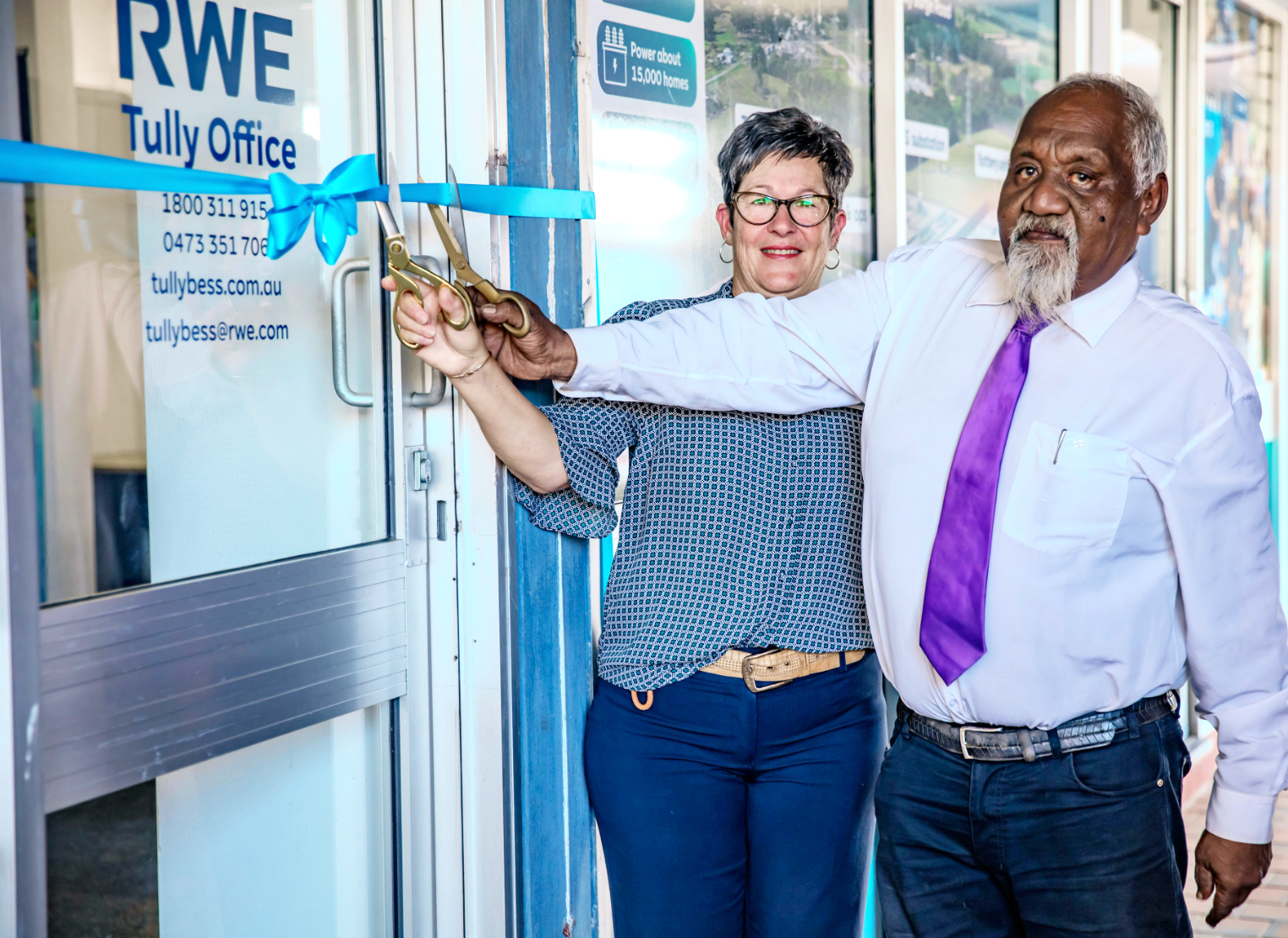
Mayor Teresa Millwood and Gulnay Traditional Owner, Clarence Kinjun at the Official BESS Project Office Opening. Photo supplied
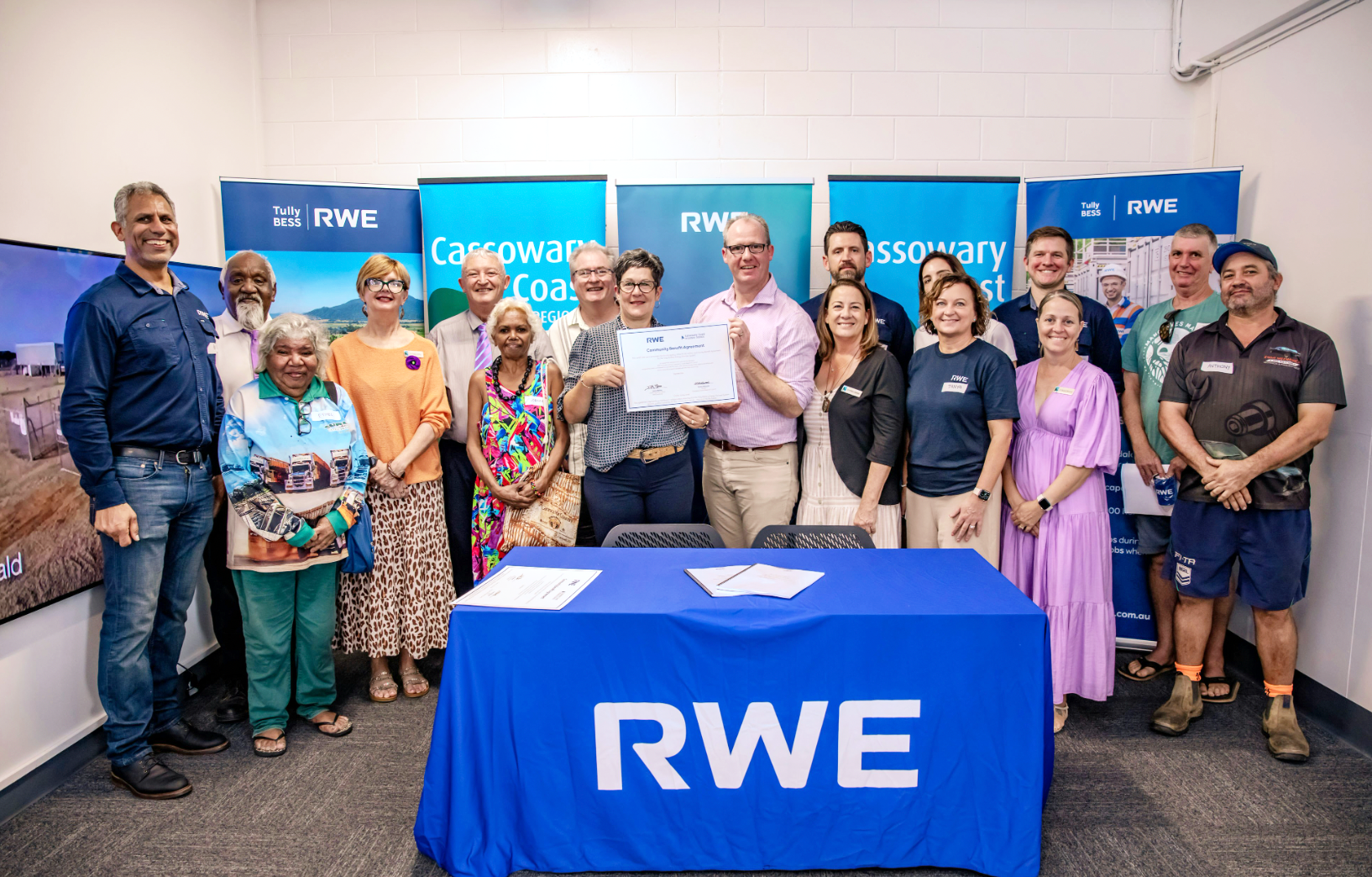
Cassowary Coast Regional Council and renewable energy company RWE have signed a $3.45 million Community Benefit Agreement for the proposed Tully Battery Energy Storage System (BESS), marking a major milestone for the region’s clean energy future.
The agreement will deliver long-term investment into the Tully community over a 23-year period, including the establishment of the RWE Tully Community Fund to support local initiatives and projects.
Under the agreement, the fund will provide $125,000 annually through Council’s community grants program, alongside an additional $25,000 per year to support a dedicated local trainee position responsible for administering the fund.
Funding will begin during the project’s construction phase, with priorities guided by an RWE Tully Community Benefit Group to ensure investment decisions remain community-led and tailored to local needs.
The agreement was developed collaboratively between RWE and Cassowary Coast Regional Council and informed by the project’s Social Impact Assessment.
RWE Renewables Europe & Australia CEO Dan Belton said the agreement reflected the company’s long-term commitment to the region.
“We are proud to partner with Cassowary Coast Regional Council on a Community Benefit Agreement shaped through genuine collaboration and informed by community feedback,” Mr Belton said.
“The RWE Tully Community Fund has been specifically tailored for local communities and will provide long-term support to the initiatives that matter most to local residents. This agreement, and the opening of our project office in the heart of the town, reflect our long-term commitment to Tully and surrounds. We also encourage local businesses and contractors to speak with us about the 28 work packages currently open as part of the project’s development phase.”
Cassowary Coast Regional Council Mayor Teresa Millwood said the agreement would provide lasting benefits for the local community.
“This agreement represents an important long-term investment into the Tully community and demonstrates what can be achieved through strong collaboration between Council, industry and the community,” Cr Millwood said.
“The establishment of the RWE Tully Community Fund and support for a dedicated local trainee position will help ensure tangible benefits flow back into local communities for many years to come. We also welcome the opening of the Tully Project Office, which provides an accessible place for residents, local businesses and stakeholders to connect directly with the project team and stay informed as the project progresses.”
The newly opened Tully Project Office will operate as an information hub and community engagement space throughout the life of the project.
The proposed Tully BESS is expected to become the largest battery energy storage project in Far North Queensland.

Hinchinbrook Shire Council has called for tenders from suitably qualified contractors to demolish and remove the structures at 7–17 Herbert Street, Ingham.
The building has been declared unsafe and failure of the property owner to respond to formal notices now enables Council to proceed with relevant demolition powers in the interests of public safety.
Mayor Ramon Jayo said the move was about balancing community expectations with due process.
“We know the community is frustrated and has been waiting to see action,” Mayor Jayo said.
“But the fact is that property owners also enjoy certain rights and legal processes must be undertaken correctly to ensure Council compliance with legislative requirements.”
Any works will need to meet strict safety and environmental standards, including the management of hazardous materials such as asbestos.
Tenders close at 2pm on Wednesday 10th June 2026.
Visit the website for more information on Council’s tender opportunities: www.hinchinbrook.qld.gov.au/our-council/procurement-and-tenders/current-procurement-and-tender-opportunities/

Be advised a temporary one-lane road closure works will be undertaken along Pappins Road, Helens Hill from: Wednesday 3rd June 2026 to Monday 8th June 2026, weather permitting.
During this period, ongoing pavement stabilisation and sealing works will be carried out.
Motorists may experience minor delays of up to five minutes under traffic control while works are underway. Traffic management measures will be in place to ensure the safety of both workers and road users.
Council appreciates the community’s patience and cooperation while these essential works are completed. For more information email council@hinchinbrook.qld.gov.au or contact Council’s customer service centre on (07) 4776 4600.
Publishers Indemnity. Any individual or entity that places advertising, supplies copy material, or submits editorial content to Life Publishing agrees and undertakes to ensure that all such material:- Does not infringe upon any copyright, trademark, or other intellectual property rights;- Is free from any content that could be considered defamatory, libelous, or slanderous;- Does not infringe upon any rights related to privacy or breach of confidence;- Contains no obscene, indecent, or otherwise unlawful material;- Complies fully with the Trade Practices Act and all other applicable laws, regulations, or statutes. Furthermore, by submitting or placing such material, these individuals or entities agree to indemnify and hold harmless the publisher, Life Publishing and Events Pty Ltd, and/or its agents from and against any and all investigations, claims, demands, liabilities, damages, costs, or judgments arising out of or in connection with the material provided. All material is believed to be accurate at the time of printing and remains the copyright of Life Publishing and Events Pty Ltd.
© 2026 Life Publishing Group Ltd.
