Independently Owned, Locally Grown, Community Loved
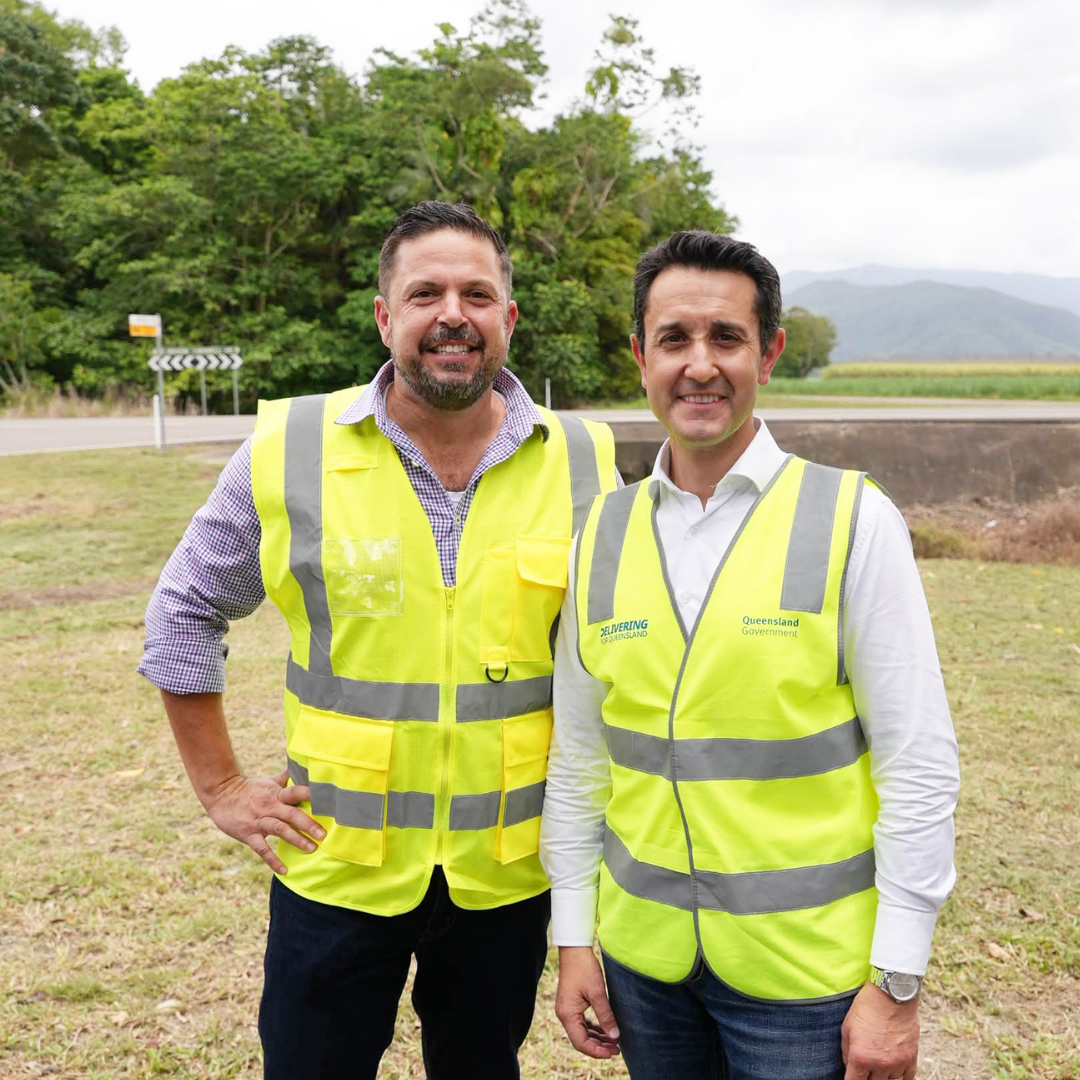


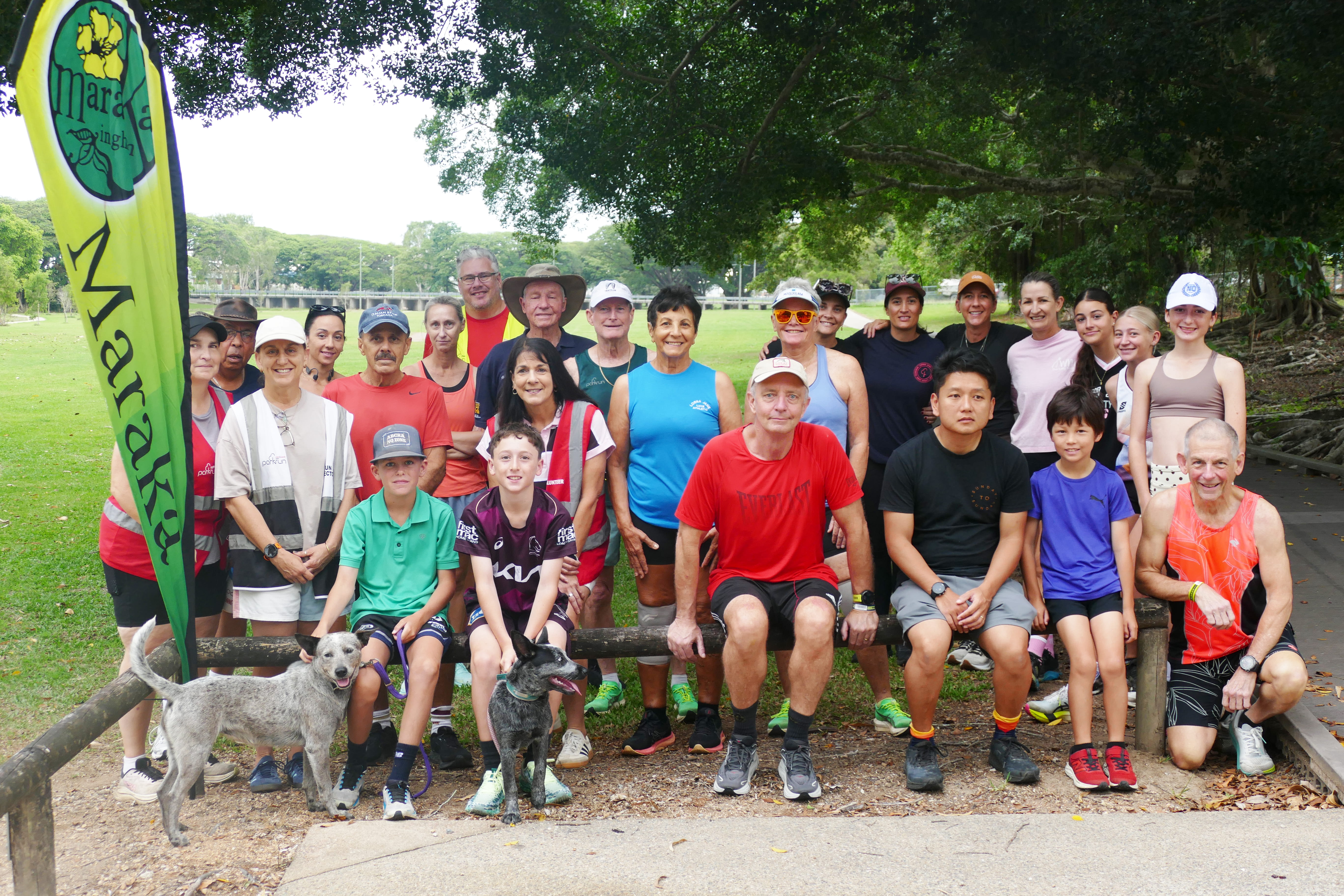
From Left Brenden Accornero, Paul Marbelli, Frank Scardamaglia, Zenan Reinaudo, Leah Russo, Sam Torrisi, Steven Marbelli and Terry Motti
Since 1926 Canegrowers Herbert River has long been the cornerstone of support for sugarcane farmers in the Herbert River district. Their unwavering commitment to advocating for and assisting their members has made them an essential partner in navigating the challenges of modern farming. Offering a range of services, from advocacy and policy influence to essential services such as payroll, Canegrowers Herbert River ensures that local growers have the resources they need to thrive.
One of the most significant contributions Canegrowers Herbert River provides is its robust advocacy for growers' interests. Sugarcane farming faces numerous pressures, fluctuating market prices, environmental regulations, and the ever-changing climate. Canegrowers Herbert River plays an active role in representing its members at local, state, and federal levels. Through strong advocacy, they ensure that growers' voices are heard on critical issues.
Their work with various government bodies helps shape policies that protect the interests of cane farmers, ensuring the sustainability of the industry in the Herbert River region. This kind of representation is invaluable to growers who might not have the time or resources to engage in these important discussions directly.
The organisation is deeply engaged with local issues, working closely with farmers to understand their specific challenges and helping to find practical solutions. Whether it's dealing with infrastructure concerns, road safety, transport, Canegrowers Herbert River plays a vital role in addressing these issues and working toward positive outcomes. By collaborating with local councils, government bodies, and industry partners, they ensure that farmers’ concerns are heard and resolved in ways that benefit both growers and the wider community.
Every season alone Canegrowers Herbert River assists members with transport issues including permitting and regulation, providing guidance with BMP, compliance audits, permit and notification requirements, drainage, CCS and cut to crush discrepancies, siding issues, cane supply contract matters and many more pertinent issues.
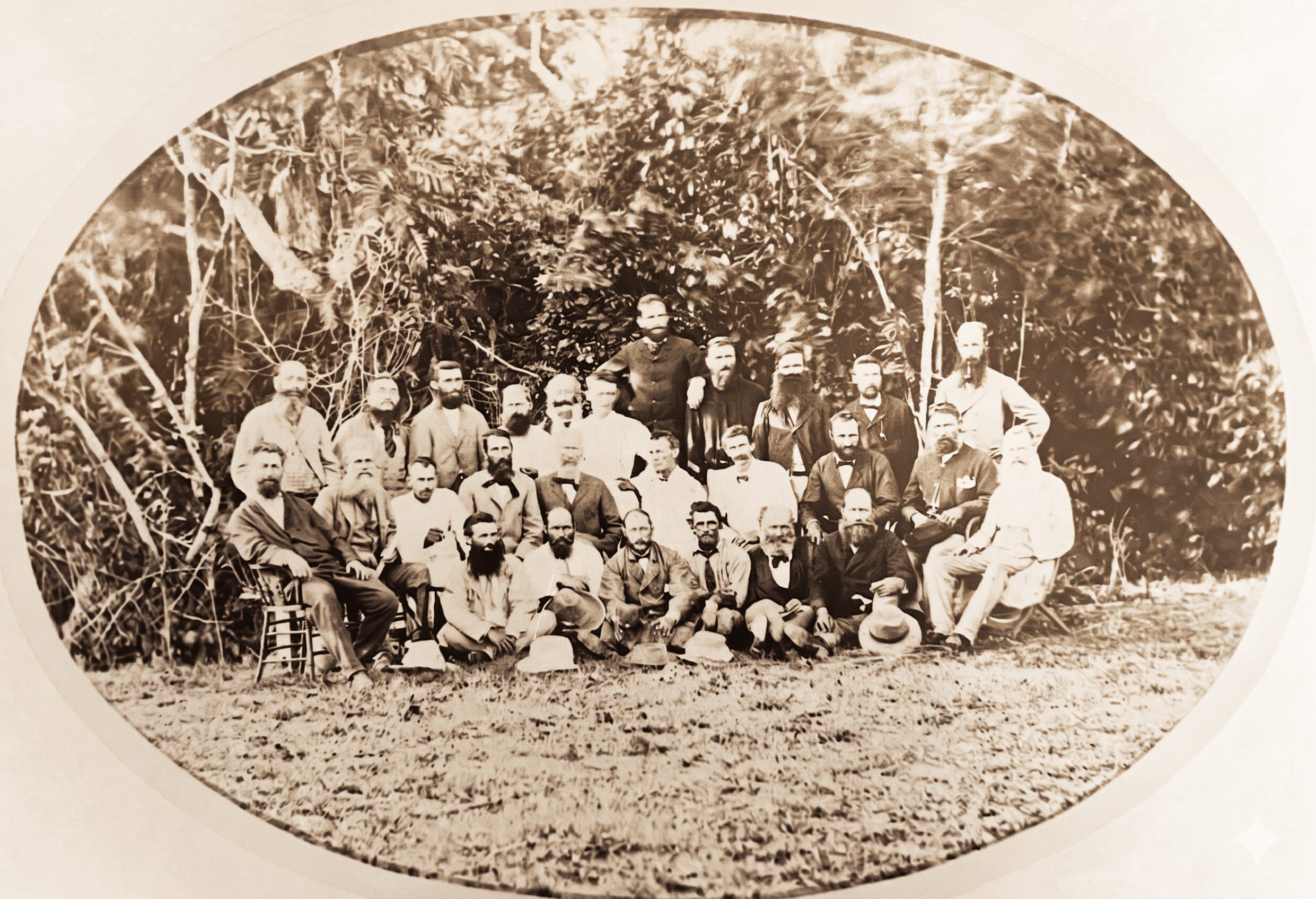
The story of CANEGROWERS on the Herbert is unique. CANEGROWERS, or as it was first known Queensland Cane Growers Association (QCGA), came about when the Queensland Government legislated for commodity associations with compulsory membership and farmer levies. Yet even before the imposition of compulsory association there was a highly organized association advocating strongly for sugar farmers on the Herbert, the Herbert River Farmers’ League (HRFL)
The Herbert River CANEGROWERS stands on the shoulders of a group of small farmers whose aspirations to grow sugar cane were ridiculed by the planters. Nevertheless, six men, only two of whom were English speakers, took on the Colonial Sugar Refining Company (CSR) in 1882 as the Herbert River Farmers’ Association (HRFA), and achieved in 1884 what seemed impossible, a contract to supply cane to CSR. It was the first association in north Queensland to solely represent small sugar growers’ interests rather than those of larger planters and was the voice of the small farmers until the formation of the Herbert River Farmers’ League (HRFL) in 1896.

When the Herbert River district branch executive of the QCGA was formed in February 1926, followed by the Herbert River Cane Growers Association (HRCGA) in February 1932 it inherited branch associations, structure and roles already established by the HRFL. It operated out of the HRFL’s building until the Farmers’ Building opened in 1934. Moreover,the first executive positions of the HRCGA were held by HRFL members who contributed their valuable organizational experience.
This strong associative urge dating from 1882 has defined the strength and determination of CANEGROWERS on the Herbert as it has steered the local industry with a united voice through the many challenges that have beset the industry in the last 100 years.
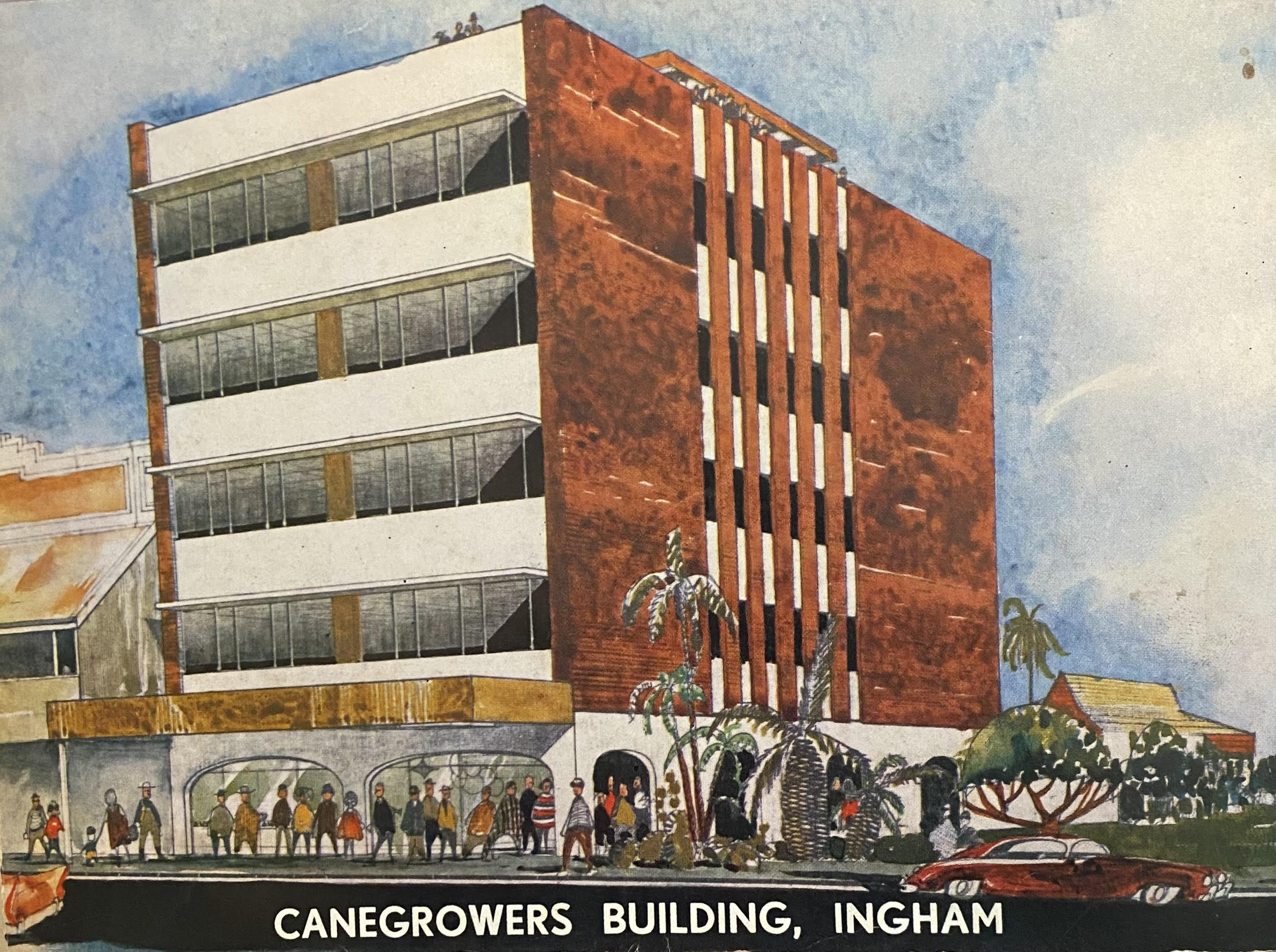
Ingham’s only skyscraper, the CANEGROWERS building, is a testament to the hopes and confidence that the Herbert River Cane Growers’ Association (HRCGA) held for the district’s sugar industry in 1970. It is not the first farmers’ building on the site, however. The newly formed HRCGA decided in 1934 that its ‘status and dignity’ warranted its own building.
A perpetual lease on an allotment on Lannercost Street was obtained by public auction. With a low-interest loan from the Queensland Cane Growers’ Council (QCGC), F.A. Pidgeon was contracted for the build at a cost of £2500. The Farmers’ Building was opened on 29 September 1934. Costs were kept low because it was built in conjunction with George Masselos’ Capitol Building, sharing stairwell and wall.
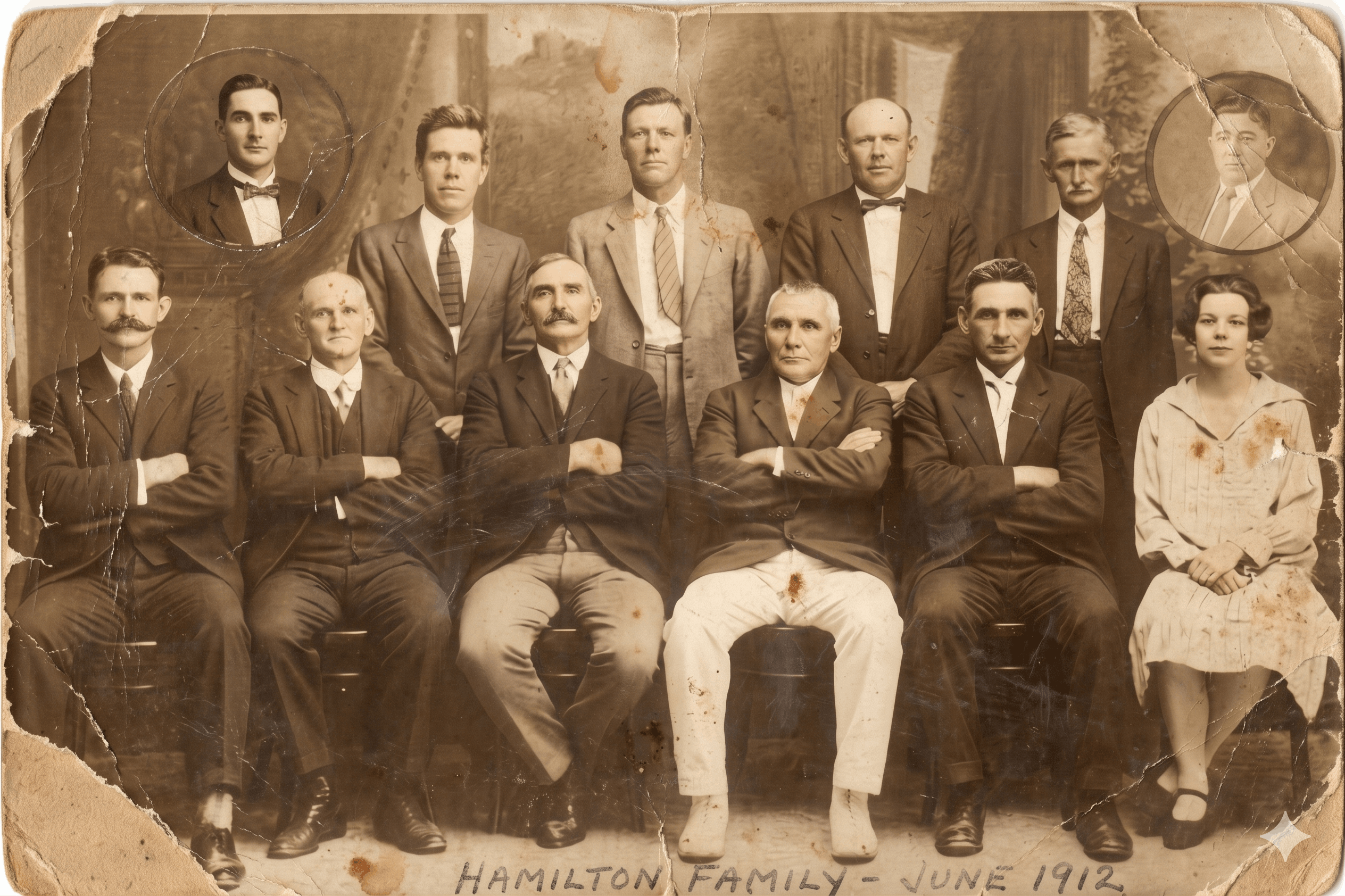
Having a building of their own from which services and assistance to farmers could be provided was integral to the HRCGA’s successful promotion of the cane growing industry for 36 years. In that time, sugar production in Queensland increased from 613,000 tons to 2.6 million tons, with the Herbert River district’s output from two mills being the largest of the 10 mills between Ingham and Mossman.
The need for a new Farmers’ building was mooted as early as 1963 but it wasn’t until 12 December 1970 that the CANEGROWERS building was opened by the Hon. J.A. Row. He described it as ‘tangible evidence of the sugar industry’s confidence in its future’.
Today the Herbert River Canegrowers Organisation still serves the local sugar industry from the lofty heights of the CANEGROWERS building, bolstering growers as they pivot on the demands of an ever-changing agricultural landscape.
The Herbert River Cane Growers Association (HRCGA) became the dominant farmers’ organization on the Herbert during the Great Depression, guiding the industry then through the fraught years of World War 2 withenlistments, as well as the internment of farmers, cane cutters and mill workers of Italian and other nationalities who were considered enemy aliens.
Though the post war economic boom created work, it continued to be difficult to attract workers to cut cane. Post-war immigrants directed to cane cutting was a stop-gap measure with mechanization inevitable. The district executives of the CANEGROWERS organization played a major role in the process of mechanization, with Queensland at the forefront.
The foresighted HRCGA purchased two TOFT harvesters in 1945 as an experimental trial. Together with CSR the HRCGA formed the Herbert River Mechanical Harvesting Committee for the testing of harvesters in the field and in 1961 and 1962 the HRCGA invested in experimental green cane harvester prototypes.
The HRCGA guided the local farming community through the difficult years of the 1980s when high interest rates, rising farm costs and extreme price variability in the world sugar market put some sugar farmers under such financial stress that there were bank foreclosures.
The small family farms survived due to strategic government legislation and subsidization. The consequence of dismantling the complex regulatory system in 1991 saw an exit of small sugar cane farmers with surviving farmers or consortiums buying up their land. The economies of scale of larger enterprises enabled them to absorb the ever increasing farm costs.
Locally the HRCG steered the farming body through these adjustments as well as another major shift, the departure of CSR and the purchase of Victoria and Macknade Mills by WILMAR in 2010. Contentious times followed when new millers across the sugar districts proposed marketing their own sugar. 2015 government legislation guaranteed farmers’ ability to choose who marketed their sugar which CANEGROWERS had aimpactful influence on this outcome through their advocacy efforts with government.
CANEGROWERS had to work out how to negotiate the changes not only for its farmer members but for itself as an organization. Despite the repeal of the statutory compulsory membership and levying arrangements, theHerbert River farmers overwhelmingly voted for the HRCGA to continue to be their representative body contrary to alternative suggestions. The HRCGA, by remaining faithful to its charter, with its strong managementand readiness to negotiate toughly continues to manage change for the benefit of its members.
1864
Legislation passed to allow plantation agriculture in Queensland
1868
Legislation passed to regulate and control the introduction of Melanesians labourers and how they were recruited. John Geoffrey O’Connell and William McDowall took up land on the Herbert to grow sugar.
1872
Gairloch Plantation Mill first crushed.
1873
Macknade and Bemerside Plantation Mills first crushed.
1876
Legislation passed to allow more speculative selection by planters but also for small farmers to farm in tropical sugar districts.
1881
Legislation passed to enable CSR to acquire land on the Herbert for growing and milling sugar cane under preferential terms.
1882
HERBERT RIVER FARMERS ASSOCIATION formed; and Gairloch Plantation Mill began crushing again under different management.
1883
Hamleigh, Ripple Creek and Victoria Plantation Mills began crushing.
1884
Legislation passed to halt the plantation land grab and promote the selection of land by smaller selectors.
CSR Victoria Plantation Mill agreed to take cane from small farmers for crushing.
1885
Legislation decreed that after 31 December 1890 no more licenses to import Melanesian labour would be issued.
1891
The arrival of the first Italian labourers on the Herbert River cane fields.
1895
HALIFAX PLANTERS’ CLUB (aa small farmers’ club) formed either 1894 or 1895.
1896
HERBERT RIVER FARMERS’ LEAGUE formed and CSR acquired Macknade Plantation Mill.
1900
Bureau of Sugar Experiment Stations (BSES) created. Responsibility was research and development for the sugar industry.
1901
White Australia policy required the end of recruitment from 31 March 1904, and deportation of all Melanesians by 31 December 1906. Completed in 1908 with exceptions.
1905
Legislation passed to allow non-British workers to be contracted to work in the sugar fields. This brought Finnish and Spanish people to the Herbert District.
1913
Legislation passed for standard rates of payment to be paid to sugar cane farmers by millers and rates of pay and conditions for all workers in the sugar industry.
1915
Legislation passed to initiate the complex regulatory system that came to govern the sugar industry and secured the place of the small grower in the industry.
1915
Legislated passed for the Queensland Government to acquire all raw sugar manufactured in Queensland and to on sell to the Commonwealth Government.
1922
Legislation passed to provide for primary industry bodies with power to compel all persons in that industry to become members and impose levies.
1925
Herbert River Farmer’s League building opened.
1926
The statutory organization the QUEENSLAND CANE GROWERS’ ASSOCIATION with governing body: The QUEENSLAND CANE GROWERS’ COUNCIL created.
Herbert River district branch executive of the QCGA formed.
1932
HERBERT RIVER CANE GROWERS ASSOCIATION (HRCGA) came into being.
1934
Farmers’ Building opened.
1947
Displaced Person cane cutters contracted to work as cane cutters.
1970
Canegrowers Building opened.
1977
Manual cane cutting deleted from the Sugar Industry Award. Sugar cane harvesting now fully mechanized.
1991
Beginning of deregulation of the sugar industry.
1999
Sugarcane Prices Act, and the Sugar Acquisition Act repealed.
2005
Government no longer set formula for the cane price or enforced 'cane production area' restrictions. Entities other than QSL (Queensland Sugar Limited) could now market raw sugar for export.
2008
Halifax Planters’ Club folded.
2009
Sucrogen formed comprising of CSR Mills, Ethanol and the Sweetener Group.
2010
CSR sells Sucrogen to Wilmar which acquired the Victoria and Macknade Mills as part of its acquisition of CSR Limited's sugar business.
2013
Sugar Research Australia (SRA) declared as a statutory body, with compulsory membership levies to be shared equally by millers and farmers.
2015
Legislation passed to allow the farmers to choose who marketed their sugar.
2017
Legislation passed to regulate the conduct of growers, mill owners and marketers of sugar in relation to contracts or agreements for the supply of cane or the on‑supply of sugar.
Publishers Indemnity. Any individual or entity that places advertising, supplies copy material, or submits editorial content to Life Publishing agrees and undertakes to ensure that all such material:- Does not infringe upon any copyright, trademark, or other intellectual property rights;- Is free from any content that could be considered defamatory, libelous, or slanderous;- Does not infringe upon any rights related to privacy or breach of confidence;- Contains no obscene, indecent, or otherwise unlawful material;- Complies fully with the Trade Practices Act and all other applicable laws, regulations, or statutes. Furthermore, by submitting or placing such material, these individuals or entities agree to indemnify and hold harmless the publisher, Life Publishing and Events Pty Ltd, and/or its agents from and against any and all investigations, claims, demands, liabilities, damages, costs, or judgments arising out of or in connection with the material provided. All material is believed to be accurate at the time of printing and remains the copyright of Life Publishing and Events Pty Ltd.
© 2026 Life Publishing Group Ltd.