Independently Owned, Locally Grown, Community Loved

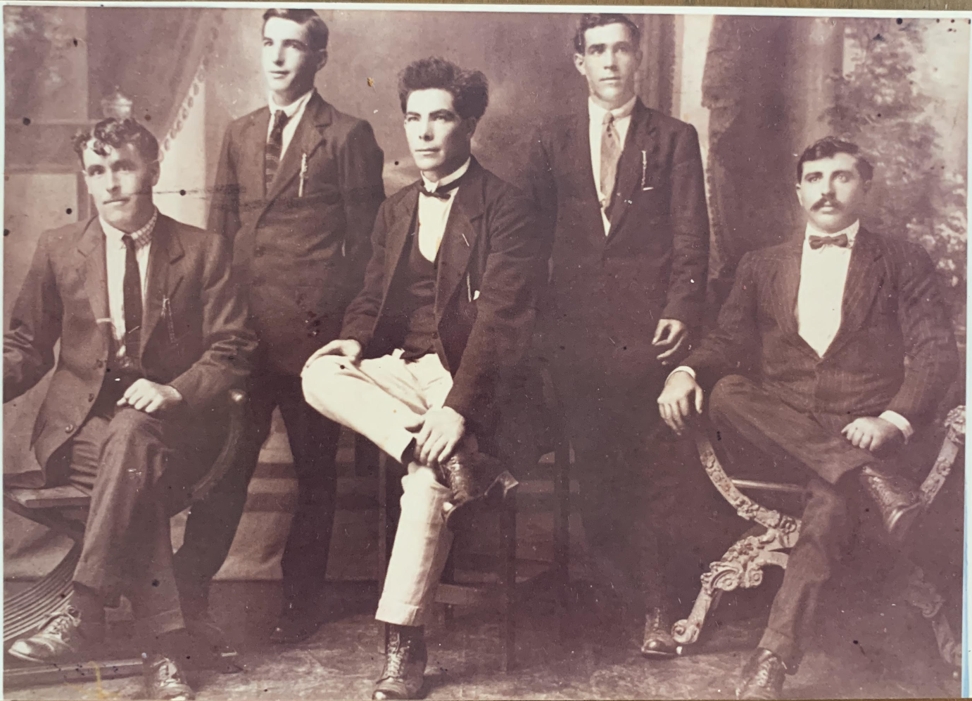
Recently, the travelling Basques in Australia exhibition was on display in the Hinchinbrook Shire Library. This exhibition is dedicated to the Basque men and women who came to Australia between 1907 and the 1970s to work in occupations where their labour was desperately needed. As there was a great disparity between the numbers of male and female migrants, many single men returned home.
Those who returned to the Basque country were interviewed for this display, so many of the names that appear in the exhibition are not familiar. Other names will be, because they and their descendants still live here.
The Basques are the oldest ethnic group in Europe whose language, Euskera, belongs to no other known language family. The Basque country - Euskal Herria - straddles northwest Spain and southwest France. The Spanish Basque region, Euskadi, is an autonomous community with its own parliament.
The first Basques arrived in the Herbert River district in 1907. When most of the former indentured Melanesian labourers were repatriated back to their islands in 1906 and 1907, the Colonial Sugar Refining Company (CSR) faced an imminent labour shortage. It brought out people of various nationalities from Europe under a contract labour scheme to cut cane in the 1907 harvest season.
Amongst the first Basques to arrive in 1907 was Aniceto Menchaca. By 1912, he was already supplying cane from his farm just outside Trebonne to Victoria Mill. Soon, other Basque families followed.
The Basque migration to the Herbert district was the result of chain migration, where migrants from one home community follow each other into the new world. Very important to the Basque chain migration were Tomas and Teresa Mendiolea, who came to Australia in 1924. Teresa was single-handedly responsible for assisting the migration of 700 immigrants to work in the Queensland sugar industry.
The Mendiolea farmhouse at Gedges Crossing was a gathering place for all the lonely single Spanish and Basque cane cutters who were welcomed there with open arms. They got good home-cooked meals, assistance with any legal matters, and companionship.
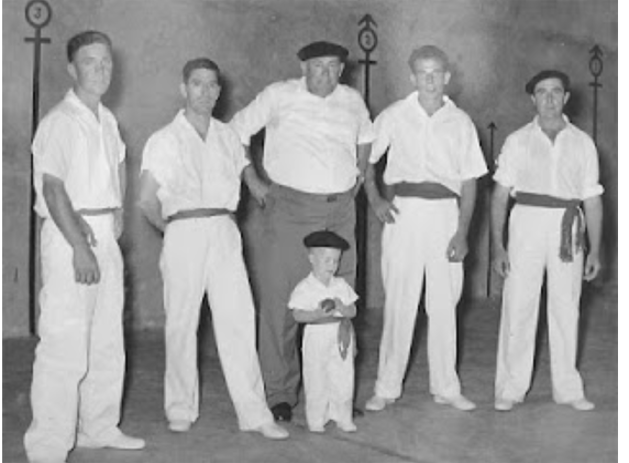
Another meeting place was the Trebonne Hotel, in whose grounds a Fronton (handball court) was built in 1959. Up to 200 people would gather at the fronton during the harvest season, especially on nights when dancing and a barbecue were organised by the Spanish Handball Club. Other traditional games played were the card game Mus, the weightlifting contest Harrijasotzaile, which required the lifting of a Piedra (a stone or stone block) and Txingas (Chinga), a competition in which the competitor had to cover a distance carrying a 50-kilogram weight in each hand.
By 1980, the Fronton was no longer used because manual cane cutting had been replaced by mechanical harvesters, and many Basques who had come out to cut cane returned home. Today, the Fronton stands as a lone remaining monument to mark the small but significant migration of Basque people to north Queensland.
Contributed with thanks by Dr Bianka Vidonja Balanzategui

Publishers Indemnity. Any individual or entity that places advertising, supplies copy material, or submits editorial content to Life Publishing agrees and undertakes to ensure that all such material:- Does not infringe upon any copyright, trademark, or other intellectual property rights;- Is free from any content that could be considered defamatory, libelous, or slanderous;- Does not infringe upon any rights related to privacy or breach of confidence;- Contains no obscene, indecent, or otherwise unlawful material;- Complies fully with the Trade Practices Act and all other applicable laws, regulations, or statutes. Furthermore, by submitting or placing such material, these individuals or entities agree to indemnify and hold harmless the publisher, Life Publishing and Events Pty Ltd, and/or its agents from and against any and all investigations, claims, demands, liabilities, damages, costs, or judgments arising out of or in connection with the material provided. All material is believed to be accurate at the time of printing and remains the copyright of Life Publishing and Events Pty Ltd.
© 2026 Life Publishing Group Ltd.