
Independently Owned, Locally Grown, Community Loved

With nearly two decades in real estate, Nathan Henderson has built a career grounded in experience, local knowledge, and a genuine understanding of people. After working as an agent for several years, he gained his Principal’s licence in 2007, marking the beginning of a long-standing presence in the Hinchinbrook property market. Nathan specialises in residential sales, rentals, and rural properties, with a particular appreciation for the people behind each transaction. “Residential sales and rentals and rural sales are the bulk of our work and having been around for a while, the people are the best part. We are truly grateful when people are referred to us and we have sold to parents and then children in the same family. Being an agent means helping people navigate an important transition in their life.” With a rural background, Nathan values getting out on the land and understanding how properties function within their environment and community. “It’s easy to focus too locally… we take care to understand what is happening outside of our area to ensure we are reacting quickly to changes in our market for clients.” “Understanding what people are aiming to achieve and when, helps us give advice and strategy in selling their property. We assist with the happiest and saddest moments in people's lives and we are always grateful for the trust our clients put in us.” What advice would you give to first-home buyers looking to settle in the region? “Avoid the FOMO, don’t rush unless it’s the right place… build a relationship with agents so you have a chance of seeing things as they come on the market.”
Read the full story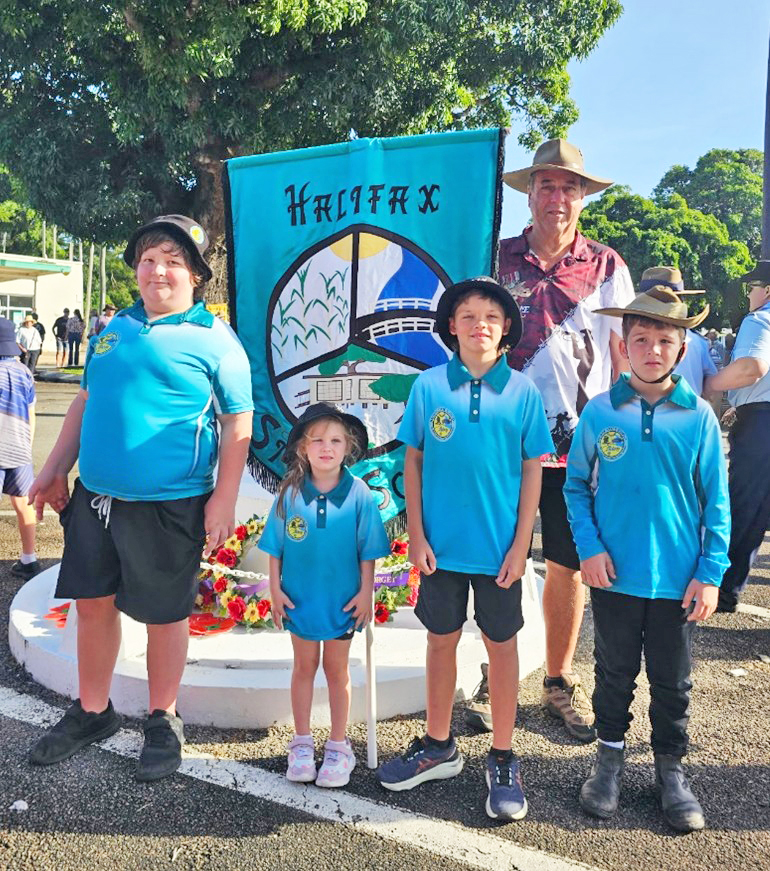
Caption: Mr Blake and students at the Halifax memorial
Read the full story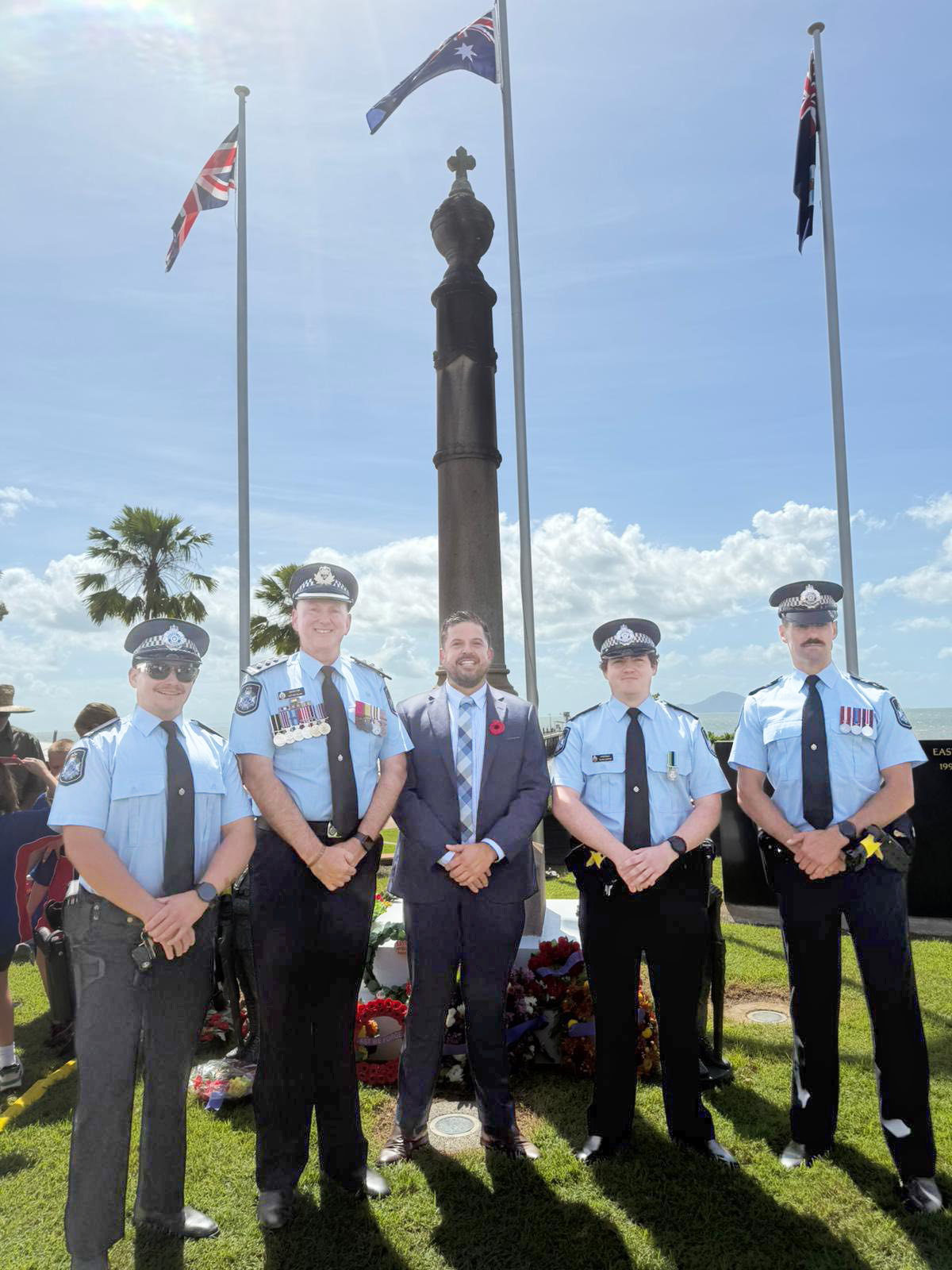
Last week I was in Brisbane for Parliament, continuing to advocate for the issues that matter most to our region, before returning home to spend time across the Hinchinbrook electorate. A key focus during the sitting week was the need for Queensland to become more self-sufficient, particularly when it comes to critical inputs like fuel and fertiliser. For communities like ours, these are important issues that directly impact the cost of living, our farmers, and the strength of our local economy. We have seen how global events can disrupt supply chains and drive-up costs. That’s why I have continued to push for greater sovereign capability, so Queensland is less exposed to international uncertainty. The Crisafulli Government is committed to strengthening this self-sufficiency and ensuring regional communities like Hinchinbrook are better protected into the future. We also passed the third tranche of Adult Crime, Adult Time laws in Parliament. This builds on the work already underway to restore community safety after a decade where victim numbers rose 193% under the former government. While we are starting to see some early signs of progress from stronger laws and a more focused approach, I know from conversations across our community that there is more to do. Turning around long-term challenges takes time, but the commitment remains clear: to back our police, hold offenders accountable, and make our communities safer. On Saturday, I had the privilege of attending a number of ANZAC Day services across the electorate, including the Dawn Service, RSL service, cemetery service, as well as services at Forrest Beach, Halifax and Cardwell. Each service was moving in its own way, and it was encouraging to see such strong attendance across all locations. It speaks to the deep respect our community holds for those who have served, and the importance of continuing to honour their sacrifice. It is always a privilege to stand alongside our community on ANZAC Day and reflect on the values of service, mateship and sacrifice that continue to shape our nation. As always, I will continue to take the voices of Hinchinbrook to Brisbane, while staying closely connected to our community here at home.
Read the full story
The Crisafulli Government is launching a new international prize for eight high-achieving Queensland students and two teachers. Successful applicants will fly to London to visit the birthplace of Westminster democracy and will undertake trips to Canberra and Brisbane parliaments. Applications for the inaugural program open on Monday 18 May to Queensland Year 9 students. The Crisafulli Government is delivering a plan for Queensland’s future and supporting the State’s students and teachers. The Crisafulli Government is delivering a once-in-a-lifetime opportunity for Queensland students and teachers to experience the birthplace of parliamentary democracy through a prestigious education prize. Launching today, the Westminster Prize is open to all Year 9 students across Queensland’s state schools, non-state schools, and homeschool settings who have a strong interest in civics and citizenship. It’s just one of the ways the Crisafulli Government is delivering a plan for Queensland’s future after a decade of decline under Labor. Eight successful students will fly to London next year with two teacher chaperones to experience first-hand aspects of the Westminster system of government, which is the foundation of Australia’s parliamentary democracy. The prize also includes trips to Canberra and Brisbane parliaments where students will gain valuable knowledge, insights and experiences with Australia’s political system. The Westminster Prize is a new initiative from the Crisafulli Government and adds to existing excellence programs including the Premier’s ANZAC Prize, the Premier’s Reading Challenge and the Peter Doherty Awards. Minister for Education John-Paul Langbroek said the Westminster Prize aimed to strengthen Queensland students’ understanding of civics, citizenship and democratic participation. “This exciting new program offers a once-in-a-lifetime opportunity for our students to travel to London, Canberra and Brisbane to learn about our rich history and political system,” Minister Langbroek said. “Today’s students are our future leaders, and the Crisafulli Government’s new Westminster Prize is a fantastic opportunity for them to travel, explore and deepen their understanding of democratic values. “Through the Westminster Prize, the eight students will grow their understanding of Queensland’s parliamentary system, Australia’s federal democracy and the Westminster model in the UK. “As well as their travels, the prize winners will deliver a local civics project focused on a community issue, applying their learning to real-world contexts.” British Consul General for Queensland and the Northern Territory Richard Cowin said he was delighted to support the fantastic initiative. “This exciting award gives students an amazing opportunity to see how the Westminster system works in real life and to experience the democratic traditions that connect the UK and Australia,” Mr Cowin said. “In a fast-changing world, understanding our shared values and approaches is more important than ever. “This prize will enable a lucky group of young Queenslanders to experience these principles firsthand and draw on them throughout their lives.” Applications to be part of the inaugural Westminster Prize open on 18 May and close 31 July, with interviews and selection in August and September. For more information, visit the website.
Read the full story

NQ Travel & Cruise had its official opening last week on Wednesday 2 April and it was well attended.
Mayor Ramon Jayo, Deputy Mayor Mary Brown, and Councillor Patrick Lynch attended to offer congratulations to NQ Travel & Cruise on their opening.
NQ Travel & Cruise owner Kathleen Lynch said she is very excited to have opened her doors.
“It's a wonderful feeling. I'm very happy with everything. My office space is beautiful and I’m ready to welcome wonderful clients through the doors,” she said.
“I will be able to focus my time on planning the best holidays for people and making their bucket list, dreams come true.”
Kathleen has lots of favourite travel destinations but she said the Cook Islands has stood out to her as an island getaway. She loves the beautiful scenery, people and relaxed nature.


Following the extreme weather events that have impacted the Hinchinbrook Shire and other parts of the State of Queensland over past several months, the focus of Council has moved from response to recovery.
Immediately following the flooding, the Recovery Group and sub groups of Infrastructure, Environment, Human and Social and Environment, commenced engagement with local groups to gain an understanding of what the impacts of the event on the community have been and also plan for what actions need to be implemented, to support the transition of the community to reinstate their lives and lifestyles.
The recovery process has now been underway for almost two months and has already seen some pleasing progress made, however we know this will be a marathon journey and are putting the framework in place to ensure capacity to provide the support required to assist the community transition to their new normal.
The 2025 Community Recovery Plan is progressing very well and it is hoped will be in a position to be formally adopted in the coming weeks.
One of the transition actions has seen the Community Recovery Hub previously located in the TAFE building has now relocated to 73-81 Lannercost Street, Ingham. Any locals seeking assistance with grants, providing follow up information for earlier applications or any general assistance requests, of any kind, can visit the Community Information and Referral Centre, which has now opened.
Currently there are representatives from Community Recovery, Lifeline and Department of Housing present at this property. As opportunity allows, there will be other agencies available for referrals or to schedule appointments with representatives. Private consulting rooms and office space will also be available for confidential and discreet appointments and it is planned to also host workshops and information sessions, at this centre.

After years of strongly advocating for Queensland youth offenders, who commit the most heinous crimes, to be sentenced as adults, I was please during last week’s parliamentary sitting to see the state government introduce its latest tranche of Adult Crime, Adult Time legislation.
The new crimes added to this piece of legislation now align with Katter’s Australian Party’s (KAP) original Adult Crime Adult Time policy. I would like to personally thank everyone who joined in to advocate for crimes such as rape and attempted murder to be added to the list. It still baffles me why they were left out of the original Making Queensland Safer laws in the first place.
These changes are a step in the right direction, but until we address the issue of current incarceration methods, any changes to the law will have little effect on the behaviour of youth offenders. We must find a detention method that acts as a deterrent while also being cost effective.
KAP has long advocated for relocation or bush sentencing to be an alternative option for judges when dealing with youth offenders. I am pleased to hear that the LNP government has in part adopted this policy and will soon commence planning and a tender process for their version of it which has been renamed ‘Circuit Breaker Sentencing’.
I am advised that the aim of this program will be to detain youth offenders in remote detention facilities with a combined total of 60 beds. I believe this is the Government’s best chance at really making a difference to youth crime rates and will offer the best avenue for turning around the lives of repeat youth offenders.
But we won’t stop there. I will continue advocating for the introduction of mandatory minimum sentencing and Castle Law to be legislated in Queensland. The kids in this state need to understand that the game is up, and I won’t stop until that message is heard loud and clear.
Contributed with thanks to Nick Dametto MP Member for Hinchinbrook

Townsville-based developer Maidment Group has made a bold entrance into the local luxury market with Marina Residences – an exclusive waterfront living experience unlike anything else in the region.
With 50% of residences sold within just two months of its launch, Marina Residences has captured the attention of discerning local and interstate buyers who have been waiting for a project of this calibre to emerge in Townsville.
Marina Residences will deliver 18 luxury residences, including 15 three-bedroom apartments and three premium sky homes, with prices starting from $2.7 million.
Positioned at the tip of Mariner’s Peninsula on The Strand, Marina Residences is the first luxury waterfront apartment development introduced to the Townsville market in nearly a decade.
“Marina Residences offers a rare and final opportunity to purchase a luxury waterfront property, in a market that has seen limited supply for so long,” said Glen Maidment, Managing Director of Maidment Group.
“The rapid pace of sales is a testament to the overwhelming demand and excitement surrounding this incredible project.”
A tribute to architectural excellence and refined living, Marina Residences is not just a place to live – it’s a bold statement of luxury and comfort.
Designed by internationally acclaimed architect Bureau Proberts and developed by Maidment Group, this iconic project blends modern elegance with a timeless appeal to create a luxury living experience that is yet to be seen in North Queensland.
Residents will enjoy an unrivalled lifestyle with access to resort-style amenities, including a gym, a private meeting room, a private dining room, and a rooftop pool and sundeck, offering uninterrupted views across the waterfront and east to Magnetic Island.
“Marina Residences is destined to become a landmark project that redefines luxury living in North Queensland,” said Mr Maidment.
“This project has been meticulously designed to provide residents with the ultimate lifestyle enriched with opulence, convenience, and sophistication.”
Strategically located in one of Townsville’s most sought-after precincts, Marina Residences offers residents easy access to local cafes and boutiques, all within a setting that celebrates North Queensland’s natural beauty.
Cementing its status among Australia’s most exceptional waterfront developments, Stage One of Marina Residences was recently awarded Boutique Project of the Year by the Urban Development Institute of Australia. Stage One comprises eight two-level waterfront homes which overlook the picturesque Breakwater Marina.
As construction on Stage Two progresses, Marina Residences is set to become the pinnacle of waterfront luxury in Townsville – offering an unparalleled blend of exclusivity, sophistication, and elegance.


Mayor Ramon Jayo was recently contacted by Taylors Beach residents, expressing their concerns about the poor NBN network, describing it as “a third world”.
In response to this NBN hosted a Community drop-in session, for residents to raise concerns to NBN spokespeople.
“The complaint that I received is that the Internet services are well below standard," explained said Mayor Jayo.
"They were either not there, or when they're there, they drop out all the time, so that they are not reliable.”
“I'm glad that they've come to address those issues.
“I'm very happy they've actually responded, and they have come to talk to the people directly, rather than the information being referred second-hand, and that they are on the ground, engaging with their clientele.
“That's a big positive to go towards addressing what the issues may be.”
Following the complaints an NBN spokesperson said that the the Australian Government and NBN Co have invested $750 million in the nbn® Fixed Wireless network to enhance coverage and deliver faster speeds, which will benefit residents in the Hinchinbrook Shire Council area.
“These upgrades will deliver faster speeds of up to 450mbps wholesale, offering peak wholesale NBN network download speeds of up to five times faster than what was previously available and expand access to NBN Fixed Wireless for the first time for more than 120,000 homes and businesses previously within the NBN Sky Muster satellite service footprint,” they said.
“It’s important to note that any equipment connected via the NBN network will not work during a power outage. Unplanned or unexpected outages to your NBN network connection can occur for many reasons, including severe storms, cyclones, bushfires, car accidents, or trees or branches falling onto power lines.
“NBN understands the inconvenience unplanned outages can cause to users. This is why we have an emergency response team dedicated to preparing for, and responding to, the recovery of the network in emergencies.”
NBN said that at the Community drop-in residents expressed their frustration with communication outages during the recent flood event. They added that it is important to note outages were not limited to NBN’s Fixed Wireless Services, but also other communication networks.
“NBN senior executives are planning to visit the region to meet with community, emergency services, local government and other stakeholders to hear firsthand about the event, their experiences, look at flood damage and options for further resiliency in the network,” an NBN spokesperson said.
“This consultation will provide valuable insights that will help NBN continue to improve emergency preparation and disaster response effectiveness.
“NBN is also meeting with the State Disaster Recovery Coordinator and Queensland Reconstruction Authority to brief on resilience measures and contribute to the development of a State Recovery and Resilience Plan.”

A tragic accident has rocked the Hinchinbrook community following a fatal two-vehicle crash at Victoria Plantation last week on the 3rd of April.
Emergency services responded to reports of a crash on Ingham Forrest Beach Road at approximately 11:40am, where a silver Hyundai Tucson and a grey Mazda CX-5 had collided.
Sadly, the driver and sole occupant of the Mazda, a 73-year-old Ingham man, was pronounced deceased at the scene.
The driver of the Hyundai, a 76-year-old woman from Forrest Beach, sustained serious injuries and was transported to hospital for treatment.
A Queensland Police Service spokesperson has stated the Forensic Crash Unit is continuing its investigation into the circumstances surrounding the crash and authorities are calling on anyone with relevant information or dashcam footage from the area at the time to come forward to assist with inquiries.
Information can be provided via Policelink at www.police.qld.gov.au/reporting or anonymously through Crime Stoppers by calling 1800 333 000 or visiting www.crimestoppersqld.com.au.
As the investigation continues, thoughts are with the families affected by this devastating incident.

With deer breeding season fast approaching, the Centre for Invasive Species Solutions is reminding communities of the heightened risk of feral deer on the road as well as increased activity and damage across Australia’s landscapes, including in suburban streets.
Dr Annelise Wiebkin, National Deer Management Coordinator, says feral deer cause serious damage in farmland, native bushland and urban areas and that the breeding season is a particularly critical time to notice their presence and manage their impacts.
“Feral deer activity will intensify in the coming weeks, so people may see deer more often or even for the first time in a new area. It’s important that the community reports sightings on the free DeerScan app,” Dr Wiebkin said.
“We have a small window of opportunity to track their spread and support control efforts, particularly in areas where feral deer numbers are still low.”
“Feral deer trash and eat native vegetation, ringbark trees, create wallows, trample undergrowth and spread weed seeds, all things that threaten the survival of native flora and fauna,” Dr Wiebkin said.
The Centre’s Chief Executive Officer, Shauna Chadlowe, warns that feral deer are becoming an increasing concern to communities across the country, with extreme weather events – such as droughts, floods and fires – pushing them into new areas.
“It’s astonishing – deer have now spread to every state and territory in Australia,” she said.
“We need everyone to stay alert.
“Every Australian can play a role by reporting feral deer sightings or signs, like tracks and damage. These reports are crucial – they help drive coordinated efforts to control new deer populations before they spiral out of control.
“By acting now, we can stop their spread and save Australia millions of dollars each year,” she added.
Feral deer also hit the farming community hard, with Ted Rowley, Independent Chair of the National Feral Deer Action Plan Committee, showcasing the importance of control efforts.
“Farmers are fed up: deer cause $69 million in agricultural productivity losses and $4.5 million in vehicle and train collisions each year. The Plan is key to stopping these losses," he said.
Jenny O’Sullivan, champion of Victoria’s Cape Liptrap community deer control group says “The free DeerScan app is really important for our community group. Reported sightings enable us to know where the deer are moving about in our community, and to focus our control efforts more effectively”.
Deer by the numbers: costing us ‘deerly’
• Six species of feral deer have become widespread in Australia.
• Deer numbers in Australia are estimated at between 1 and 2 million.
• Feral deer cost the Australian economy about $91.3 million in 2021, including:
o $69.1 in agricultural losses
o $17.8 million in public expenditure for control efforts
o $3.3 million in motor vehicle impacts
o $1.2 million in train collisions


In a major win for North Queensland farmers recovering from last month’s floods, the federal and Queensland governments have overhauled disaster funding rules to allow growers to use recovery grants to replant and reseed waterlogged crops—unlocking critical support that was previously out of reach.
The significant changes to extraordinary assistance grants under Category C and D of the joint Commonwealth-state Disaster Recovery Funding Arrangements (DRFA) mean farmers can now:
Replant lost or damaged plants with the same or comparable crops
Purchase plants, seed, seedlings, root and/or tube stock and tissue cultures
Purchase chemicals for weed and/or pest control
Purchase establishment fertilizer
Federal Minister for Emergency Management Jenny McAllister said that disaster funding will help farmers replant and rebuild their businesses.
“North Queensland farmers can now access grants of up to $75,000 to help them feedstock, repair damage and now replant," Minister McAllister said.
“We have worked closely with the Queensland Government to ensure North Queensland farmers are supported as they move into recovery.
“This package will give farmers security and confidence to get back on their feet and continue to produce great Australian agricultural products.”
Primary Industries Minister Tony Perrett said for the first-time primary producers can use these grants to get their crops back in the ground and start working towards harvest and recovery.
“Growers asked, we’ve listened, and worked with the Federal Government to make this change so producers can put the assistance toward the best way forward for their operation," Mr Perrett said.
“The Crisafulli Government gets regional and rural Queensland, and we’ve got primary producers’ backs when it comes to working with the Albanese Government on support for producers in times of need.
“I encourage all growers to contact the Queensland Rural Industry Development Authority (QRIDA) for guidance about what this new assistance means for their operations."
Queensland State Recovery Coordinator Andrew Cripps says this is a game changer for growers who’ve lost crops and want to get back to production as soon as possible.
“This has been a structural problem in the disaster recovery framework for primary producers for a long time,” he said.
“I'm delighted we have been able to achieve this reform for impacted farmers and land holders recovering from this flood event,” Mr Cripps said.


Calls to list a productive agricultural plant as a Weed of National Significance (WoNS) are "misinformed" and risk undermining a crucial feed source for Australia’s livestock industry, the National Farmers’ Federation has warned.
NFF Sustainable Development and Climate Change Committee Chair, Mr Angus Atkinson, said buffel grass was a key asset for grazing operations—carefully managed by producers for its resilience and value in supporting livestock.
“It is a high-yielding plant renowned for its resilience in arid regions," he said.
"It also provides significant environmental co-benefits, including land rehabilitation and erosion mitigation which is conveniently ignored by environmental groups,” Mr Atkinson explained.
“Calls to list buffel grass as a WoNS pre-emptively ignores the economic benefits it provides to thousands of producers across Australia.
Mr Atkinson said its members would much rather see it listed as a Feed of National Significance.
“WoNS status should only be reserved for where there is consensus for listing, national coordination or assistance for eradication. There is no consensus on buffel grass, farmers do not support this," he added.
“Farmers want to have a process for contentious plants, this needs to be different to a WoNS process which inadequately acknowledges the economic value of plants like buffel.”
Mr Atkinson stressed decisions by other jurisdictions to declare buffel grass a weed must not open the door for national listing of this critically important agricultural species.
“Listing it as a WoNS will inflict a devastating blow to northern grazing systems, decimate grasslands dominated by buffel grass and create significant top-soil loss.”
Federal Member for Kennedy Bob Katter has also voiced strong opposition to the proposed listing of buffel grass (Cenchrus ciliaris) as a Weed of National Significance (WoNS), highlighting its vital role in Australia's beef industry, urging the government to abandon the proposed listing.
"Buffel grass wasn't brought here by accident – it was introduced because it's one of the best options we've got. It holds the soil together and keeps the cattle fed even during drought," Mr Katter explained.
"The Gulf and Peninsula were built on buffel, Brahman, and bitumen."
Mr Katter stressed that a WoNS listing could impose legislative restrictions, mandate removal efforts, and initiate biological control research aimed at eradication. Such measures threaten one of Australia's most vital pasture species, which underpins the livelihoods of countless Aussie farmers and sustains production of beef that is essential for domestic and international food security.
"Buffel grass is essential to the northern cattle industry, and to label it as a weed would be counter-intuitive, turning all of the North into a weed-infested dust bowl," Mr Katter emphasised.
"Talk to any northern cattle farmer and they will tell you it is not just good cattle fed, buffel grass protects soil, cools the ground, sequesters carbon, and supports native fauna. Its deep-rooted resilience has dramatically improved rainwater efficiency and environmental sustainability across Australia.
"Buffel grass is not some noxious weed—it's an improved pasture grass. It holds the soil together, soaks up the rain, and has improved sustainability while reducing erosion," Mr Katter said.
"Meanwhile, terrible invasive species like lantana, prickly acacia, rubber vine, and feral cats and pigs, should be demanding our attention. Why on earth are we wasting our time even talking about this?"
Mr Katter criticised the narrative surrounding buffel grass as being rooted in anti-livestock ideology rather than genuine environmental concern.
"Rural and regional Australia will not survive without an effective, improved pasture—buffel is the best pasture grass we've got, and anyone saying otherwise needs their head read," he declared.
KAP Leader and Member for Traeger Robbie Katter said the federal government's consideration of adding buffel grass to the WoNS registry, a move driven by ideologically-motivated environmentalists, was extremely misguided.
"These people are fools - they can't be bothered to take consequential action on the myriad of extremely serious weeds and pests that are destroying Australia's native ecosystem, and yet they want to pursue this," he said.
"The fact remains that we have to feed our nation and, buffel grass, for what limited environmental risk it poses, is one of our best performing pastures and one that underpins the entire northern beef industry.
"The need to be able to deliver on our food production demands leaves for dead any perceived environmental risks buffel grass poses."
AgForce Queensland Cattle President Lloyd Hick said, "This is not an isolated issue. It is part of a broader pattern of decisions being made without industry input, with disastrous consequences for agriculture and Australia.
"If the beef sector does not push back hard on this, it will be taken as a win and another critical pillar targeted next.
"Producers are increasingly frustrated as time and energy that should go into food production is spent pushing back against agenda-driven ideas and re-educating city-based decision makers who think they understand the land—but don't."
Shadow Minister for Northern Australia, Senator Susan McDonald also agreed, saying “Declaring buffel grass a weed would be catastrophic to graziers across Australia who rely on it for crucial fodder to keep their operations going.
“It also reduces erosion and dust storms.
“There is no justification for this move and I encourage everyone affected to make their thoughts known to the Federal Agriculture Minister, as I will be.”


The Queensland Government is investing $2 million in targeted action to tackle the state’s escalating feral pig problem, easing the burden on regional communities and supporting the agricultural sector.
Following years of limited progress, feral pig populations have exploded across Queensland, causing widespread damage to crops, natural ecosystems and waterways. In 2023 alone, ABARES reported $95 million in production losses and control costs due to feral pigs in Queensland.
The new investment includes $1 million to develop a Queensland Feral Pig Action Plan, designed in consultation with key stakeholders and tailored to meet the unique challenges of different regions. The remaining $1 million will support the development of innovative control methods over the next three years.
This initiative adds to the government’s broader $50 million, four-year commitment to strengthening biosecurity across the state.
Regional feral pig coordinators, funded by the state government, are already on the ground in six key areas—Cairns, Longreach, Mareeba, Townsville, Mt Isa, and more—working alongside landholders, local councils, and agencies on coordinated control measures including baiting, trapping and aerial shooting.
Minister for Primary Industries Tony Perrett said reducing feral pig numbers would take investment, innovation and teamwork.
“We need to make a dent in feral pig populations, not only to protect primary production but to mitigate biosecurity risks,” Minister Perrett said.
“Feral pigs cost primary producers millions of dollars every year.
“We know the only way to get on top of this growing problem is to have a coordinated plan with everyone from landholders to the Government working together.
“Whether you’re a grazier out west, a sugarcane farmer up north, a strawberry grower on the granite belt, a natural resource manager in the Wet Tropics, a traditional owner on the Cape, or part of a local, state, or Commonwealth government agency—your ideas, expertise, and action are essential.”

Senator Gerard Rennick from People First Party was in Ingham last Thursday to get the word out about what his party is all about.
He said that peoples main concern was the direction is heading in.
“They feel as though the Australian or the major parties aren't putting Australians first. They're putting foreign interests first,” he explained.
“They're looking for parties who have solutions and can actually provide some vision and direction, vision in where they want the country to be, and that is ultimately a country that can stand on its own two feet to be prosperous, and make sure that our children get the same opportunities their forefathers gave to us.”
Senator Rennick said that the people’s concerns align with his parties policies entirely.
“We want to protect the individual and the families,” he said.
“We want to lower taxes. We want smaller government. We want to give greater choice in childcare and superannuation, and we want the government to get back to doing those big macro things like building infrastructure and funding it domestically in order to make sure we keep the wealth here.”
Describing their party's approach, the Senator Rennick said, "Our point of difference is that we are solutions-focused, but we also want to be very professional and polished and measured in how we go about dealing with our colleagues in Canberra.”
“We need to adopt a collaborative approach that we can influence outcomes, rather than a combative approach.
“We want to be a different minor party. We want to be collaborative. We want to be progressive. We want to have solutions, rather than complain about the problems.”
With a background including a Masters of Tax Law, a Bachelor of Commerce, and a Masters of Applied Finance, the candidate said they are well-prepared to address the economic challenges Australia faces.
The candidate also advocated for lower immigration, the removal of renewable energy subsidies, the establishment of an independent judicial commission, and stronger protections for whistleblowers.

Hiya Hinchinbrook Shire!
I am Victoria, you're newly arrived journalist of the Hinchinbrook Life.
What a weekend I have had! It began with snorkelling in the Whitsundays and getting sunburnt on a boat trip on Saturday and culminated with me driving almost five hours to get to this lovely town in the heart of cane country. Utterly exhausted, and would you believe I forgot to pack my laundry powder? I think I would have forgotten more if I didn't keep notes and lists!
Since starting with the Life Publishing Group three months ago I have travelled a whopping 1500kms to move my life from Brisbane, all the way up the coast and pit-stopping in Airlie Beach for my training, to finally reach Hinchinbrook this weekend.
It's been a long but adventurous journey and I am very glad to be here!
Now that I'm here, I'm keen to make the most of it. With my camera charged, note-pad and pen, I'm already in the field hunting stories and capturing community moments that truly encapsulate the spirit of the people up here in sunny North Queensland.
If you see me about town, say hello! I can't wait to meet everyone and learn more about this town and all that is happening here. Always happy to stop for a chat (unless I have to run off to an interview!), let's make the most of our time here together.
Kindly, Victoria
Fun fact: Laundry detergents were developed because of a soap scarcity in WW1!

When disastrous floods swept through the region in February, the town of Ingham found itself in a crisis unlike any it had seen in recent memory with devastating flood waters surpassing the levels they reached in the historic floods of 1967.
Amidst the chaos of the floods the local medical practices Hinchinbrook Healthcare and Ingham Family Medical Practice banded together in times of uncertainty and provided a glimmer of light to Ingham residents, demonstrating remarkable resilience and resourcefulness.
Hinchinbrook Healthcare was among the first to respond, despite losing power for almost a week, they refused to wait for outside help and sprang into action. Under the leadership of Dr Stewart Jackson, the team acted swiftly, after obtaining a generator with the help of the Northern Queensland Primary Health Network and leveraging their miraculously intact internet connection, they were able to resume consultations within days. The clinic provided invaluable urgent medical care for flood related injuries, chronic conditions, even going above and beyond to arrange private retrievals for patients requiring vital cancer or dialysis treatments.
Hinchinbrook Healthcare however, was not alone in rising above the flood waters to meet the challenge. Nearby, Ingham Family Medical Practice contended with similar battles. Despite their facility being spared the floodwaters, prolonged power outages handicapped essential medical infrastructure, putting vaccine supplies in jeopardy and crippling computer systems. The practice however, remained unfazed and persevered, continuing to deliver basic services amid the sweltering summer heat due to the lack of air-conditioning.
Throughout the crisis the steadfast and unwavering dedication of both Hinchinbrook Health and Ingham Family Medical Practice, along with the instrumental support North Queensland Primary Health Network provided indispensable reassurance to the residents of Ingham enduring personal hardships. The presence and resolute persistence of the Heroes of Hinchinbrook became a symbol of hope and stability in an otherwise tempestuous period.
Their deeds laid the foundation for the emergence of community resilience as neighbour supported neighbour, exemplifying the intrinsic strength which resides within collective community action. As the floodwaters cleared and recovery began, residents of Ingham expressed their profound appreciation for the efforts of the medical teams, acknowledging their sacrifices made to deliver critical care in tumultuous times.
Today, as the community recovers, the actions and experience of these two medical practices underscores the key role primary healthcare providers play in disasters. Their adaptability, ability to collaborate and continue delivering care whilst staring down immense challenges serves as proof of their commitment, underpinning the utmost value of local healthcare during emergency situations and disasters.


Queensland’s peak agriculture body— the Queensland Farmers’ Federation (QFF) and its members Cotton Australia, Queensland Fruit & Vegetable Growers (QFVG), and Canegrowers—are calling on the Queensland and Australian Governments to take a long-term approach to support the agriculture sector.
With two significant weather events already hitting Queensland this year and a possible third on its way, climate resilience, preparedness and response are front and centre with Queensland’s farmers who are once again facing devastating losses, including damage to crops, infrastructure, and essential farm resources.
As the sector works to recover, industry leaders are urging the government to review and enhance long-term disaster recovery measures to ensure farm businesses can rebuild quickly and build resilience against future events.
QFF CEO Jo Sheppard said urgent changes to disaster recovery support frameworks are needed to enable farms to build their capacity to prepare for natural disasters and also to return to full operation after an event with minimal disruption.
“Queensland is Australia’s most disaster-prone state and extreme weather events are unfortunately no stranger to our farmers and regional communities. Farmers have done an incredible job in proactively building their resilience and managing risk, but they need targeted, long-term support to recover quickly and prepare for future events. We need to ensure preparedness and response frameworks reflect the realities of modern farming and the weather risks that challenge the agriculture sector,” Ms Sheppard said.
“The cost of recovery is rising, and disaster funding needs to keep pace. We have seen some really positive announcements and reforms from the Queensland and Federal government which have been sincerely welcomed by industry, however further measures are needed so that we can be more effective in the way in which we support Queensland farmers to recover and prepare for future weather events."
Canegrowers CEO Dan Galligan said the State and Federal governments’ announcement earlier this month to increase disaster recovery funding for primary producers to $75,000 was a step in the right direction.
“We are grateful for both the Federal and Queensland governments’ recognition of the scale of the challenge faced by farmers when it comes to recovery efforts following a natural disaster,” Mr Galligan said.
“This increase reflects the increasing costs of recovery for growers who have been hit hard by recent flooding and will take years to bounce back. This month’s weather events have particularly impacted sugarcane growers at Rocky Point who have had their cane paddocks inundated and who are now playing the waiting game while they wait for flood waters to recede.
“We also welcome recent updates to disaster funding regulations, which formalise new rules allowing growers to use recovery grants for replanting lost crops – a long-standing gap in Queensland’s disaster recovery framework.
“Both of these are crucial steps forward, however there is still a need for a longer-term approach to disaster and recovery funding, with further on-the-ground resources needed.
“For the sugarcane industry, this includes updating the definition of a primary producer to reflect modern farm structures, including those with off-farm income, indexing grants to match rising recovery costs, improving workforce support to help businesses retain staff during recovery periods and establishing a dedicated pool of rural recovery officers embedded within industry groups to expedite recovery efforts.”
Queensland Fruit & Vegetable Growers (QFVG) CEO Rachel Chambers has called for urgent improvements in disaster response and recovery for the horticulture sector following recent extreme weather events.
“Horticulture faces a variety of challenges in disasters—damage impacts can differ widely due to factors such as farm infrastructure, crop types, and workforce structures. The impact on operations can also depend on the size and scale of the business, and in many cases, assessing crop impact particularly in the case of tree crops, can take months or even years,” Ms Chambers said.
“Given that availability of food has once again shown to be at risk in these events, QFVG is calling on behalf of the entire horticultural supply chain for a more resilient transport network along with urging policymakers to ensure that support for growers is timely and fit for purpose.”
Cotton Australia General Manager Michael Murray stressed the need for improved risk management strategies for farmers.
“We need to introduce preparedness grant funding for all natural disasters, similar to existing drought assistance, and remove the 9 per cent stamp duty on crop and parametric insurance to encourage independent risk management,” Mr Murray said.

Flood-affected soybean growers in Queensland growing regions say the best way concerned Aussies can help growers get back on their feet is at the supermarket checkout.
For North Queensland soybean grower, Christian Lago, it has been a season of constant weather challenges and lots of uncertainty.
“Our soybean season in the Burdekin region has been a challenge from the start”, said Mr Lago.
“Before Christmas, we were struggling to get soybeans in the ground thanks to wet weather and a delayed cane harvest, and then, the paddocks we did plant have been through flooding rains in early February, followed by more heavy rainfall in late March,” he added.
“We’ve got about four weeks to go before we harvest and, to be honest, there’s a lot of uncertainty whether our soybeans will make it into the silo thanks to the vagaries of the weather.”
Soy Australia Industry Development Officer, Judy Plath, said growers in the Mackay region had also experienced difficulties getting soybeans planted before and after Christmas due to wet weather and the late cane season.
“There has certainly been a reduction in the area of soybeans planted in the Mackay region this year due to weather challenges,” she said.
Soybean grower, Paul Fleming, has heard reports of destroyed and damaged soybean crops throughout his district, and says the best way consumers can help soybean growers get back on their feet is by buying Aussie-grown when they shop.
“People wanting to help can support Aussie soybean growers by making sure they put Aussie-grown soybean products in their shopping trolley,” he said.
Mr Fleming, who is a Board member of the peak industry body for soybeans, Soy Australia, believes most people don’t realise that a lot of soy-based foods in the supermarket are made with soy ingredients imported from places like China.
“If consumers choose brands that support Aussie farmers, they can make a huge difference to local soybean growers and help us keep afloat during difficult times,” he added.
“Companies like Vitasoy, for example, buy a lot of soybeans from the Northern Rivers and exclusively use Aussie-grown soybeans in their soy milk and yoghurt range,” said Mr Fleming.
“In fact, Vitasoy are the only Aussie soy milk manufacturer using Aussie-grown soybeans in their milk.
“Other brands use clever marketing to stop consumers from realising they actually use imported soy in their milks.”
“When you see wording like 'made in Australia with 99 per cent Australian ingredients' on your soy milk, then you can be confident that the company is supporting Aussie farmers,” said Mr Fleming.
“The same goes for soy-based foods like tofu or tempeh.
“The ingredient list should be virtually 100 per cent Aussie.”
Publishers Indemnity. Any individual or entity that places advertising, supplies copy material, or submits editorial content to Life Publishing agrees and undertakes to ensure that all such material:- Does not infringe upon any copyright, trademark, or other intellectual property rights;- Is free from any content that could be considered defamatory, libelous, or slanderous;- Does not infringe upon any rights related to privacy or breach of confidence;- Contains no obscene, indecent, or otherwise unlawful material;- Complies fully with the Trade Practices Act and all other applicable laws, regulations, or statutes. Furthermore, by submitting or placing such material, these individuals or entities agree to indemnify and hold harmless the publisher, Life Publishing and Events Pty Ltd, and/or its agents from and against any and all investigations, claims, demands, liabilities, damages, costs, or judgments arising out of or in connection with the material provided. All material is believed to be accurate at the time of printing and remains the copyright of Life Publishing and Events Pty Ltd.
© 2026 Life Publishing Group Ltd.
