
Independently Owned, Locally Grown, Community Loved

by Hinchinbrook Community Support Centre When we think about housing, it's easy to think simply about having a roof over our heads. However, safe and stable housing plays a much bigger role in our lives than many people realise. A secure home provides more than shelter. It offers safety, stability, privacy, connection to community, and a foundation from which individuals and families can thrive. Stable housing supports physical and mental wellbeing, helps children succeed at school, enables people to maintain employment, and provides a sense of belonging and security. Unfortunately, rising living costs, limited housing availability and changing life circumstances continue to place pressure on many households. For some people, maintaining suitable housing can become increasingly difficult, while others may find themselves facing housing insecurity or homelessness through no fault of their own. At Hinchinbrook Community Support Centre, we understand that everyone's circumstances are different. Our Housing and Homelessness Services support individuals and families who are experiencing homelessness or are at risk of becoming homeless. Our goal is to help people achieve greater self-reliance, independence and housing stability. HCSC also provides long-term housing options for eligible low-income families, as well as one and two-bedroom units for individuals and couples aged over 55 years. Maintaining a safe home environment is another important part of housing stability. Through our Home and Yard Maintenance Social Enterprise, HCSC provides comprehensive household maintenance services throughout the Hinchinbrook region. The service supports community housing providers, local welfare and community organisations, and householders who are frail, living with disability, or experiencing economic disadvantage. Simple tasks such as yard maintenance, minor household works and property upkeep can make a significant difference to safety, accessibility and quality of life, particularly for older community members and those facing barriers to maintaining their homes independently. Whether someone needs support to maintain their housing, access suitable accommodation, or keep their home safe and functional, assistance may be available. If you would like to learn more about HCSC's Housing and Homelessness Services or Home and Yard Maintenance Social Enterprise, we encourage you to contact our team for further information. Because everyone deserves the security, dignity and peace of mind that comes with having a safe place to call home. While this month we focus on the importance of safe and stable housing, next month we will take a closer look at the growing housing and homelessness challenges affecting communities across Australia, including regional areas such as our Hinchinbrook region. In recognition of Homelessness Awareness Week, we will explore the realities of housing insecurity, the impact homelessness can have on individuals and families, and the support services available within our community. We will also be sharing information about HCSC's upcoming Homelessness event in August, which will bring together services and organisations to provide information, support and connection for community members seeking assistance or wanting to learn more about housing and homelessness issues. We encourage community members to keep an eye out for next month's article for further details. Caption: The Hinchinbrook Community Support Centre trades team hard at work. Photo supplied
Read the full story
Mark Spina has built a long career in real estate, bringing decades of experience and a long-standing commitment to helping people buy, sell, rent and manage property throughout the Hinchinbrook region. As Director of Ingham Real Estate, Mark has been working in the industry since 1999, beginning his career as a Real Estate Salesperson in Hervey Bay. In 2007, Mark and his wife returned home to Ingham and purchased Ingham Real Estate, continuing to build a trusted local business. Mark and his team assist clients across all areas of property sales and property management, working with a wide range of properties and people throughout the region. He builds trust with his clients, focusing on clear conversations and strong relationships throughout each transaction. “Working one on one with Sellers and Buyers, Landlords and Tenants with open communication” Mark said the team at Ingham Real Estate appreciates everyone who has chosen to work with them over the years. “We would like to thank all past and future Sellers, Buyers, Landlords and Tenants for choosing to deal with Ingham Real Estate. Big or Small, we Rent and Sell em’ all.” Mark believes the Hinchinbrook Shire remains a great place for those looking to take their first step into the property market. “The Hinchinbrook Shire is a fantastic place to purchase a first home. There are still affordable properties to purchase and it’s a great place to raise a family.” Caption: Mark Spina is the Director of Ingham Real Estate. Photo sourced: Inghamrealestate.com
Read the full story
New e-mobility laws will come into effect across Queensland from 1st July, introducing stronger rules and enforcement powers aimed at reducing dangerous behaviours involving e-scooters and e-bikes. The new laws will give Queensland Police additional powers to tackle illegal and high-powered devices, including the ability to seize and destroy devices that do not comply with safety requirements. Under the reforms, e-bikes and scooters capable of exceeding 25km/h without assistance will be banned, while a 12km/h speed limit will apply in areas where riders are travelling near pedestrians. Police will also have the power to conduct random breath testing for riders in public places from 1st July. Riders found over the 0.05 blood alcohol limit will face fines of more than $500, with maximum court penalties of up to $6,908. Higher penalties will also apply for offences including speeding, failing to wear a helmet, careless riding, illegally carrying passengers and riding Personal Mobility Devices on prohibited roads. The laws will also introduce licensing requirements for riders, with exemptions available for people with medical conditions or disabilities. Riders aged 12 to 17 will be able to use e-mobility devices under parental supervision from 31st August, while parents may be held accountable if children under 16 are found riding illegally. The reforms follow growing community concerns around illegal and high-powered e-mobility devices and aim to create clearer rules around who can ride, what devices can be used, where they can travel and how fast they can go. The changes were informed by community feedback and expert consultation, with the goal of improving safety while allowing responsible e-mobility use to continue. More information can be found on the Queensland Government’s website. Caption: E-Mobility Laws have now been introduced to make Queenslanders safer. Photo sourced: Shutterstock
Read the full story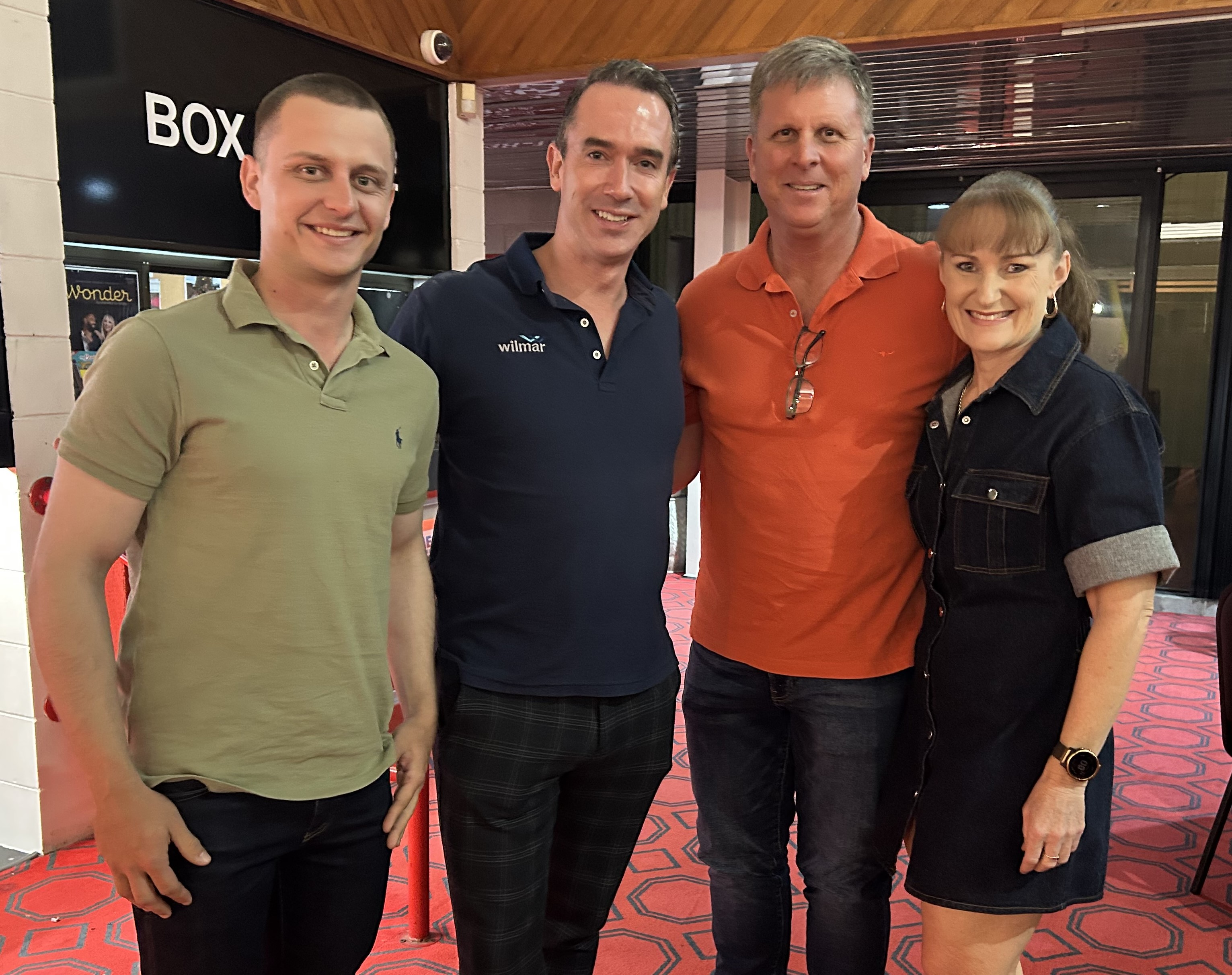
Simon Hood Wilmar Manager Grower Marketing June is shaping up to be a busy month, and we look forward to catching up with growers across our milling regions through a range of events and activities. This week, our Global Traders Roadshow returns, bringing together Wilmar's global trading experts and local Grower Marketing team to discuss the latest developments in sugar and currency markets. These sessions provide a valuable opportunity to hear directly from the people monitoring global markets every day, while also asking questions about pricing options and current market conditions. We are looking forward to connecting with those of you who have put their name down to attend. We're also reminding growers that nominations for the 2027 Managed Pool Plus close on 30 June. If you've been considering the pool, now is the time to act. The Managed Pool Plus is designed for growers seeking a longer-term approach to pricing in volatile markets, with active management across both sugar and currency markets. The 2025 season has highlighted the value of this strategy, with the pool delivering a result above the seasonal average, demonstrating the benefits of disciplined pricing over an extended window rather than relying on short-term market movements. While past performance is never a guarantee of future returns, the result reinforces the value of having experienced market specialists actively managing price risk through changing market conditions. If you'd like to learn more before nominations close, speak with your local Grower Marketing Relationship Manager or catch us at one of the Global Traders Roadshow events. Beyond the markets, we're proud to continue supporting the local communities that support our industry. Throughout June, Wilmar Grower Marketing is once again sponsoring several regional events, including the Sarina Tractor Pull, Proserpine Cane Awards and Ingham Tractor Pull. These events celebrate the people who make our industry what it is and provide a great opportunity for families, growers and the wider community to come together. We look forward to seeing many familiar faces, celebrating another season and continuing the conversations that matter most to our growers. We hope to see you at one of our roadshow sessions or community events over the coming weeks. Caption: Senior Sugar Trader Peter Bingham (second from left) is excited to meet with growers and share insights into global sugar markets during Wilmar's Global Traders Roadshow this week. Photo supplied
Read the full story
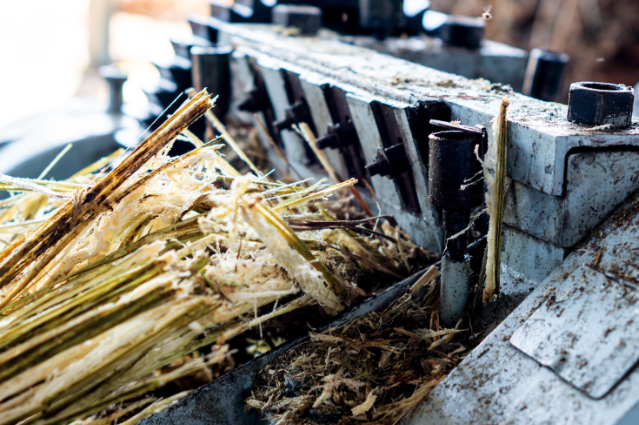
Wilmar Sugar and Renewables has confirmed start dates for the 2026 sugar production season, with mills across the Burdekin, Proserpine and Plane Creek regions preparing to begin crushing in early June.
The company’s four Burdekin mills; Invicta, Pioneer, Kalamia and Inkerman, along with Plane Creek Mill at Sarina, are scheduled to begin operations on 2 June. Proserpine Mill and the Herbert region’s Victoria and Macknade mills will follow on 9 June.
General Manager Operations James Wallace said the start dates were determined by crop forecasts, factory readiness and expected paddock conditions.
“We've got a bigger crop than last year, and we're keen to get the season under way to minimise the risk of a late finish and the associated challenges of pushing into the wet season,” Mr Wallace said.
“Our goal is to have all of our factories crushed out by mid-to-late November.”
Wilmar is forecasting a statewide crop of 15.19 million tonnes for the 2026 season, almost one million tonnes higher than last year’s total throughput of 14.23 million tonnes.
Regional estimates include 7.97 million tonnes in the Burdekin, 1.67 million tonnes in Proserpine and 1.45 million tonnes at Plane Creek.
General Manager Engineering Istvan Torok said maintenance and upgrade works across factories, rail networks and rolling stock were nearing completion ahead of the season start.
General Manager Cane Supply and Grower Relations Dave Zeller said loco driver training was already under way and reminded motorists to remain vigilant around cane rail crossings.
“We’re reminding residents and visitors to take extra care on the roads and look out for cane trains,” Mr Zeller said.

Image from Shutterstock
Queensland families are continuing to benefit from the State Government’s Back to School Boost initiative, with more than $15 million already used to help cover the cost of school expenses for primary school students.
So far, more than $15.2 million has been accessed by families across Queensland. However, with only around half of the available funding currently used, many students still have credits sitting on their school accounts waiting to be claimed.
If you are a parent or guardian, check your school account for unused credit.
The program provides $100 per year for every Queensland primary school-aged child (Prep to Year 6), including students attending state schools, non-state schools and home-schooling programs. The funding is applied directly to school accounts and can be used throughout the year to assist with education-related costs.
Parents and carers can put the funding towards a range of school expenses including uniforms, stationery, equipment, excursions, musical instruments and extracurricular activities.
The initiative is designed to ease cost-of-living pressures and give families greater flexibility in managing education expenses throughout the year.
Education support programs such as the Back to School Boost aim to reduce some of the financial pressure associated with the school year and ensure students have access to essential items and opportunities.
Families seeking more information or wanting to check eligibility and available credits can visit the relevant Back to School Boost information page.

The free mulch is available for Hinchinbrook residents at Lucinda. Photo sourced: Shutterstock
Residents looking to improve their gardens or landscaping projects will have an opportunity to access free mulch through a Hinchinbrook Shire Council initiative beginning this month.
Council is making mulch available to residents for personal household use, with stockpiles created from local tree maintenance activities and contractor works across the region. The initiative provides an opportunity for the community to reuse organic material while helping residents with gardening and property maintenance needs.
The mulch will be available for collection from the Lucinda BMX Track at 1–7 Dungeness Road, Lucinda, from Tuesday, 19th May through to Tuesday, 26th May. Collection hours will operate daily, including weekends, from 7:00am until 5:00pm.
Council has advised that the mulch is being provided as-is and, like any recycled organic material, may contain natural debris including leaves, seeds and other organic matter. Residents are asked to collect and use the material at their own discretion.
Those wishing to collect mulch will need to load their own trailers or vehicles and should ensure they bring suitable equipment for loading. Residents are also reminded that access to the site is at their own risk, children must remain supervised at all times and all on-site signage and safety directions should be followed.
The free mulch is available strictly for personal use and commercial collection will not be permitted. Supply will also be limited to available stock and offered on a first come, first served basis, with entry gates only open during the advertised collection period.
For more information email council@hinchinbrook.qld.gov.au or call Council’s customer service centre on (07) 4776 4600.

Photo from Shutterstock: https://www.shutterstock.com/image-photo/empathy-trust-nurse-caregiver-holding-hands-2376127109
Rights in Action ensures individuals are heard, respected, supported, and empowered to assert their rights.
Through individual, self, systemic, and citizen advocacy, Rights in Action walks beside people as they navigate decisions that affect their lives, propelling opportunity and empowerment. This is not about speaking for someone, but about strengthening their voice and ensuring their views are recognised and taken seriously.
The North Queensland Community Skill Building Program extends this impact by focusing on long-term empowerment. As a federally funded initiative, the program builds awareness and provides accessible information so people with disabilities can develop their self-advocacy skills. This includes practical toolkits, webinars, online resources, and workshops such as the upcoming NDIS Appeals workshop, which will be held in Ingham on Thursday, 28th May.
Understanding rights and knowing how to respond when those rights are challenged is essential to achieving independence and inclusion.
Together, independent advocacy and community skill building create meaningful, lasting change by shifting power away from complex systems and back to individuals.
Rights in Action demonstrates that advocacy is not just a service, it is a pathway to dignity, confidence, and genuine choice.
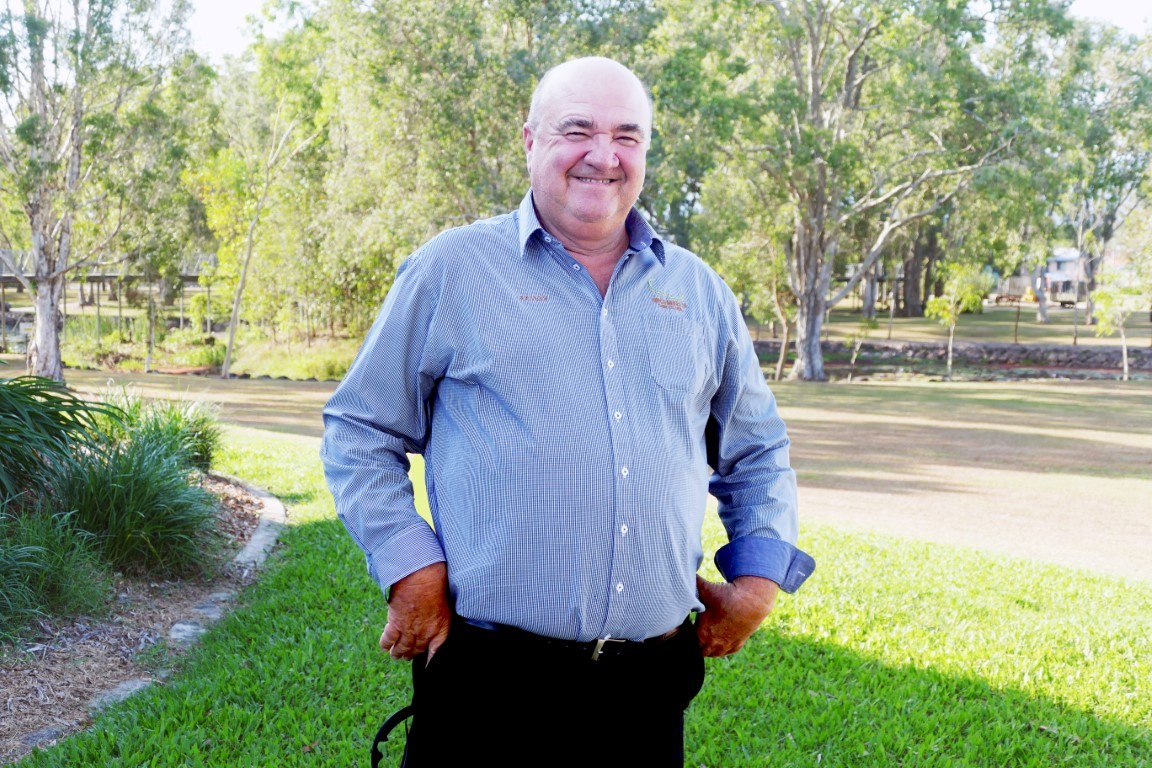
Unfortunately, the Federal Budget handed down on Tuesday night did not include anything specific for our part of Kennedy.
Our requests included funding assistance for better waste and recycling facilities, as well as support for disaster resilience. Perhaps announcements impacting our region may appear in the finer details to be released later — I remain hopeful.
We do, however, welcome the $2 billion boost for housing-related trunk infrastructure nationally, along with the additional $750 million to continue programs such as Growing Regions.
These funding opportunities are not guaranteed and are available to all councils as contestable grants. This means councils must apply and compete against one another, and smaller councils like ours face significant challenges competing with larger regions.
While we see some willingness to partner with councils through increased housing investment — such as the $2 billion housing fund — it must be remembered that this funding is proposed to be rolled out over four years across the entire country.
As I said, it is going to be a challenge.
Councils need a fairer share of funding from the Commonwealth to support day-to-day operations however; this was largely absent from Tuesday’s Budget.
Local governments and their communities are continuing to see the core funding program — Financial Assistance Grants — decline as a percentage of total taxation revenue, now sitting at just 0.49 per cent.
This was once 1 per cent, but successive governments have failed to maintain the payment to local government, even in line with CPI. Decreasing federal support ultimately shifts the burden onto ratepayers as operational costs continue to rise.
This is extremely disappointing, as untied funding from FA Grants allows councils to allocate resources in line with their communities’ priorities because no one understands their communities better than local government.
It was encouraging, however, to hear that the government will spend $2.55 billion to reduce the fuel excise and heavy road user charge for three months, in response to global energy market disruptions and as a short-term cost-of-living measure.
A separate $10 billion fuel security investment will expand national stockpiles to 50 days, increase storage capacity, and assess options to strengthen domestic refining capability. However, once again there was no mention of support or consideration for biofuels as a means of improving future fuel security and reducing dependence on overseas sources.
North Queensland is perfectly positioned to capitalise on and deliver biofuel production for Australia, thanks to our existing agricultural practices, infrastructure, and supply chains.
Yet we continue to receive no clear answer as to why the government will not support the creation of this new industry, let alone actively invest in getting it underway.
Our turn must surely be coming.

Looking Forward to Welcoming Visitors
As the Hinchinbrook community continues to progress through recovery from last year’s weather event, we are now facing additional challenges as a result of global events.
Many residents and businesses who depend on the agricultural sector for their livelihoods are closely monitoring the world sugar price and ever-increasing input costs, to understand how this will translate in their personal situations.
The impacts of sugar prices that do not cover production costs, the ongoing crisis in Iran, and the concerning increase of input costs and significant cost of living increases across the board, is cause for concern for many. For these reasons, the growth of visitor economy in the Shire continues to be of significant importance in supporting the local traditional agriculture-based economy.
As the weather improves, traditionally this time of year provides an opportunity welcome increased visitor numbers into the Shire. Whether they be interstate visitors venturing north to enjoy our milder weather, or regional visitors who travel to explore their neighbouring communities and enjoy the spectacular natural attractions or diverse events offered, they are all welcome. Each visitor makes a difference for our community, and their contributions are appreciated and acknowledged.
Events, whether large or small, make an important contribution to the lifestyle on offer to local residents and visitors, yet at the same time support the local economy. From community events, to arts, craft and live entertainment, outdoor experiences visiting natural attractions or marine adventures, human sporting carnivals to animal-based events – they all make a contribution and the visitation they attract is critical to the diversity of our local economy.
Visitor feedback provided indicates the easy going and welcoming nature of the local communities is a highlight of their time in our region – so let’s continue to demonstrate the famous North Queensland hospitality and welcome all to our Shire!
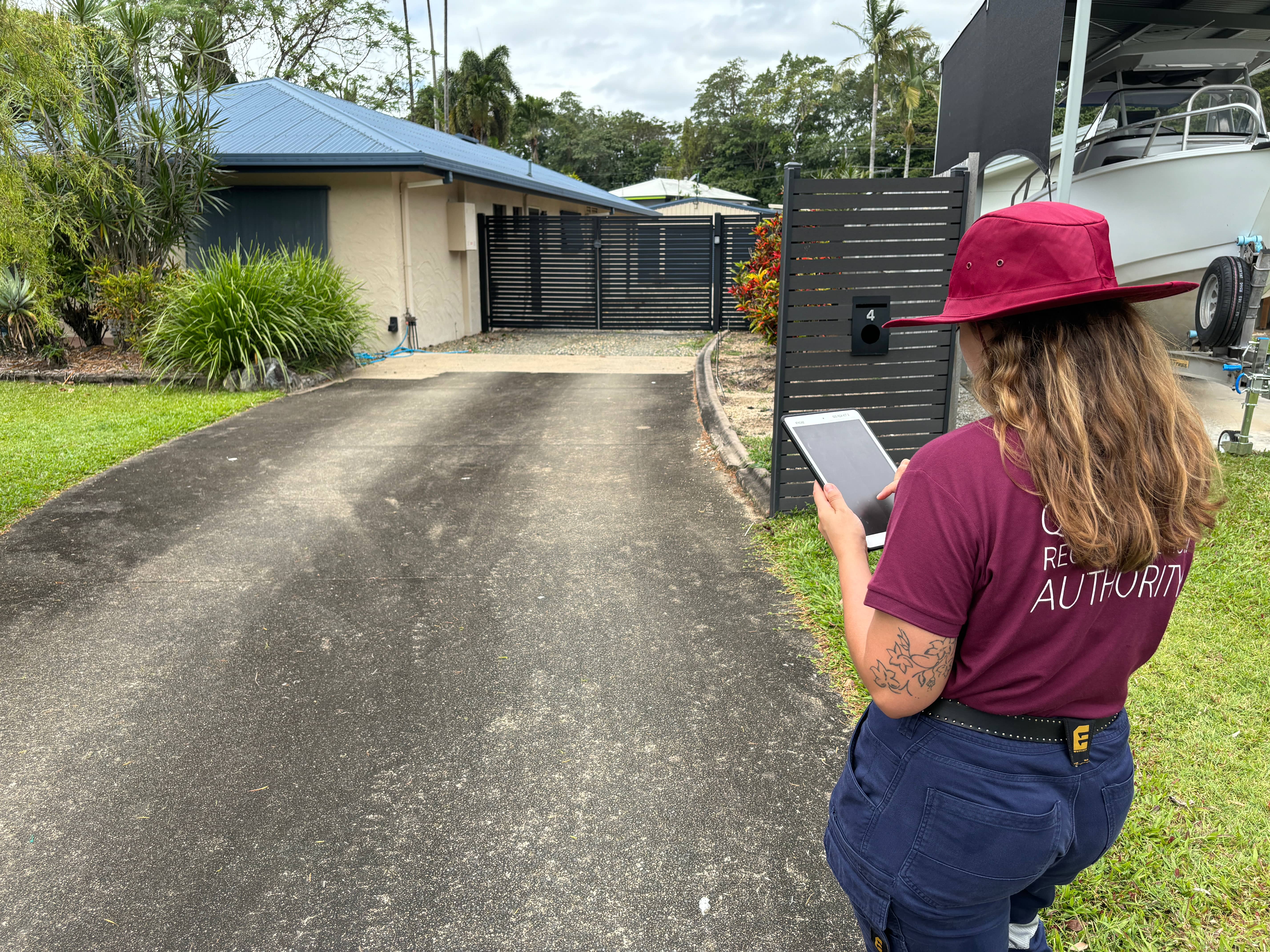
Doorknocking is scheduled Monday, 18th May 2026 and Friday, 22nd May 2026. Photo supplied
Heads up Hinchinbrook, officers from the Queensland Reconstruction Authority will be in the Hinchinbrook region between Monday, 18th May 2026 and Friday, 22nd May 2026 checking on homes and businesses still damaged from last year’s floods.
These assessments are an important part of our disaster recovery process, ensuring impacted residents are receiving the assistance they need to recover.
Around 600 properties are scheduled to be doorknocked throughout north Queensland over the week.
If residents are not home or available when a QRA officer visits, a calling card will be left containing information about the assessment and contacts for support.
To find out more visit www.qra.qld.gov.au/reconstruction-monitoring

The pile of stones looked unremarkable as often is the point of burglars marking potential opportunities. Photo sourced: Everything Ingham Facebook group.
A recent social media discussion has prompted local residents to think more closely about home security after one woman shared concerns over finding a strange collection of stones placed at the top of her driveway.
“I noticed a collection of rocks at the top of my driveway just before the roller door this morning when I took the wheelie bin out,” she wrote.
“Asked son if it was him or friends, wasn’t them.
“Few years back people's houses were marked including mine with zip ties. At the time I had three dogs and three thick zip ties on a side gate.
“Just wondering if anyone else have come across something similar recently.”
The post quickly drew responses from locals sharing experiences and concerns, with some suggesting unusual objects left around properties, unexpected markings, stickers on mailboxes or repeated unanswered phone calls can sometimes be viewed as suspicious activity.
While there is no evidence that items such as stones, cable ties, stickers or markings automatically indicate criminal activity, Queensland Police encourage residents to stay aware of unusual activity and report concerns rather than assume a break-in is certain to occur.
Queensland Police say many home burglaries are opportunistic, often targeting homes that appear empty or have easy access points. Homes with windows or doors left unlocked or unsecured can become more attractive to offenders. Similarly, curtains remaining closed throughout the day, overflowing letterboxes and bins left unattended for extended periods may indicate that nobody is home.
Offenders are often searching for items that can be quickly taken and sold, including cash, credit cards, jewellery, electronic devices and vehicle keys. Car keys left on benches, near doorways or in visible locations inside homes can also become a target.
Residents can reduce their risk by locking doors, windows and garages, even while at home, keeping valuables and keys out of sight, installing sensor lighting or security cameras and trimming shrubs or vegetation that create hiding places around a property. Informing trusted neighbours if something unusual is occurring or if you are going away can also add an extra level of security.
If a break-in does occur, police advise avoiding touching anything unnecessarily in order to preserve evidence, moving to a safe location if an offender could still be nearby and contacting Triple Zero (000) in an emergency or Policelink for non-urgent incidents.
Police also encourage residents to mark and record valuable property where possible. Recording serial numbers and proof of ownership can help deter theft and assist in identifying and returning stolen items.
Perhaps the strongest message to come from the discussion was one echoed by many community members, that neighbours looking out for one another remains one of the most effective forms of community safety.
(This article was written with thanks to the advice and contributions of the Ingham Police Station & the Media & Communications Division of the Queensland Police Service.)

Hinchinbrook Shire Council has completed a legislated 10‑year review of the Hinchinbrook Shire Planning Scheme 2017, confirming the scheme continues to provide a strong framework for managing growth and development across the Shire.
The review was considered by Council at its General Meeting on 28 April 2026, and forms part of Council’s obligations under the Planning Act 2016, which requires all local governments to regularly review their planning schemes to ensure they remaincontemporary and effective.
Council engaged an independent, multidisciplinary regional planning and advisory firm, to provide expert advice and independently inform the recommendations arising from the statutory review.
The firm examined how the Planning Scheme has performed since its commencement in 2018 and whether it continues to align with community expectations, development trends and State and regional planning policy.
Mayor Ramon Jayo said the review was an important housekeeping step.
“Planning schemes need regular review to make sure they continue to reflect how our communities live, work and grow,” Mayor Jayo said.
“This review helps Council understand where the scheme is working well and where improvements may be needed in the future.”
Rather than making immediate changes, Council has endorsed a strategic pathway for considering future planning scheme amendments. This approach allows improvements to be prioritised and delivered progressively, taking into account available funding, Council resources and future budget considerations.
The review also drew on community input gathered through Council initiatives such as the Liveability Strategy and Local Housing Action Plan, alongside internal consultation with Council officers.
Council has emphasised that the review does not change the current Planning Scheme and does not include public consultation at this stage.
“If Council decides to move forward with planning scheme amendments in the future, there will be formal public consultation at that time,” Mayor Jayo said.
“For now, this review provides a clear and responsible way forward.”
The Hinchinbrook Shire Planning Scheme 2017 remains in effect. For more information, visit Council’s latest news section at hinchinbrook.qld.gov.au or contact Council on (07) 4776 4600.

Do it for Dolly Day saw locals raise funds for Dolly’s Dream. Photo supplied
The Cardwell community has continued to demonstrate its generosity, with recent fundraising efforts supporting local schools and raising more than $3,000 for Dolly’s Dream.
Following successful fundraising activities surrounding Anzac Day and the Battle of the Coral Sea commemorations, the Cardwell RSL Sub Branch announced a total of $5,500 in donations to Parents and Citizens groups at several schools across the region.
Cardwell State School received $2,000, while Kennedy State School and Murray River Upper State School each received $1,000. Tully High School, Gilroy Santa Maria College and Our Lady of Lourdes College also received donations of $500 each.
Cardwell RSL President Robert Lang said the committee was proud of its fundraising efforts, particularly through events held around Anzac Day and the Battle of the Coral Sea ceremonies.
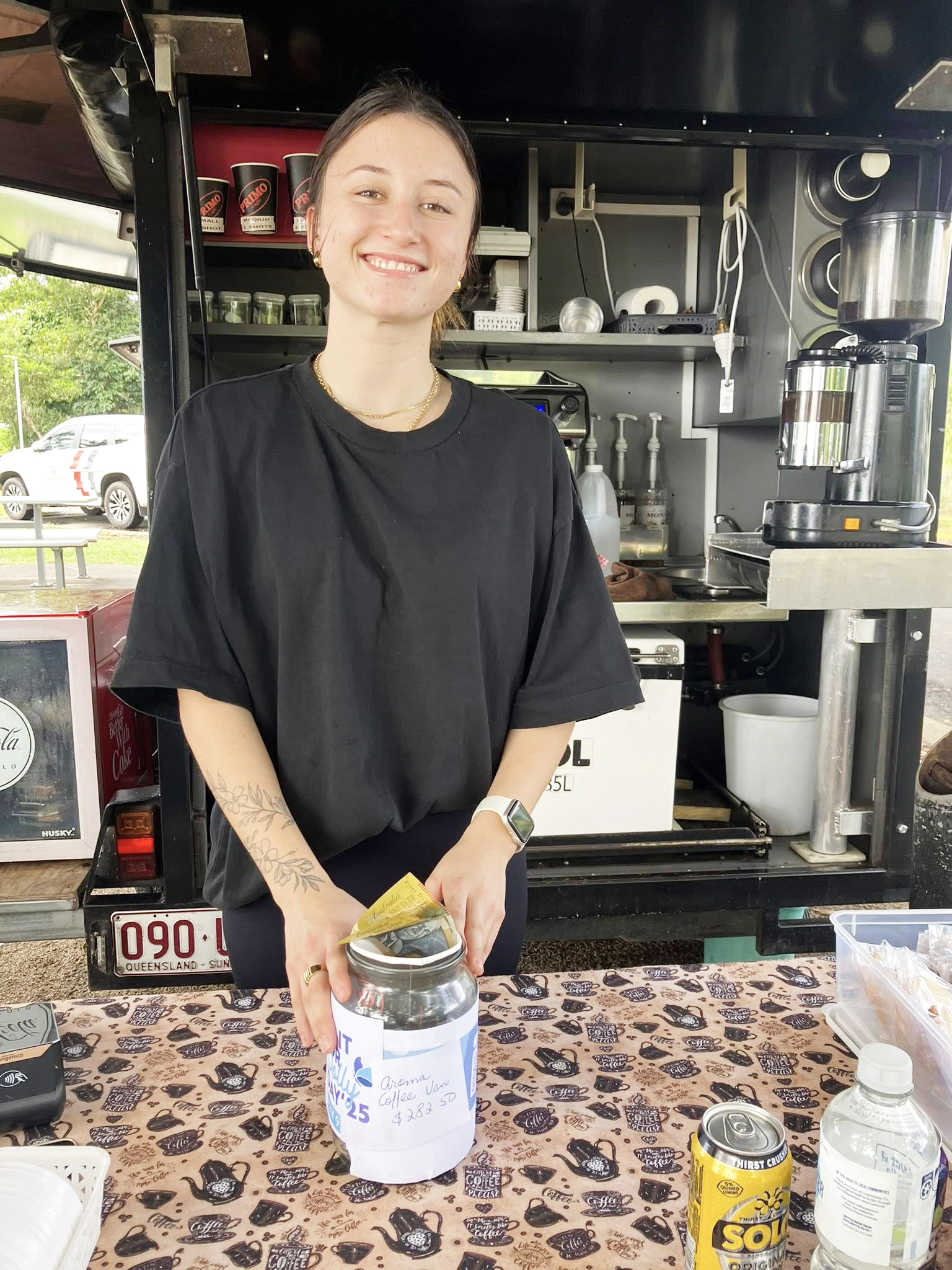
The school donations form part of the Cardwell RSL’s 2026 donations program, with further support planned later in the year for local community organisations and events.
The spirit of giving has also extended beyond the RSL, with Cardwell businesses, schools and community groups recently coming together in support of Dolly’s Dream. Collectively, the community raised more than $3,000 for the organisation.
Businesses and organisations involved in the fundraising effort included Cardwell RSL, Cardwell Early Learning and Cardwell Op Shop, alongside support from local schools and community members.
The recent efforts highlight the strong community spirit in Cardwell, with fundraising and support continuing to benefit both local causes and broader initiatives.
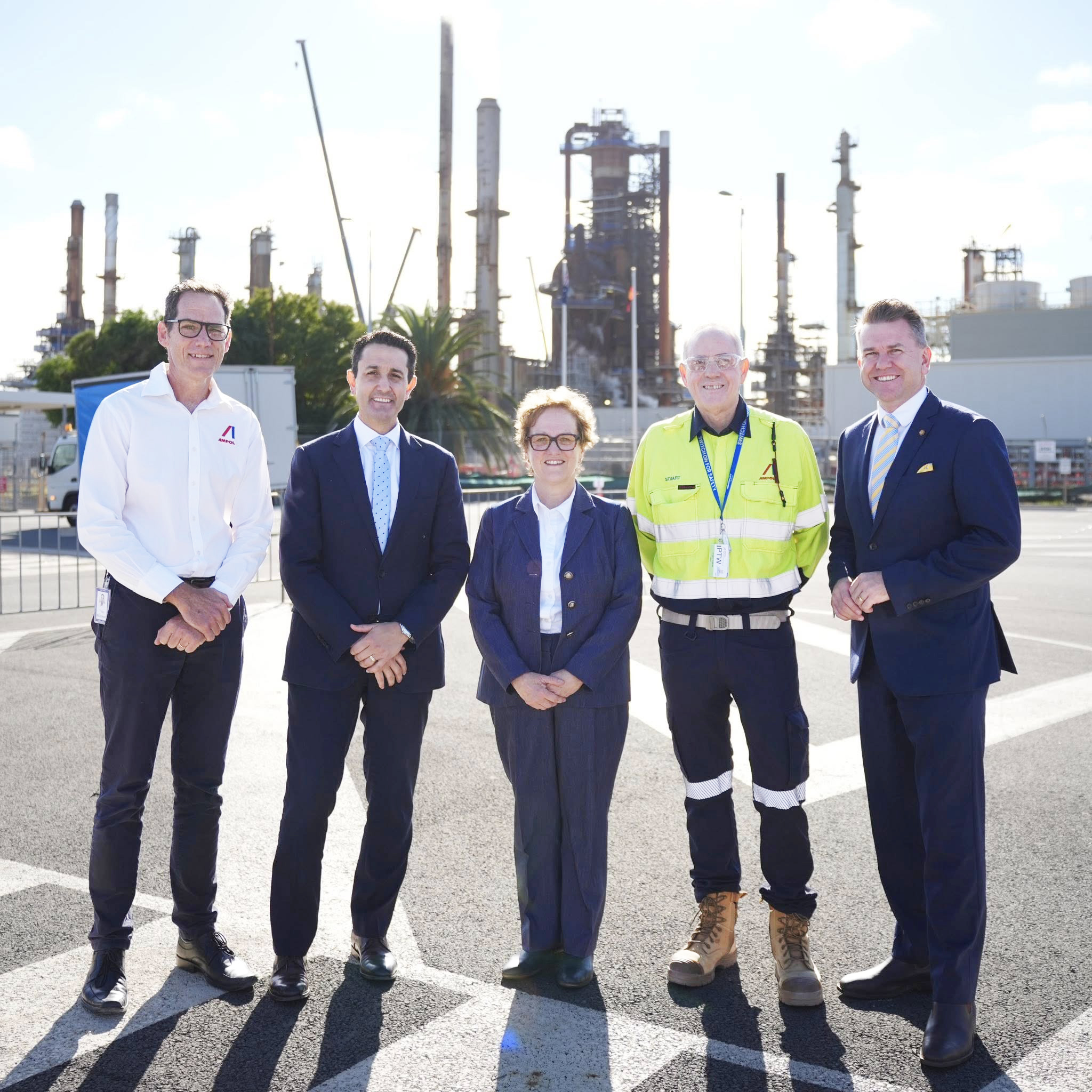
The Queensland Government’s Accelerating Fuel Infrastructure Program aims to boost local refining and storage capacity, with regional communities like Hinchinbrook expected to benefit from stronger long-term fuel security. Photo source: David Crisafulli MP
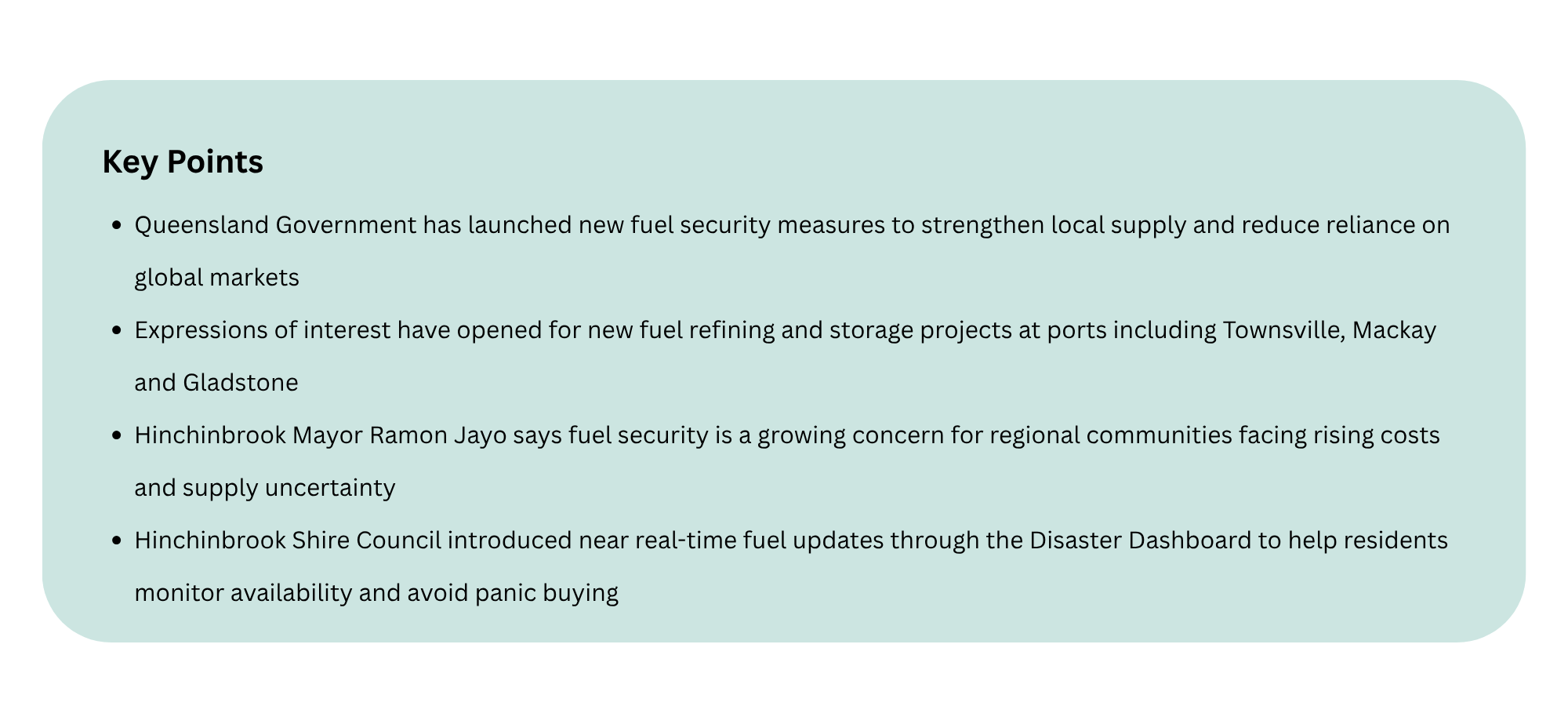
In the Hinchinbrook Shire, fuel security is back in focus as the Queensland Government rolls out new measures aimed at strengthening supply and reducing reliance on global markets. Expressions of interest have opened under the Accelerating Fuel Infrastructure Program, inviting industry to develop refining and storage projects on government-owned land at key ports across the state.
Hinchinbrook Shire Council Mayor Ramon Jayo said the issue remains a growing concern locally, with residents already feeling the effects of rising costs and supply uncertainty. In response, Council has introduced real-time fuel updates through the Hinchinbrook Disaster Dashboard, helping residents plan ahead and reduce pressure on local supply while broader state initiatives take shape.
“It’s so important to make fuel availability information easier to access, so people can make informed decisions and avoid unnecessary trips between service stations.”

Just last week, the government announced it is actively working to strengthen Queensland’s fuel security through a plan to expand local drilling, refining and storage capacity, including unlocking additionalinfrastructure at ports across the state.
On Saturday, 2 May, expressions of interest opened, inviting industry to submit proposals for fuel refining and/or storage on government-owned land and ports in Townsville, Mackay, Gladstone, Abbot Point, Bundaberg and Brisbane, under the new Accelerating Fuel Infrastructure Program.
The Accelerating Fuel Infrastructure Program was developed as a joint initiative between the Office of the Coordinator-General and Economic Development Queensland and includes a statewide audit of government-owned industrial and port land suitable for new refineries or fuel storage facilities (already underway), targeted market engagement to attract industry proposals (now open), and streamlined approval and delivery processes for projects on these sites.
Hinchinbrook Shire Council Mayor Ramon Jayo, who has regularly spoken on the importance of fuel security in the region, said the issue remains a key concern for regional and remote communities, noting that a program like the Accelerating Fuel Infrastructure Program comes at a critical time.
“Fuel has been a regular topic around our dinner tables and workplaces for weeks now, and I know many locals are feeling concerned about availability and rising costs,” he said.
“We understand how important fuel is to everyday life in Hinchinbrook. Whether you’re commuting to work, running a business, taking kids to school, or travelling long distances to access services,” Mayor Jayo said.
“For us, fuel isn’t a luxury.”
“While Australia has fuel security measures in place, regional and remote communities like ours can still feel the impact of international instability through transport delays, increased demand and temporary supply pressures.”

Hinchinbrook Shire Council is encouraging residents to stay informed and plan ahead as global pressures continue to impact fuel supply, with new tools now available to help the community navigate potential disruptions. In response, fuel availability information has been made more accessible through the Hinchinbrook Disaster Dashboard, providing near real-time updates sourced directly from the Queensland Government.
The dashboard allows users to view participating fuel retailers, check availability and monitor local supply trends, helping residents make informed decisions and avoid unnecessary travel between service stations.
“It’s so important to make fuel availability information easier to access, so people can make informed decisions and avoid unnecessary trips,” Mayor Jayo said.
“When people can see where fuel is available, it helps everyone — it reduces panic buying, supports fair access, and helps ensure essential services and vulnerable community members aren’t left without fuel.”
Council is also encouraging residents to use fuel responsibly and remain mindful of others during periods of supply pressure.
“A little consideration goes a long way,” Mayor Jayo said.
“Using fuel responsibly helps ensure there’s enough for emergency services, essential workers, local businesses and those who rely on fuel the most.”
Under the Queensland Fuel Security Plan, alongside the rollout of the Accelerating Fuel Infrastructure Program, the Queensland Government has introduced a series of broader measures in recent weeks. On 22 April, a $25 million investment in renewable diesel production at Ampol’s Lytton refinery was announced, aimed at delivering Australia’s first sustainable domestic production of second-generation low-carbon liquid fuels, with initial output targeted from 2028.
Premier David Crisafulli said the Queensland Government aims to deliver both security and opportunity, ensuring the state is better protected from reliance on global supply chains in the future.
“More storage and refining fuel locally means it’s easier for families to fill up, and small businesses to stay afloat amidst rising national cost pressures,” he said.
“We have a plan across the short, medium and long-term to get projects moving to produce oil, refine it and store fuel locally, as well as deliver relief and fight for Queenslanders receiving the most accurate information available.”
Collectively, the initiatives reflect a broader effort to strengthen fuel security and reduce vulnerability to global disruptions, particularly for regional communities like the Hinchinbrook Shire.
Residents can access the dashboard via the Hinchinbrook Disaster Information Facebook page or the Disaster Dashboard website, https://disaster.hinchinbrook.qld.gov.au, alongside updates on weather warnings, road conditions and community safety information.


More than $820,000 in funding has been announced to support turtle nest protection and predator control projects along Queensland’s coastline, helping threatened marine turtle hatchlings safely reach the ocean. Photo source: Shutterstock
Queensland’s threatened marine turtle populations are set to receive a major boost, with more than $820,000 in funding announced to support projects protecting nests and hatchlings along the State’s coastline, including regions connected to the Great Barrier Reef.
Delivered through the Nest to Ocean Turtle Protection Program, the funding will support seven organisations from Far North Queensland to the Wide Bay region working to improve turtle survival rates through predator control and nest protection measures.
Jointly funded by the State and Federal Governments, the program provides grants of up to $120,000 for projects aimed at protecting key nesting beaches from threats such as feral pigs, foxes and other predators.
Queensland is home to six of the world’s seven marine turtle species, including green, loggerhead, hawksbill and flatback turtles, all considered threatened due to climate change, habitat loss and predation.
Since the program began in 2014, more than 40,000 turtle nests have been monitored across Queensland, with an estimated 2.5 million hatchlings successfully reaching the ocean thanks to predator control and direct nest protection measures.
Federal Environment Minister Murray Watt said the initiative was helping safeguard vulnerable species connected to the Great Barrier Reef.
“Traditional Owners have been caring for the Reef for thousands of years and we’re committed to investing in their knowledge and experience.” Minister Watt said
The program also supports partnerships with Traditional Owners, local conservation groups and regional organisations carrying out on-ground works at priority nesting beaches along the Queensland coast.
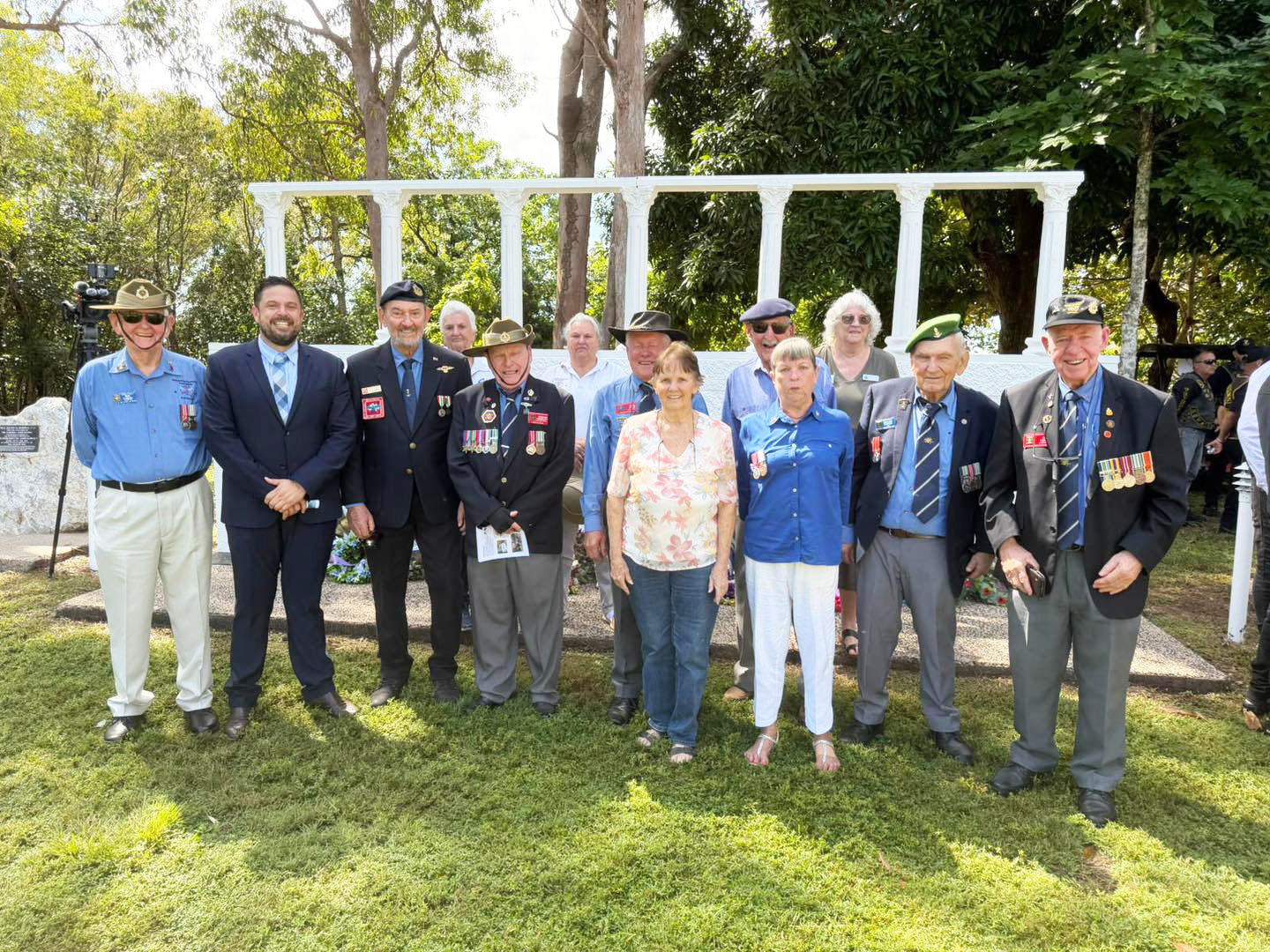
Wayde Chiesa MP, attending the Battle of the Coral Sea memorial in Cardwell. Photo supplied
It was a privilege to recently attend the SES graduation ceremony and long service awards in Ingham, recognising the incredible dedication of volunteers who selflessly serve and protect our community through severe weather events and emergencies across Hinchinbrook.
Their commitment reflects the very best of our region and the spirit of service that keeps our communities strong. Thank you to every SES member for your dedication to keeping our community safe.
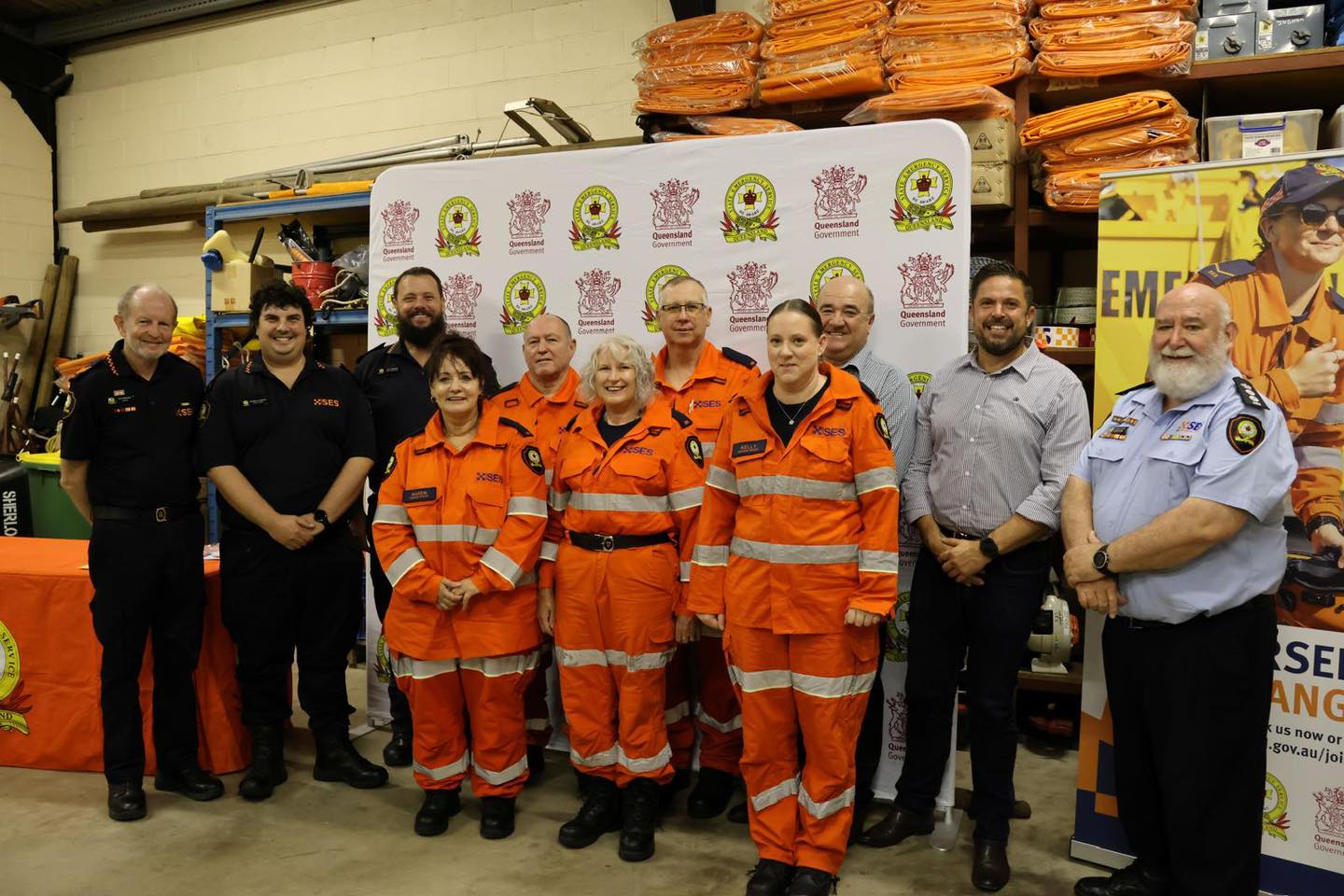
I also had the honour of attending the Battle of the Coral Sea memorial service in Cardwell, where I delivered the Premier’s message and joined veterans, students and community members in paying tribute to those who served.
The Battle of the Coral Sea was a defining moment in Australia’s history — fought off our own shores and instrumental in securing our nation’s future during World War II. It was a reminder of the courage, sacrifice and resilience shown by generations of Australians in times of uncertainty.
Last Saturday night, I had the pleasure of attending and MC’ing the CANEGROWERS Herbert River Centenary Gala Dinner, celebrating 100 years of one of the most important organisations in our region’s history.
It was fantastic to welcome the Minister for Primary Industries, Tony Perrett MP, to the region for the occasion and to see so many growers, industry leaders, families and supporters come together to celebrate this remarkable milestone.
For 100 years, CANEGROWERS Herbert River has been a voice for local growers and a cornerstone of one of Queensland’s most important industries.
The sugar industry has helped shape the identity, economy and culture of the Herbert River district for generations. Behind every season are hardworking farming families who continue to back our region, create local jobs and contribute enormously to Queensland’s economy.
The centenary was not only an opportunity to reflect on the challenges and achievements of the past, but also to look forward with confidence to the future of the industry and the next generation of growers.
Congratulations to everyone involved in organising such a wonderful evening and to all those who have contributed to the success of CANEGROWERS Herbert River over the past century.
I now look forward to returning to Parliament this week to continue advocating for the Hinchinbrook electorate and regional Queensland.

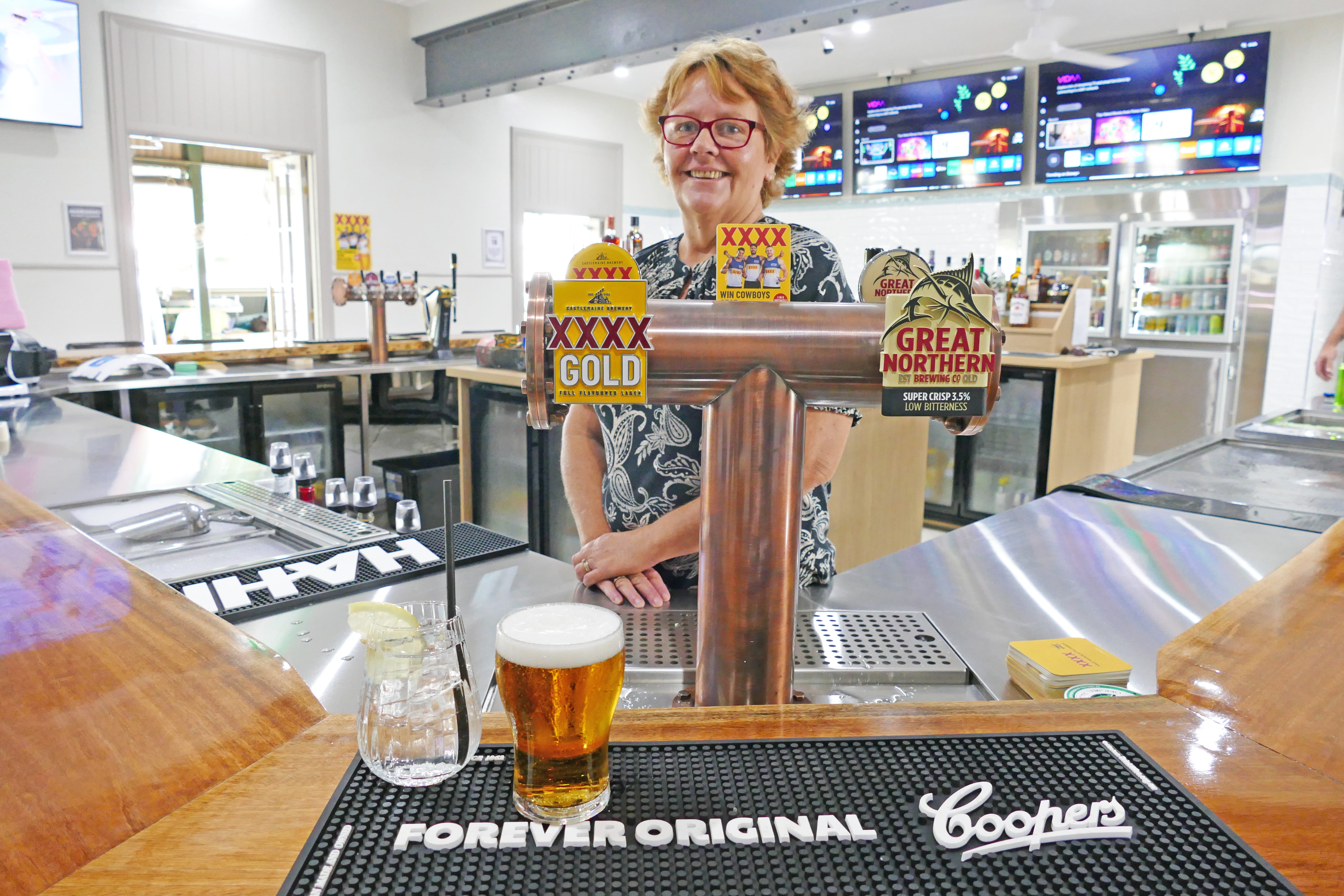
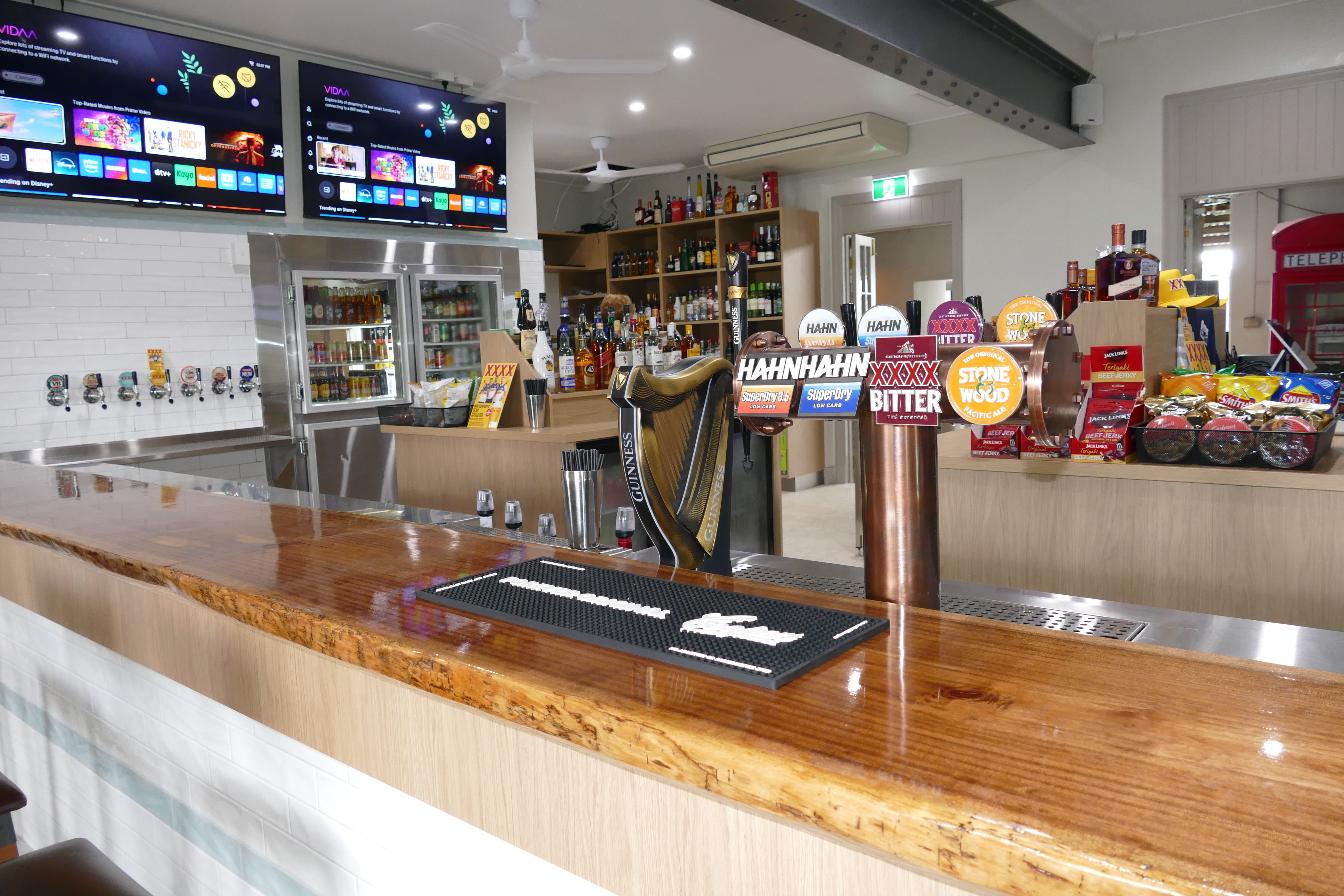
At the Halifax Hotel enjoy a cold one around the same horseshoe bar you know and love. Photo credit: Victoria Velton
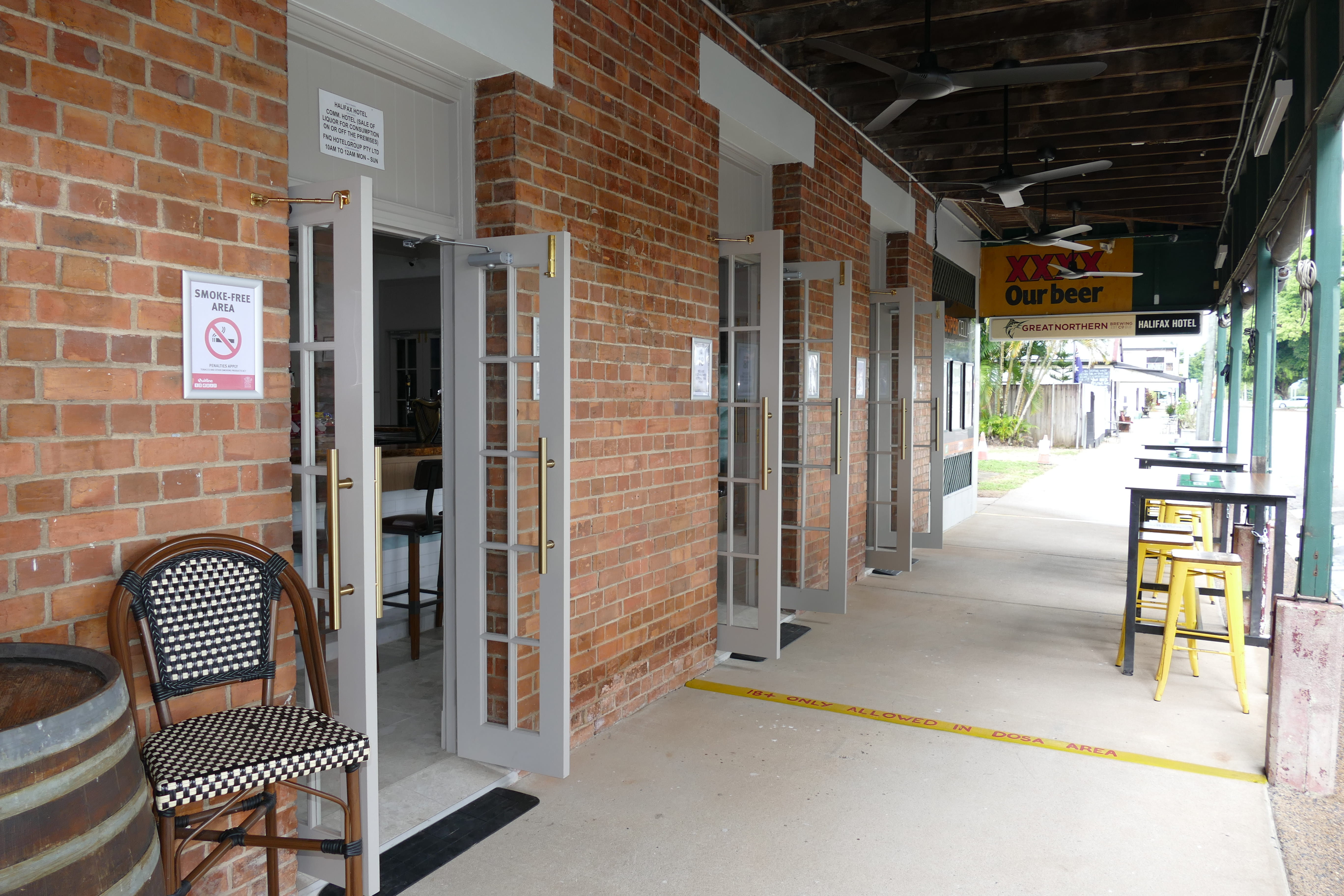
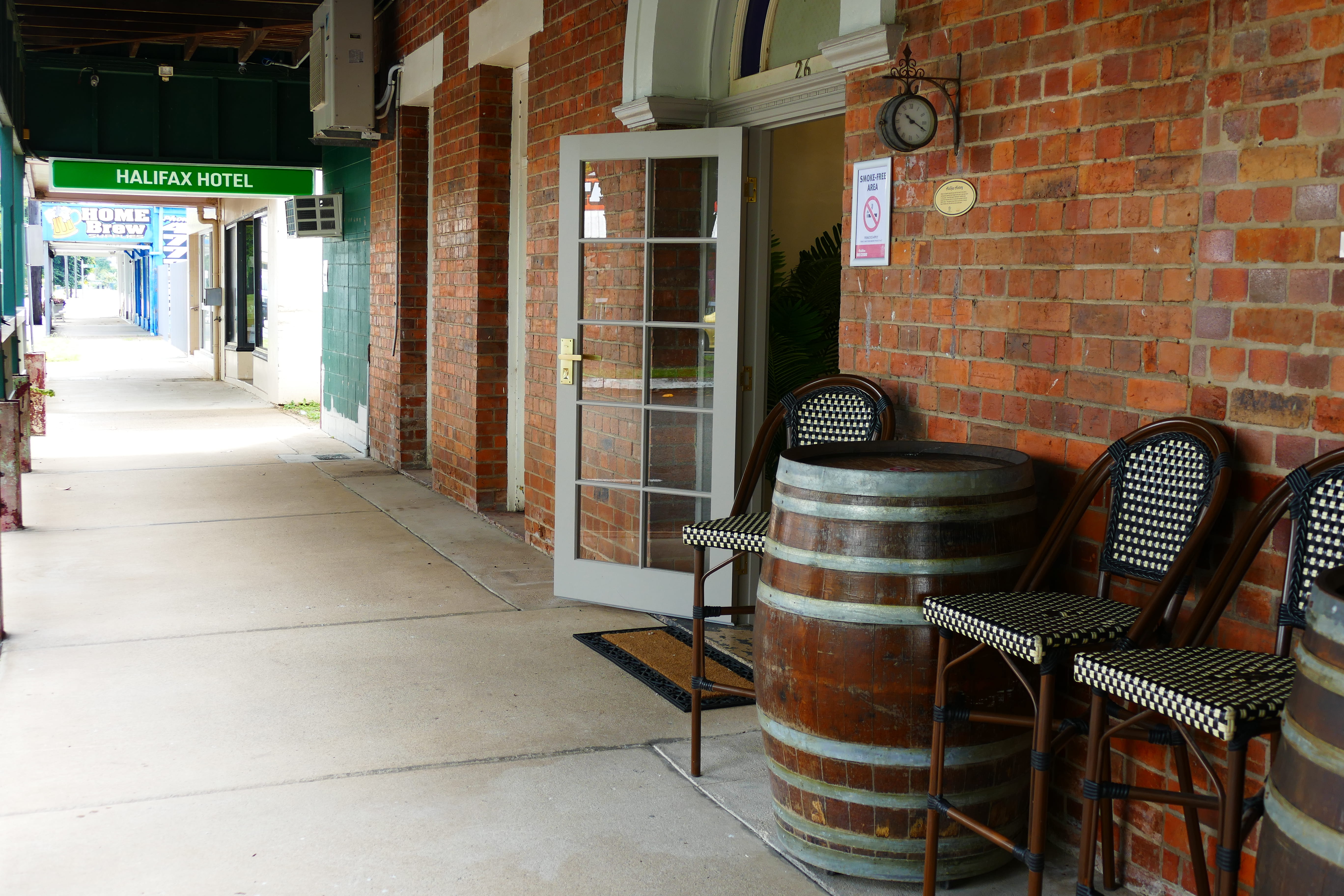
After months of rebuilding, repainting and restoring one of Halifax’s most recognisable pubs, the doors of the Halifax Hotel are open once again and locals are pouring back in.
Owners Luke Penning and Joe Mikuletic first took over the historic pub in August 2024, but only months later the February 2025 weather event brought everything to a standstill.
Now, following a major refurbishment and a long battle with insurance, the pair are finally welcoming patrons back through the doors.
“It feels very, very good,” Luke said. “We’re really enjoying everyone coming back and supporting the local pub.”
For Luke and Joe, reopening has been emotional after what they describe as a long and difficult road.
“We’re still fighting insurance, and that’s a 15-month ongoing fight,” Luke said.
Despite the challenges, the owners were determined to preserve the soul of the old pub while giving it a fresh new look.
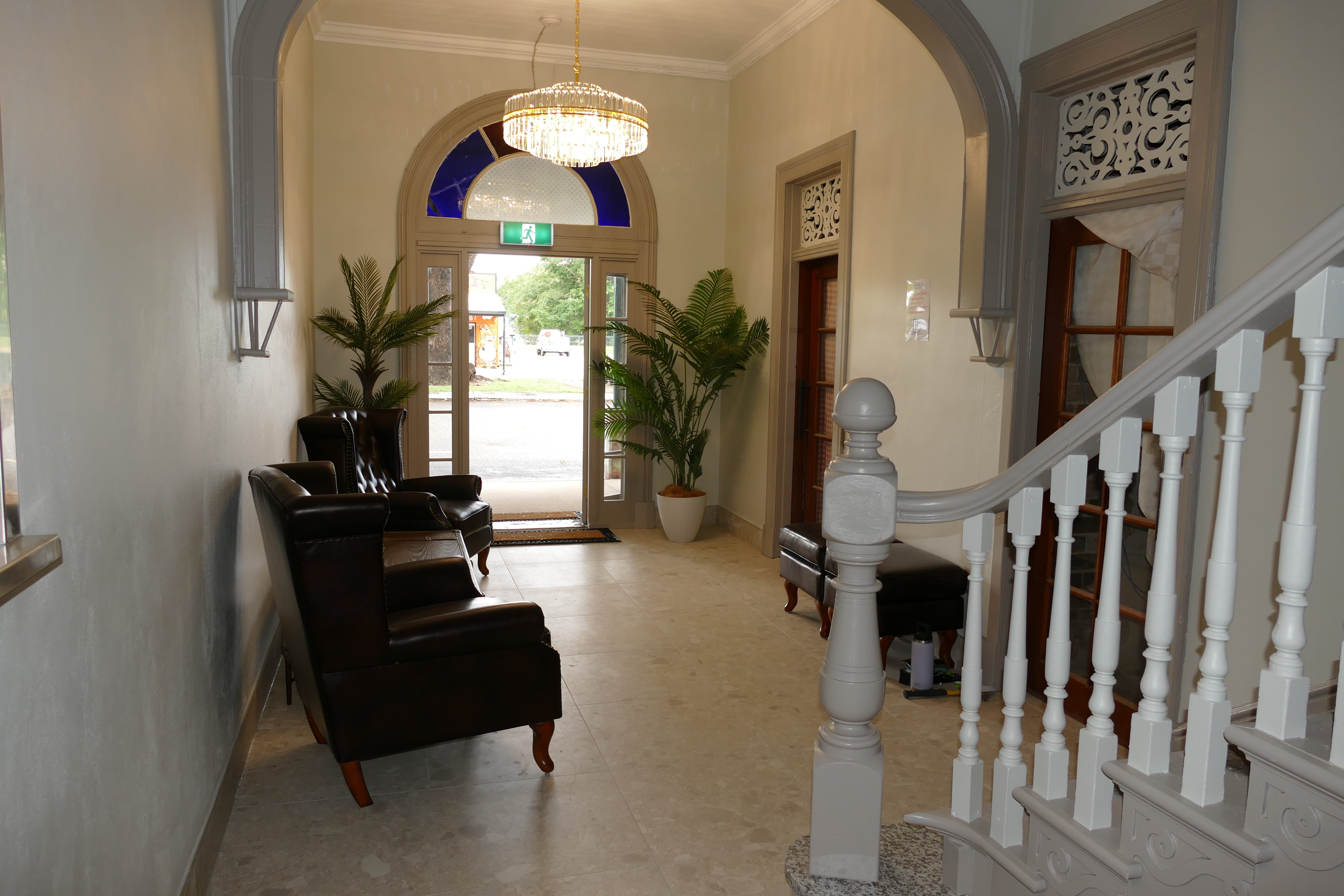
The redesign stripped the building back to its bones before introducing warm country-inspired colours and carefully selected finishes.
“Original mixed with new, still with that old Queensland charm,” Luke said.
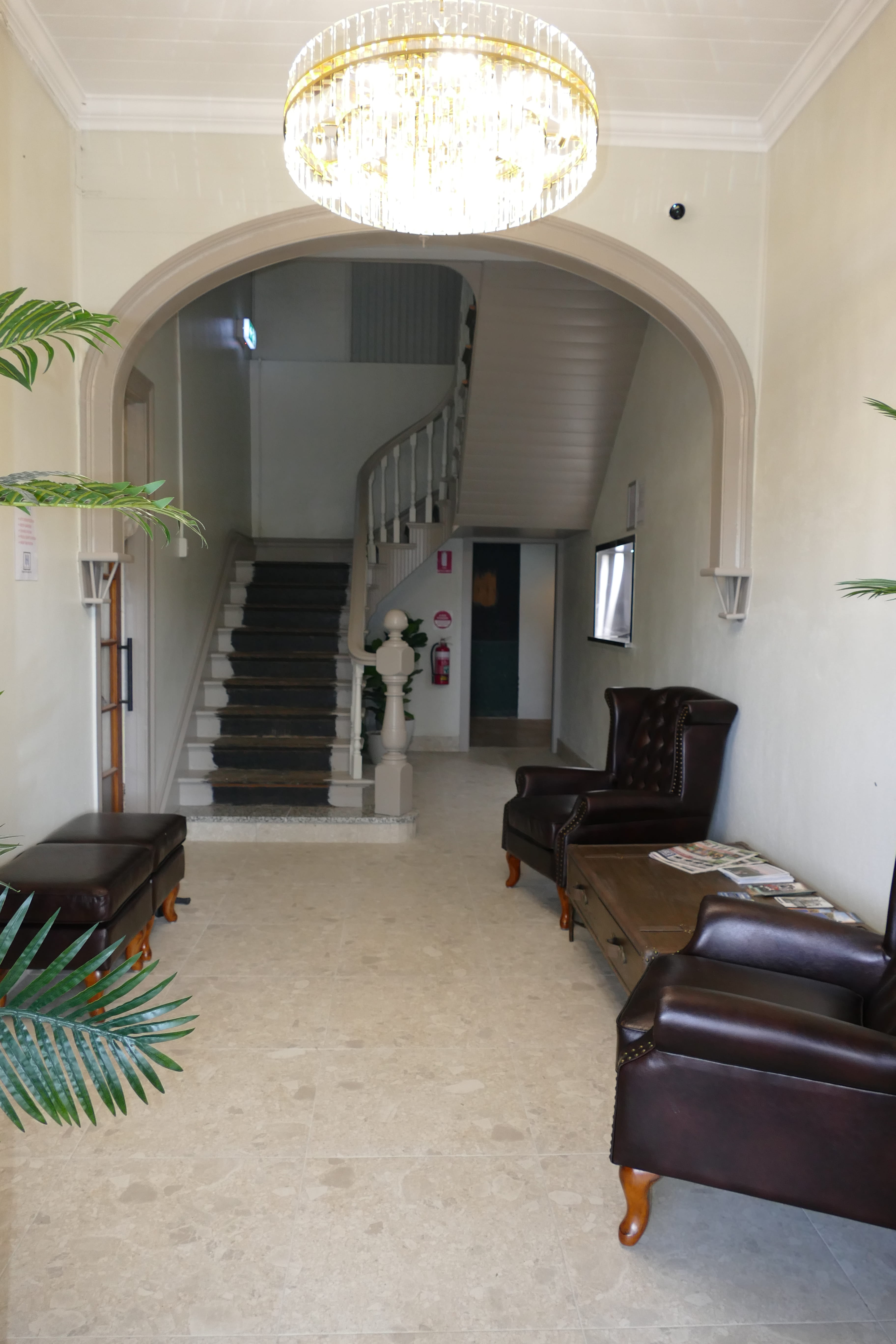
One feature they were especially determined to save was the hotel’s beloved historic staircase.
“We nearly lost the staircase,” Luke said. “That staircase is one of the reasons we bought the pub. We fell in love with it.”
He said local builder Glenn Sexton was instrumental in saving the 120-year-old feature.
“He just took a few panels up, had a look at it, and said he could fix it. That was a massive relief because seeing it go was pretty terrifying.”
Joe said the rebuild became a collaborative labour of love between the owners, builders and tradespeople.
“Glenn Sexton has been amazing,” he said. “Even the trades had a bit of a say. It became a work of love from everyone.”
Alongside the restoration have come plenty of modern additions, including new chandeliers, upgraded air conditioning, a free Crowd DJ jukebox system and an expanded range of drinks.
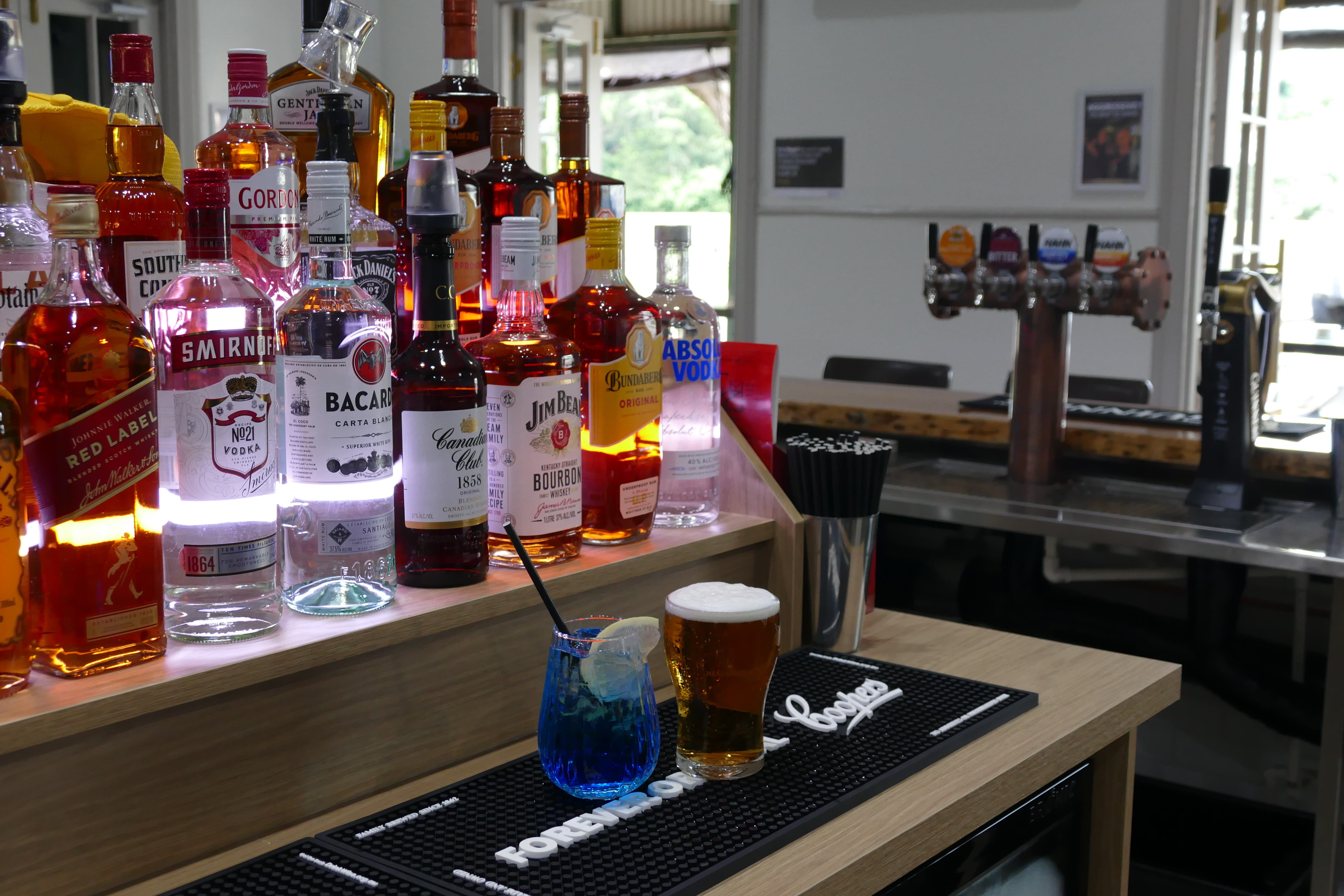
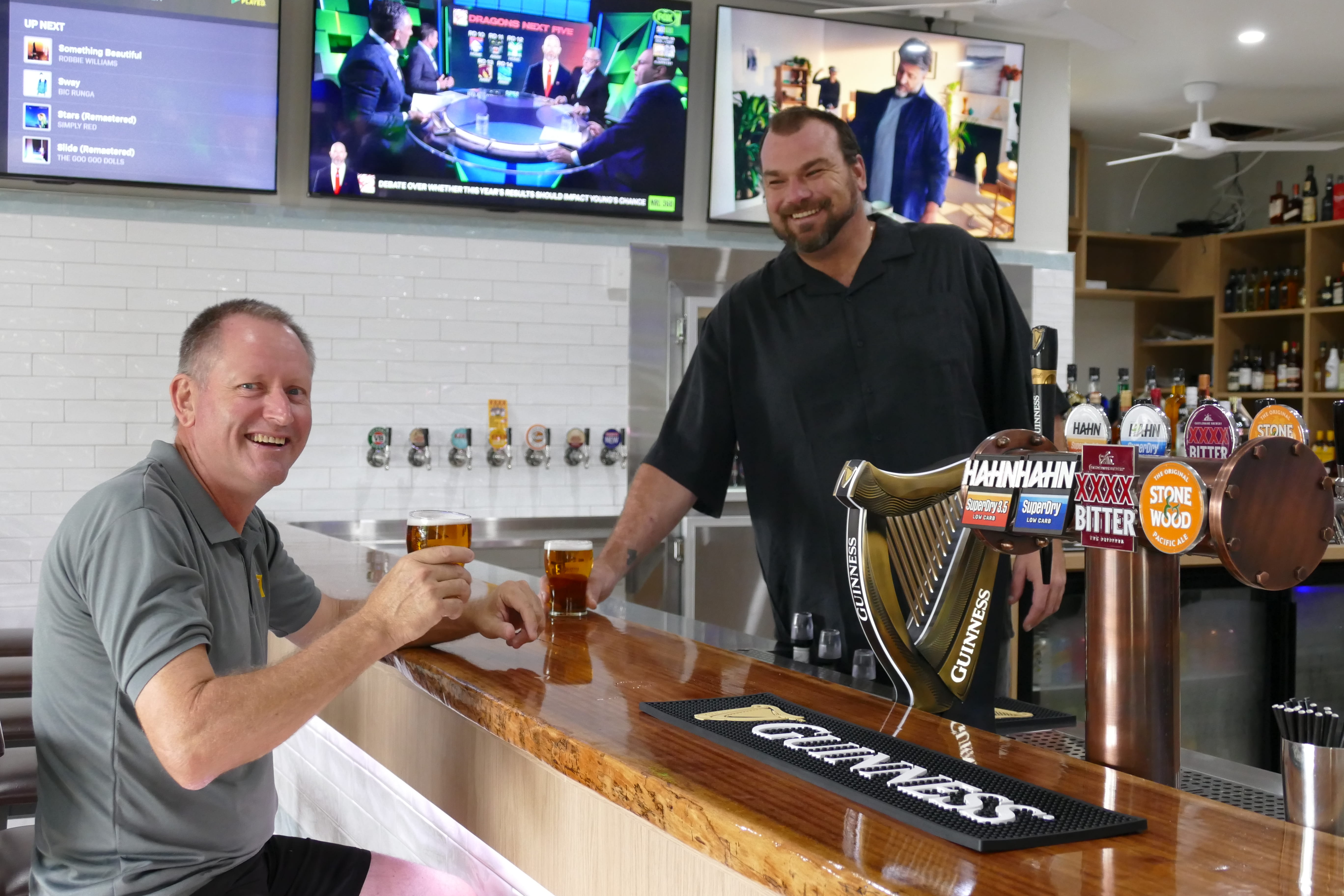
One standout addition has been the hotel’s specialty Guinness tap, shaped in the iconic harp.
“The Guinness has actually taken off quite well,” Luke laughed. “We’ve had a lot of people ‘split the G’, as they say.”
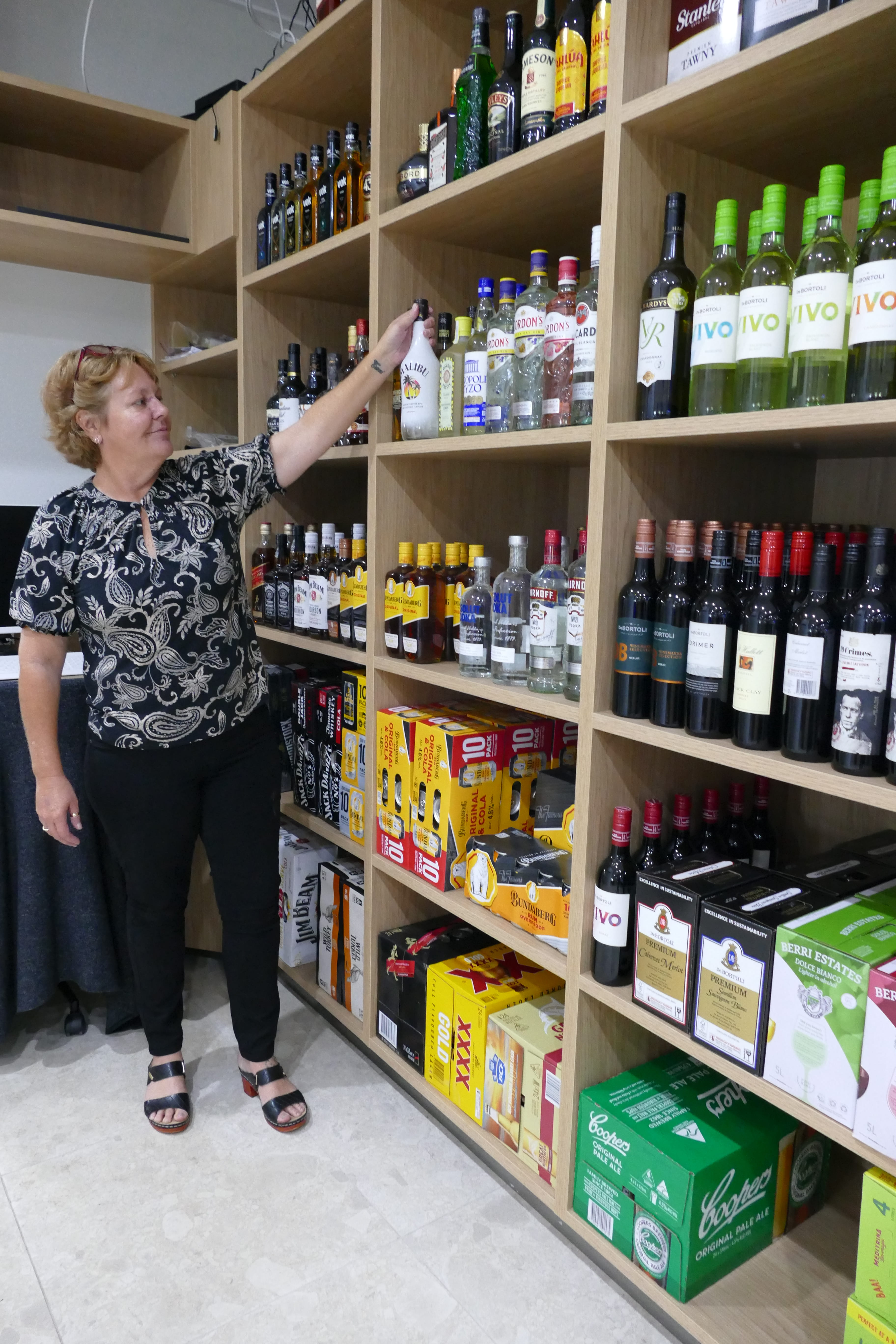
The pub has doubled its tap range from eight to 16, with a broader mix of old favourites and new options for patrons to try. Cocktail offerings and an expanded bottle shop range are also helping draw in new customers.
“We’ve got a lot of people saying, ‘I’ll give that a go, I’ll try that,’” Luke said.
Opening night proved the community had been waiting eagerly for the pub’s return.
“The bar was full from about 10 o’clock midday until 11:30 at night,” Joe said. “We had bums in seats from open to close.”
Luke said the steady stream of patrons throughout the day was especially rewarding.
“It wasn’t just one crazy rush at six o’clock. It was constant all the way through till closing time,” he said.
The pair already have ambitious plans for stages two and three of the redevelopment.
Future additions will include two free pool tables, dart lanes, a new TAB area, a beer garden and a dedicated pizzeria. A Mediterranean-style pub menu is also in the works, with a full-time chef already secured.
“We’re wanting a proper Italian pub, Mediterranean pub-style menu,” Luke said. “We’ve got chandeliers and everything on order for the new dining room.”
Cocktail training for staff is also underway, with the owners keen to add classic pub favourites to the menu.
“You know, the old Manhattans, Whiskey Sours, lemon lime bitters,” Luke said. “Joe loves his lemon lime bitters. Loves making them.”
Joe said visitors are often stunned by the transformation when they walk through the doors.
“Their jaws just drop,” he said. “It’s still got that old Halifax Hotel feel, but everyone’s amazed because it’s all new.”
At the centre of it all remains the iconic horseshoe bar, something the owners refused to change.

“I think the biggest reason people love it is because it’s the horseshoe bar,” Luke said.
“We maintained that traditional shape,” Joe added. “It’s Queensland. It’s iconic.”
The upgrades are already attracting a broader mix of patrons, from locals who had never previously visited the pub to travellers returning from fishing trips through Lucinda.
“We never really used to have a lot of people sitting at the bar,” Joe said. “Now people want to come in, sit down after a hard day and enjoy a cold beer in the air conditioning.”
He said the renovation had managed to modernise the space without losing its welcoming atmosphere.
“With the glass windows, it still doesn’t feel cramped. It still gives that open feeling,” he said. “It honestly still hasn’t sunk in for us. It feels like a dream.”
The reopening has also reunited some familiar faces, with former staff members returning alongside new general manager Narelle.
“Two of our old staff have come back,” Luke said. “They were aching to get back just as much as we were.”
Throughout the rebuild, locals regularly wandered in to check on progress and offer encouragement.
“They’d walk in and say, ‘Good to see you again, let’s have a look,’” Luke said. “Everyone’s been very, very supportive.”
He said people were now beginning to understand the full scale of what the business had endured.
“Everyone’s seeing the reality of everything that happened now, not just stories and rumours.”
The owners expect the venue to be fully completed by the end of August, coinciding with their two-year anniversary.
“We’re planning something like a street party for it,” Luke said excitedly.
Looking ahead, the Halifax Hotel team is eager to bring back classic pub entertainment too, including raffles, meat trays, Jag the Joker and musical bingo nights.
“It’s going to be good,” Luke said with a grin.

From Left Brenden Accornero, Paul Marbelli, Frank Scardamaglia, Zenan Reinaudo, Leah Russo, Sam Torrisi, Steven Marbelli and Terry Motti
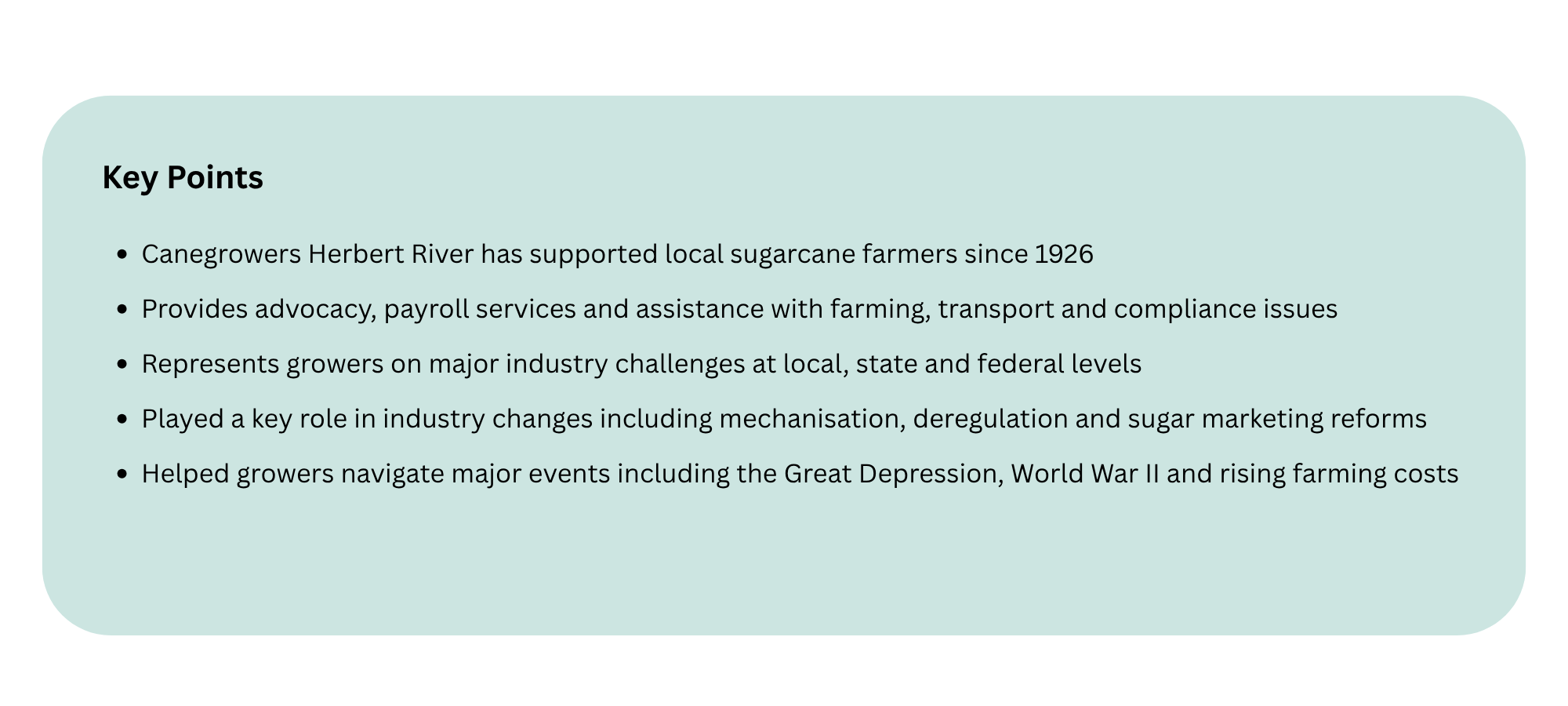
Since 1926 Canegrowers Herbert River has long been the cornerstone of support for sugarcane farmers in the Herbert River district. Their unwavering commitment to advocating for and assisting their members has made them an essential partner in navigating the challenges of modern farming. Offering a range of services, from advocacy and policy influence to essential services such as payroll, Canegrowers Herbert River ensures that local growers have the resources they need to thrive.
One of the most significant contributions Canegrowers Herbert River provides is its robust advocacy for growers' interests. Sugarcane farming faces numerous pressures, fluctuating market prices, environmental regulations, and the ever-changing climate. Canegrowers Herbert River plays an active role in representing its members at local, state, and federal levels. Through strong advocacy, they ensure that growers' voices are heard on critical issues.
Their work with various government bodies helps shape policies that protect the interests of cane farmers, ensuring the sustainability of the industry in the Herbert River region. This kind of representation is invaluable to growers who might not have the time or resources to engage in these important discussions directly.
The organisation is deeply engaged with local issues, working closely with farmers to understand their specific challenges and helping to find practical solutions. Whether it's dealing with infrastructure concerns, road safety, transport, Canegrowers Herbert River plays a vital role in addressing these issues and working toward positive outcomes. By collaborating with local councils, government bodies, and industry partners, they ensure that farmers’ concerns are heard and resolved in ways that benefit both growers and the wider community.
Every season alone Canegrowers Herbert River assists members with transport issues including permitting and regulation, providing guidance with BMP, compliance audits, permit and notification requirements, drainage, CCS and cut to crush discrepancies, siding issues, cane supply contract matters and many more pertinent issues.
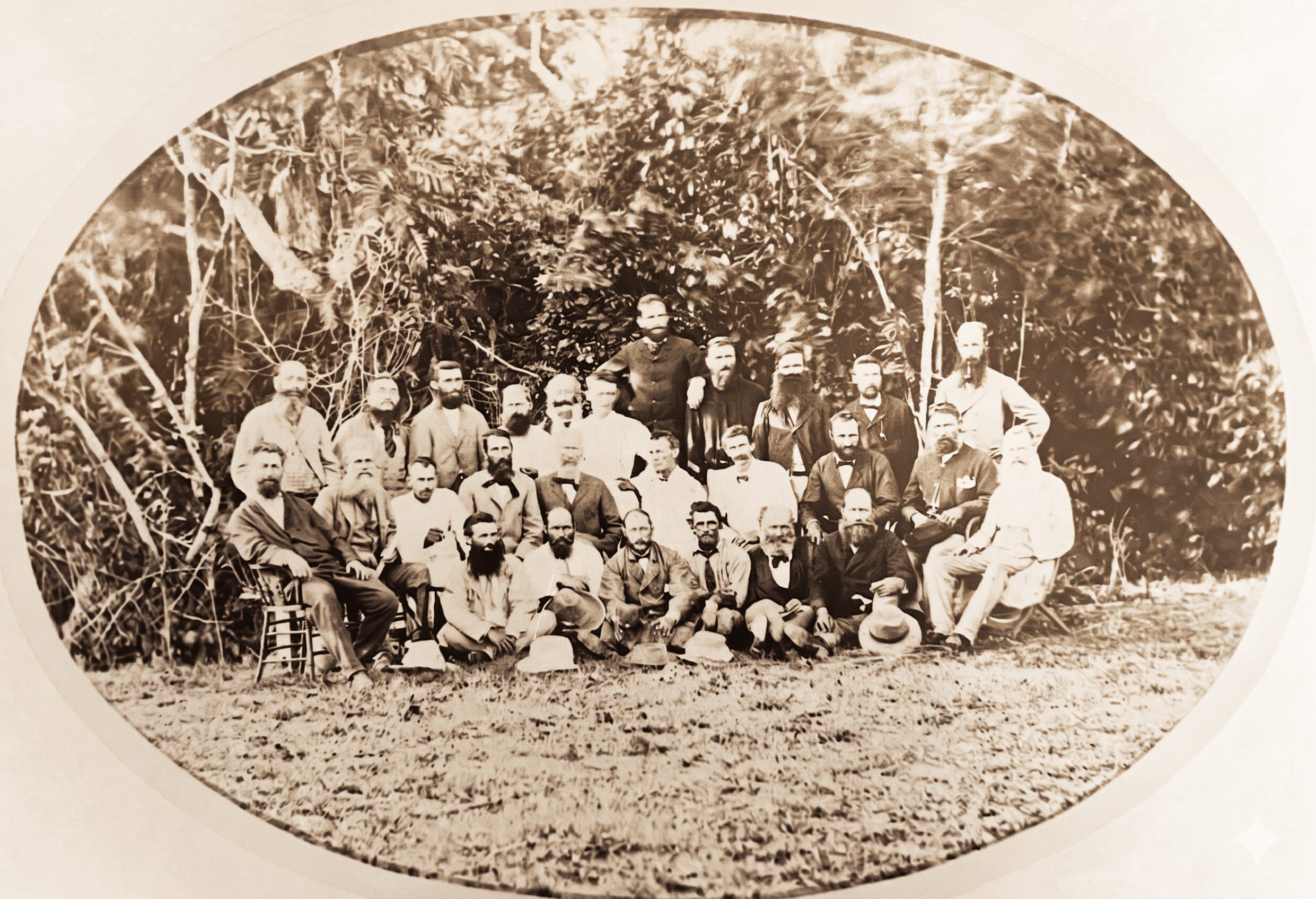
The story of CANEGROWERS on the Herbert is unique. CANEGROWERS, or as it was first known Queensland Cane Growers Association (QCGA), came about when the Queensland Government legislated for commodity associations with compulsory membership and farmer levies. Yet even before the imposition of compulsory association there was a highly organized association advocating strongly for sugar farmers on the Herbert, the Herbert River Farmers’ League (HRFL)
The Herbert River CANEGROWERS stands on the shoulders of a group of small farmers whose aspirations to grow sugar cane were ridiculed by the planters. Nevertheless, six men, only two of whom were English speakers, took on the Colonial Sugar Refining Company (CSR) in 1882 as the Herbert River Farmers’ Association (HRFA), and achieved in 1884 what seemed impossible, a contract to supply cane to CSR. It was the first association in north Queensland to solely represent small sugar growers’ interests rather than those of larger planters and was the voice of the small farmers until the formation of the Herbert River Farmers’ League (HRFL) in 1896.

When the Herbert River district branch executive of the QCGA was formed in February 1926, followed by the Herbert River Cane Growers Association (HRCGA) in February 1932 it inherited branch associations, structure and roles already established by the HRFL. It operated out of the HRFL’s building until the Farmers’ Building opened in 1934. Moreover,the first executive positions of the HRCGA were held by HRFL members who contributed their valuable organizational experience.
This strong associative urge dating from 1882 has defined the strength and determination of CANEGROWERS on the Herbert as it has steered the local industry with a united voice through the many challenges that have beset the industry in the last 100 years.
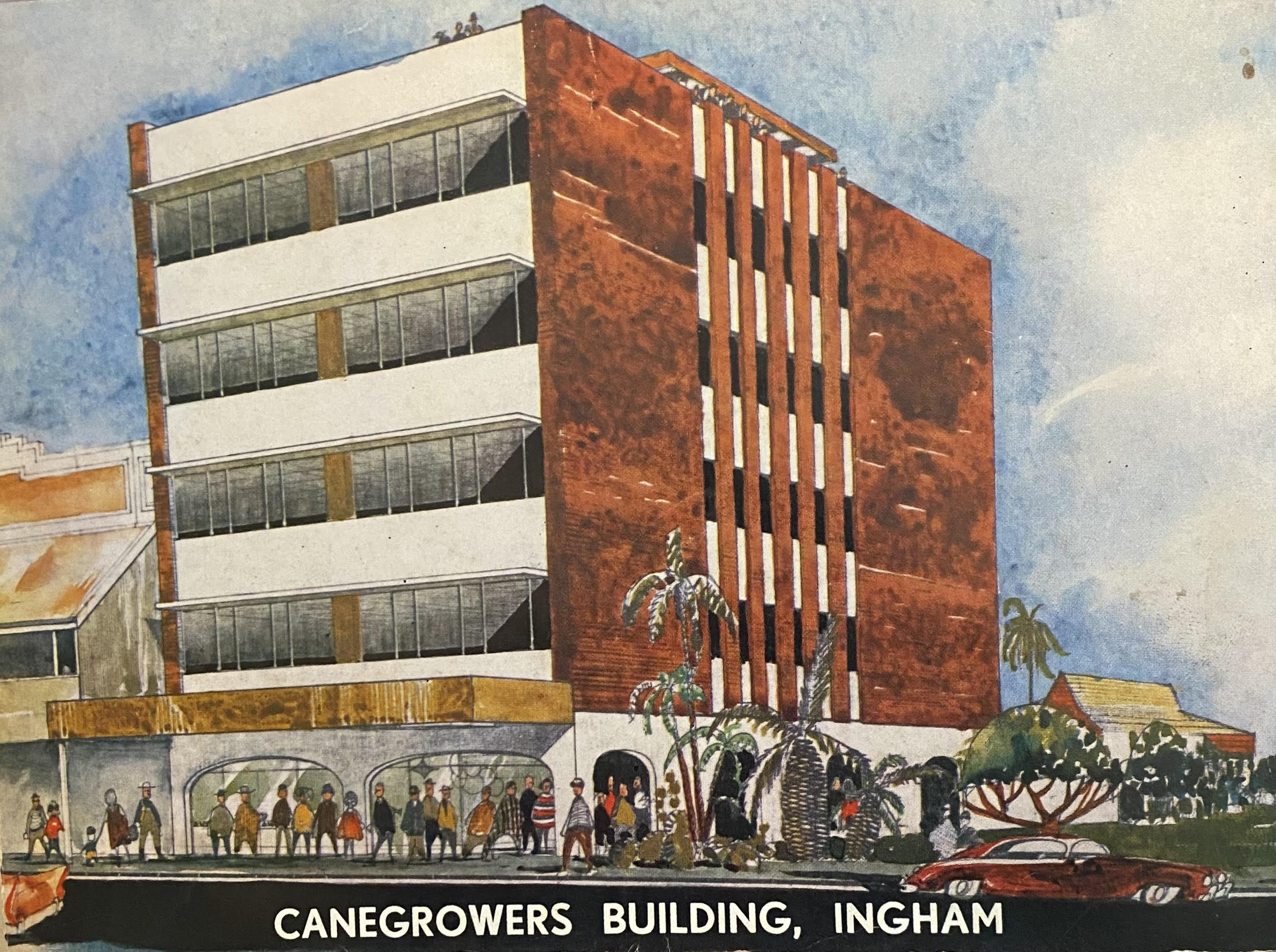
Ingham’s only skyscraper, the CANEGROWERS building, is a testament to the hopes and confidence that the Herbert River Cane Growers’ Association (HRCGA) held for the district’s sugar industry in 1970. It is not the first farmers’ building on the site, however. The newly formed HRCGA decided in 1934 that its ‘status and dignity’ warranted its own building.
A perpetual lease on an allotment on Lannercost Street was obtained by public auction. With a low-interest loan from the Queensland Cane Growers’ Council (QCGC), F.A. Pidgeon was contracted for the build at a cost of £2500. The Farmers’ Building was opened on 29 September 1934. Costs were kept low because it was built in conjunction with George Masselos’ Capitol Building, sharing stairwell and wall.
Having a building of their own from which services and assistance to farmers could be provided was integral to the HRCGA’s successful promotion of the cane growing industry for 36 years. In that time, sugar production in Queensland increased from 613,000 tons to 2.6 million tons, with the Herbert River district’s output from two mills being the largest of the 10 mills between Ingham and Mossman.
The need for a new Farmers’ building was mooted as early as 1963 but it wasn’t until 12 December 1970 that the CANEGROWERS building was opened by the Hon. J.A. Row. He described it as ‘tangible evidence of the sugar industry’s confidence in its future’.
Today the Herbert River Canegrowers Organisation still serves the local sugar industry from the lofty heights of the CANEGROWERS building, bolstering growers as they pivot on the demands of an ever-changing agricultural landscape.
The Herbert River Cane Growers Association (HRCGA) became the dominant farmers’ organization on the Herbert during the Great Depression, guiding the industry then through the fraught years of World War 2 withenlistments, as well as the internment of farmers, cane cutters and mill workers of Italian and other nationalities who were considered enemy aliens.
Though the post war economic boom created work, it continued to be difficult to attract workers to cut cane. Post-war immigrants directed to cane cutting was a stop-gap measure with mechanization inevitable. The district executives of the CANEGROWERS organization played a major role in the process of mechanization, with Queensland at the forefront.
The foresighted HRCGA purchased two TOFT harvesters in 1945 as an experimental trial. Together with CSR the HRCGA formed the Herbert River Mechanical Harvesting Committee for the testing of harvesters in the field and in 1961 and 1962 the HRCGA invested in experimental green cane harvester prototypes.
The HRCGA guided the local farming community through the difficult years of the 1980s when high interest rates, rising farm costs and extreme price variability in the world sugar market put some sugar farmers under such financial stress that there were bank foreclosures.
The small family farms survived due to strategic government legislation and subsidization. The consequence of dismantling the complex regulatory system in 1991 saw an exit of small sugar cane farmers with surviving farmers or consortiums buying up their land. The economies of scale of larger enterprises enabled them to absorb the ever increasing farm costs.
Locally the HRCG steered the farming body through these adjustments as well as another major shift, the departure of CSR and the purchase of Victoria and Macknade Mills by WILMAR in 2010. Contentious times followed when new millers across the sugar districts proposed marketing their own sugar. 2015 government legislation guaranteed farmers’ ability to choose who marketed their sugar which CANEGROWERS had aimpactful influence on this outcome through their advocacy efforts with government.
CANEGROWERS had to work out how to negotiate the changes not only for its farmer members but for itself as an organization. Despite the repeal of the statutory compulsory membership and levying arrangements, theHerbert River farmers overwhelmingly voted for the HRCGA to continue to be their representative body contrary to alternative suggestions. The HRCGA, by remaining faithful to its charter, with its strong managementand readiness to negotiate toughly continues to manage change for the benefit of its members.
1864
Legislation passed to allow plantation agriculture in Queensland
1868
Legislation passed to regulate and control the introduction of Melanesians labourers and how they were recruited. John Geoffrey O’Connell and William McDowall took up land on the Herbert to grow sugar.
1872
Gairloch Plantation Mill first crushed.
1873
Macknade and Bemerside Plantation Mills first crushed.
1876
Legislation passed to allow more speculative selection by planters but also for small farmers to farm in tropical sugar districts.
1881
Legislation passed to enable CSR to acquire land on the Herbert for growing and milling sugar cane under preferential terms.
1882
HERBERT RIVER FARMERS ASSOCIATION formed; and Gairloch Plantation Mill began crushing again under different management.
1883
Hamleigh, Ripple Creek and Victoria Plantation Mills began crushing.
1884
Legislation passed to halt the plantation land grab and promote the selection of land by smaller selectors.
CSR Victoria Plantation Mill agreed to take cane from small farmers for crushing.
1885
Legislation decreed that after 31 December 1890 no more licenses to import Melanesian labour would be issued.
1891
The arrival of the first Italian labourers on the Herbert River cane fields.
1895
HALIFAX PLANTERS’ CLUB (aa small farmers’ club) formed either 1894 or 1895.
1896
HERBERT RIVER FARMERS’ LEAGUE formed and CSR acquired Macknade Plantation Mill.
1900
Bureau of Sugar Experiment Stations (BSES) created. Responsibility was research and development for the sugar industry.
1901
White Australia policy required the end of recruitment from 31 March 1904, and deportation of all Melanesians by 31 December 1906. Completed in 1908 with exceptions.
1905
Legislation passed to allow non-British workers to be contracted to work in the sugar fields. This brought Finnish and Spanish people to the Herbert District.
1913
Legislation passed for standard rates of payment to be paid to sugar cane farmers by millers and rates of pay and conditions for all workers in the sugar industry.
1915
Legislation passed to initiate the complex regulatory system that came to govern the sugar industry and secured the place of the small grower in the industry.
1915
Legislated passed for the Queensland Government to acquire all raw sugar manufactured in Queensland and to on sell to the Commonwealth Government.
1922
Legislation passed to provide for primary industry bodies with power to compel all persons in that industry to become members and impose levies.
1925
Herbert River Farmer’s League building opened.
1926
The statutory organization the QUEENSLAND CANE GROWERS’ ASSOCIATION with governing body: The QUEENSLAND CANE GROWERS’ COUNCIL created.
Herbert River district branch executive of the QCGA formed.
1932
HERBERT RIVER CANE GROWERS ASSOCIATION (HRCGA) came into being.
1934
Farmers’ Building opened.
1947
Displaced Person cane cutters contracted to work as cane cutters.
1970
Canegrowers Building opened.
1977
Manual cane cutting deleted from the Sugar Industry Award. Sugar cane harvesting now fully mechanized.
1991
Beginning of deregulation of the sugar industry.
1999
Sugarcane Prices Act, and the Sugar Acquisition Act repealed.
2005
Government no longer set formula for the cane price or enforced 'cane production area' restrictions. Entities other than QSL (Queensland Sugar Limited) could now market raw sugar for export.
2008
Halifax Planters’ Club folded.
2009
Sucrogen formed comprising of CSR Mills, Ethanol and the Sweetener Group.
2010
CSR sells Sucrogen to Wilmar which acquired the Victoria and Macknade Mills as part of its acquisition of CSR Limited's sugar business.
2013
Sugar Research Australia (SRA) declared as a statutory body, with compulsory membership levies to be shared equally by millers and farmers.
2015
Legislation passed to allow the farmers to choose who marketed their sugar.
2017
Legislation passed to regulate the conduct of growers, mill owners and marketers of sugar in relation to contracts or agreements for the supply of cane or the on‑supply of sugar.
Publishers Indemnity. Any individual or entity that places advertising, supplies copy material, or submits editorial content to Life Publishing agrees and undertakes to ensure that all such material:- Does not infringe upon any copyright, trademark, or other intellectual property rights;- Is free from any content that could be considered defamatory, libelous, or slanderous;- Does not infringe upon any rights related to privacy or breach of confidence;- Contains no obscene, indecent, or otherwise unlawful material;- Complies fully with the Trade Practices Act and all other applicable laws, regulations, or statutes. Furthermore, by submitting or placing such material, these individuals or entities agree to indemnify and hold harmless the publisher, Life Publishing and Events Pty Ltd, and/or its agents from and against any and all investigations, claims, demands, liabilities, damages, costs, or judgments arising out of or in connection with the material provided. All material is believed to be accurate at the time of printing and remains the copyright of Life Publishing and Events Pty Ltd.
© 2026 Life Publishing Group Ltd.
