
Independently Owned, Locally Grown, Community Loved

As Queensland’s shorebird nesting season gets underway, beachgoers are being reminded to give coastal birds plenty of space as they raise their young. For ground-nesting birds, a peaceful stretch of sand can be the difference between a successful nesting attempt and a disturbed one. Nests and chicks can be difficult to spot due to camouflage. Dogs, people and vehicles moving too close to the birds can cause them to leave their nests and leave vulnerable chicks unprotected. Visitors should watch where they walk, avoid known roosting and nesting areas and keep dogs on a lead where required. Local beaches and wetlands are home to shorebirds such as beach stone-curlews, pied oystercatchers, and the endangered little terns. If you spot birds nesting or young chicks on the sand, give them plenty of space and avoid walking or driving through the area. A simple way to help is to give birds a wide berth. If a bird becomes agitated or flies away as you approach, take that as a sign you are too close and move further back. The warmer months also bring an opportunity for Queenslanders to take a closer look at the birds sharing their local environment as the Aussie Bird Count returns. The Aussie Bird Count will run from the 19th to 25th October, giving bird lovers and curious locals the chance to spend just 20 minutes counting the birds around them. Now in its 13th year, the national citizen science event is open to everyone, with counts able to be completed in backyards, parks, schoolyards, beaches or even from a window. Last year, a record 64,000 Australians counted more than five million birds, with the information helping BirdLife Australia build a better picture of Australia's bird populations. You don't need to be a bird expert to take part as the free Aussie Bird Count app includes a bird finder to help identify unfamiliar species, and every count contributes to Australia's growing citizen-science dataset. This October will be a great chance to look a little closer at the wildlife around you and help the birds. WHAT: Aussie Bird Count 2026 WHEN: October 19th–25th WHERE: Anywhere you can spot birds
Read the full story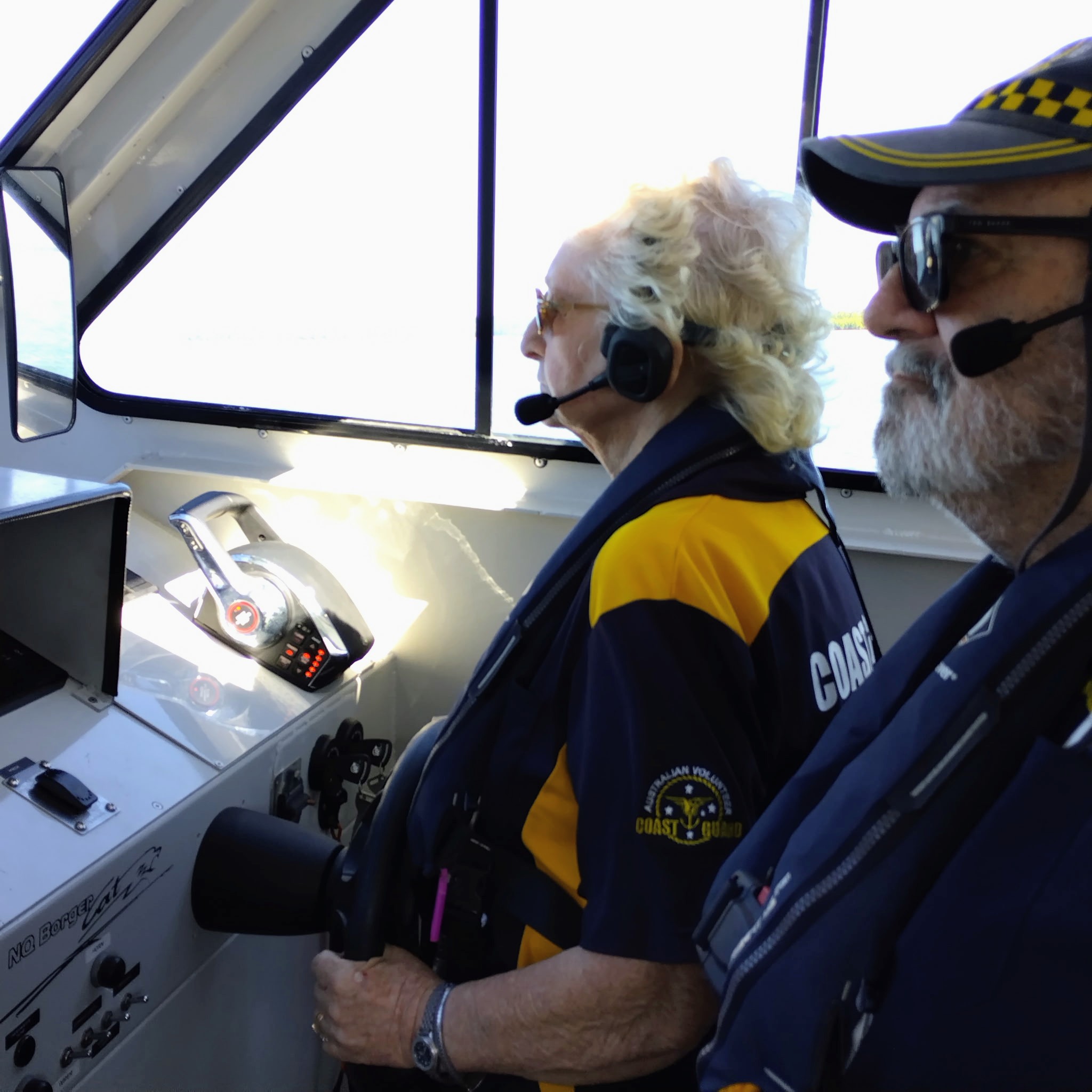
The Lucinda Coast Guard QF-14 has welcomed new communication headsets for its volunteers, thanks to a grant from the Port of Townsville Authority. Lucinda Coast Guard President Steve Whipps said the headsets would make communication between crew members significantly clearer while the vessel was underway. “These headsets provide clear and audible speech despite the noise from our twin 300 HP motors and the sound of the waves striking the vessel at speed,” President Whipps said. He said the improved communication would help ensure important instructions were heard clearly by all crew members while out on missions. “This ability greatly improves communication between the Skipper, the Navigator, the Helmsperson and the deck crew, preventing missed instructions and misheard directions,” he said. “Our thanks go to the Port of Townsville Authority for their great contribution to our on-board safety,” he said. Caption: Helmsperson Coral and Skipper Graham at the helm. Photo supplied: Steve Whipps Crew member Jeanette with the new headset on.
Read the full story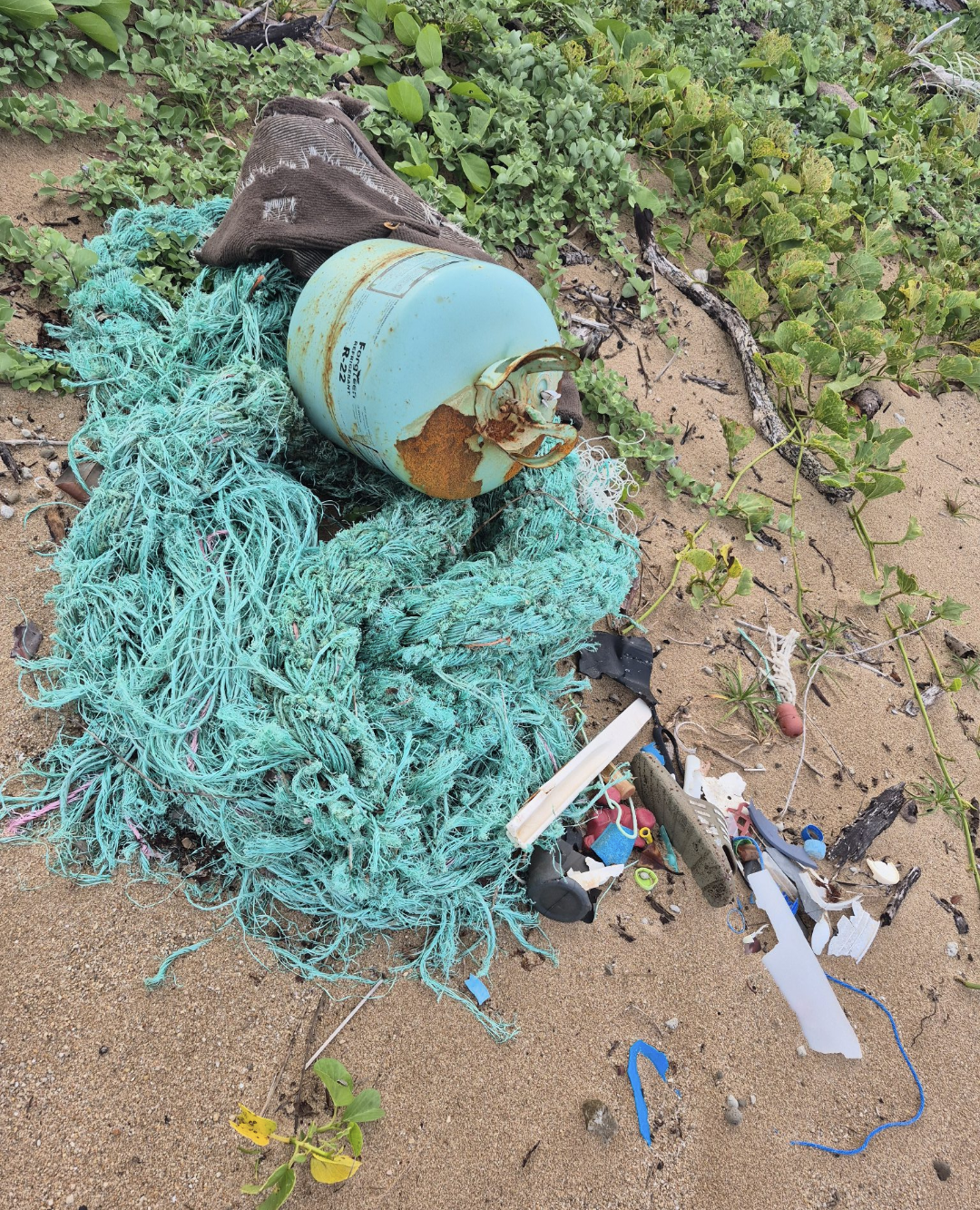
Forrest Beach locals are doing their bit to keep the popular coastline clean, with a recent online conversation highlighting how many beachcombers are now regularly picking up plastic and other rubbish washed in by the tide. For some, it has become part of their regular beach walk, with one local saying they often fill a pocket with pieces of plastic they find along the sand. “I quite often go for the little, tiny pieces as they are easily swallowed by our marine life, but also pick up the chunky bits,” one resident commented. Others shared their own experiences of helping to keep Forrest Beach clean, with another resident remembering the old saying, “three for the sea”, an initiative asking beachgoers to collect and dispose of at least three items of trash whenever they leave the shore. “These days it is more like 30,” the resident said. The problem is not limited to the obvious rubbish. Though larger pieces pose a danger through choking, entanglement and restricting movement, smaller plastics can build up in animals over time. Locals have pointed to tiny fragments, some no bigger than grains of salt, which can be easily swallowed by marine wildlife. One local said the ongoing challenge of plastic washed in with the tide makes beach clean-up a “never-ending job”. Forrest Beach residents are encouraging others to pick up what they can when they are at the beach or along any waterway, whether it is one piece or a pocketful, and help keep the coastline beautiful for both the community and its wildlife. Caption: Rubbish and plastics can range from the tinies coil of nylon fishing line to the metres of thick marine rope. This pile of rubbish was found on Forrest Beach by residents. Photo credit: Victoria Velton
Read the full storyOn Friday, 19th September 1879, the first annual meeting of the Herbert River Jockey Club (Kennedy District) was held.
Read the full story
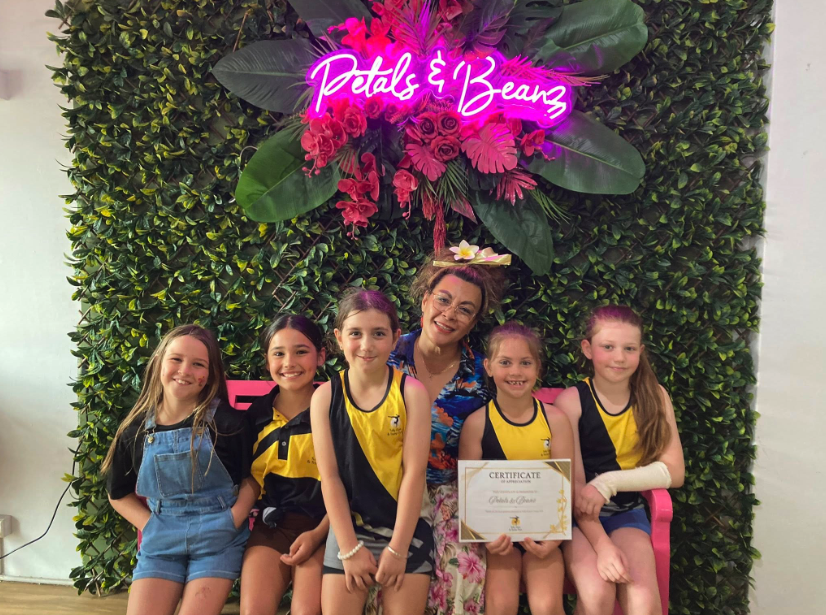
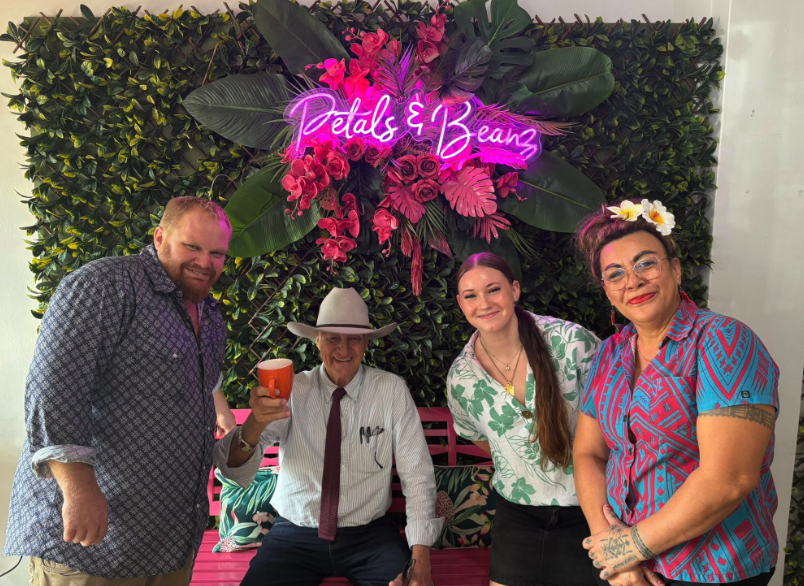
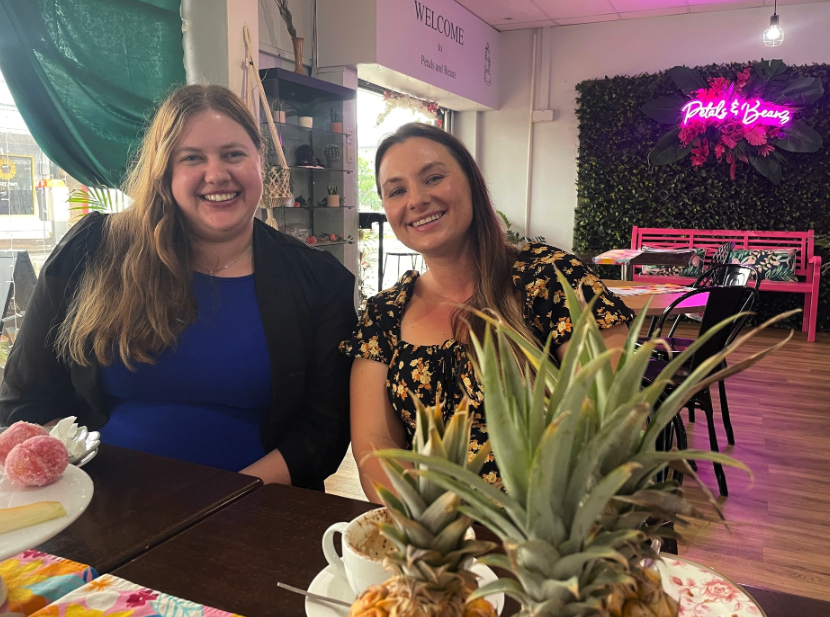
Petal and Beanz is the place to be and a popular stop for all ages. Visitors can’t resist snapping a photo under the café’s beautiful sign. From politicians and local business networkers to children’s gymnastics teams and even the Hinchinbrook Life newspaper’s own Sherie Hansler-Adams, everyone enjoys their time at Petal and Beanz.
With great coffee, cakes as beautiful as their floral arrangements, and fresh sandwiches and smoothies served with a smile, the team at Petal and Beanz are among the happiest around. So next time you're driving through Tully or if you're a business looking for your next networking location, pop into Petal and Beanz!


Oh Wow! Those are the two most common words guests say as they arrive at Vista Hinchinbrook.
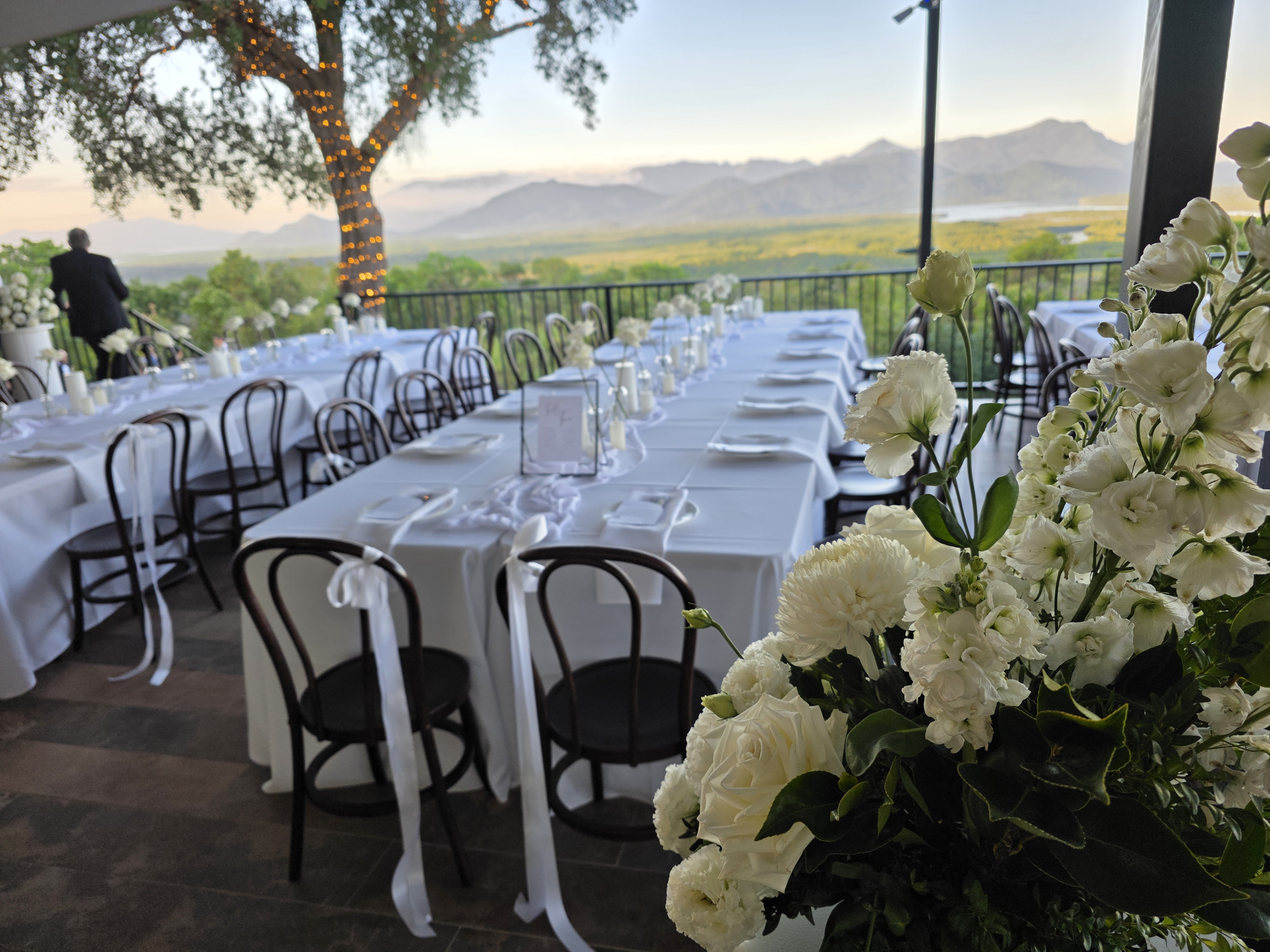
After the steep drive through the rainforest, stroll along our side deck and past the beautiful pond. Then, as you step onto the front deck, the Hinchinbrook Channel bursts into view. Glory in the unique panorama of this World Heritage listed area adjoining Girringun National Park.
This is your breakfast arena, or perhaps you have come for one of our famed High Teas. Here, the sweeping outlook of one of the best views in North Queensland, pairs perfectly with homemade savouries, decadent cakes, and locally sourced tea and coffee. There is no rush to leave. Take your time, relax with friends, and enjoy a beer or wine from our bar.
Of course, you might be arriving for a night’s stay in one of our four luxury units. Perhaps a cabin tucked back among the rainforest, designed for comfort and seclusion. Or for a romantic escape, you may have reserved the Mahogany Cabin. Perched towards the front of the property, this stunningly designed apartment offers all you need, from the king bed where you will wake to uninterrupted panoramic views, to the bathroom… well, we will let you discover that for yourself.
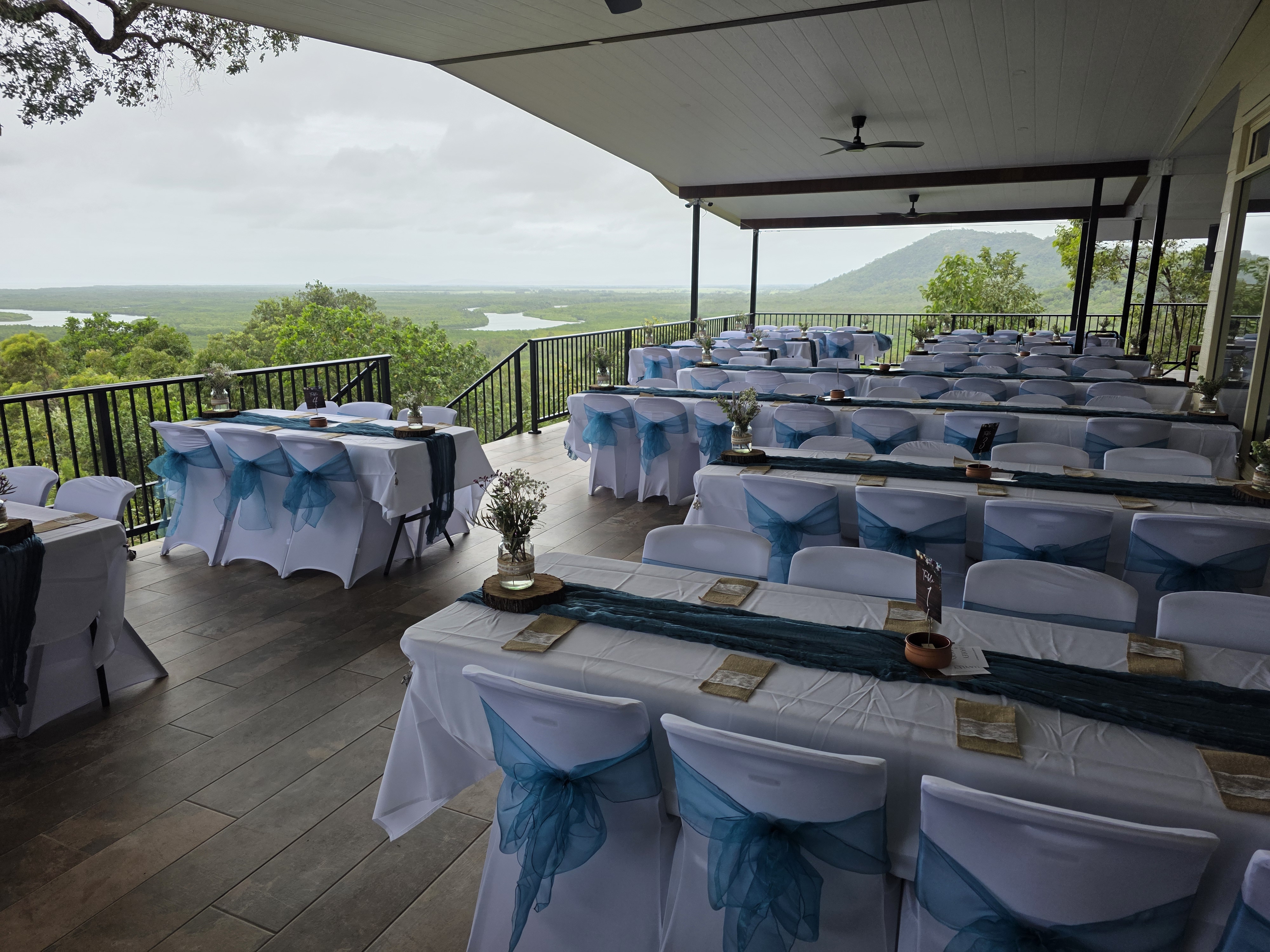
Maybe you are one of the growing number of guests here for a special event. Whether private or corporate, our large deck means we can tailor the space to fit your needs.
And then, those words again: Oh Wow! You have come for a wedding. With this backdrop, your day will be truly unforgettable.
Do not miss the chance to make your special event extraordinary. Contact us, or better yet, pop up to see us in person. We would love to meet you. Vista are proud to have been nominated in the People’s Choice Awards Townsville Enterprise short stay category, along with a few other Hinchinbrook area businesses. It would be great to get behind these businesses with your vote, scan the QR code!
QR code: https://www.townsvillenorthqueensland.com.au/north-queensland-s-tourism-and-events-awards/


Queensland Mental Health Week has just wrapped up (October 4–12), with World Mental Health Day on October 10. Across much of the world, October marks Mental Health Awareness Month, a timely reminder that wellbeing isn’t something we think about once a year. It’s something we grow every day.
This year’s theme, Connect for Mental Health, couldn’t feel more relevant. There’s tension in the world: between people and power, families, and communities. Right now, many people are experiencing disconnection, from themselves, from others, from country and culture, and as we get busier, even from the day-to-day parts of life that help us feel like ourselves.
But connection doesn’t need to be grand or complicated. A small gesture, done consistently, matters more than we realise.
That connection can start with self: slowing down, listening to your body, checking in with how you’re really going. Reconnecting with what brings you energy or joy.
It continues with others: making space for conversations that go beyond “I’m fine.” Checking in with some. Sending the message. Taking the walk. Opening the door.
Then there’s community, those moments where we feel part of something. A nod across the street. A shared meal. A story told at the right time. A feeling that you belong, somewhere to be and people to see.
And finally, there’s nature, the track, the garden, the breeze off the water, the way the light filters through the cane. Nature grounds us. It reminds us we’re part of something bigger.
At Tumbleweed Therapies, we support people to reconnect with all of these, with self, others, community and place. Whether you're navigating stress, identity, grief, or change, it’s okay to reach out.
If at any point during the week or year, you’ve wondered whether it’s time to talk, consider this your sign. When you're ready, reach out to me or Lucia, our local counsellor. After hours, call 1300 MH CALL or dial 000 in an emergency.
Mental health isn’t something we fix. It’s something we take care of consistently. Connection is part of that and starts with a conversation. Let’s keep the momentum going: reach out to us at intake@tumbleweedtherapies.com or call 07 4463 8679. You can also visit our website at www.tumbleweedtherapies.com.au
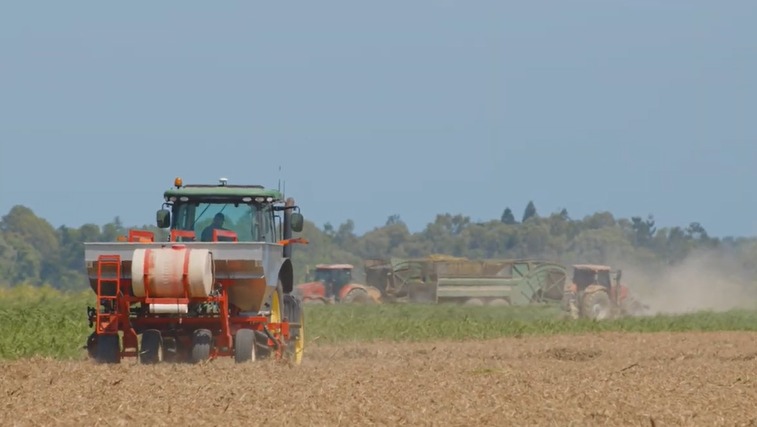
Canegrowers Herbert River will host the CANEGROWERS Farm Performance and Productivity Policy Committee in Ingham on Tuesday, 14 October and Wednesday, 15 October, bringing together growers and industry leaders from across Queensland.
The two-day meeting will focus on key issues that directly impact growers inside the farm gate, including workforce strategies, harvesting risk, transport logistics, research and development priorities, and workplace health and safety. The committee plays a vital role in shaping policy that supports the long-term sustainability, productivity, and safety of Queensland’s cane farming industry.
Chairman of Canegrowers Herbert River, Steven Marbelli, who also chairs the committee, said it was an honour to host the event in the Herbert region.
“It’s exciting to welcome growers and policy representatives from across the state to Ingham,” Mr Marbelli said. “This committee is committed to understanding and resolving the issues that affect our industry and our members every day. Hosting the committee in Ingham gives us a valuable opportunity to showcase our region and highlight the shared goals and challenges that unite growers across Queensland.”
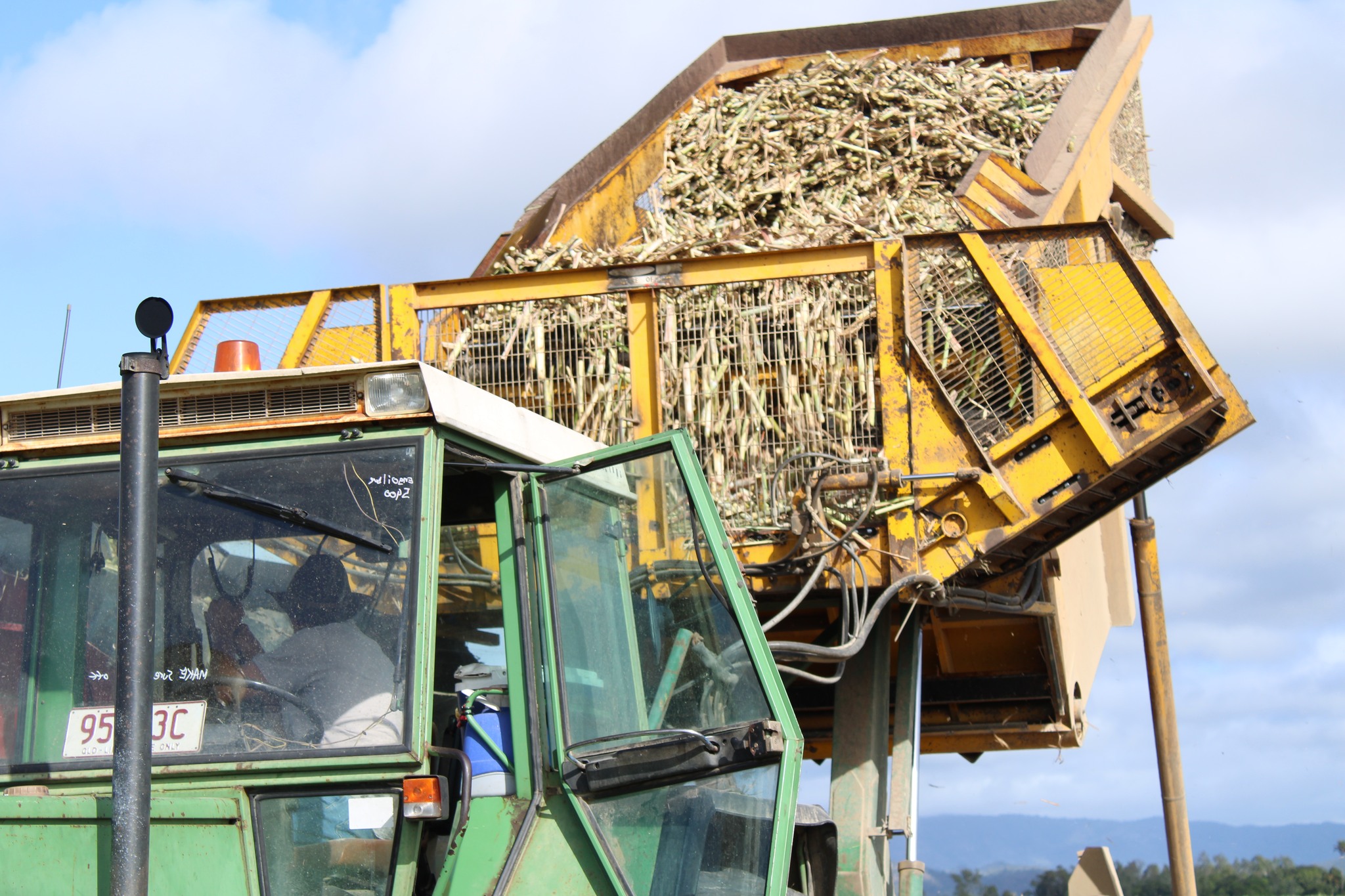
Day one will feature a field trip and harvesting demonstration, providing key stakeholders, including representatives from the National Heavy Vehicle Regulator (NHVR), the Department of Transport and Main Roads (TMR), and Queensland Police with firsthand insight into the challenges faced during the cane harvesting process. The demonstration aims to improve understanding and collaboration on transport and safety matters affecting growers and the harvesting sector.
Safety will also be a key discussion point, with the committee set to meet with the Farm Safe Australia CEO and Chairperson to discuss strategies that help growers and workers remain free from harm in their workplaces.
The committee will also hear from Dr Garry Rosewarne, Sugar Research Australia’s General Manager for Variety Development, who will provide updates on varieties and their release processes.
The two-day program reflects CANEGROWERS’ strong commitment to advocacy, collaboration, and continual improvement, ensuring Queensland cane growers remain at the forefront of sustainable and productive farming.
.JPG)
Grab your calendar — digital or paper — and mark down Friday, 14 November 2025, for the 47th Hinchinbrook Art Awards, one of North Queensland’s most anticipated cultural events.
Artists from across the nation are invited to take part in this vibrant celebration of creativity and innovation, showcasing a diverse range of artistic mediums — from painting and sculpture to contemporary mixed media.
The Awards, to be held at the TYTO Regional Art Gallery, offer a dynamic platform for both emerging and established artists to exhibit their work, connect with audiences, and contribute to the rich artistic landscape of the region.
This year, I am honoured to join respected artists Alison McDonald and Fran Nason on the judging panel.
Together, we will have the privilege of viewing and assessing the many incredible works submitted, each one a reflection of imagination, skill and passion.
The Awards are proudly supported by a strong network of local sponsors and this is a true testament to the commitment our community continues to show towards fostering the arts and cultural growth.
The highlight of the event will be Opening Night on Friday 14 November 2025 an evening not to be missed. Guests will be the first to see the stunning artworks on display, enjoy the lively atmosphere, and celebrate the achievements of artists from near and far. With entertainment, refreshments, and the buzz of creativity in the air, Opening Night promises to be a memorable community celebration of art and culture for our shire.
The 47th Hinchinbrook Art Awards have become a long-standing tradition and a much-loved highlight on the shire’s arts calendar. Importantly, they provide a pathway for young and emerging artists to gain recognition, build confidence, and share their talents with a wider audience. Supporting these artists not only strengthens our local creative community but also ensures the next generation of cultural voices continues to grow and thrive.
Council looks forward to welcoming you on Opening Night as we celebrate the talent, passion, and imagination that make the Hinchinbrook Art Awards so special. It’s a true celebration of creativity at TYTO Art Gallery and beyond.
And while you’re marking your calendars, don’t forget the Maraka Festival events happening over the weekends of 18 October 2025 and 25 October 2025 — another wonderful local celebration that’s not to be missed on our shire’s calendar.
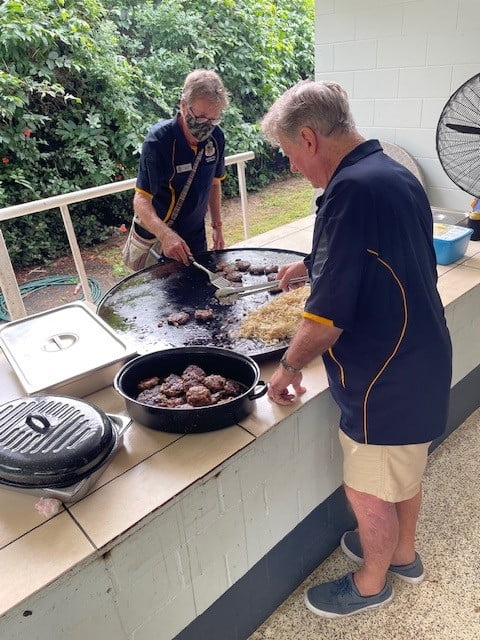
There’s something wonderfully down-to-earth about a Sunday lunch where friends and family gather, and the aroma of the grill draws you in. At Cardwell RSL, the weekly midday BBQ lunch is exactly that, a warm, community soundtrack to the weekend. For just $10, you get a hearty feed, and for dessert lovers, a sweet treat is available for $5.
What makes it more than just a meal is the spirit behind it. Non-members are more than welcome, as it’s a chance to catch up, reconnect, and simply enjoy good company. The club sweetens the pot with five roasted chook raffles and a $100 board prize, giving that sense of fun and anticipation. Meanwhile, Cardwell RSL plays its part in stewardship too, encouraging guests to bring along their 10 cent recycling empties, with the lunch proceeds flowing to support Cardwell community projects.
Set on Roma Street, Cardwell, this Sunday ritual embodies the RSL’s roots, not just a veterans’ organisation, but a local gathering place woven into town life. The grill fires up each week, so get up to Cardwell and enjoy a truly connected and delicious Sunday. The bar opens at 10am and meals are served about 12:30pm.
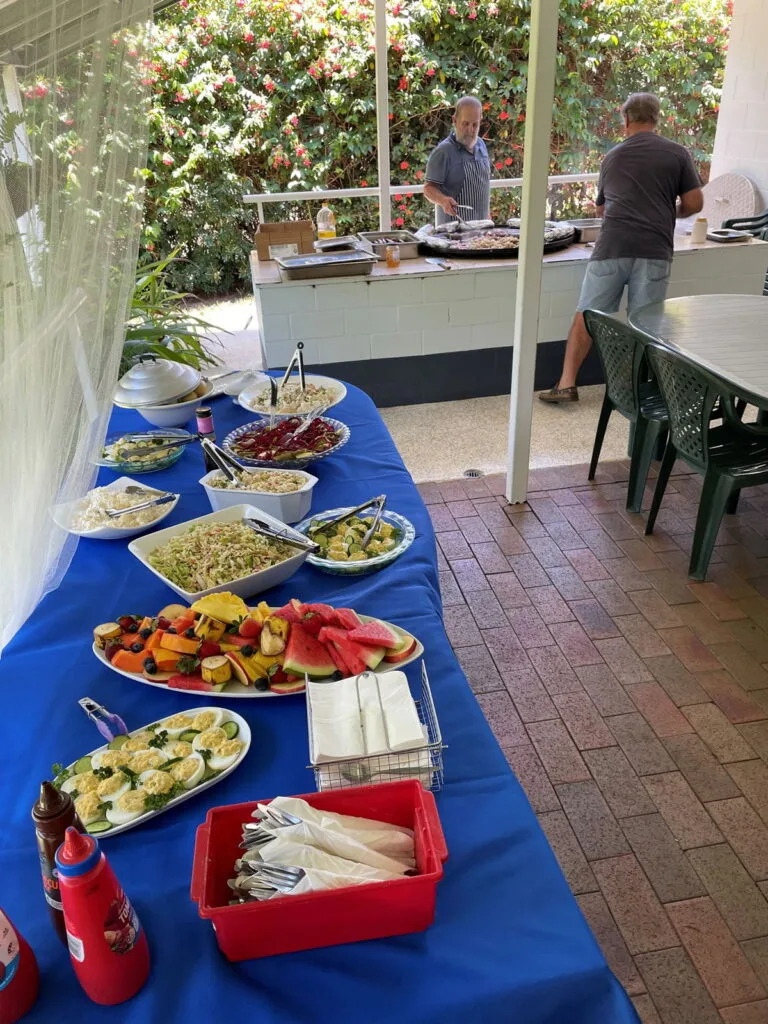

One of the region’s most treasured events will soon ignite the grounds of the beloved Herbert River Jockey Club as the renowned Hinchinbrook Cup returns for another year!
Set to be held on Saturday, the 15th of November, the extravaganza has well and truly earned the prestigious title of being Ingham’s biggest and best horse racing event across the annual calendar.
Although entry tickets sales are yet to go live on the Herbert River Jockey Club’s website, the teaser of what’s to be expected from the family event has already attracted waves of attention and excitement. Gates will be open from 11am sharp until late to showcase a plethora of local horse races accompanied by on-site local and southern bookmakers, a groovy DJ and live band, a bar and canteen, children’s entertainment, and of course, the ever-popular Fashions on the Field.
Children's tickets can only be purchased at the gate on race day, they will not be available to purchase online.
Fashions on the Field continues to be the most highly anticipated feature of the Herbert River Jockey Club’s events, and with several spectacular Judging Categories, it’s clear why. With Best Dressed Couple, Contemporary Lady of the Track, Best Dressed Man of the Track, and Spotter’s Choice among the event’s Judging Categories, race goers have the opportunity to walk the runway and leave a star. A list of the specific criteria expected in each of the Judging Categories is available online at hrjc.com.au/fashions-on-the-field.
Keep your eyes on the Herbert River Jockey Club’s social media pages to be the first to know when entry tickets go on sale, and mark you calendars for a memorable weekend!
WHAT: Herbert River Jockey Club's Hinchinbrook Cup
WHEN: Saturday, 15th of November, from 11am
WHERE: Herbert River Jockey Club, 69 Marina Parade, Ingham

Wilmar Sugar is continuing to make strong progress with the 2025 crushing season, supported by solid factory performance and a steady run of fine weather across its milling regions.
As of 8am on the 30th of September, Wilmar’s eight factories had processed close to 10.38 million tonnes of sugarcane, representing 71 per cent of the total crop.
Following its second reforecast last week, the company has revised the total crop down to 14.52 million tonnes, a decrease of about 110,000 tonnes from the August estimate.
Despite the revision, crushing operations remain on track, with the Herbert, Burdekin and Proserpine regions expected to wrap up around November, and Plane Creek projected to finish in early December.
Herbert Region
The Herbert region’s crop estimate has been revised upward from 3.55 million to 3.7 million tonnes, an increase of 150,000 tonnes.
Dry and cool weather has helped CCS (Commercial Cane Sugar) levels climb above 13 units, which is a strong result considering the impact of the February flood event.
The field sector has been maintaining effective communication with operations teams, ensuring a consistent cane supply to the factories.
Burdekin Region
The Burdekin crop has been revised down from 7.97 million to 7.85 million tonnes, a reduction of about 120,000 tonnes.
Factory performance across all sites has been strong, with only occasional stoppages typical for this stage of the season.
Dry conditions are impacting the remaining crop, leading to a slight reduction in tonnage but contributing to higher CCS levels.
Proserpine Region
The Proserpine crop estimate has been revised down from 1.58 million to 1.53 million tonnes, a decrease of 50,000 tonnes.
CCS levels remain high, tracking almost half a unit above budget for the week to date.
However, ongoing dry weather has caused a decline in average crop yields since the start of September.
Plane Creek Region
The Plane Creek crop has been revised down from 1.53 million to 1.44 million tonnes, a reduction of around 90,000 tonnes.
Crushing rates have improved, supported by good bin weights from the growing and harvesting sectors.
Seasonal CCS levels continue to climb under the prolonged dry conditions.
Wilmar Sugar’s regional teams continue to work closely with growers and harvesting contractors to maintain efficient operations as the 2025 season progresses toward completion.

Cantatore Pharmacy is much more than your everyday chemist. While it’s known for friendly service and reliable advice, it also offers a range of health, beauty, and lifestyle products that make it a true community hub.
One of the pharmacy’s standout features is its private consultation room, providing a comfortable space where customers can speak directly with a pharmacist about minor ailments or general health concerns. Extending beyond the usual prescription needs, with consultations available for travel advice, vaccinations, hormonal contraception, and basic health checks. The team takes the time to listen, helping you find practical solutions and ensuring you leave with confidence and peace of mind.
Cantatore Pharmacy also caters to those needing assistance with mobility or recovery. You can hire or purchase essential health and mobility aids, such as walkers, crutches, and other support equipment designed to make daily life easier and safer.

For those who enjoy a touch of luxury, the pharmacy’s beauty section is stocked with a delightful range of perfumes, skincare, and makeup, including trusted Australian brands like Nude by Nature and MCo Beauty. Shoppers looking for comfort can browse their selection of Scholl and Homyped footwear for men and women, known for their superior support and style.
Cantatore Pharmacy also hosts a busy lotto corner where locals can try their luck, pick up newspapers, or browse the latest magazines. Plus, a convenient photo printing machine is now available in store!
With the festive season approaching, the pharmacy’s gift range is well worth exploring. From beautifully packaged candles and fragrance diffusers to thoughtful gift sets, with free gift wrapping available too.

Cantatore Pharmacy also offers home deliveries, ensuring customers can access their medications and essentials with ease.
Now located at 86 Cartwright Street, Cantatore Pharmacy marks an exciting new chapter for the local favourite, offering all the essentials you expect, from first aid supplies and personal care to vitamins. Whether you’re seeking practical health solutions, a thoughtful gift, or simply a friendly face behind the counter, Cantatore Pharmacy has it all under one roof.
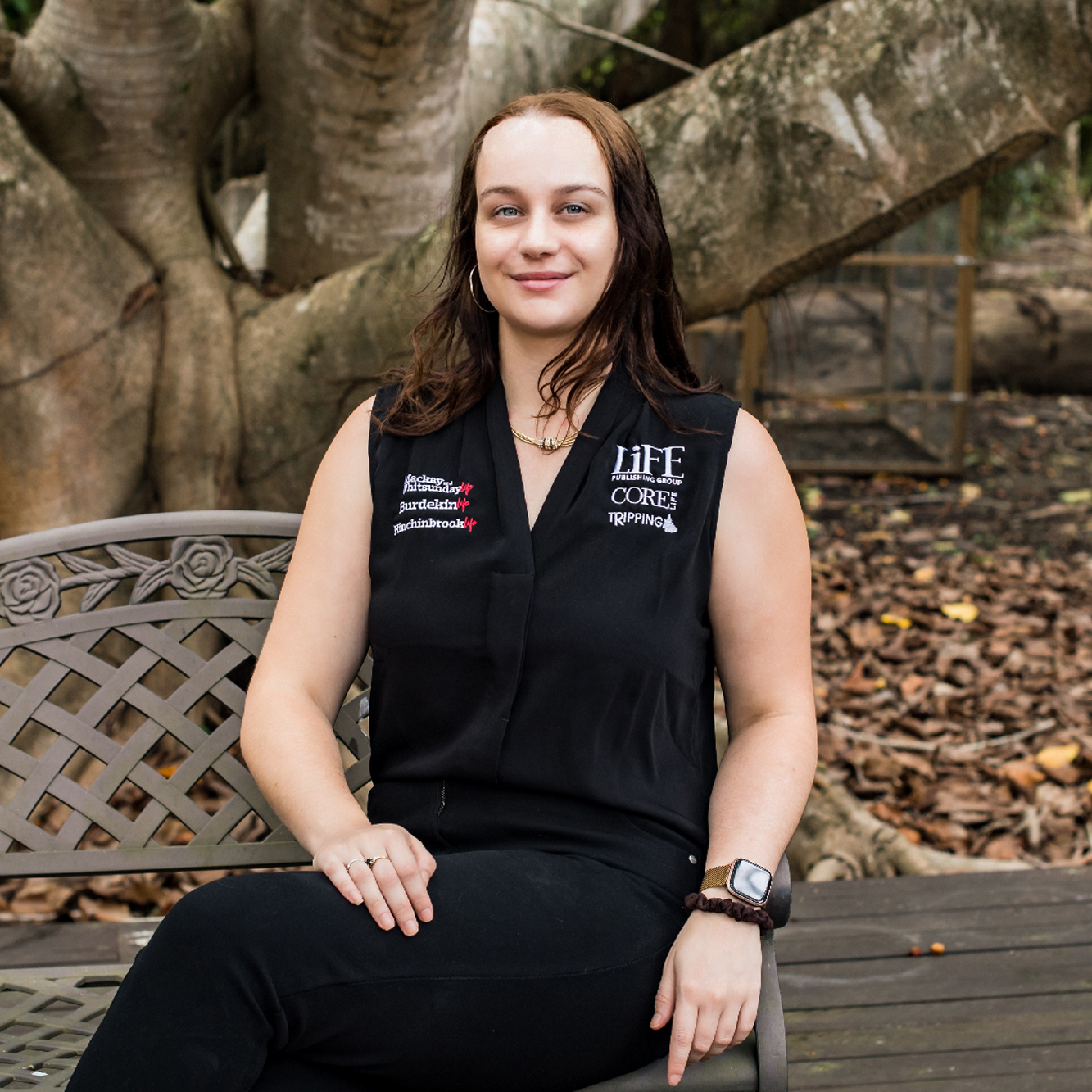
Hiya Hinchinbrookshire!
This week, I’ve been focusing on a lot of 'M's. Maraka is just around the corner, and if you don’t already know — and if the front cover hasn’t given it away — I’m in the running for Maraka Queen! It’s truly exciting, as I’ve never done anything like this before. But with my determination to make the most of this opportunity the Lion’s Club has opened up to me, you can bet I will go all in, one hundred per cent.
Another 'M' this week was Mental Health. As someone who has experienced the ups and downs that mental health can bring to both body and mind, it was wonderful to take part in Selectability’s Big Breakfast and see their great example of slowing down and connecting at the park. Sometimes you have to take those small moments for yourself, or risk overwhelming yourself and burning out.
The last 'M' on my list was my mother. On Saturday, we took a little road trip up to Cardwell to see the Plant Expo, then continued to Tully for a spot of shopping. We enjoyed ice creams on the way home and spent the time chatting about everything and anything. I couldn’t ask for a better day out with her, and I hope to do another one soon.
Fun Fact: The letter M is the thirteenth letter of the Latin alphabet and is also used as a Roman numeral to denote the number 1000

The Halifax SES Unit has received a significant boost, with a new canopy and essential equipment funded through the Halifax Emergency Liaison Partnership (H.E.L.P.) and a new rescue vehicle provided by the Queensland Government’s SES Support Grant program.
H.E.L.P. is a not-for-profit organisation formed to support emergency services across the Lower Herbert region, including Halifax, Lucinda, Taylors Beach and Macknade. The group raises funds through regular community raffles and events, such as the popular meat tray raffles held at the Lucinda Pub every second month. All proceeds go directly toward purchasing vital equipment for local emergency services, helping them respond effectively to community needs.
SES Local Controller Dan Cordner from the Halifax SES said the support from H.E.L.P. had made a real difference to their growing unit. “H.E.L.P. came in to provide the canopy for our new vehicle, as well as two large battery fans, a charging bank and a vacuum cleaner,” he explained. “It’s all very useful equipment for our volunteers, especially as Halifax is still a relatively new branch of the SES. We’re building up our portfolio of gear and trying to get back to where we were many years ago.”

Greg Sexton, a member of H.E.L.P. and the SES, added that the local fundraising efforts were a perfect example of how small communities come together in times of need. “Supporting the meat tray raffle at the Lucinda Pub is a big help,” Greg said. “The pub provides the prizes and the space, and we just turn up to sell the tickets. The funds go straight to H.E.L.P., which then supports groups like the SES, among others.”
With natural disasters a regular challenge in the region, the new vehicle and equipment will help the Halifax SES continue its vital work in keeping the Lower Herbert community safe.
If you’re looking for a practical way to help your community, consider joining the SES. New members are always welcome in the Lower Herbert and Ingham areas. Visit www.ses.qld.gov.au to learn more.
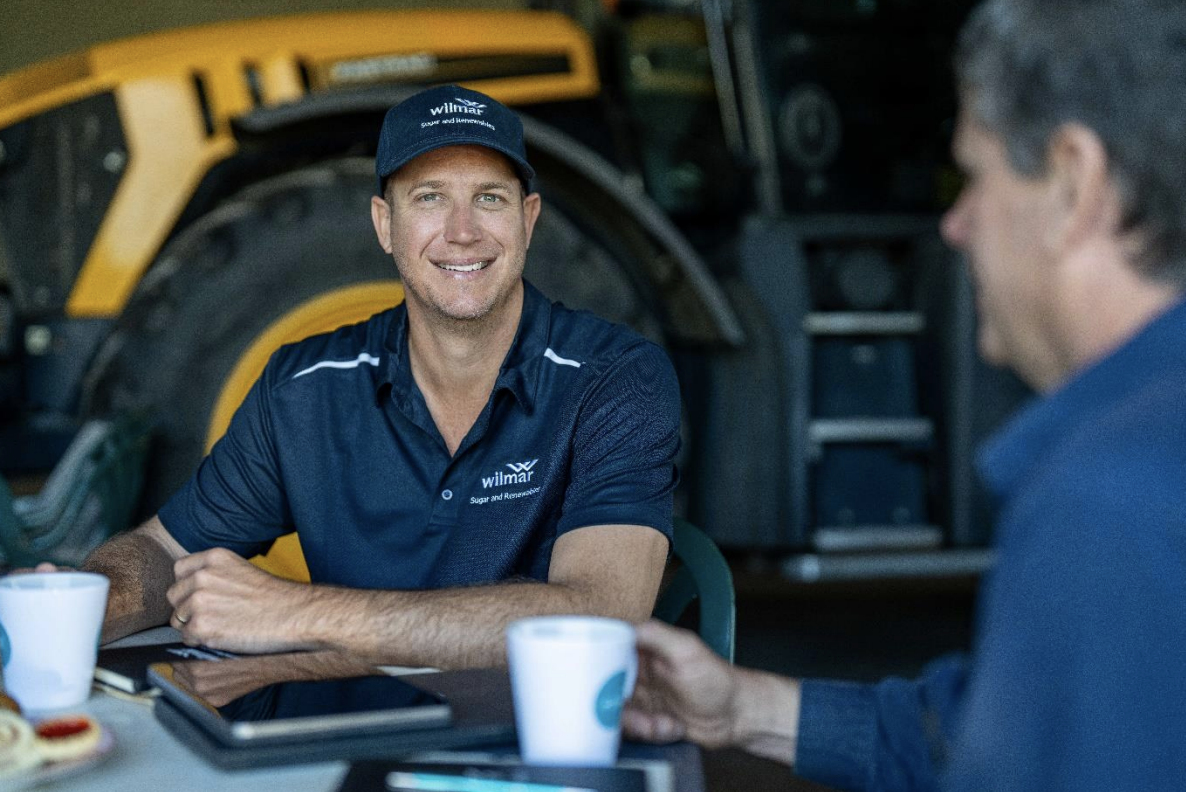
I’m excited to introduce myself as Wilmar’s new Relationship Manager for the Herbert region
working alongside Franco Zaini. Having grown up in North Queensland and worked across the
agricultural sector, I understand how important it is for cane growers to have strong local
connections and practical support.
In this role, I’ll be working closely with Herbert growers to provide one-on-one support, helping you make informed decisions about your sugar marketing and pricing. My focus is on building lasting relationships and ensuring you have the tools and information you need to get the most value from your GEI Sugar.
It’s a great time to be joining the Wilmar team, with the launch of our Wilmar Grower
Advantage program. This new initiative recognises the important partnership we have with
growers and provides access to a range of exclusive offers and discounts through trusted
rural suppliers. It’s designed to help reduce on-farm costs and deliver extra value to your
business — just one more reason to market your GEI sugar with Wilmar.
If you would like to take advantage of discounted pricing and access to Elder’s professional
support services, please reach out to me or Franco to get you connected with the Elders
team.
As we look ahead to next season, I’d also like to remind growers that marketing nominations for the 2026 season close on 31 October 2025.
Choosing Wilmar Grower Marketing means partnering with a team that understands your
business, offers flexible pricing options, and continues to invest in programs that deliver real benefits to growers.
I look forward to meeting more of you in the coming weeks and learning about your goals for
the seasons ahead. Whether you’d like to chat about pricing, the new Grower Advantage
program, or your nomination for next season, please don’t hesitate to get in touch.
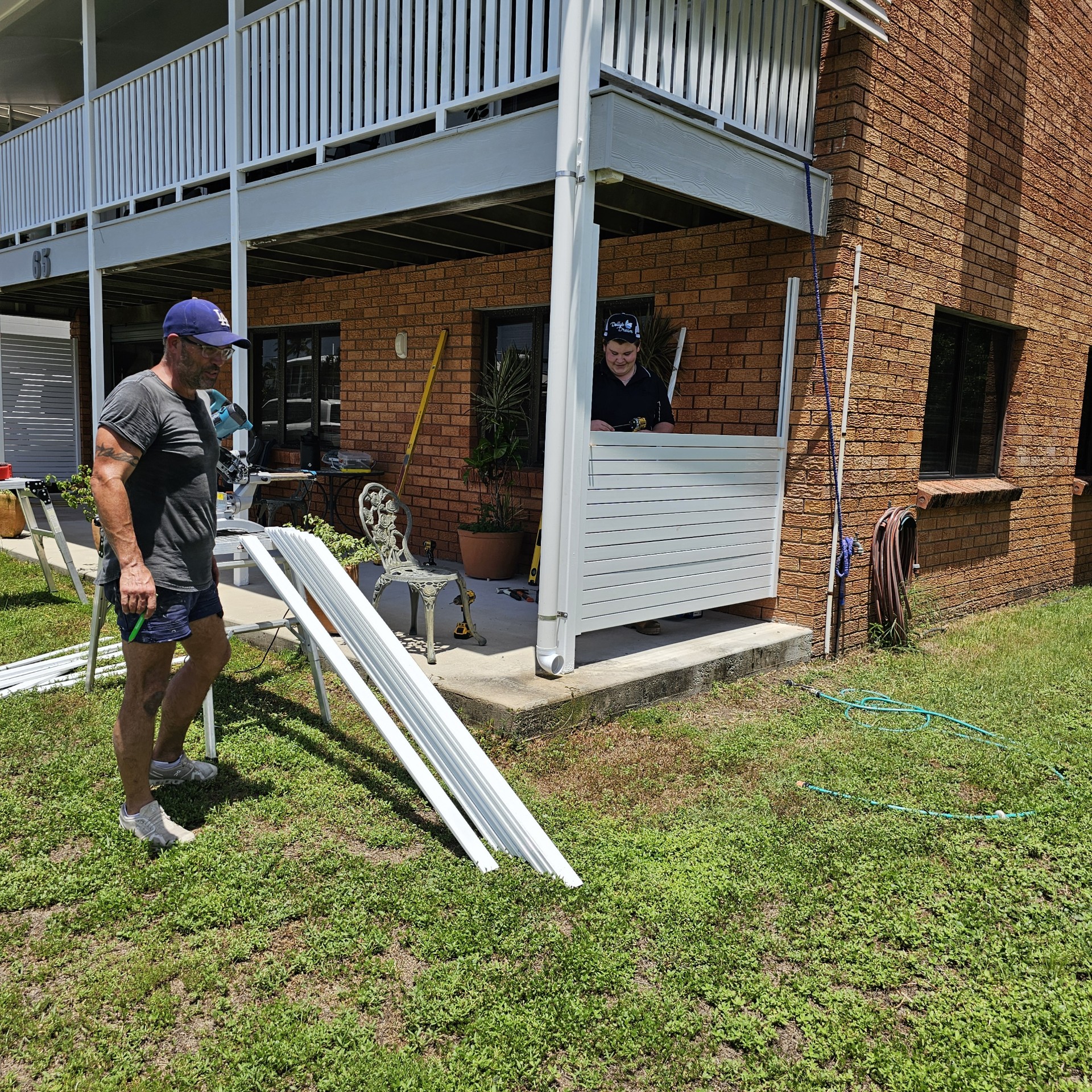
Venables Glass and Home Solutions celebrates its second year in business, an impressive milestone for a locally owned company that has quickly earned a reputation for reliability, craftsmanship, and genuine community spirit.

Founded by experienced glazier Joey Venables, the business combines over three decades of trade expertise with a passion for serving the Ingham district. After working in larger centres like Geelong & Melbourne, Joey returned home during the pandemic and established Venables Glass and Home Solutions with a clear goal: to provide top-quality products and services while keeping business local.
Now entering its third year, the company continues to grow steadily. What began as a small team of two has expanded to Joey, two tradesmen and the office manager Hannah, with two new staff joining in the coming weeks. This growth reflects a growing demand for their services across the Hinchinbrook region, stretching north to Tully and south to Townsville.
Venables Glass and Home Solutions provides a comprehensive range of glazing, aluminium, and carpentry services. The team handles everything from minor home maintenance and repairs to large-scale window and door installations. With a full-time carpenter now on board, the business can assist residents with essential maintenance work, particularly those still addressing damage from past flooding events.
As North Queensland approaches storm season, the company’s expertise in preventative measures is more valuable than ever. Venables Glass and Home Solutions offers storm-damage repairs, window protection installations, and Invisi-Gard cyclone-rated security screens that meet government resilience program standards. These high-quality solutions not only enhance safety but can also be subsidised through available funding programs.
All work is custom-measured and fitted by the team, ensuring each job meets exact specifications. Many materials are manufactured in-house, while other specialised components are sourced from Townsville suppliers. This mix allows the business to support local industry while maintaining control over quality and turnaround times.

The company also provides free measuring and quoting services, reinforcing its commitment to transparent and accessible customer care. Their clients include homeowners, builders, and local tradespeople who rely on Venables Glass and Home Solutions for reliable products and service.
Beyond their trade work, the team takes pride in contributing to the local economy and supporting community events. Joey says one of the most rewarding parts of running the business is working in the town he grew up in, surrounded by family and familiar faces.
As Venables Glass and Home Solutions enters its third year, the future looks bright. With a growing team, strong community ties, and a commitment to quality, the business continues to set a solid example of local success built on integrity and genuine connection.
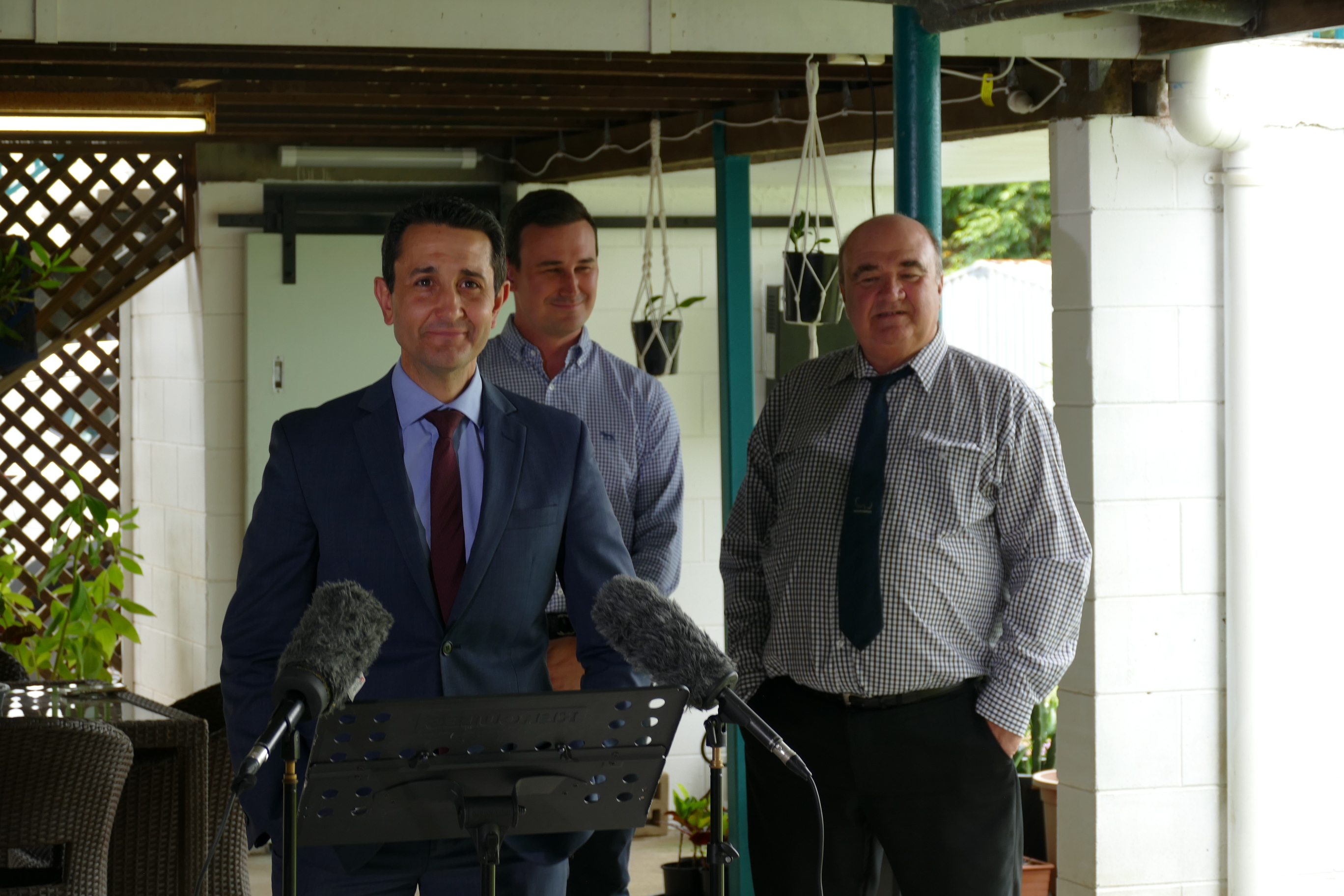
Last week, Premier of Queensland David Crisafulli visited Ingham to see the impact of the Stronger Homes Grant, meeting with one of the successful households affected by February’s historic floods.
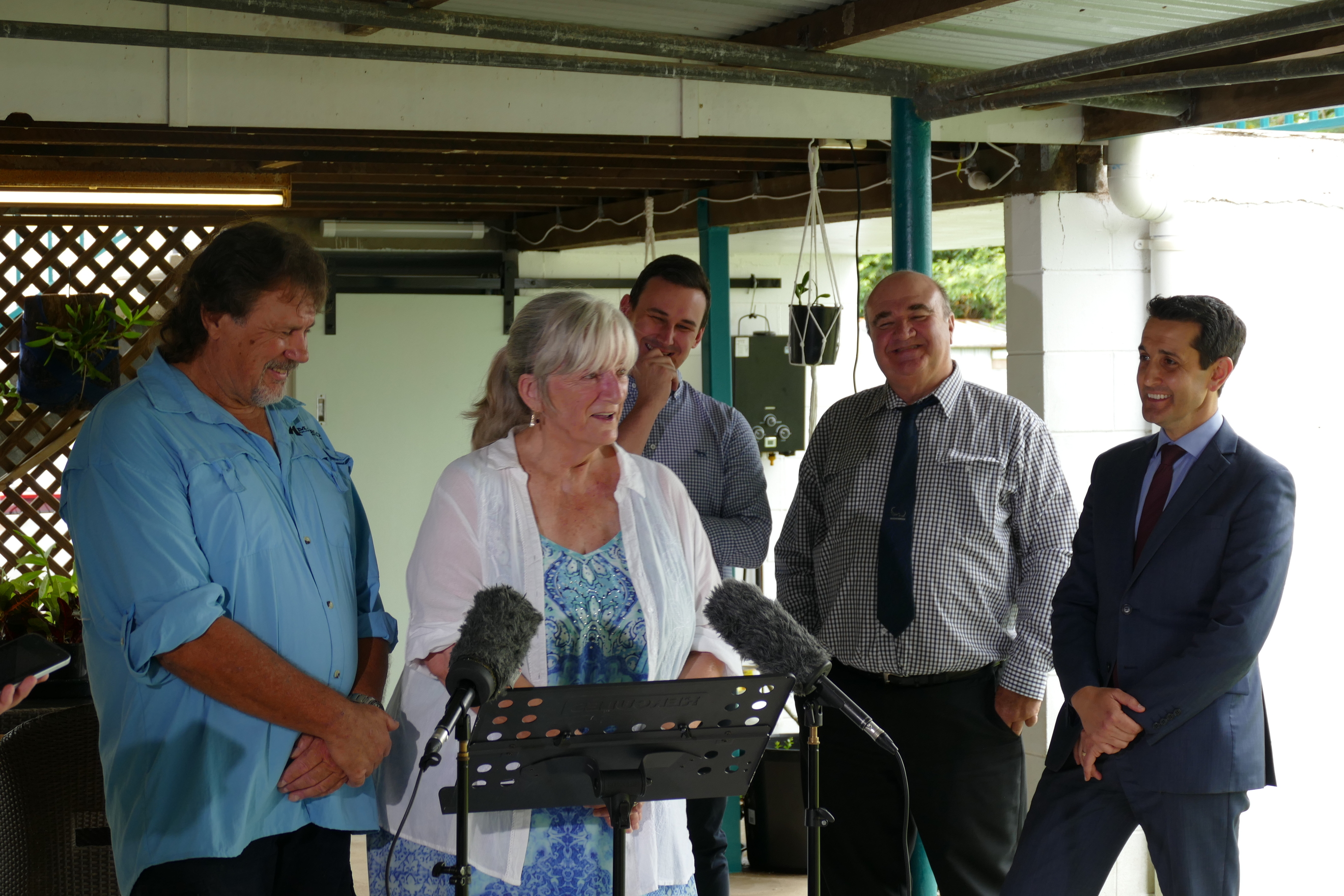
Premier Crisafulli said. “We said when the flood came through this town that we’d be here for the long haul, and for the long haul we are. I’m determined to make sure that this community knows it’s not being forgotten in the recovery from what was really historic floods.”
The programme has already been taken up by 44 local residents, with over half of the applications completed. “It’s about building resilience and allowing people to handle the next flood,” the Premier added. “Everything we’re doing is about making sure we can make our communities more resilient. By doing that work, it reduces the impact next time around, which means lower cost, less heartache, and getting people back on their feet.”
Mayor of Hinchinbrook, Raymon Jayo, highlighted the practical benefits of the reduced pressure local emergency agencies will face if more homes take on the Stronger Homes Grant: "One home affected can impact 10 to 15 others, so the Stronger Homes programme abates all that.”
Yvonne and Neville, recipients of the grant, described their experience. “During the flood, we lost our hot water service, and it was devastating,” Yvonne said. “After the floods had died back, the Stronger Homes Grant was released. We applied, and it was a very simple process. I was overjoyed to hear back so quickly that we’d been granted $10,000. We were able to replace the hot water service and install solar. The whole process went so smoothly and the staff were prompt and very helpful. Before we knew it, we had hot water again. It was brilliant.”
Minister for Housing and Public Works Sam O’Connor added, “This is one of dozens of households in this community alone who have benefited from the Stronger Homes Grant. It’s fantastic to hear the benefits for their home and future resilience. Applications are still open until the end of the year, and we want to get as many households that were impacted with inundation to apply as possible.”

The visit highlighted how the Stronger Homes Grant is helping Hinchinbrook residents rebuild safely, reduce future risk, and regain peace of mind after devastating floods.

Hinchinbrook MP and Katter’s Australian Party (KAP) Deputy Leader, Nick Dametto, has welcomed the announcement that ‘Bush Sentencing’ will be delivered as Circuit Breaker Sentencing by the Crisafulli Government.
Aligning with KAP policy, the State Government is set to create a court-ordered alternative to youth detention and is now seeking interested organisations to deliver this program.
The Government intends to operate Circuit Breaker Sentencing across two locations in North and South-East Queensland, accommodating up to 60 youth offenders for three to six months. The program’s focus will be on ‘structure, discipline, education, and rehabilitation.’ It is expected to commence in 2026.
Mr Dametto said he had been calling for Bush Sentencing to be implemented in Queensland since 2017, to deal with the scourge of youth crime and to act as a strong deterrent to offending by rehabilitating youth offenders through discipline, hard work and rural training.
“During the 2024 election campaign, the LNP picked up this policy and now seeks to introduce it as Circuit Breaker Sentencing,” Mr Dametto said.
“I am so proud that a policy that we spent years developing with correctional staff, youth workers and First Nations leaders is finally coming to fruition. This alternative sentencing method is designed to put distance between victims and offenders while utilising methods that have been proven to turn young lives around.
“Hard work and a bit of dirt under the fingernails never hurt anybody. If implemented correctly, this incarceration method will teach the value of hard work and responsibility in a bid to turn young offenders away from a life of crime.
“When developing our policy, it was made clear by those who have worked with similar kids that you need at least 12 months to turn their lives around. The first three months are needed to clean them up off the drugs and alcohol while getting their nutrition right. Once you have that sorted, you’ve got an opportunity to teach them something.
“We suggested a minimum of 6 months in our policy and if, after rigorous assessments against a number of criteria, it was determined that these kids were not ready to re-engage back into meaningful work, training or education, they would go on to serve a full 12 months. I hope that the government takes this into consideration before setting in stone how long these youth offenders will spend in this program.
“The revolving door of youth detention that these kids have become accustomed to at Cleveland Detention Centre must stop. Bush sentencing was designed to do that, now it’s up to the Youth Justice Minister to make sure that this policy delivers what Queenslanders have been asking for.
“We know there are many organisations out there who are more than capable of working in conjunction with the State Government to deliver this vital court-ordered sentencing alternative, and I encourage them to lodge their interest before the 9 October 2025 deadline. For more information or to register interest, visit www.youthjustice.qld.gov.au/circuitbreaker
Publishers Indemnity. Any individual or entity that places advertising, supplies copy material, or submits editorial content to Life Publishing agrees and undertakes to ensure that all such material:- Does not infringe upon any copyright, trademark, or other intellectual property rights;- Is free from any content that could be considered defamatory, libelous, or slanderous;- Does not infringe upon any rights related to privacy or breach of confidence;- Contains no obscene, indecent, or otherwise unlawful material;- Complies fully with the Trade Practices Act and all other applicable laws, regulations, or statutes. Furthermore, by submitting or placing such material, these individuals or entities agree to indemnify and hold harmless the publisher, Life Publishing and Events Pty Ltd, and/or its agents from and against any and all investigations, claims, demands, liabilities, damages, costs, or judgments arising out of or in connection with the material provided. All material is believed to be accurate at the time of printing and remains the copyright of Life Publishing and Events Pty Ltd.
© 2026 Life Publishing Group Ltd.
