Independently Owned, Locally Grown, Community Loved

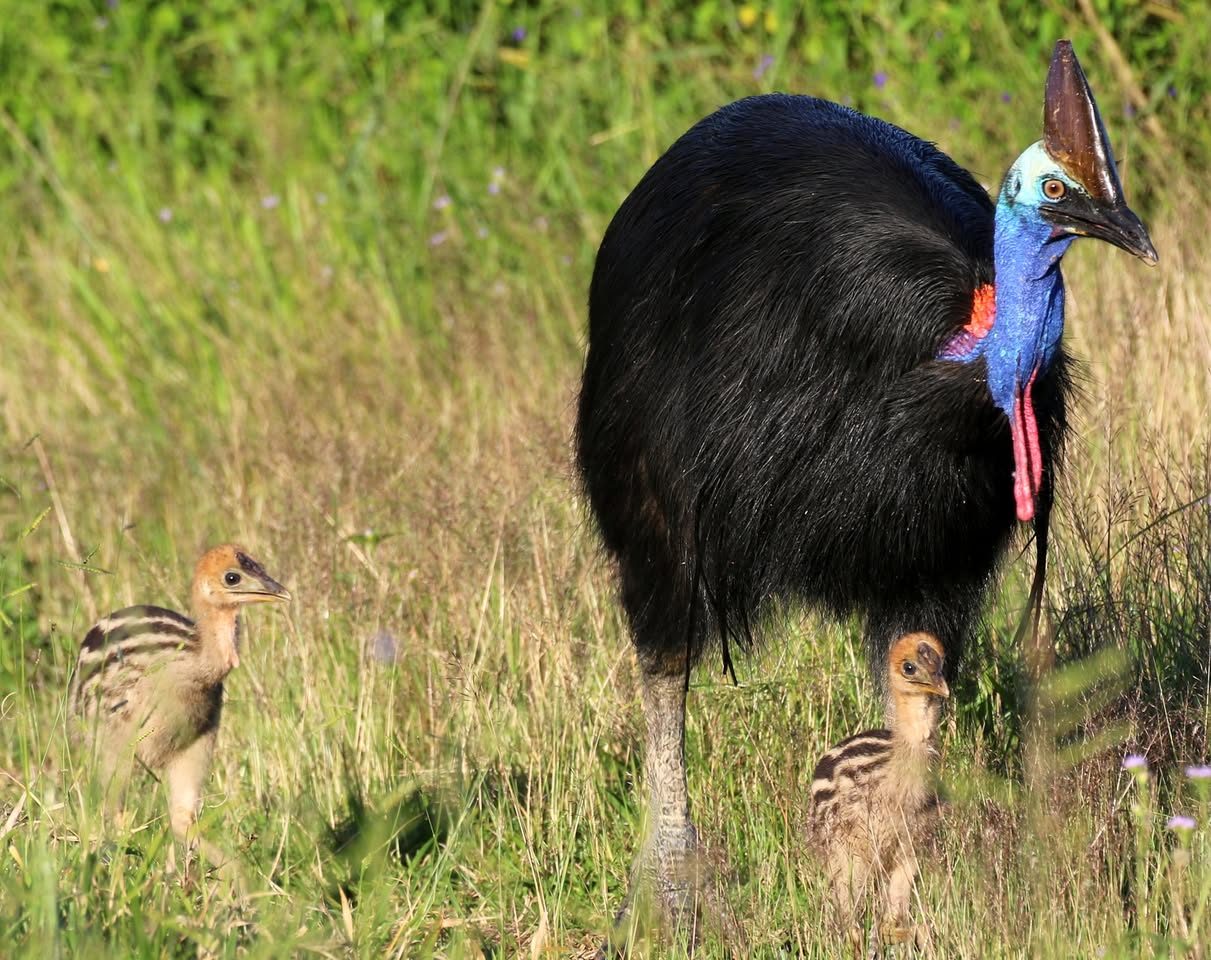
A recent sighting of three southern cassowaries has drawn attention to the continued presence of this iconic species near local schools and residential areas. At approximately 5:25pm on Friday, 31 January 2026, the birds were observed in a paddock opposite MBSS before moving across TMB Road into a field on the northern side of the school. The cassowaries appeared to be foraging, feeding on what looked like discarded bread scraps. The same trio had been reported in the area earlier in January.
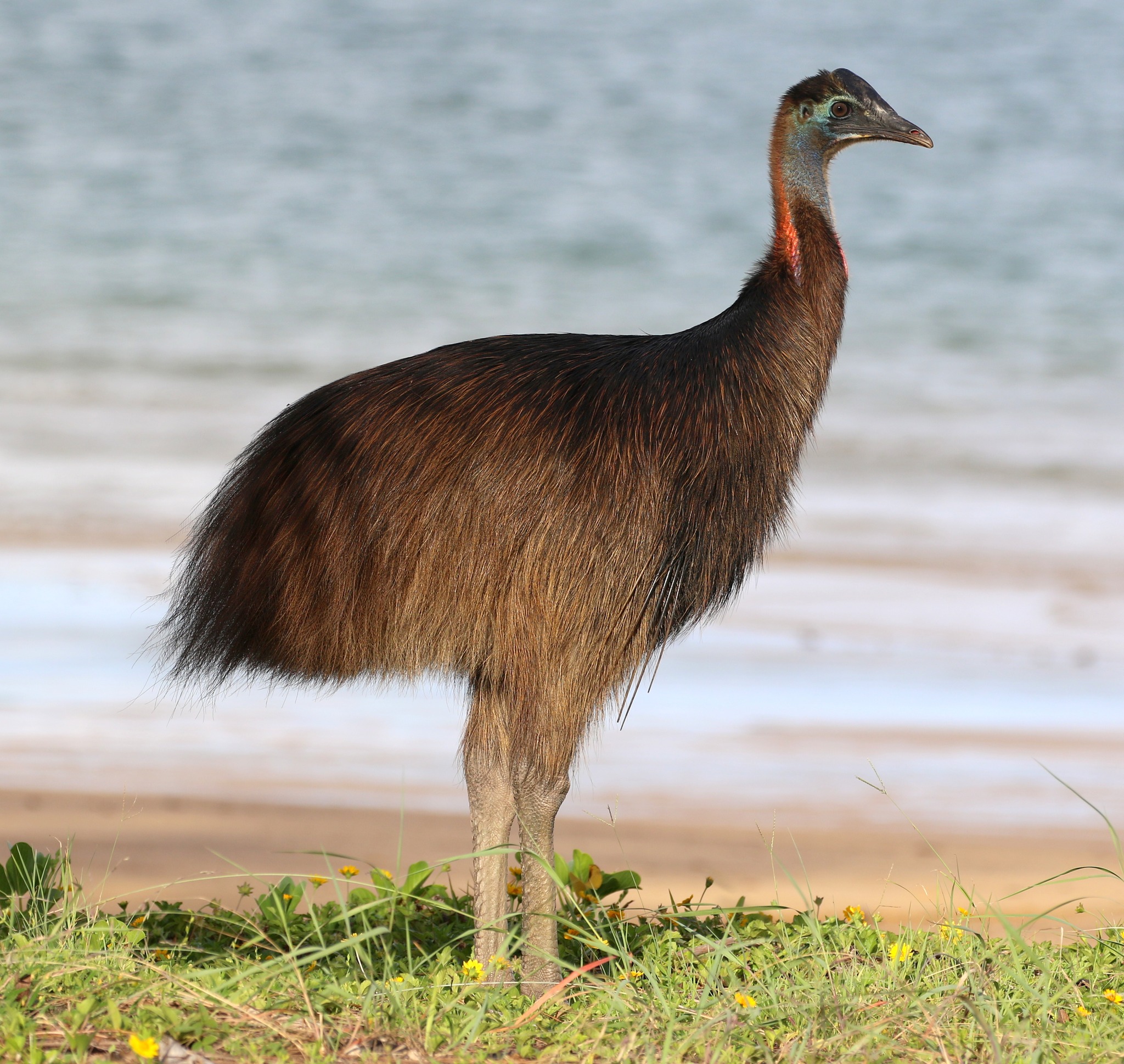
Another cassowary sighting was reported at around 5pm on 3 February on the foreshore at South Mission Beach, near Kennedy Esplanade and close to the caravan park. A lone sub-adult cassowary was seen walking across the road to the beach, where it paused briefly before meandering north along the shoreline for approximately five minutes. The bird then crossed back over the road, likely returning to the safety of nearby backyards. The cassowary was described as a healthy, very striking bird.
Sightings such as this are a positive reminder of the success and importance of local conservation efforts. The Community for Coastal and Cassowary Conservation (C4) represents a strong legacy of grassroots environmental action on the Cassowary Coast. Emerging in the late 1980s and early 1990s, C4 grew from the shared goals of groups including the Wildlife Preservation Society Queensland and the Movement for Responsible Coastal Development.
C4’s mission has consistently focused on protecting coastal and rainforest habitats and the diverse plants and animals that depend on them. Central to this work is respect for the Djiru people, the Traditional Owners of the land, and a commitment to balancing conservation with responsible development for future generations.
While cassowary sightings are exciting, they also come with responsibilities. Southern cassowaries are large, powerful birds with unpredictable behaviour and can seriously injure people or pets if threatened. Community members are encouraged to appreciate cassowaries from a safe distance and never approach them, particularly if chicks are present, as male cassowaries will defend their young.
Feeding cassowaries is illegal, dangerous, and has contributed to cassowary injuries and deaths. Food scraps should be placed in secure, closed bins, and compost bins should have tight-fitting lids. Motorists are urged to slow down in cassowary habitat and remain alert, especially in areas where sightings are common. Parking near cassowaries should be avoided, as birds may associate vehicles with food.
By following these guidelines and remaining “Cass-o-wary,” the community can help ensure that future sightings remain a positive sign of a healthy environment and a shared commitment to protecting one of Australia’s most remarkable species.
The trio have been known to frequent the area. Photo credit: Jeff Larson
Publishers Indemnity. Any individual or entity that places advertising, supplies copy material, or submits editorial content to Life Publishing agrees and undertakes to ensure that all such material:- Does not infringe upon any copyright, trademark, or other intellectual property rights;- Is free from any content that could be considered defamatory, libelous, or slanderous;- Does not infringe upon any rights related to privacy or breach of confidence;- Contains no obscene, indecent, or otherwise unlawful material;- Complies fully with the Trade Practices Act and all other applicable laws, regulations, or statutes. Furthermore, by submitting or placing such material, these individuals or entities agree to indemnify and hold harmless the publisher, Life Publishing and Events Pty Ltd, and/or its agents from and against any and all investigations, claims, demands, liabilities, damages, costs, or judgments arising out of or in connection with the material provided. All material is believed to be accurate at the time of printing and remains the copyright of Life Publishing and Events Pty Ltd.
© 2026 Life Publishing Group Ltd.