Independently Owned, Locally Grown, Community Loved

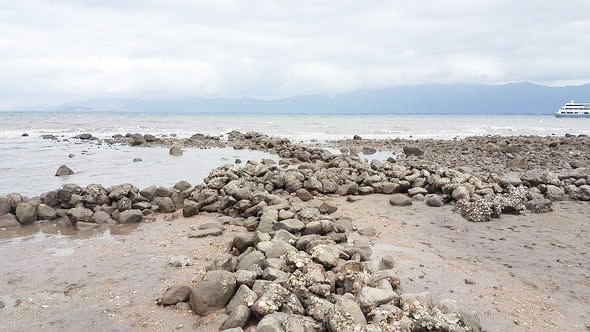
Ancient stone fish weirs on Hinchinbrook Island are drawing attention for their cultural and environmental significance, showcasing the deep connection between Indigenous communities and coastal ecosystems.
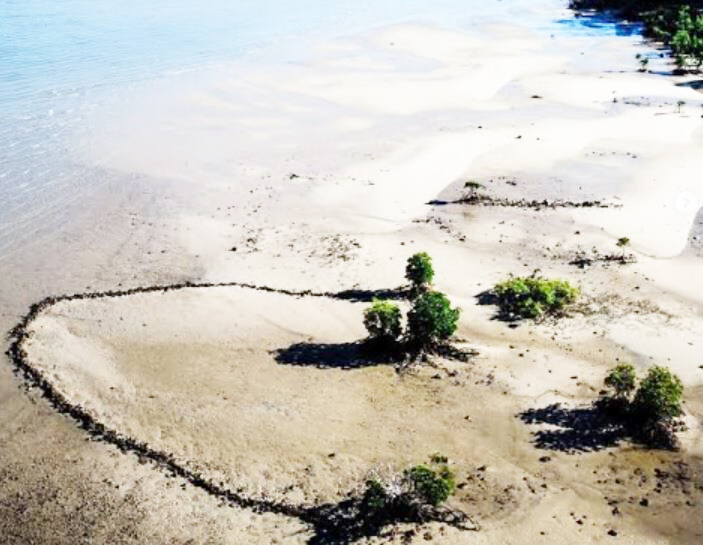
Senior community archaeologist Paul Montgomery recently highlighted the structures, noting the island is home to five stone weirs, including the large Scraggy Point tidal fish weirs, which cover an area of around 20,000 square metres.
The island, also known as Pouandai, is traditionally associated with the Biyaygiri people and forms part of the homelands of the Bandjin and Girramay peoples. These fish weirs, located among extensive mangrove tidal flats, were historically used as fish traps and remain central to cultural practices and traditional ecological knowledge.
Experts say such structures provide valuable insight into sustainable resource management, demonstrating how Indigenous communities have long worked in harmony with coastal environments.
The fish weirs are part of broader research into Indigenous cultural heritage and climate knowledge, highlighting their ongoing importance to both history and environmental understanding.
CAPTIONS:
Publishers Indemnity. Any individual or entity that places advertising, supplies copy material, or submits editorial content to Life Publishing agrees and undertakes to ensure that all such material:- Does not infringe upon any copyright, trademark, or other intellectual property rights;- Is free from any content that could be considered defamatory, libelous, or slanderous;- Does not infringe upon any rights related to privacy or breach of confidence;- Contains no obscene, indecent, or otherwise unlawful material;- Complies fully with the Trade Practices Act and all other applicable laws, regulations, or statutes. Furthermore, by submitting or placing such material, these individuals or entities agree to indemnify and hold harmless the publisher, Life Publishing and Events Pty Ltd, and/or its agents from and against any and all investigations, claims, demands, liabilities, damages, costs, or judgments arising out of or in connection with the material provided. All material is believed to be accurate at the time of printing and remains the copyright of Life Publishing and Events Pty Ltd.
© 2026 Life Publishing Group Ltd.