Independently Owned, Locally Grown, Community Loved

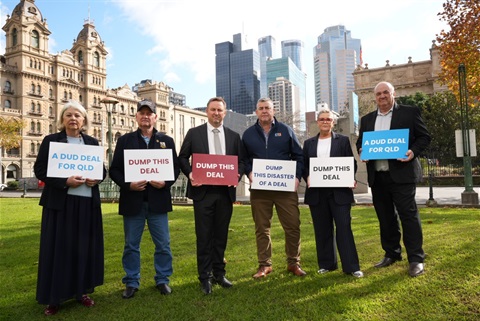
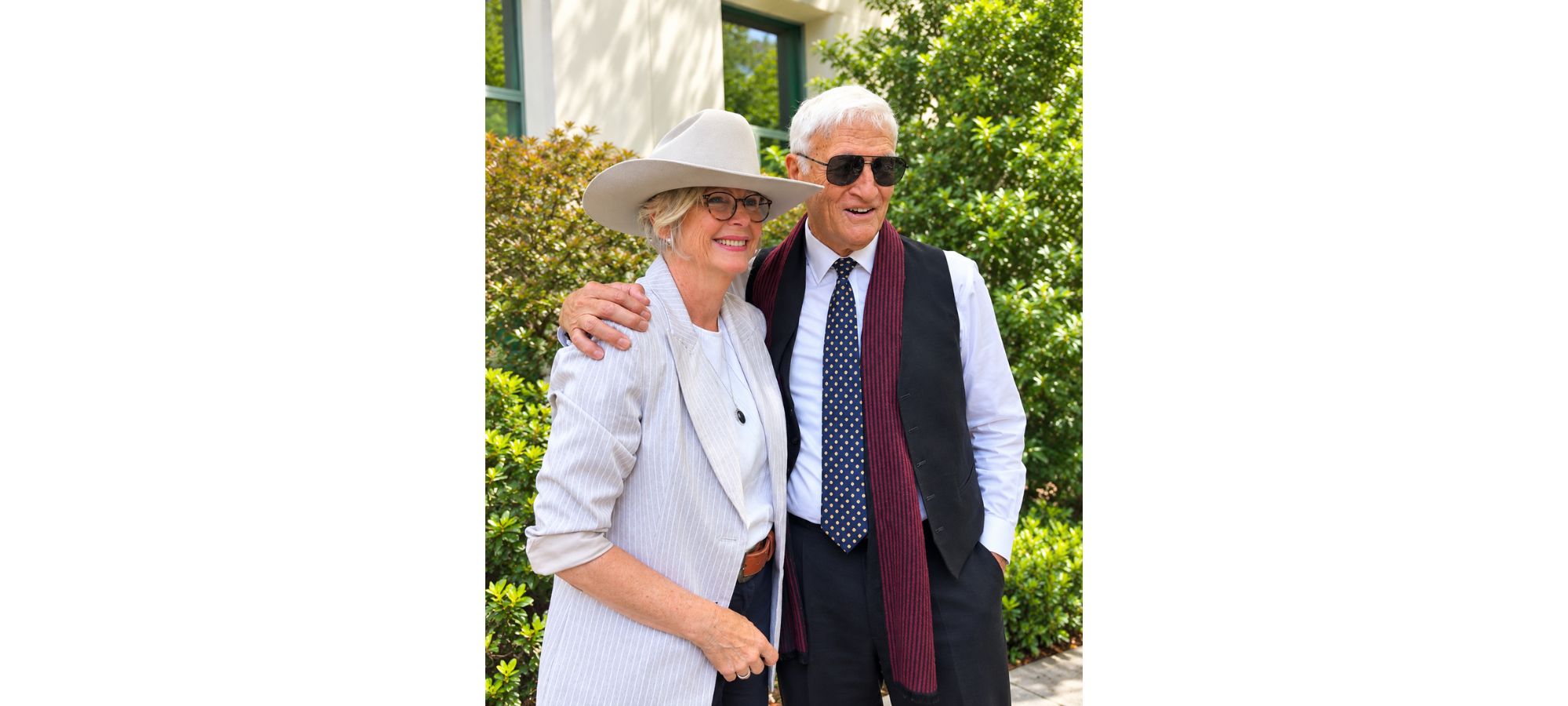
Mayor Jayo was part of a mayoral delegation standing up against proposed changes to disaster relief funding. Photo source: LGAQ
The Local Government Association of Queensland (LGAQ) has today taken six Queensland mayors from different corners of the state to Melbourne as the sector ramps up the fight to reverse the Federal Government’s disaster funding changes that critics say mightleave communities impacted by cyclones, floods and bushfires without the full financial support needed for recovery.
The changes include reducing the Federal Government’s contribution to disaster recovery from an average of 64 per cent down to 50 per cent, despite the Federal Government taking about 80 per cent of all taxation revenue, compared to about 17 per cent for State Governments and three per cent for councils.
The Melbourne mayoral delegation comes just weeks after delegates from the country’s 538 councils used the Australian Local Government Association’s (ALGA) National General Assembly in Canberra to call on the Federal Government to abandon its proposed changes, in a motion put forward by the Byron Shire Council in New South Wales.
The local government leaders - who travelled a combined 16,000km one-way - discussed the proposed disaster recovering funding changes outside the Melbourne hotel where the Federal, State and Territory Ministers met.
“Queensland councils fear these proposed funding reductions will leave communities worse off, in what is Australia’s most disaster-prone state,” LGAQ Chief Executive Officer Alison Smith said.
“These mayors chose to travel to Melbourne to demonstrate how important it is that the Federal Government drops these proposed reforms.”
Today, the six Queensland mayors – from Queensland’s far north, north west, south west, south east and tropical coast - described the proposed reforms as unfair.
“We all pay our taxes. Communities expect that when they need help, it should be provided. Yet when the Federal Government collects 80 per cent of all national taxation revenue, and councils collect just three per cent, the expectation is that Canberra should make the strongest contribution during natural disasters,” said Etheridge Shire Mayor Barry Hughes.
“Instead the Commonwealth has decided it wants to slash disaster funding, and pocket more than $600 million a year across Queensland if the last disaster season is anything to go by,” said Douglas Shire Mayor Lisa Scomazzon.
“No one wants or deserves a natural disaster. No one asks for their town to be cut off, their roads to be washed away, their main street to be flooded and covered in mud, or their food to run out or go off because the trucks can’t get through. But disaster recovery funding is like an insurance policy – you want it to pay out when a community is on its knees,” said Hinchinbrook Shire Mayor Ramon Jayo.
“These are all the reality of living in Queensland. Locals all do what they can to survive and help each other. All we are asking is that the Commonwealth continues to come good with the current levels of funding to help out,” said Lockyer Valley Regional Council Mayor Tanya Milligan.
“Councils and mayors are standing up for what is right, what is fair. If this deal goes ahead it is nothing less than kicking Queenslanders when they are down,” said Murweh Shire Mayor Shaun ‘Zoro’ Radnedge.
“Our current system works and needs to continue to provide the reassurance communities can rely on,” Whitsunday Regional Council Mayor Ry Collins said.
Queensland Reconstruction Authority (QRA) analysis of the last three years of disasters shows Queensland would receive $1.5 billion less in Commonwealth disaster relief under the proposed changes, including $638 million less in just the past year alone.
However, the modelling shows Queensland communities would have missed out on at least $2.8 billion in Federal support if the proposed regime had been in place since 2018.
“In the 2025-26 summer, 74 of Queensland’s 77 local government areas were disaster activated,” Ms Smith said.
“Councils have heard the Commonwealth say that no council will be worse off under these reforms, but with the size of the funding gap that this reduction in Federal support would create, these mayors are wondering who will meet this shortfall?” LGAQ CEO Alison Smith asked.
Publishers Indemnity. Any individual or entity that places advertising, supplies copy material, or submits editorial content to Life Publishing agrees and undertakes to ensure that all such material:- Does not infringe upon any copyright, trademark, or other intellectual property rights;- Is free from any content that could be considered defamatory, libelous, or slanderous;- Does not infringe upon any rights related to privacy or breach of confidence;- Contains no obscene, indecent, or otherwise unlawful material;- Complies fully with the Trade Practices Act and all other applicable laws, regulations, or statutes. Furthermore, by submitting or placing such material, these individuals or entities agree to indemnify and hold harmless the publisher, Life Publishing and Events Pty Ltd, and/or its agents from and against any and all investigations, claims, demands, liabilities, damages, costs, or judgments arising out of or in connection with the material provided. All material is believed to be accurate at the time of printing and remains the copyright of Life Publishing and Events Pty Ltd.
© 2026 Life Publishing Group Ltd.