Independently Owned, Locally Grown, Community Loved


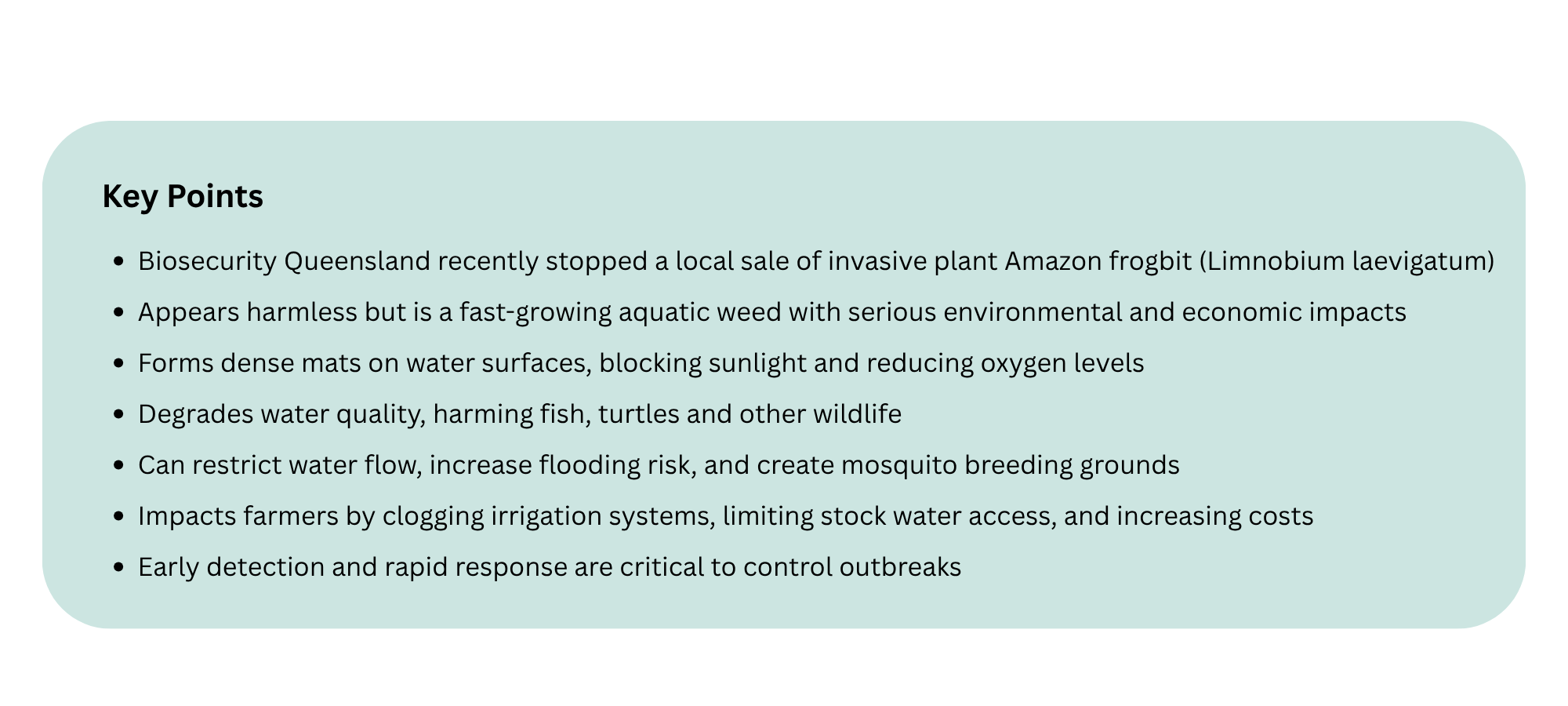
Recently Biosecurity Queensland officers found and stopped a person selling Amazon frogbit locally.
Amazon frogbit (Limnobium laevigatum) is a free-floating plant that, at first glance, appears harmless. With its small, round leaves and delicate white flowers, it can even look attractive in garden ponds.
But beneath that calm surface lies a fast-growing invasive species capable of causing significant environmental and economic damage.
Once established, Amazon frogbit spreads rapidly, forming dense mats across the water.
These mats block sunlight from reaching native aquatic plants, reducing oxygen levels and degrading water quality.
This has a direct impact on fish, turtles, and other wildlife that depend on healthy waterways.
It can also restrict water flow, increase the risk of flooding and create breeding grounds for mosquitoes.
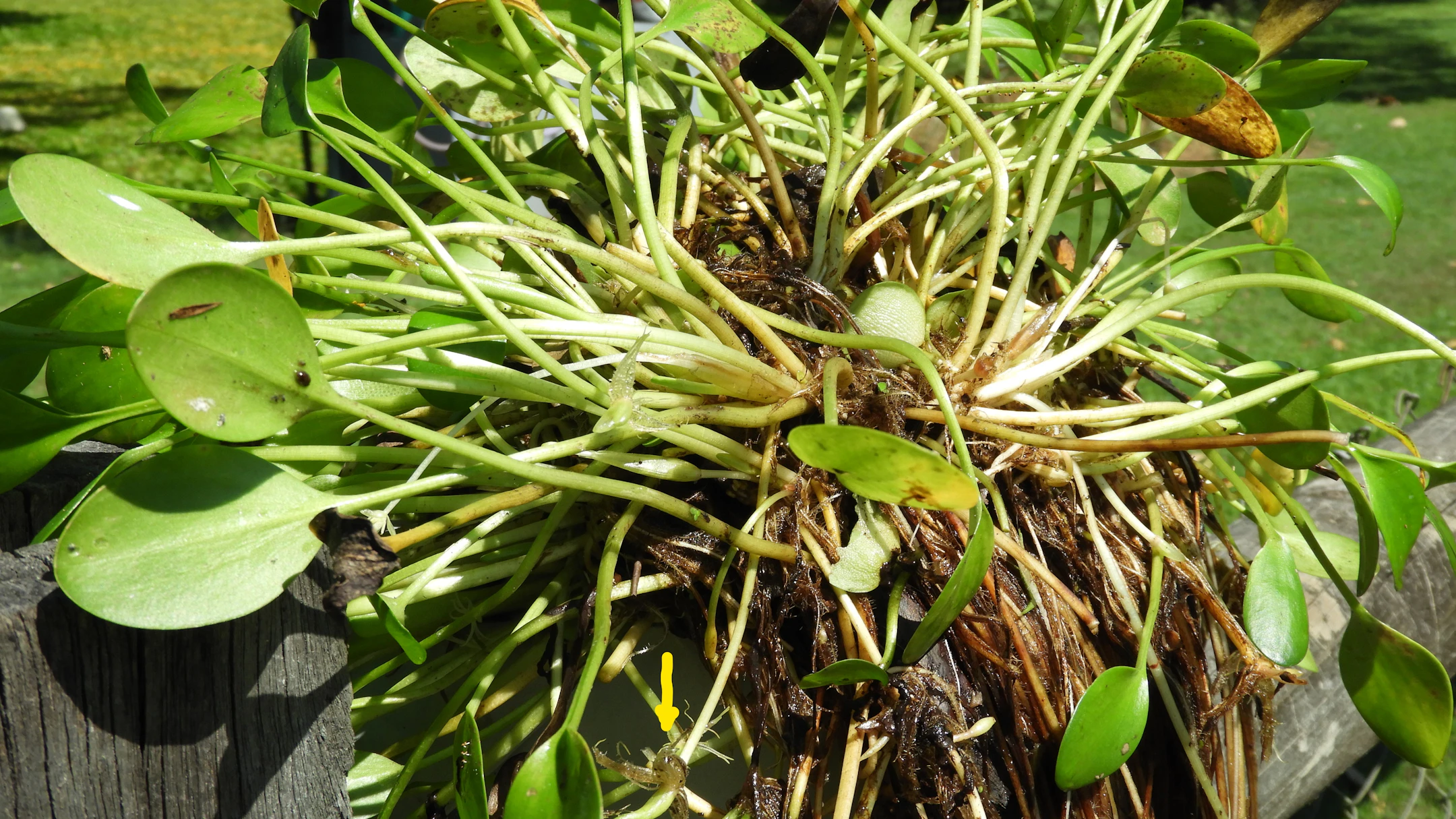
For landholders and primary producers, the impacts can be equally concerning. Infestations clog irrigation systems, hinder stock access to water, and increase management costs.
In a region where waterways are so closely tied to livelihoods and lifestyle, this is not a problem we can afford to ignore.
The most effective way to manage Amazon frogbit is early detection and rapid response.
Small outbreaks can often be controlled before they spread, but once the plant becomes widespread, eradication becomes far more difficult and costly.
Residents can play a key role by making themselves aware of what it looks like, checking drains and waterways on their properties, and by never releasing aquarium or pond plants into natural water systems.
If you suspect Amazon frogbit is present, please report it to our biosecurity team so appropriate action can be taken.
Protecting our waterways is a shared responsibility.
By staying vigilant and acting early, we can help prevent Amazon frogbit from becoming yet another introduced species taking hold, choking our waterways and infesting our agricultural lands.
Publishers Indemnity. Any individual or entity that places advertising, supplies copy material, or submits editorial content to Life Publishing agrees and undertakes to ensure that all such material:- Does not infringe upon any copyright, trademark, or other intellectual property rights;- Is free from any content that could be considered defamatory, libelous, or slanderous;- Does not infringe upon any rights related to privacy or breach of confidence;- Contains no obscene, indecent, or otherwise unlawful material;- Complies fully with the Trade Practices Act and all other applicable laws, regulations, or statutes. Furthermore, by submitting or placing such material, these individuals or entities agree to indemnify and hold harmless the publisher, Life Publishing and Events Pty Ltd, and/or its agents from and against any and all investigations, claims, demands, liabilities, damages, costs, or judgments arising out of or in connection with the material provided. All material is believed to be accurate at the time of printing and remains the copyright of Life Publishing and Events Pty Ltd.
© 2026 Life Publishing Group Ltd.