Independently Owned, Locally Grown, Community Loved

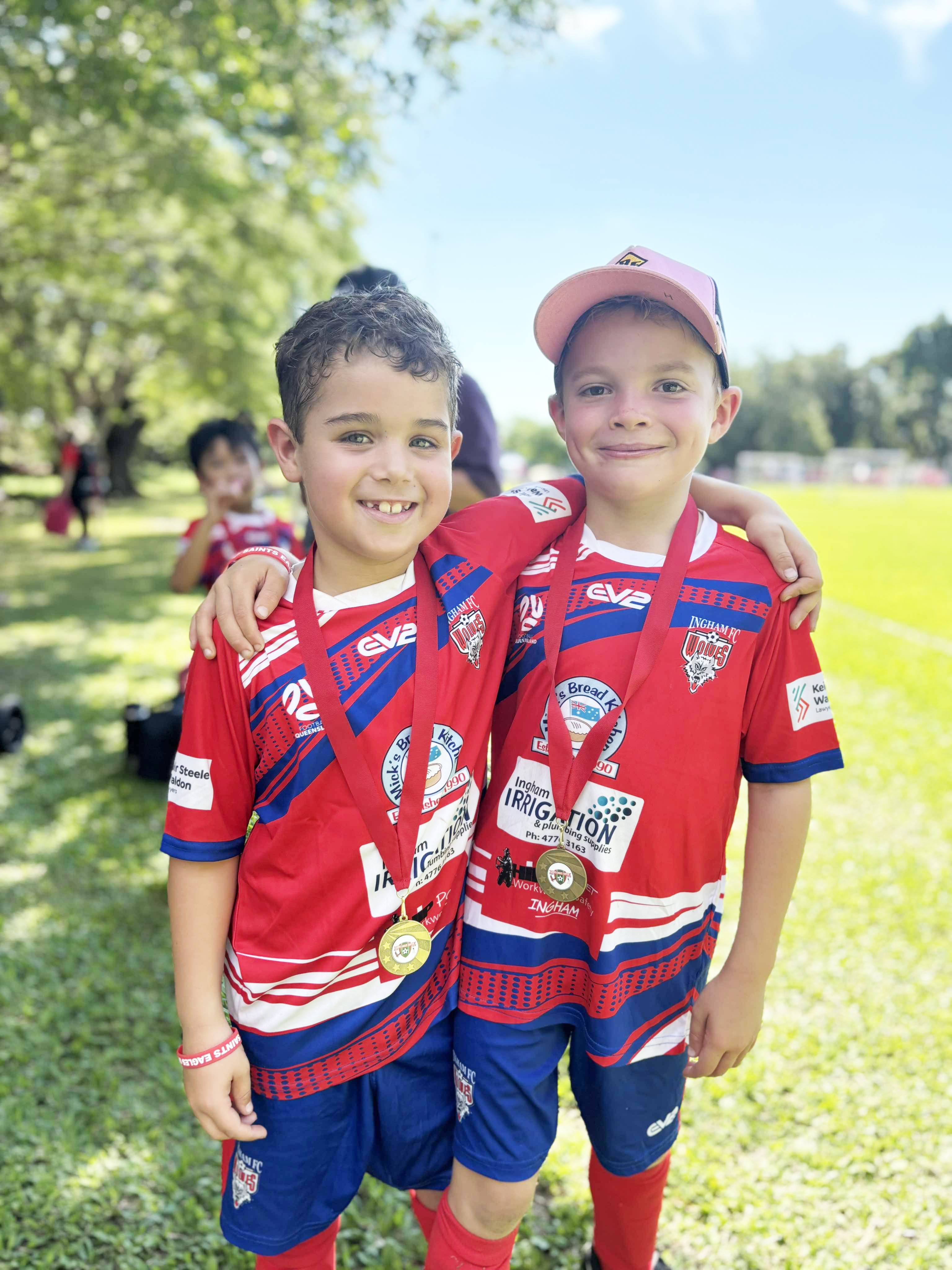
Archer Carr (9 goals) and Huxley Beatts (9 goals) shared 18 goals between them in four matches, C. 2025. Outdoor play in sports, enjoyed by children who love to play soccer. Photo supplied: Jonny Pearce.
In a world where screens are becoming an increasingly common part of childhood, health professionals are reminding families that movement is far more than just a way for children to burn off energy.
According to the team at Naturally Kids Allied Health, active play is one of the most important building blocks of healthy childhood development. Active play isn't simply about keeping children physically active. Through movement, children develop physical, social, emotional and cognitive skills that support participation at home, school and in the community.
Research continues to show that movement plays a critical role in childhood development. Activities such as climbing, running, jumping, balancing, dancing and participating in sport help develop strength, coordination, balance, endurance, motor planning and body awareness.
However, the benefits extend far beyond physical health.
The team at Naturally Kids explains that active play provides valuable opportunities for children to develop communication skills, teamwork, problem-solving abilities and emotional regulation.
When children are engaged in active play, they are learning much more than movement skills. They are learning how to take turns, manage challenges, communicate with others, follow instructions and build confidence in their own abilities.
These skills form the foundation for successful participation in everyday activities throughout childhood and beyond.
Regular participation in sport, recreation and outdoor activities provides children with opportunities to experience achievement through effort and persistence.
Confidence develops when children learn a new skill, practise it and see themselves improve over time. Resilience develops when children experience challenges and discover they can work through them.
Children don't build resilience by avoiding challenges. They build resilience when they learn they can overcome them.
Whether it's learning a new dance routine, mastering a bike ride, completing an obstacle course or participating in a team sport, children learn that progress comes through practice, persistence and patience.
These experiences help children develop self-belief and confidence that often carries across into school, friendships and other areas of life.
While technology offers many benefits, allied health professionals are seeing increasing challenges associated with reduced opportunities for movement, outdoor exploration and face-to-face social interaction.
The goal isn't to eliminate technology. The goal is to ensure children continue to have meaningful opportunities to move, play, explore and connect with others.
The team encourages families to focus on making movement enjoyable rather than treating it as exercise.
Children are far more likely to remain active when activities are fun, social and aligned with their interests.
Simple activities such as visiting local parks, riding bikes, swimming, dancing, participating in community sport or exploring nature can all help establish lifelong healthy habits.
While free play remains important, structured activities provide additional developmental benefits that children may not experience elsewhere.
Through organised sport, recreation programs and community activities, children learn important life skills including following instructions, managing routines, setting goals, working as part of a team and developing self-discipline.
Structured activities also provide opportunities for children to receive support, encouragement and guidance from trained professionals within a predictable and supportive environment.
Participation is one of the strongest contributors to positive developmental outcomes. When children feel capable, connected and included, the benefits often extend across multiple areas of development.
Importantly, structured activities also provide opportunities for children to develop friendships, a sense of belonging and meaningful social connections that support emotional wellbeing.
For parents looking to encourage more activity, the advice from Naturally Kids is straightforward: start with activities your child enjoys.
The most effective activity is not necessarily the most structured or expensive, it's the one your child wants to keep doing.
Consistency is often more important than intensity. Small amounts of regular movement can make a significant difference to a child's physical health, emotional wellbeing, confidence and overall development over time.
Through their work with children and families across North Queensland, the Naturally Kids team regularly sees the positive impact active play has on participation, confidence, emotional regulation and social connection.
Whether through organised sport, community programs, outdoor adventures or everyday play, movement remains one of the most powerful tools available to support healthy childhood development.
Publishers Indemnity. Any individual or entity that places advertising, supplies copy material, or submits editorial content to Life Publishing agrees and undertakes to ensure that all such material:- Does not infringe upon any copyright, trademark, or other intellectual property rights;- Is free from any content that could be considered defamatory, libelous, or slanderous;- Does not infringe upon any rights related to privacy or breach of confidence;- Contains no obscene, indecent, or otherwise unlawful material;- Complies fully with the Trade Practices Act and all other applicable laws, regulations, or statutes. Furthermore, by submitting or placing such material, these individuals or entities agree to indemnify and hold harmless the publisher, Life Publishing and Events Pty Ltd, and/or its agents from and against any and all investigations, claims, demands, liabilities, damages, costs, or judgments arising out of or in connection with the material provided. All material is believed to be accurate at the time of printing and remains the copyright of Life Publishing and Events Pty Ltd.
© 2026 Life Publishing Group Ltd.