
Independently Owned, Locally Grown, Community Loved

2026 has marked an exciting new chapter for Science at Our Lady of Lourdes with the introduction of Science as a specialist subject across the school. Aligned with the Australian Curriculum Version 9, our science program provides students with opportunities to investigate real-world phenomena through hands-on learning, creativity, inquiry and play. At Lourdes, we believe that students learn best when they are actively engaged in meaningful experiences that allow them to question, explore, design, test and create. Across every year level, students have been immersed in learning that encourages curiosity while developing important skills such as collaboration, critical thinking, problem-solving and resilience. Our Year 2 students have stepped into the role of designers and inventors by creating their own fidget toys. Students investigated how materials can be changed and selected for specific purposes, using the design process to create products that are both practical and engaging. They have loved seeing how different products can be made, especially their favourite toys. Students at Our Lady of Lourdes have had lots of fun being inventors. Photos supplied
Read the full story
Feel the Magic is providing vital support to children and families across Australia who are navigating the pain of grief, offering a range of free early intervention programs designed to help young people “face, feel and heal” after the death of a parent, guardian or sibling. At the heart of the organisation is a belief that no child should face grief alone. Its programs create a nurturing, supportive environment where children aged 7 to 18 can express their emotions, learn coping strategies, and connect with others who understand their experience. Through its virtual camp programs, Feel the Magic is able to reach families regardless of location. These online sessions bring together grieving children to learn a shared “grief language”, build practical emotional tools, and reduce feelings of isolation through connection with other families. The organisation also offers specialised programs for those impacted by suicide bereavement. These include virtual camps, a one-day face-to-face “Let’s Talk Suicide Family Day Camp”, and the signature Camp Magic experience—an intensive 2.5-day overnight program where children are paired with trained volunteer mentors who provide one-on-one support throughout the camp. Camp Magic focuses on helping children understand grief, regulate difficult emotions and develop healthy coping strategies in a safe and structured environment. A concurrent emotional literacy workshop is also available for parents and guardians, helping families better understand grief responses and strengthen communication at home. For older participants, Grad Camp supports young people aged 16 to 19 as they transition into adulthood while continuing to process their grief experience. Across all programs, Feel the Magic emphasises connection, understanding and hope, with the organisation noting that even a single day can make a meaningful difference in a child’s journey through grief. To learn more about how you can get involved email lauren.galbraith@feelthemagic.org.au. WHAT: Family Day Camp WHEN: 26th July WHERE: The Cathedral School, Townsville
Read the full story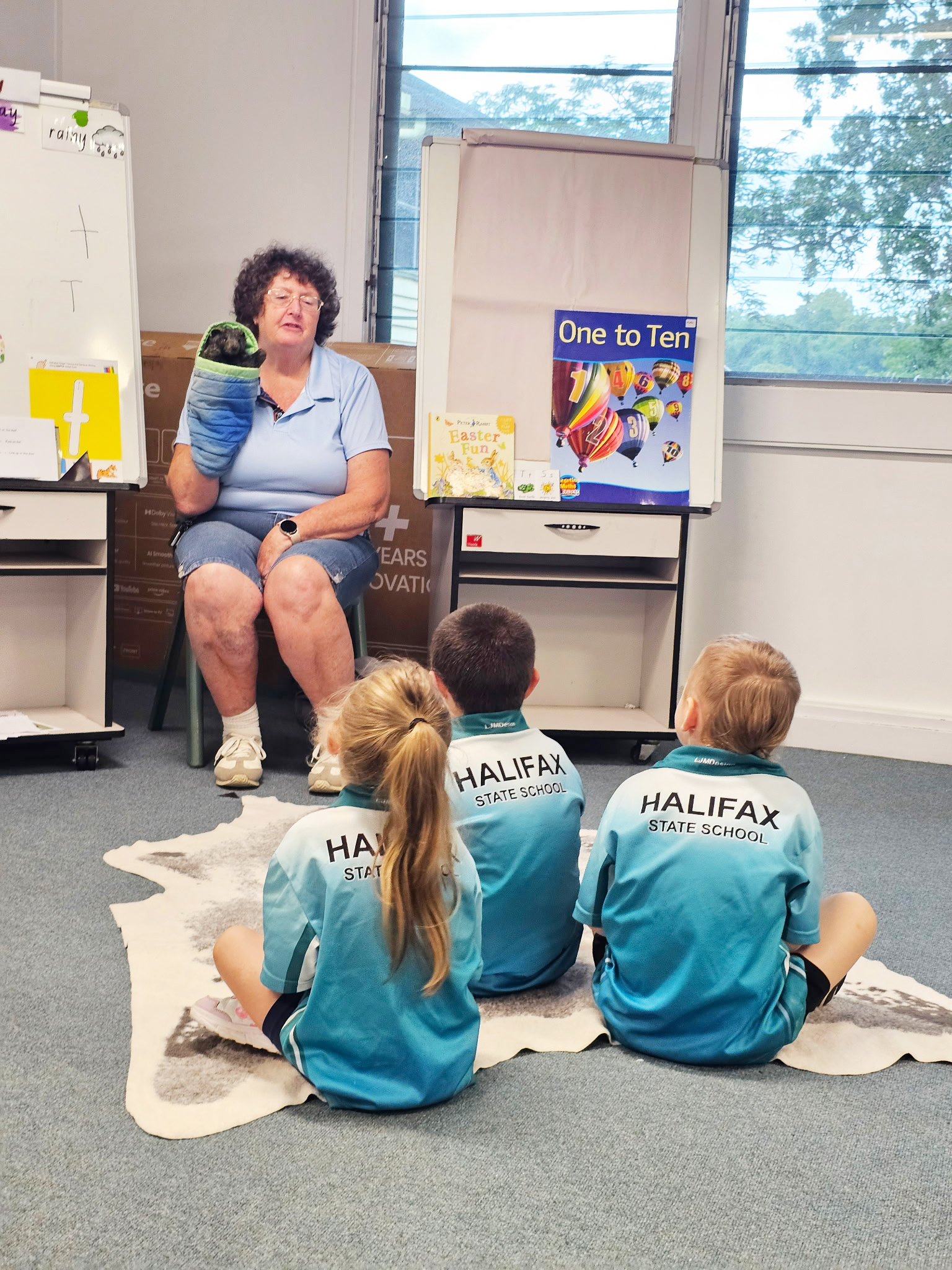
A strong school community is built on the dedication of its people. At the heart of Halifax SS are highly experienced and caring learning support staff who ensure every student feels included, supported, and capable of success. Their work, alongside experienced and innovative teachers, creates engaging classrooms where creativity and curiosity thrive. Play-based learning is one example of this approach in action, helping students develop confidence, independence, and a love of learning from an early age. Bringing these strengths together is exceptional leadership. This has been recognised through the awarding of the prestigious Bill McClintock Medal, introduced in 2016 to honour individuals who contribute to the advocacy and service of the Queensland Association of State School Principals (QASSP), particularly through supporting colleagues across regional and remote communities. “We are all very proud of Michael for receiving this award,” a spokesperson said. “It reflects a commitment not only to school excellence, but to strengthening education across Queensland. “Together, caring support staff, innovative teaching, and award-winning leadership create an environment where students and communities thrive.” Caption: 1. Teacher aide Jenny Genrich incorporates play-based learning to actively engage students and support early skill development in the classroom. 2. Presentation of the Bill McClintock Medal, recognising outstanding leadership and service to education across Queensland.
Read the full story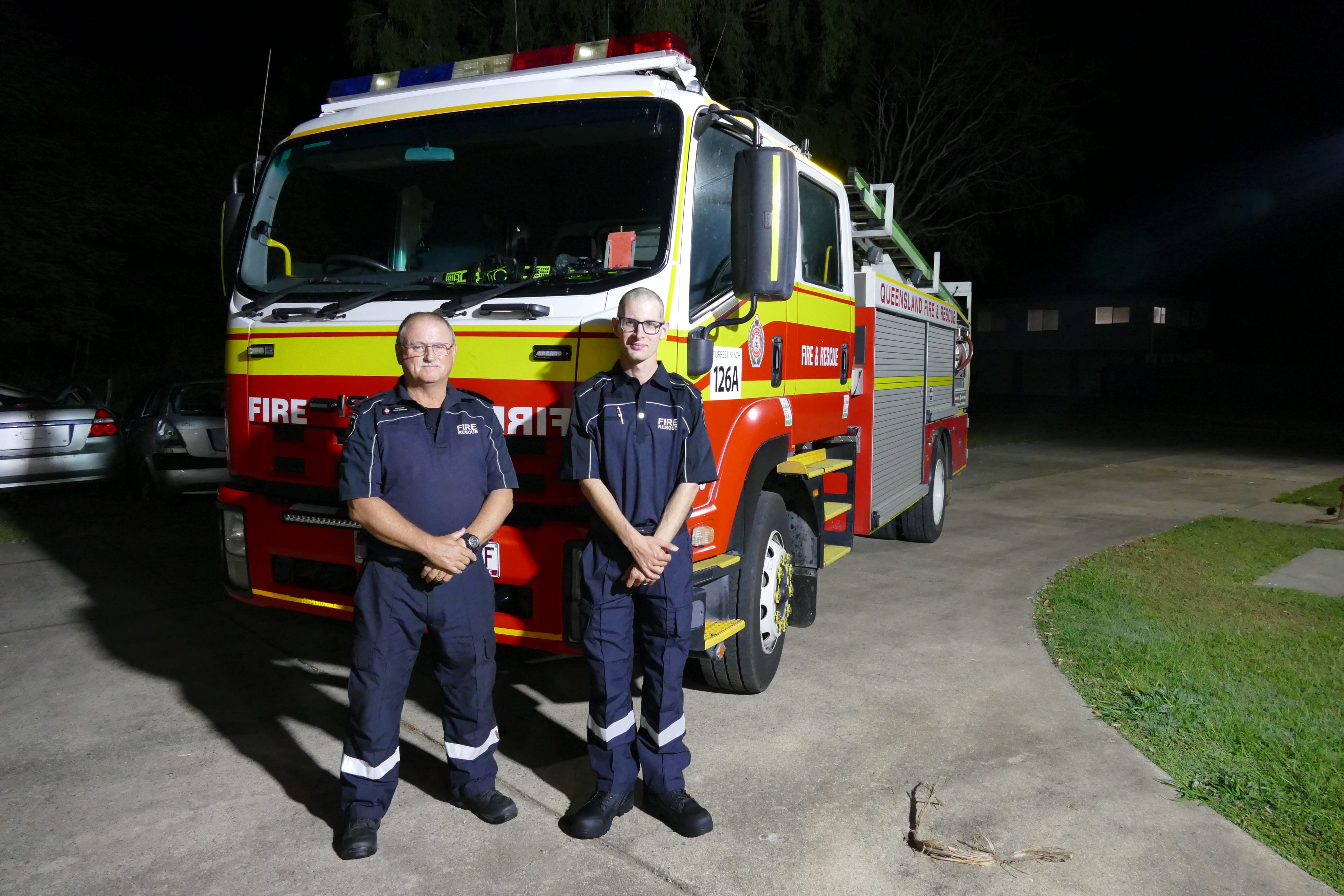
When disaster strikes, firefighters are often the first people the community turns to. But behind every emergency response is a team of locals who give their time, train regularly and step up when their neighbours need them most. Forrest Beach Fire and Rescue is encouraging more community members, particularly younger residents, to consider joining the station and becoming part of the team. "It's a good thing to get people back in from the community, especially for the station here; because we're an elderly community. Getting the younger people in is really, really important,” said Acting Lieutenant Keith Amos. Keith highlighted that being part of the station is a chance to make a tangible impact on the community- and not just in cases of fire. During the major flooding event of 2025 that isolated Forrest Beach and surrounding areas, firefighters assisted residents, with rescues, but also delivering meals and helping secure damaged homes. "The floods, when we were cut off, the way we were seen by the community and how we helped people really made an impact," Keith said. The crew’s role is diverse, and potential recruits are reminded that it’s not all flashing lights and sirens. Beyond the emergencies, auxiliary firefighters have an important role in the everyday community; regularly attending markets, school safety days and events to teach fire safety and engage with local families. During the recent Tasman Turtle Picnic Day, a popular community event for children, countless young attendees were proudly sporting the station’s bright, colourful Blazer the Koala firefighting mascot stickers. "We try and get into the community, showing what we do," Auxiliary Firefighter Michael Monbelli said. Michael also explained that for him, the biggest obstacle is balancing service with everyday life – though this factor he feels is understood and well-supported by the crew. Michael balances his firefighting role with full time work at the mill, and a busy family life with young children. On his team, there is a schoolteacher, two ex-servicemen, and another millworker. Auxiliary firefighters also commit significant time to weekly training. As for emergency response, call-outs can occur at any hour of the day or night. "Being an auxiliary is that we're on call.” Acting Lieutenant Keith Amos explained. “So even on our Wednesday night training we can get a call." Keith described the role as ‘drop everything and jump into action’. Despite the demands, Former Army serviceman Mark McEwen believes many people underestimate how manageable the role can be. "It doesn't take too much out of your normal week. Give up your three hours of training on a Wednesday, and you're on call." At the same time, emergency work can be unpredictable. "Things can change in a heartbeat," Mark said. He recalled a 4:00am call-out to a possible house fire. "Eight hours later, we get home. Us older fellas feel it a bit more, but it was worthwhile. That's what we're here for." The crew also works closely with volunteer organisations including the SES and Forrest Beach Surf Life Saving Club. During the February 2025 flood event, firefighters and surf lifesavers combined resources to rescue elderly residents trapped by rising floodwaters. According to the firefighters, the biggest motivation to get involved is that it feels good to make a difference in your community. "It's that sense of pride," Keith said, "I take pride in this job and I love doing it." "Even if you've never thought about becoming a firefighter, come down and have a chat to us," Keith said. "It's that simple.” Caption: Members of the Forrest Beach Auxiliary Firefighters: Glyn Morgan, former Air Force serviceman, and Braydon Fratus, local mill worker and the brigade's newest recruit, standing by the Forrest Beach Brigade’s fire engine.
Read the full story


Farmers Sound Alarm On Fuel & Fertiliser Pressures Amid Global Tensions
By Queensland Farmers’ Federation CEO Jo Sheppard
The Queensland Farmers’ Federation, our peak body members and corporate partners remain concerned by the on-farm impacts of global tensions in the Middle East.
The Federal Government recently committed to establishing a dedicated fertiliser taskforce and is exploring mechanisms to underwrite fertiliser shipments to stabilise supply chains. National Cabinet also agreed to the National Fuel Security Plan aimed at coordinating a consistent response across the Commonwealth, States and Territories. The Plan outlines indicative policy settings across four levels, outlining individual, Commonwealth and State and Territory actions, including the potential for fuel rationing at level four.
The Government has also halved the fuel excise, reducing the cost of petrol and diesel by 26.3 cents for three months, with the heavy road user charge also reduced to zero during the same period to relieve freight costs.
QFF CEO Jo Sheppard said that while the reduction in the fuel excise will do little to assist farmers, QFF supports the government’s clear message acknowledging the importance of diesel and fertiliser to the national economy, noting that planning ahead is essential if we are to be in a position to support Australians through the impact of the global energy shock.
“Australia is lucky enough to be home to some of the best energy resources in the world – gas, oil, coal, sun, wind and a significant bio-energy opportunity. A National Fuel Security Plan should not just be something we pull out during times of crisis but should be a long-term strategy with key implementable milestones so that we are continually building our sovereign energy capability,” Ms Sheppard said.
“As a nation we have been complacent. We can be complacent no more.”
CANEGROWERS Australia Chief Executive Dan Galligan said the situation highlights how exposed Australia remains to global fuel shocks.
“Australia imports the vast majority of the fuel we use, and much of it moves through some of the most volatile regions in the world,” Mr Galligan said. “Ethanol made from Australian crops like sugarcane can replace a portion of imported petrol and provide a reliable domestic supply. An enforced E10 mandate would mean around 10% of the fuel Australians use could be produced right here at home rather than shipped in from the other side of the world.”
Cotton Australia General Manager Michael Murray said while most cotton growers appear to be getting their required diesel eventually, the cost is putting huge pressure on financial sustainability.
“We should have learnt a lesson from COVID-19, and we really must learn it now, we must boost our sovereign capability to produce inputs that are vital for our economy,” Mr Murray said.
Queensland Fruit & Vegetable Growers (QFVG) CEO Scott Kompo-Harms GAICD said horticulture producers are already operating under sustained cost pressures, and the current global disruptions are pushing many businesses to breaking point.
“Queensland horticulture growers have been dealing with rising input costs for years, but surging fuel prices, transport levies, and emerging shortages of critical inputs such as plastics and fertilisers are now compounding those pressures in a way that is simply unsustainable,” Mr Kompo-Harms said.
QFF and our peak body members are continuing to seek real time feedback from farmers and communities and are working with industry and government to support practical responses as the situation evolves. Farmers are encouraged to report supply issues to their peak industry body.
.jpg)
The Government has announced a suite of measures aimed at supporting Australia’s farmers, fishers and producers as global conflict continues to place pressure on supply chains and costs.
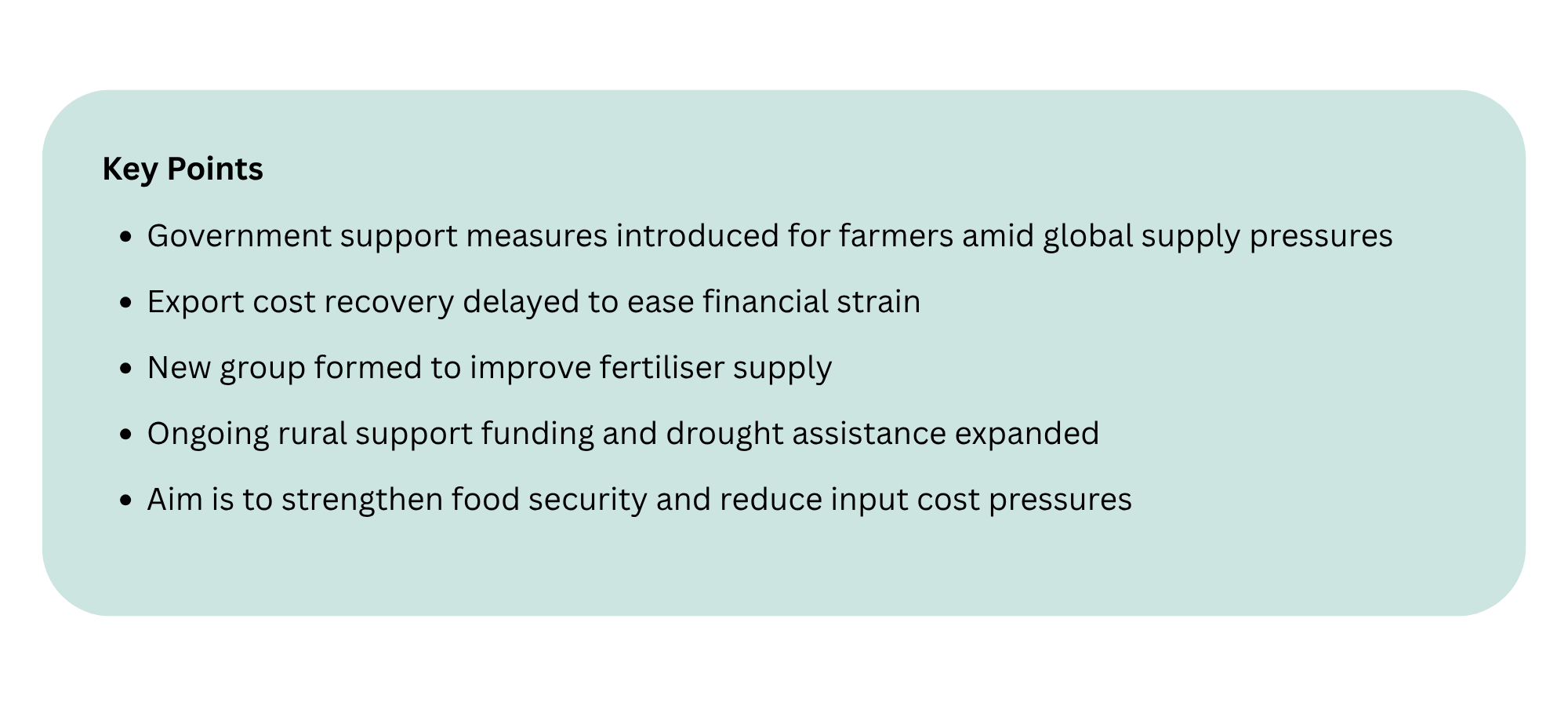
In response to disruptions linked to the conflict in the Middle East, the Government is working to maintain export flows, stabilise input costs and strengthen the nation’s food production system.
A key measure includes deferring the phased transition to full cost recovery for export regulatory services by 12 months, now set to commence on 1 July 2027. The move is designed to provide greater certainty for farmers and producers already facing rising input costs.
The Government is also establishing a new Fertiliser Supply Working Group, bringing together key agencies and industry representatives including Fertilizer Australia and the National Farmers Federation. The group will build on existing efforts to improve fertiliser availability, including monitoring supply chains and engaging alternative suppliers.
Additional support is being delivered through financial assistance programs, with more than $1.29 billion invested in rural support and resilience funding since July 2022. This includes the rollout of a new Drought Hardship Loan and expanded access to the Rural Financial Counselling Service.
Minister for Agriculture, Fisheries and Forestry Julie Collins said the Government remained focused on supporting the sector through ongoing challenges.
“We are working day and night with our farmers, fishers and producers to help manage this impact of the conflict in the Middle East,” Ms Collins said.
“Our farmers and producers feed millions of people both here and abroad, but events like the conflict in the Middle East reaffirm why we cannot be complacent.
“That’s why we’ve taken immediate action to help safeguard Australia’s food production system, and to support our farmers and producers – including to help get fuel and fertiliser into our regions.
“We recognise the disruption the conflict in the Middle East has had on our farmers and producers, which is why we are deferring the commencement of the phased transition to full cost recovery for export regulatory services for one year.
“Our Government will never leave farmers behind who are facing hardship.”
CAPTION: New support measures aim to provide certainty for farmers and producers, helping safeguard Australia’s food supply and export strength during ongoing global disruptions. Photo source: Shutterstock
Minute With The Mayor
Mayor Ramon Jayo
Remembering Our Own This Anzac Day
In Hinchinbrook, Anzac Day is deeply personal. The people we honour were not strangers; they were sons and daughters, neighbours and friends, with strong ties to this region and futures they were willing to sacrifice in service of others.
As we approach Anzac Day, it is important to reflect not only on national history but on our own local stories. Hinchinbrook Shire Library plays a vital role in preserving this history, particularly through its significant collection relating to the 31st Battalion, The Kennedy Regiment. Donated by Captain Bob Burla RFD, ED & Bars (RL), the collection includes service records, photographs and personal documents that connect us directly to the lived experiences of local servicemen and women.
These records ensure remembrance remains meaningful and grounded in our community. Preserving history is not just about the past, it is about helping future generations understand the service, resilience and sacrifice that have shaped Hinchinbrook and Australia.
Anzac Day also reminds us of the importance of coming together. I sincerely thank the Herbert River RSL for its ongoing dedication to ensuring Anzac Day is commemorated each year with dignity and respect. Their commitment, supported by veterans, volunteers and community members, ensures that remembrance continues to be a strong and unifying tradition in Hinchinbrook.
I encourage residents to attend local Anzac Day services and to visit the Hinchinbrook Shire Library to connect with our military history. By remembering our own, we honour those who served and ensure their legacy continues.
.JPG)
Hello Hinchinbrook,
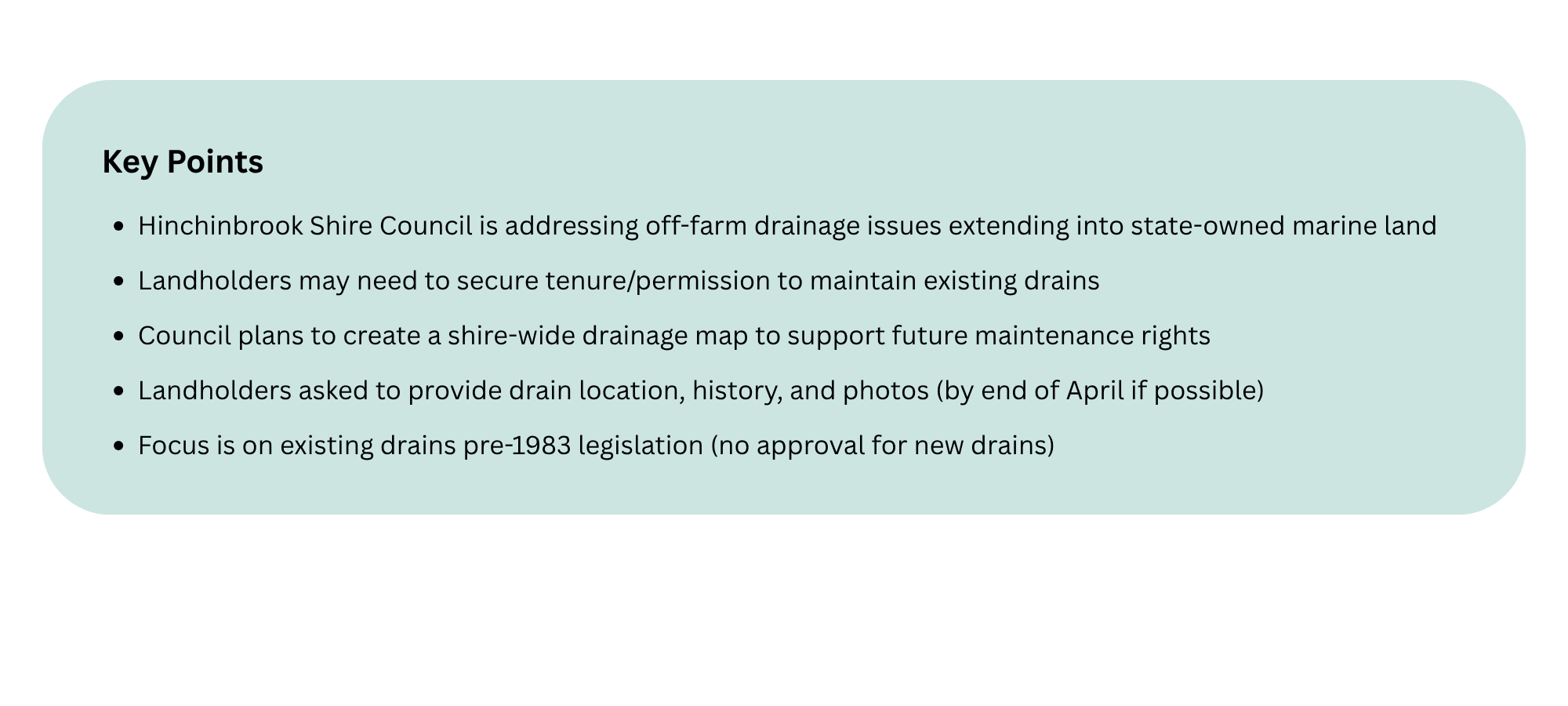
I thought I would mention some developments with the Hinchinbrook Drainage Advisory Group. Recently, some landholders in the coastal interface would have received letters from Council regarding off‑farm drains that had been previously/historically constructed past farm/property boundaries into marine tenures adjoining the landholders’ properties.
In these circumstances and given the ownership of such land by the State, Council would envisage that it will be necessary for adjoining landholders to secure some form of tenure over the land upon which the drain exists as a precursor to being able to maintain the drainage system.
It is Council’s intention to compile a shire‑wide map of the drains of concern to enable shire‑wide permitting to occur and have relevant rights to clean and maintain written into legislation for protection into the future.
Information required includes: the location of the actual drain on your property (a map identifying the location is preferred); details of when the drain was constructed, with photographic/documented evidence at or during construction if possible; and a photo of the actual drain or drains as they appear today.
If you are only able to provide present‑day photos, that will be okay. Council/DPI would like to be able to start mapping and collating these areas by the end of April, so please get your information in as soon as possible.
For clarification, it needs to be pointed out that the reason for the evidence is due to legislation at present which enables maintenance of drainage infrastructure that was constructed and present prior to the declaration legislation of Fish Habitat Areas in 1983. This does not enable the creation of new drains.
On another note, Snap Send Solve is a free app that lets you report a problem to your local council using an iPhone or Android device. You can also make a general request or provide feedback. Snap Send Solve allows you to quickly and easily capture and report common issues such as illegal rubbish dumping or a street sign needing repair.
How Snap Send Solve works: Snap Send Solve determines your local council using your smartphone’s GPS location. It then sends you your council’s contact information, location, and email contact. When you use Snap Send Solve, your request is sent from the app using your email address and phone number so that Hinchinbrook Shire Council can communicate directly with you to resolve the issue.
Once again, it is great to be able to pick up a copy of Hinchinbrook Life and read through what has been happening and what will be happening throughout our shire. Thank you for the opportunity once again.
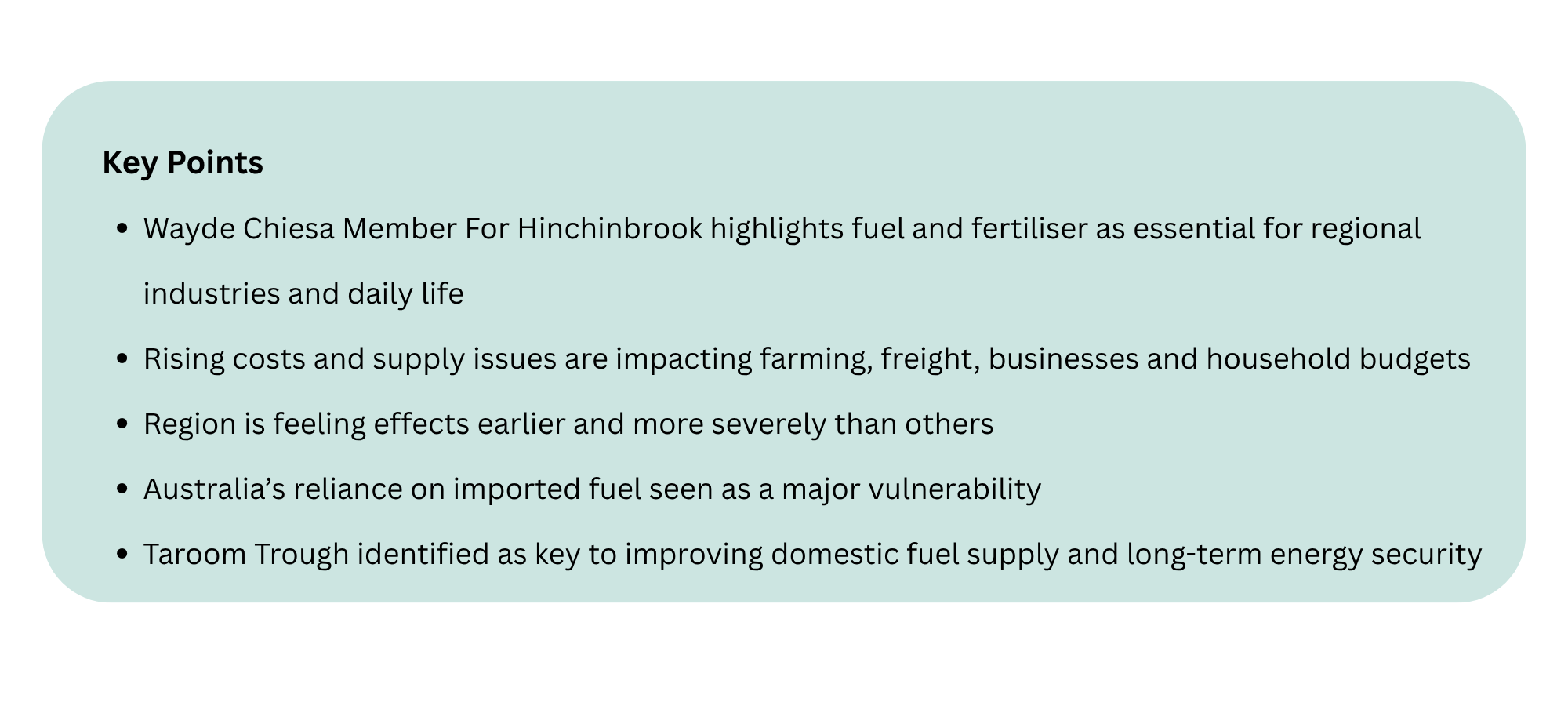
In Hinchinbrook, fuel and fertiliser are not optional extras. They are essential inputs that keep our farms productive, freight moving, and local businesses operating. That is why security of supply matters so much in our region. But supply on its own is not enough. Fuel and fertiliser also need to be available at a reasonable cost, and right now that is clearly not the case for many producers and families across our part of the world.
Over the last fortnight, I raised this issue in Parliament because people in our region are feeling the effects first and hardest. In my recent speech, I made the point that in places like Hinchinbrook, fuel powers our harvesters, pumps, trucks, fishing boats, freight and family cars. When costs rise sharply or supply becomes uncertain, the impacts do not stay at the bowser. They flow through to cane, horticulture, grazing, fishing, freight, food prices and household budgets.
What this situation has exposed is a much bigger problem for Australia. We remain too dependent on imported refined fuel, which leaves us exposed when global conflict disrupts markets and supply chains. That is why this debate must be about more than today’s fuel bill. It must also be about lifting Australia’s sovereign capability and building the resilience we need for the future.
That is why the Taroom Trough matters so much. The Crisafulli Government is unlocking the first oil field in 50 years at the Taroom Trough. This has the potential to become Australia’s first major new oil province since the 1970s, and early production is already flowing into domestic refining for diesel. This is important not just for Queensland, but for the nation. It speaks directly to our long-term fuel security, our economic resilience and our ability to produce more of what we need here in Australia, rather than relying so heavily on overseas supply.
Queensland has been clear to the Federal Government that regional communities need both supply security and affordability. Hinchinbrook deserves fuel and fertiliser that are not only available, but delivered on time and at a price that does not undermine production and punish families.
Next week I am back to Parliament in Brisbane, where I will continue to fight for what is important to our region.
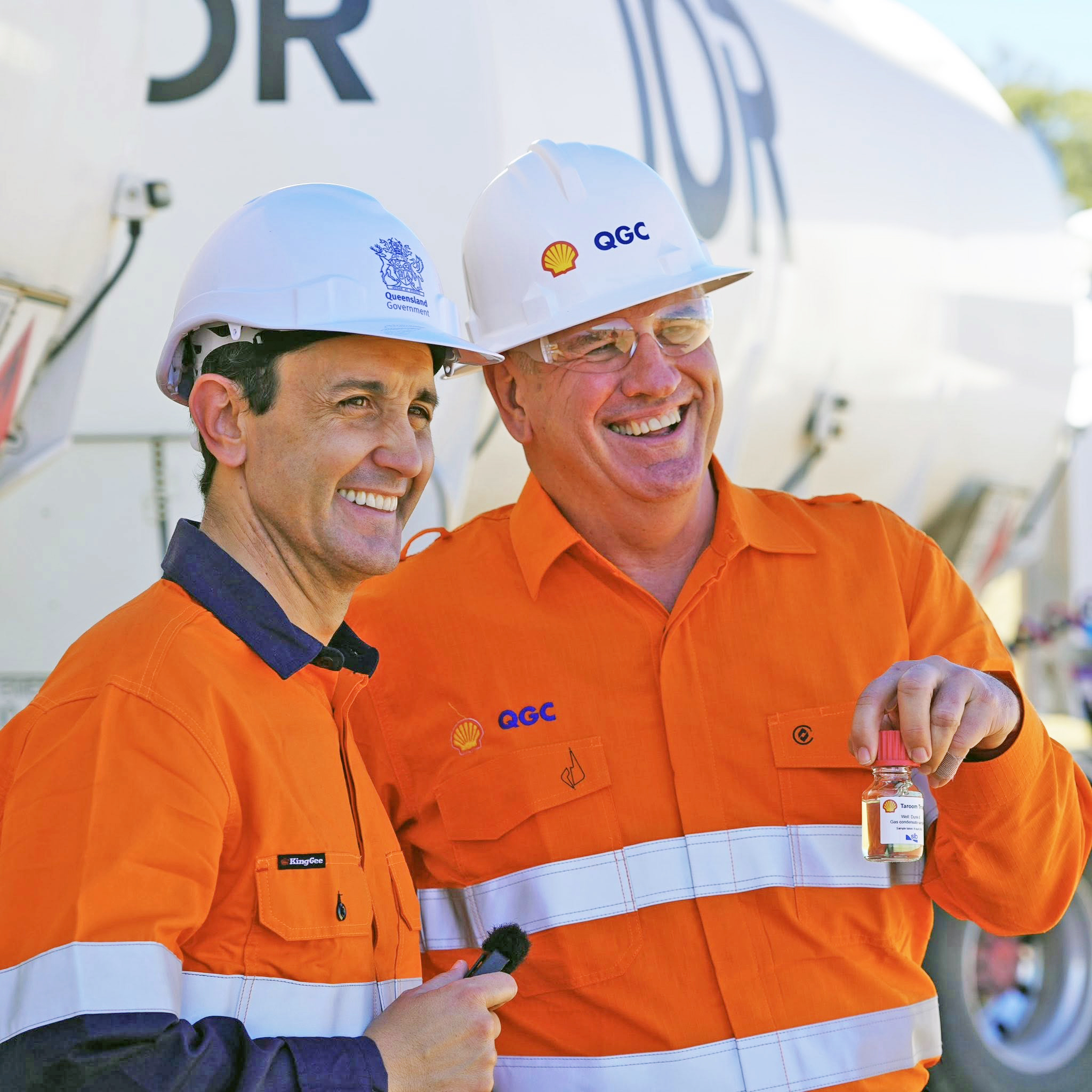
Caption: Premier David Crisafulli at the Taroom Trough. Photo credit: David Crisafulli's office

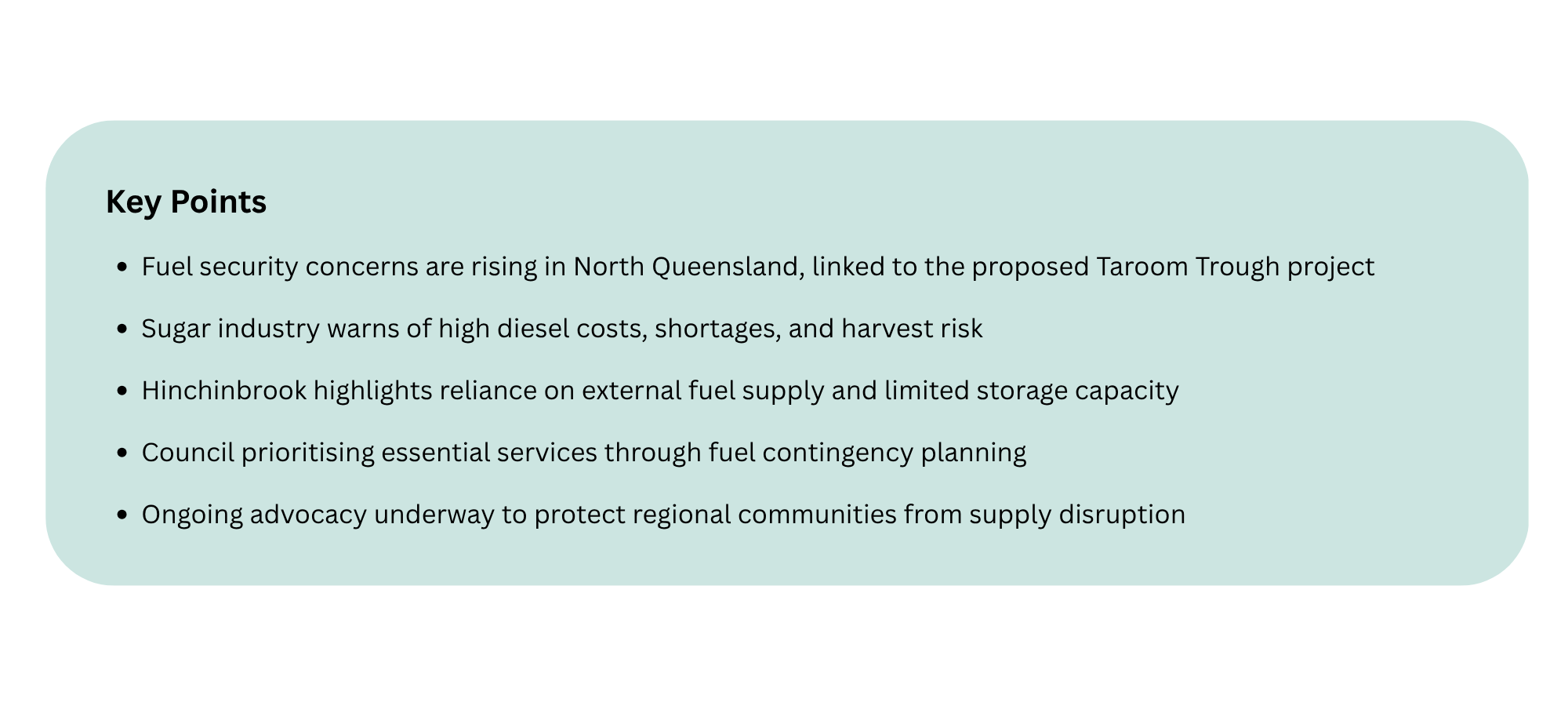
Fuel security is emerging as a growing concern across North Queensland, with rising prices, supply delays and broader global pressures placing renewed strain on regional communities. In Hinchinbrook, where agriculture, transport and essential services depend heavily on consistent fuel access, even small disruptions can have wide-reaching consequences.
The Queensland Government’s push to develop the Taroom Trough oil field has added another layer to the debate, with supporters citing the need for stronger domestic supply. However, local leaders warn that the issue is already being felt on the ground. From the sugar industry to council operations, the region is closely watching how fuel availability and affordability continue to unfold.
Fuel security concerns are sharpening across North Queensland, with the proposed development of the Taroom Trough oil field placing renewed focus on how regional communities like Hinchinbrook will be impacted.
The Queensland Government has announced plans to unlock the Taroom Trough, the first new oil field in Australia in 50 years, as part of a broader strategy to strengthen domestic fuel supply. While the project is still developing, the issue of fuel availability is already being felt locally, particularly across agriculture and essential services.
KAP Federal Member for Kennedy Bob Katter has warned the situation is becoming critical for the sugar industry, a key economic driver in the Hinchinbrook region.
“Sugar is a multi-billion-dollar export industry underpinning regional Australia, and it is now under threat,” said Mr Katter. “Australia’s sugar industry requires around 100 million litres of diesel this season. Right now, farmers can’t get it or can’t afford it.”
Mr Katter said diesel prices have surged from $1.70 per litre in early March to nearly $3 per litre by April, significantly increasing production costs. At the same time, supply delays of up to two weeks are being reported.
“This is pure idiocy that in a country so rich in resources, our farmers are lining up like we’re some sort of developing nation,” he said.
With production costs now exceeding returns, he warned the 2026 sugar harvest is at serious risk.
“This is simply unsustainable and it’s catastrophic for our sugar guys,” said Mr Katter.
“Every tonne harvested is a loss. Every farmer is going to go backwards.”
Closer to home, Hinchinbrook Shire Council Mayor Ramon Jayo said the region faces unique vulnerabilities due to its reliance on external fuel supply chains.
“Locally, our key pressure points are our reliance on fuel supplies through Townsville, limited on-site storage capacity, and the vulnerability that comes with weekly fuel allocations rather than on-demand delivery,” he said.
“Any disruption whether from national rationing decisions, global instability, or severe weather events could quickly affect businesses, essential services and disaster readiness. While conditions are currently stable, the margin for disruption is small.”
Mayor Jayo said council is working closely with neighbouring councils, the Local Government Association of Queensland, and state and federal governments to ensure regional concerns are understood.
“Through Townsville Enterprise Limited, we are also advocating on behalf of local businesses and industries, sharing real-time insights from industry to support better coordination, informed decision-making, and appropriate assistance where it is needed most.”
He acknowledged the growing cost-of-living pressures being felt across the community, driven largely by global factors.
“There’s no doubt cost-of-living pressures are being felt across our community, and it’s important to acknowledge that many of these pressures are being driven by factors well beyond our region including global conflicts, supply chain disruptions and inflationary forces.
“At the local level, Council’s priority is to plan responsibly so essential services continue to operate and shocks are managed calmly, not reactively.”
Mayor Jayo said planning is already underway to ensure essential services can continue in the event of fuel shortages.
“Council has responded by progressing our Business Continuity Plan, prioritising fuel use for critical services like water, sewerage, waste, regulatory services and disaster response.”
As debate continues around the Taroom Trough and Australia’s fuel future, local leaders say preparation and clear communication will be key to protecting regional communities like Hinchinbrook from further disruption.
Caption: The Taroom Trough is set to be the first oil field developed in Australia for half a century, Premier Crisafulli announces ‘This is a generational opportunity to ensure we’re not left at the end of a global supply chain.’ Photo credit: David Crisafulli’s office

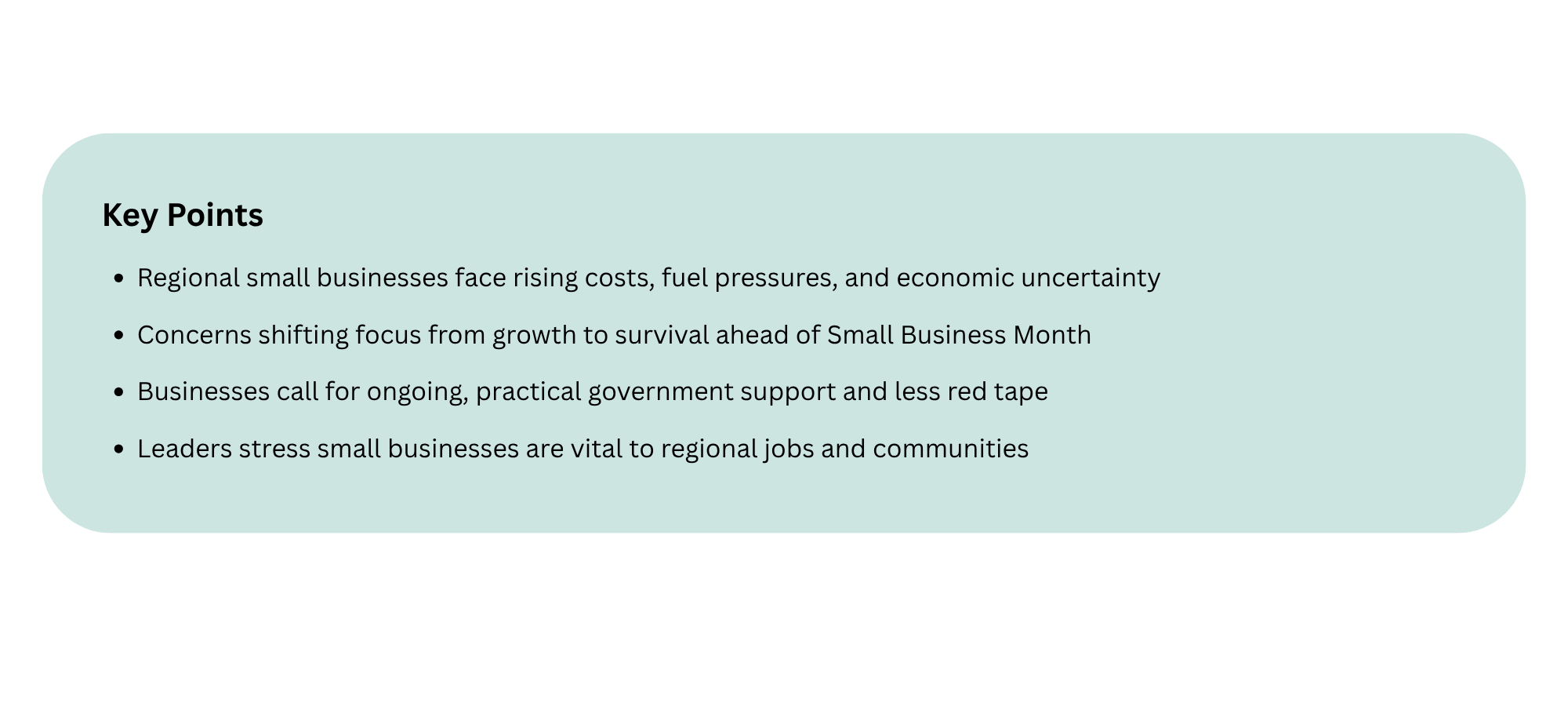
With Queensland Small Business Month fast approaching in May, regional communities across the state are preparing to celebrate and support local enterprises. However, for many businesses in the Hinchinbrook Shire, the reality is far from festive, as rising costs continue to place significant pressure on operations.
Mary Brown, President of the Hinchinbrook Chamber of Commerce Industry and Tourism Inc., highlighted the mounting challenges facing local businesses, amplifying concerns about the future of their operations, employees and the wider community.
“Currently, as a result of the impacts from the Iran conflict and rapidly escalating costs of almost everything—most significantly fuel and fertiliser—our community is facing exceptionally challenging business conditions,” Ms Brown said.
Business conditions have been further strained by two interest rate rises in 2026, falling global sugar prices, and upcoming nationwide changes, including new merchant fee regulations taking effect in October and the abolition of junior pay rates for 18–20-year-olds in retail, fast food and pharmacy. Ms Brown also noted businesses had reported sharp local cost increases, with freight rising by 50 per cent and essential materials, such as building products, increasing by 30 per cent in recent weeks.
“All of these factors are decisions made by other parties that directly impact businesses—their capacity to employ staff and even remain sustainable,” she said.
Cassowary Coast Regional Council Mayor Teresa Millwood also acknowledged the growing pressure on businesses, highlighting the close link between fuel costs and the broader economy.
Fuel underpins freight, tourism, agriculture and trades, and when prices rise or supply tightens, the impact flows directly into the cost of doing business and the cost of living.
“Right now, one of the biggest pressures on our small businesses is rising operational costs, further impacted by uncertainty around fuel. In regional areas, that hits hard,” Mayor Millwood said.
She added that businesses are not only dealing with fuel pressures, but also rising interest rates, soaring insurance and operating costs, workforce shortages, and the ongoing impacts of natural disasters.
“In regional communities, those challenges are amplified. We travel further, rely more on transport, and have fewer alternatives,” she said.
“Our small businesses are incredibly resilient, but right now, they’re being stretched from every direction—and they shouldn’t have to carry that alone.”
Earlier this year, conversations within the local business community focused on growth and opportunity, but in recent weeks the discussion has shifted towards survival and sustainability as uncertainty continues.
“Ordinarily, Queensland Small Business Month would be an ideal opportunity for businesses to network, engage in professional development and share knowledge,” Ms Brown said.
“However, in the current environment, this year may require a rethink, with a stronger focus on practical support and helping business owners navigate their pathway forward.”
Hinchinbrook Shire Mayor Ramon Jayo reinforced the importance of small businesses to the region.
“Small businesses are the backbone of our local economy, employing local people, supporting families, and keeping money circulating within the community,” he said.
“Beyond their economic contribution, they help define the character of our towns—they sponsor local sporting clubs, support events, and provide essential services that keep our communities connected and resilient.”
Mayor Jayo said initiatives like Queensland Small Business Month can play an important role, particularly when supported by practical, locally tailored measures that extend beyond a single month.
Mayor Millwood said the region urgently needs stronger, more targeted support, including continued investment in infrastructure, reduced red tape, workforce development and funding to help businesses grow, recover and innovate.
“We need support that truly reflects the realities of regional communities,” she said.
“We’d also like to see strong partnerships where State Government works alongside councils and local industry to deliver solutions tailored to regions like ours, because the future of the Cassowary Coast is about building a strong, sustainable economy—and that takes all levels of government working together.”
Ms Brown echoed the call for leadership and long-term policy certainty.
“Since the weather event in February 2025, the Queensland Government has provided invaluable support across many sectors affecting almost every aspect of our community,” she said.
“During this incredibly difficult time, the business community needs assurances from all levels of govenment that they have a clear plan to guide the nation forward and that they recognise the vital role small businesses play in the broader economy.”
As Queensland Small Business Month approaches, the message from regional communities could not be clearer; celebration alone isn’t enough, and meaningful, sustained support will be critical to ensuring small businesses can weather the challenges ahead.

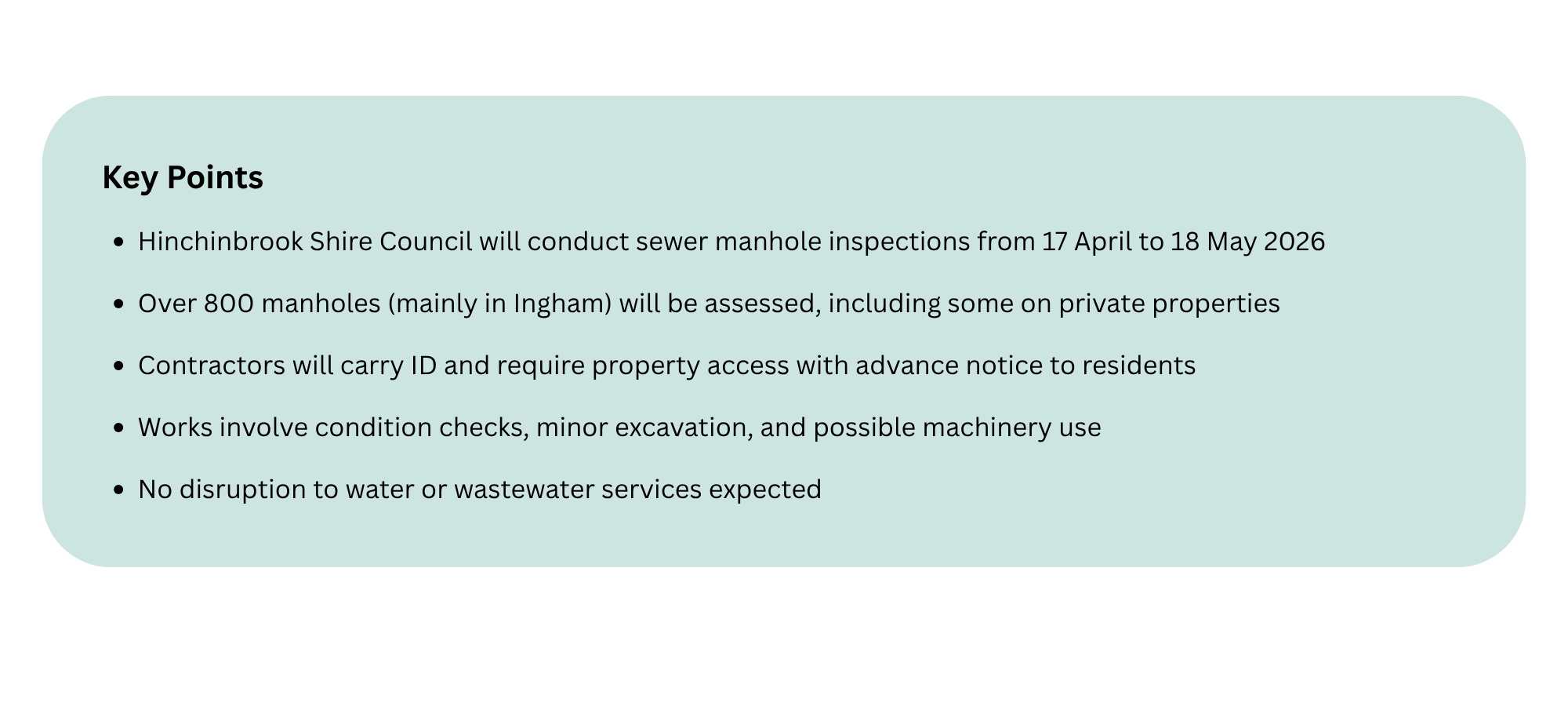
Hinchinbrook Shire Council wishes to advise residents that sewer manhole condition assessments will be conducted from Friday 17 April 2026 to Monday 18 May 2026, weather permitting. The majority of the 800-plus sewer manholes are located within Ingham, many on private properties, and contractors have been engaged to carry out condition assessments requiring access to these sites. Contractors will carry official identification at all times when on-site.
These assessments will involve inspecting and evaluating the condition of existing sewer manholes to identify any required repairs or upgrades. The assessments will be conducted across both residential and commercial properties. Access to private properties will be required to inspect the sewer manhole network. Affected property occupants will be notified in advance via written communication. The notification will request that occupants ensure safe and unobstructed access to the site, including securing pets and managing any potential hazards (for example, dogs on the property), to enable the works to be carried out safely and without delay. Where safe access cannot be obtained, the inspection may need to be rescheduled.
Council will work closely with contractors to minimise any disruption to your daily routine. The assessments may involve minor excavation or disturbance in close proximity to sewer manholes. This work is necessary to determine the structural integrity of the manholes and may include the use of small machinery, such as an excavator, to gain access to the manhole locations. There will be no disruption to your water or wastewater services during the assessment process. Any disturbance to your property will be kept to a minimum, and affected areas will be reinstated to their original condition. Safety, noise, and environmental controls will be in place at all times to reduce the impact of these works on the local community.
We appreciate your patience and understanding as we undertake these important assessments for the ongoing maintenance of our sewer infrastructure. If there are any concerns, please call Council’s Customer Service Centre on 4776 4600 or by emailing council@hinchinbrook.qld.gov.au so that it can be investigated and resolved.
Caption: Manholes in the Ingham area are undergoing assessment. Photo sourced: Shutterstock

Hinchinbrook Shire Council advises that temporary one-lane road closure works will be undertaken along Pappins Road, Helens Hill from:
Monday 20 April 2026 to Monday 4 May 2026, weather permitting.
During this period, pavement stabilisation and sealing works will be carried out.
Motorists may experience minor delays of up to five minutes under traffic control while works are underway.
Traffic management measures will be in place to ensure the safety of both workers and road users.
Council appreciates the community’s patience and cooperation while these essential works are completed.
For further information or to raise any concerns, please contact Council’s Customer Service Centre on (07) 4776 4600 or email council@hinchinbrook.qld.gov.au

Fuel security concerns are sharpening across North Queensland, with the proposed development of the Taroom Trough oil field placing renewed focus on how regional communities like Hinchinbrook will be impacted.
The Queensland Government has announced plans to unlock the Taroom Trough, the first new oil field in Australia in 50 years, as part of a broader strategy to strengthen domestic fuel supply. While the project is still developing, the issue of fuel availability is already being felt locally, particularly across agriculture and essential services.
KAP Federal Member for Kennedy Bob Katter has warned the situation is becoming critical for the sugar industry, a key economic driver in the Hinchinbrook region.
“Sugar is a multi-billion-dollar export industry underpinning regional Australia, and it is now under threat,” said Mr Katter. “Australia’s sugar industry requires around 100 million litres of diesel this season. Right now, farmers can’t get it or can’t afford it.”
Mr Katter said diesel prices have surged from $1.70 per litre in early March to nearly $3 per litre by April, significantly increasing production costs. At the same time, supply delays of up to two weeks are being reported.
“This is pure idiocy that in a country so rich in resources, our farmers are lining up like we’re some sort of developing nation,” he said.
With production costs now exceeding returns, he warned the 2026 sugar harvest is at serious risk.
“This is simply unsustainable and it’s catastrophic for our sugar guys,” said Mr Katter.
“Every tonne harvested is a loss. Every farmer is going to go backwards.”
Closer to home, Hinchinbrook Shire Council Mayor Ramon Jayo said the region faces unique vulnerabilities due to its reliance on external fuel supply chains.
“Locally, our key pressure points are our reliance on fuel supplies through Townsville, limited on-site storage capacity, and the vulnerability that comes with weekly fuel allocations rather than on-demand delivery,” he said.
“Any disruption whether from national rationing decisions, global instability, or severe weather events could quickly affect businesses, essential services and disaster readiness. While conditions are currently stable, the margin for disruption is small.”
Mayor Jayo said council is working closely with neighbouring councils, the Local Government Association of Queensland, and state and federal governments to ensure regional concerns are understood.
“Through Townsville Enterprise Limited, we are also advocating on behalf of local businesses and industries, sharing real-time insights from industry to support better coordination, informed decision-making, and appropriate assistance where it is needed most.”
He acknowledged the growing cost-of-living pressures being felt across the community, driven largely by global factors.
“There’s no doubt cost-of-living pressures are being felt across our community, and it’s important to acknowledge that many of these pressures are being driven by factors well beyond our region including global conflicts, supply chain disruptions and inflationary forces.
“At the local level, Council’s priority is to plan responsibly so essential services continue to operate and shocks are managed calmly, not reactively.”
Mayor Jayo said planning is already underway to ensure essential services can continue in the event of fuel shortages.
“Council has responded by progressing our Business Continuity Plan, prioritising fuel use for critical services like water, sewerage, waste, regulatory services and disaster response.”
As debate continues around the Taroom Trough and Australia’s fuel future, local leaders say preparation and clear communication will be key to protecting regional communities like Hinchinbrook from further disruption.
Stock image from: https://pixabay.com/photos/gas-station-gas-pump-refuel-diesel-4978824/

Joyce Di Giacomo, a resident at Canossa in Trebonne, puts her passion to paper through colouring in. At 102 years of age, she proudly displays her works at the aged care facility and this year decided to enter Cantatore Pharmacy’s Easter colouring-in competition.
Although she did not fall into any age category, she received a special commendation and a prize for her efforts and skill.
Happy Easter to you, Joyce, and well done!

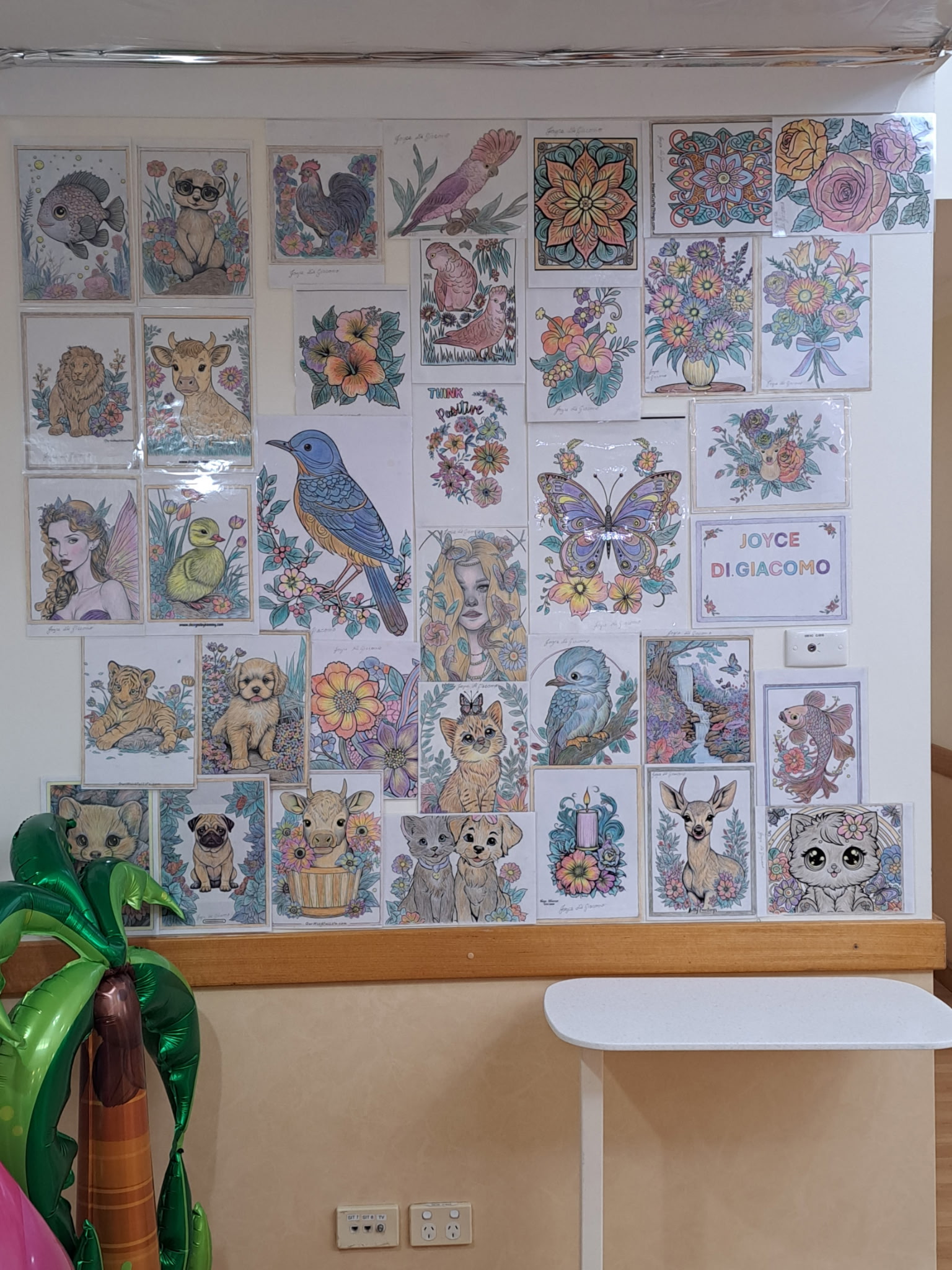
Joyce cutting the cake when she turned 102 this year. Photo supplied

As uncertainty continues around fuel supply in the foreseeable future—due in part to the ongoing conflict in the Middle East—Council is putting contingency plans in place to best manage resources if required, ensuring service delivery to the community is not significantly compromised.
While current fuel supply arrangements remain stable, our vulnerability—particularly during the high-risk weather season—means forward planning is essential. Council is determined to be prepared, not reactive.
Our immediate priority is ensuring fuel is available where it matters most. Essential services such as water and sewerage operations, waste collection, regulatory services, and disaster response must be protected. To achieve this, some non-essential activities may need to be adjusted if supply tightens. These decisions will not be taken lightly, and Council will always communicate any changes clearly and early.
However, as we are increasingly recognising, fuel resources and supply present growing challenges for regional Australia. Addressing this means we must, as a nation, start thinking differently about how we secure our fuel future.
This is where bioenergy—particularly from sugarcane—presents a significant opportunity. We have been advocating for bioenergy for years. We already know it works, and ethanol derived from sugarcane has the potential to be a low‑carbon, renewable game changer for Australia’s fuel security. Many other nations are already embracing this approach, so why can’t we?
Sugarcane is a powerful and versatile crop. Beyond sugar production, it already contributes to renewable electricity generation through bagasse.
You would therefore understand my delight at hearing yesterday’s recommendations from the State Government’s Primary Industries and Resources Committee, following its inquiry into Sugarcane Bioenergy Opportunities in Queensland.
The purpose of the inquiry was to examine the current state of the sugarcane industry in Queensland, including the barriers and opportunities facing the sector, and to consider mechanisms to support its future growth and diversification.
The committee made 12 recommendations to the Queensland Government aimed at supporting the development of a resilient and profitable sugarcane bioenergy industry. The committee concluded that, with appropriate policysettings and coordinated investment, Queensland’s sugarcane industry is well positioned to play a significant role in the state’s emerging bioeconomy, strengthening regional economies and contributing to Australia’s long-term energy and fuel security.
However, the job is not yet complete. We must continue advocating to ensure the State Government not only accepts these recommendations but implements them. Both State and Federal Governments must mandate the use of biofuels and establish the right regulatory and policy settings to create a viable market and provide certainty for investment.
This is not about politics.
This is about reality.
And it is about securing a sustainable future for our region.
By Victoria Velton
Easter weekend brought a noticeable boost to numbers across both courses, with plenty of visitors joining locals for a spirited morning of exercise.
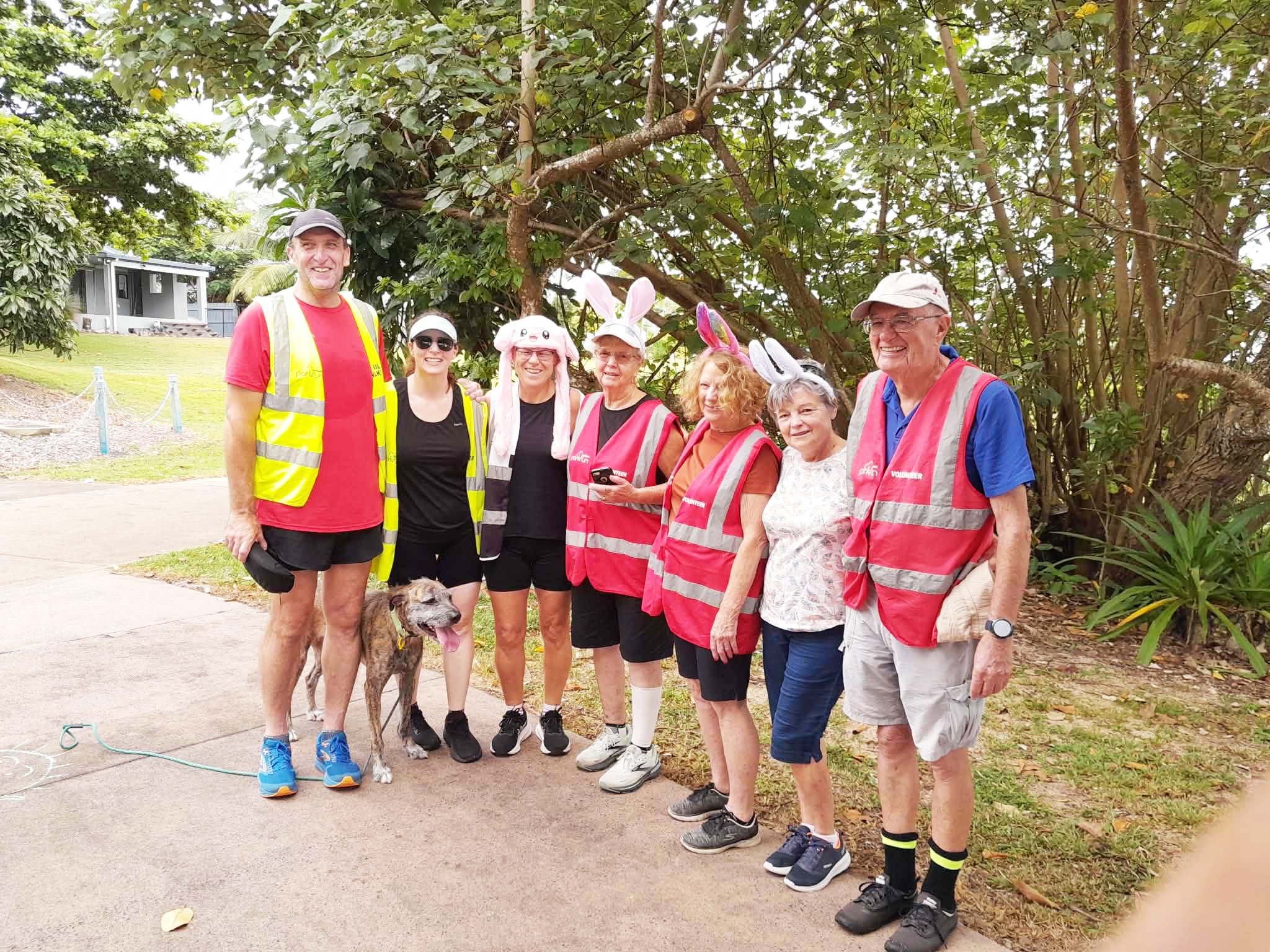
At Cardwell, volunteers got into the festive spirit, sporting rabbit ears as runners and walkers took to the course, adding a bit of fun to the morning. Meanwhile, Palm Creek welcomed two large visiting groups from Townsville and Brisbane, helping swell the field and creating a lively atmosphere out on the track.

It’s always fun to run and race against new people, having so many on the track meant there was a new face around every bend.
Parkrun Results: 4th April 2026
Palm Creek #119 – 57 participants
Fastest time: Jeff Rubach (17:54)
Final finisher: Kelly Krumin (58:26)
PBs: 14 achieved
First-timers: 14 welcomed
Volunteers: Steven Veltmeyer, Amanda Towner, Samantha Neitz, Matteo Mancuso, Kelly Krumin, Bridgette Duffy

Cardwell #381 – 33 participants
Fastest time: Joshua Chugg (18:35)
Final finisher: Matthew Gardiner (53:24)
PBs: 4 achieved
First-timers: 10 welcomed
Volunteers: Kerry Snell, Glenda Stahel, Jan Ferguson, Terry Curtin, Matthew Gardiner, Rachelle Warlond

.jpg)
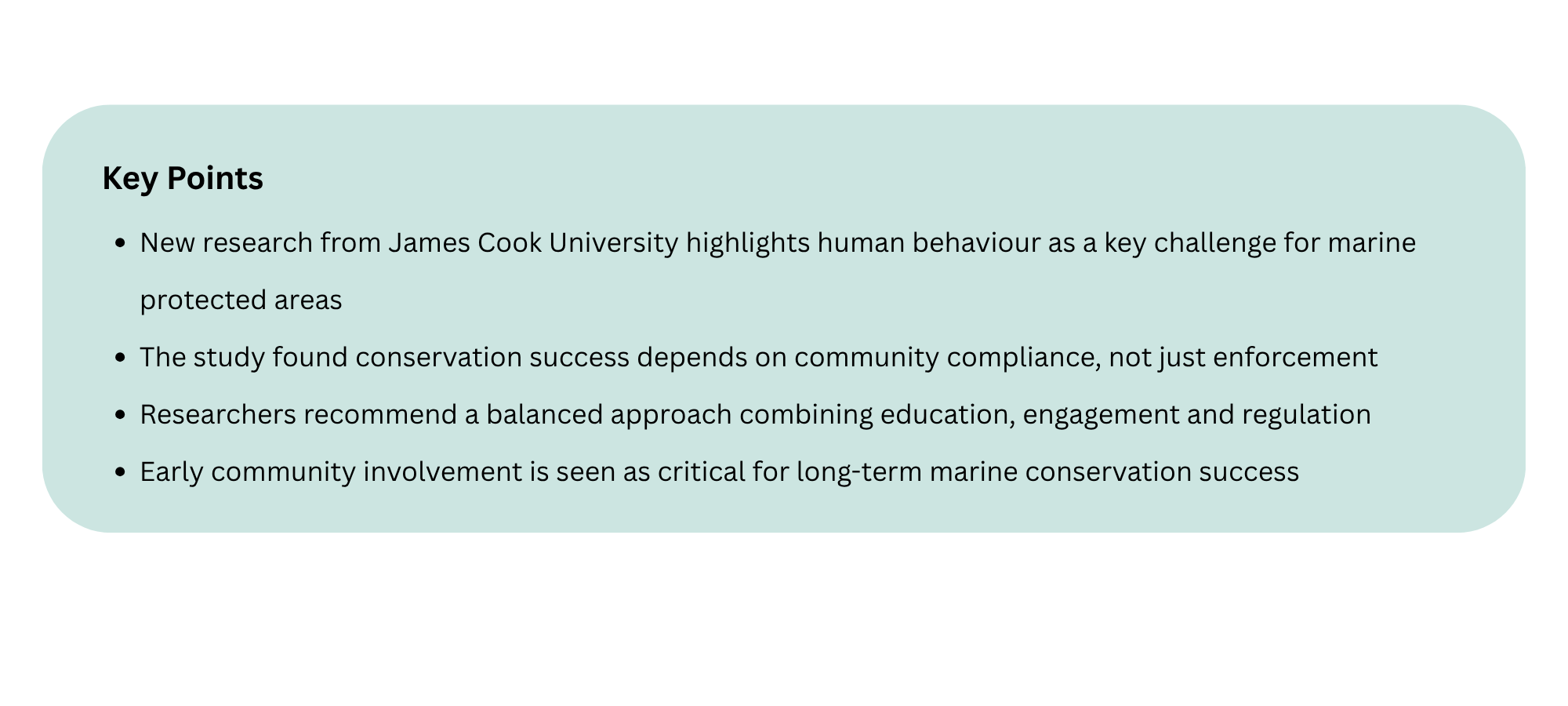
New research led by James Cook University is shining a light on what experts describe as the “Achilles’ heel” of marine protected areas (MPAs)—human behaviour.
While MPAs play a vital role in protecting ocean ecosystems, including coral reefs and seagrass habitats, the study found their success depends heavily on how well people comply with the rules designed to protect them.
Led by conservation scientist Brock Bergseth, the research brought together global experts to develop a new framework aimed at improving compliance.
“Globally, marine protected areas and other conservation programs are often impeded by the inability to successfully manage human behaviour,” Dr Bergseth said.
The study challenges the traditional reliance on enforcement and penalties, instead promoting a balanced “carrot and stick” approach that encourages voluntary compliance.
“While some enforcement may be necessary, it’s not a panacea for compliance,” Dr Bergseth said.
Researchers emphasised that early and ongoing engagement with communities is key to success, helping people feel a sense of ownership and fairness around regulations.
Senior researcher Jon Day said improving compliance systems would be critical for the future of marine conservation.
“Over the course of my career, I’ve seen what happens when compliance and enforcement are under-resourced or overlooked – to the detriment of effective MPAs,” he said.
“Reframing our global compliance system will better enable long-standing success of marine conservation initiatives, protecting ocean health now and far into the future.”
CAPTION: A new JCU-led study has shown that effective conservation relies heavily on compliance. Photo source: JCU
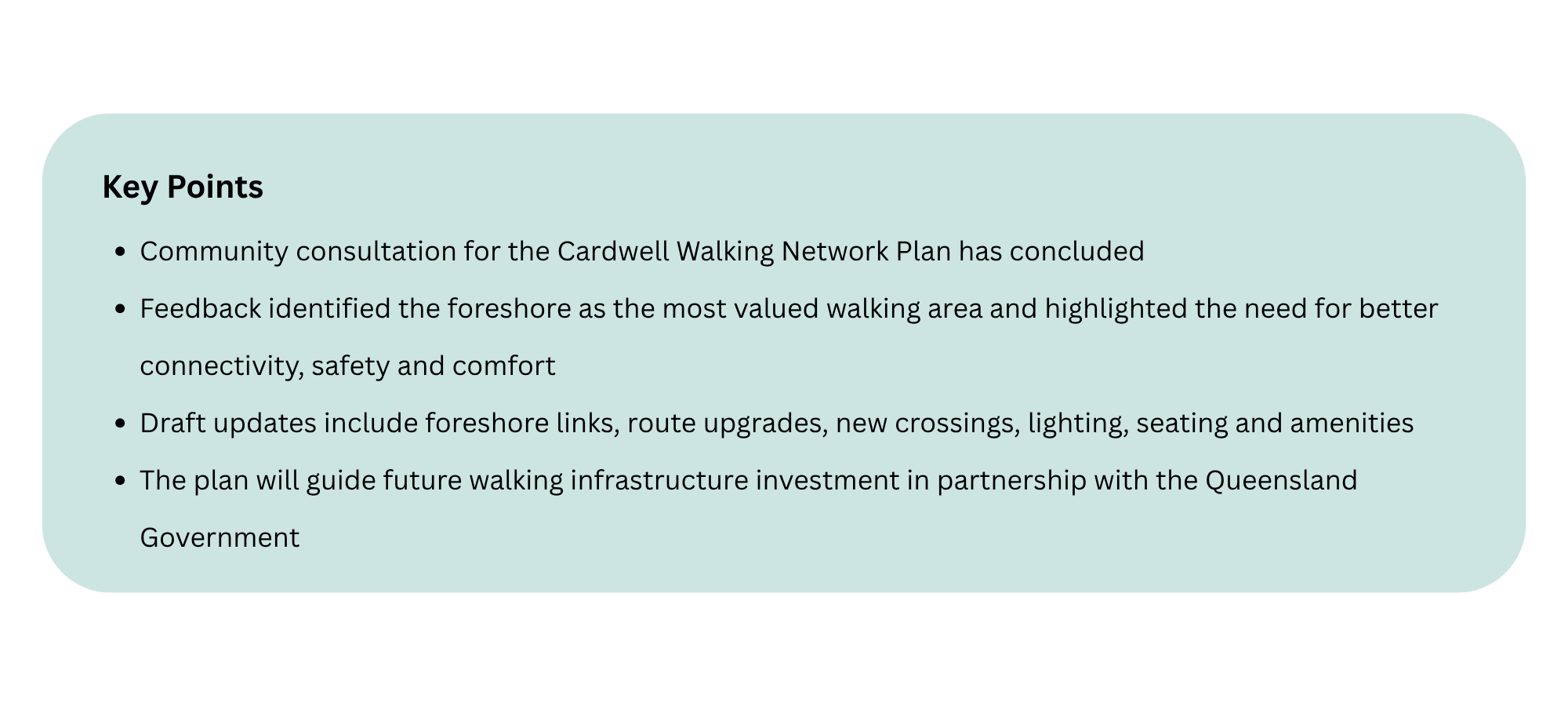
Community consultation for the Cardwell Walking Network Plan has wrapped up, with local feedback playing a key role in shaping the town’s future walking infrastructure.
Over a five-week engagement period, residents shared their views through an online Your Say page, an interactive mapping tool and a community workshop, providing valuable insight into how locals use and experience Cardwell’s walking network.
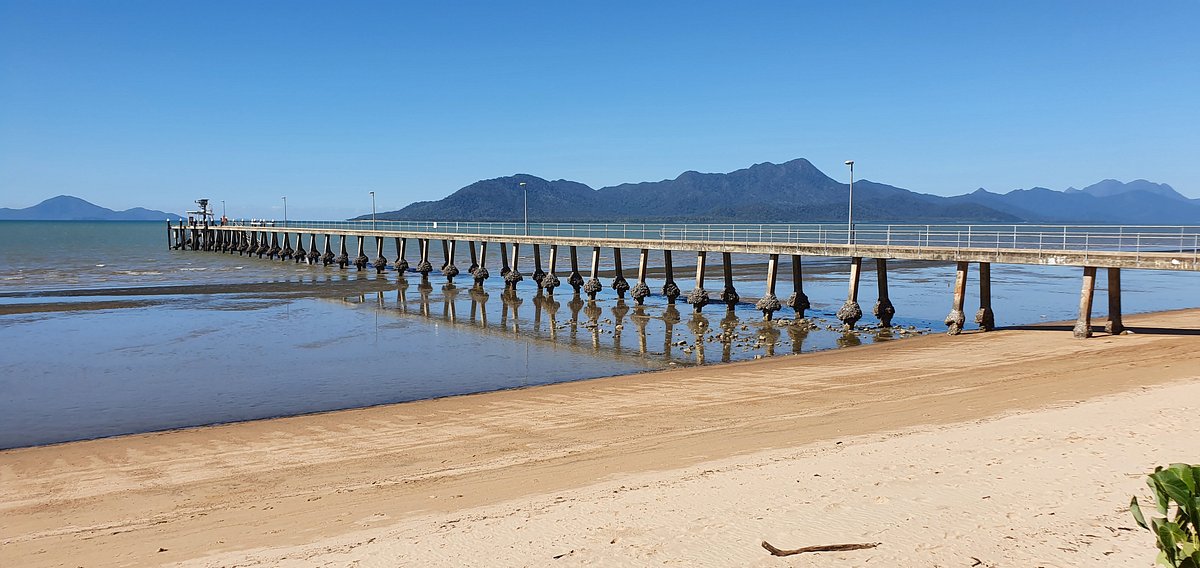
Feedback highlighted the foreshore as the town’s most valued walking destination, while also identifying a strong need for improved connectivity, safety and overall comfort across walking routes.
In response, the draft plan has been updated to include stronger links to the foreshore shared path, upgrades to key routes such as Gregory Street and the Bruce Highway, and the introduction of new pedestrian crossings and safety features. Additional lighting, seating and amenities have also been incorporated to enhance the walking experience.
The project is being delivered by Cassowary Coast Regional Council in partnership with the Queensland Department of Transport and Main Roads.
Council will now work with TMR to finalise the plan, which will help guide future investment in walking infrastructure across Cardwell, subject to available funding.
Community members who contributed to the consultation process have been thanked for helping shape a more connected and accessible future for the town.
CAPTION: Community engagement for the Cardwell Walking Network Plan is now complete! Photo source: Cassowary Coast Regional Council
Publishers Indemnity. Any individual or entity that places advertising, supplies copy material, or submits editorial content to Life Publishing agrees and undertakes to ensure that all such material:- Does not infringe upon any copyright, trademark, or other intellectual property rights;- Is free from any content that could be considered defamatory, libelous, or slanderous;- Does not infringe upon any rights related to privacy or breach of confidence;- Contains no obscene, indecent, or otherwise unlawful material;- Complies fully with the Trade Practices Act and all other applicable laws, regulations, or statutes. Furthermore, by submitting or placing such material, these individuals or entities agree to indemnify and hold harmless the publisher, Life Publishing and Events Pty Ltd, and/or its agents from and against any and all investigations, claims, demands, liabilities, damages, costs, or judgments arising out of or in connection with the material provided. All material is believed to be accurate at the time of printing and remains the copyright of Life Publishing and Events Pty Ltd.
© 2026 Life Publishing Group Ltd.
